17 Best Places to Visit in France in 2026

France receives more international visitors than any other country on earth, and the overwhelming majority of them go to one city. That imbalance is the opportunity. Once you look past the obvious, the country divides into regions that barely resemble each other, and the good places to visit in France are spread across all of them.
The best places to visit in France cluster into five broad zones: Paris and its ring of palaces; the north and west, from the Normandy beaches to Brittany; the eastern edge along Alsace and the Alps; the southwest around Bordeaux and Toulouse; and the Mediterranean south, from Marseille to Corsica. A first trip can cover two of these comfortably.
This list runs roughly clockwise, starting in Paris and finishing offshore.
1. Paris
Paris rewards a slower pace than most people give it. The instinct is to sprint between monuments, but the city works better if you pick two neighborhoods a day and walk them properly. The Marais on a Sunday, when half of Paris shops and the other half sits outside. The Latin Quarter early, before the tour groups reach the Panthéon.
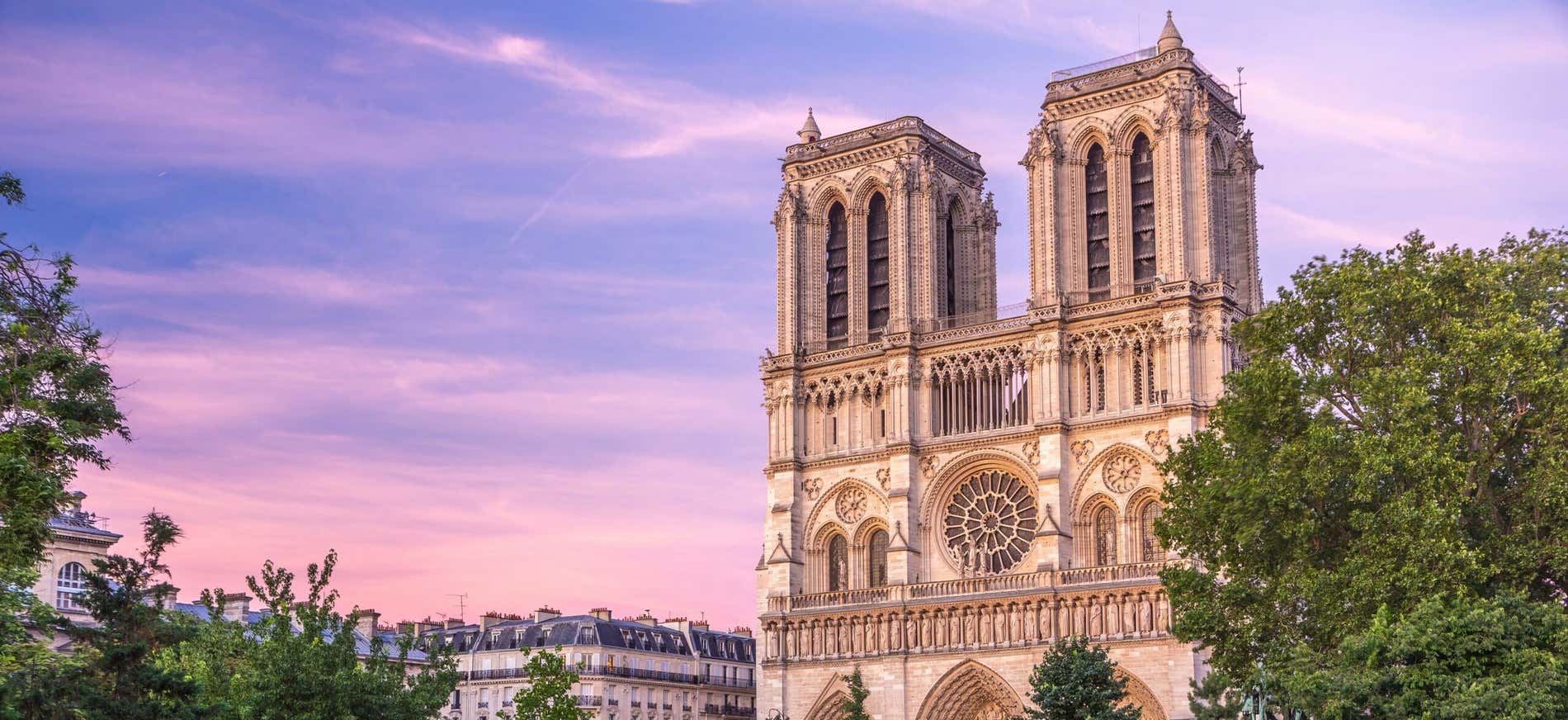
The headline sights hold up. The Eiffel Tower has stood at 1,083 feet (330 meters) since 1889, when it went up as a temporary exhibit for the World’s Fair. The Louvre is the most-visited museum on the planet. Notre-Dame reopened in December 2024, five years after the fire, and the restored interior is startlingly bright compared to the soot-darkened version most visitors remember.
Book the ticketed sights ahead and leave the rest loose. A good first morning is the Paris free walking tour, which links the Louvre, the Seine, and Notre-Dame in one loop. For the artistic half of the city, the Montmartre and Sacré-Cœur free tour covers the lanes where Picasso and Van Gogh worked. Later, a Seine river cruise gives you the monuments from the water, which is the angle they were built for.
2. Versailles
Versailles sits about 12 miles (20 kilometers) southwest of Paris and makes the easiest big day trip in the country. The RER C runs there directly, and the palace is a short walk from the station.
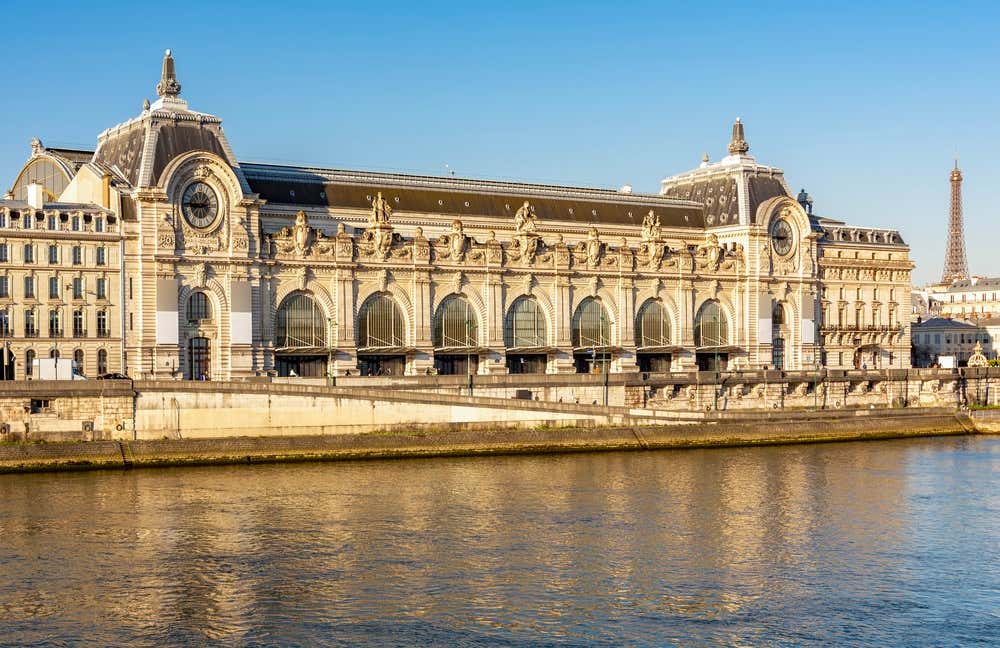
Louis XIV moved the French court here in 1682, and the scale of the place is the point: it was built to make visiting nobles feel small. The Hall of Mirrors runs 239 feet (73 meters) with 357 mirrors facing the garden windows, and the Treaty of Versailles was signed in it in 1919. Outside, the gardens cover close to 2,000 acres (800 hectares), laid out by André Le Nôtre in dead-straight lines that run to the horizon.
Two practical points. The palace closes on Mondays, and the fountains only run on scheduled show days, which are worth checking before you commit to a date. Rent a bike or a golf cart for the far end of the estate, where Marie Antoinette’s hamlet sits with its thatched cottages and working farm. You can browse the guided tours and tickets for Versailles to see which combination fits your day.
3. Normandy
Normandy carries more history per mile than anywhere else in France, and it wears it lightly. Apple orchards, half-timbered farms, cliffs dropping into the Channel, and a coastline that changed the twentieth century on a single June morning in 1944.
The five landing beaches run west to east: Utah, Omaha, Gold, Juno, and Sword. The American Cemetery above Omaha holds 9,388 graves on a bluff over the sand, and it is a quiet, well-kept place that asks nothing of you but time. Inland at Bayeux, the eleventh-century tapestry stretches roughly 230 feet (70 meters) and tells the other invasion story, the one that went the opposite direction.
There is a softer Normandy too. Étretat’s chalk arches are the ones Monet painted over and over, and Honfleur’s harbor is lined with slate-fronted houses. Eat the cheese, drink the cider, and try calvados once. Coming from the capital, the 2-day trip to Normandy, Saint-Malo, and Mont Saint Michel covers the ground efficiently, or you can browse the full range of excursions across Normandy.
4. Mont Saint Michel
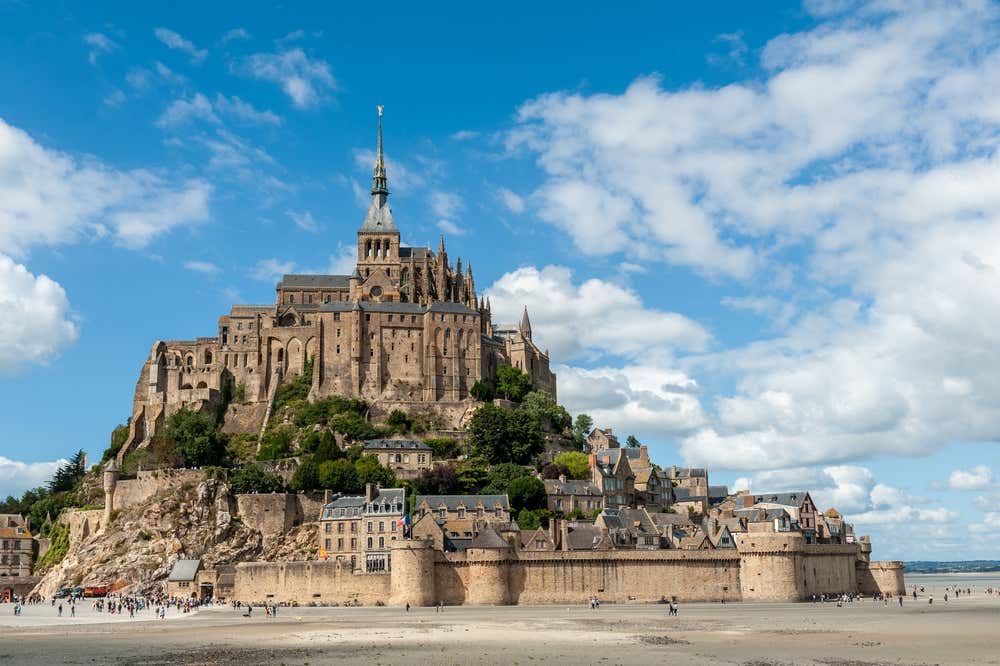
There is no photograph that makes Mont Saint Michel look ordinary. An abbey stacked on a granite outcrop in a tidal bay, with a village spiralling up the rock beneath it, and a permanent population you could fit in a single bus.
The abbey was founded in the eighth century and grew upward for the next seven hundred years. UNESCO listed it in 1979. The bay has some of the largest tides in Europe, with a range that can reach 46 feet (14 meters), and on the biggest spring tides the water genuinely encircles the mount again. A bridge replaced the old causeway in 2014, so access no longer depends on the sea.
Go early or stay overnight. The day-trip crowds arrive around 11 AM and thin out by late afternoon, and the village between those hours is a different, much better place. Opening times shift by season, so check before you travel. The tours and tickets for Mont Saint Michel cover the abbey itself, and the 2-day trip combining Mont Saint Michel and the Loire castles pairs it with the châteaux.
5. Strasbourg
Strasbourg has been French and German by turns, and the result is a city that belongs comfortably to neither. Timber-framed houses, a cathedral in pink Vosges sandstone, and a food culture built on choucroute and Riesling rather than butter and burgundy.
The cathedral spire reaches 466 feet (142 meters) and was the tallest building in the world from 1647 until 1874. Inside, the astronomical clock still performs its procession of figures each afternoon. West of it, the Petite France quarter sits on canals where the tanners once worked, and the whole island center has been a World Heritage Site since 1988.
December is the month everyone wants. The Christmas market has run since 1570, which makes it one of the oldest in Europe, and the city fills accordingly. Book far ahead for those weeks. The guided tours and boat trips in Strasbourg include the canal circuit, and nearby Colmar tours and day trips reach the smaller Alsatian wine villages.
6. Lyon
Lyon is where French people go to eat, and they are not being ironic about it. The city sits between two rivers with a Renaissance old town on one bank and a Roman hill above it, and it has taken food seriously for five hundred years.
Eat in a bouchon, the small family-run places serving quenelles, andouillette, and pike dumplings in cream. Walk the traboules, covered passageways cutting through buildings between streets, originally built so silk workers could move bolts of cloth in the dry. Most are unmarked and several are open to the public. Up on Fourvière hill, two Roman theaters from the first century BC still host summer concerts.
The Vieux Lyon has been a World Heritage Site since 1998, and it is one of the largest Renaissance quarters in Europe. If your dates are flexible, the Fête des Lumières in early December turns the whole center into a light installation for four nights. Have a look at the walking tours and food experiences in Lyon for the bouchon circuit.
Les Halles de Lyon Paul Bocuse gathers around 50 producers under one roof and is best visited before lunch.
7. Chamonix and Mont Blanc
Chamonix sits in a valley directly under the highest mountain in western Europe, and the scale takes a day to absorb. Mont Blanc tops out at 15,774 feet (4,808 meters), and from the town you are looking almost straight up at it.
The Aiguille du Midi cable car climbs to 12,605 feet (3,842 meters) in two stages and delivers you onto a rock spire with a viewing terrace and a glass box you can step into. Dress for it, because the temperature drop from the valley is severe even in August. The Montenvers rack railway runs to the Mer de Glace, France’s longest glacier, which has retreated visibly within living memory.
Chamonix hosted the first Winter Olympics in 1924 and still runs on mountain time: skiing from December, hiking and climbing from June. Cable cars close for maintenance in shoulder season and in bad weather, so confirm they are running before you build a day around them. The excursions and activities across the French Alps cover the valley and the passes around it.
The Mer de Glace is reached by rack railway from Chamonix in about 20 minutes.
8. Bordeaux
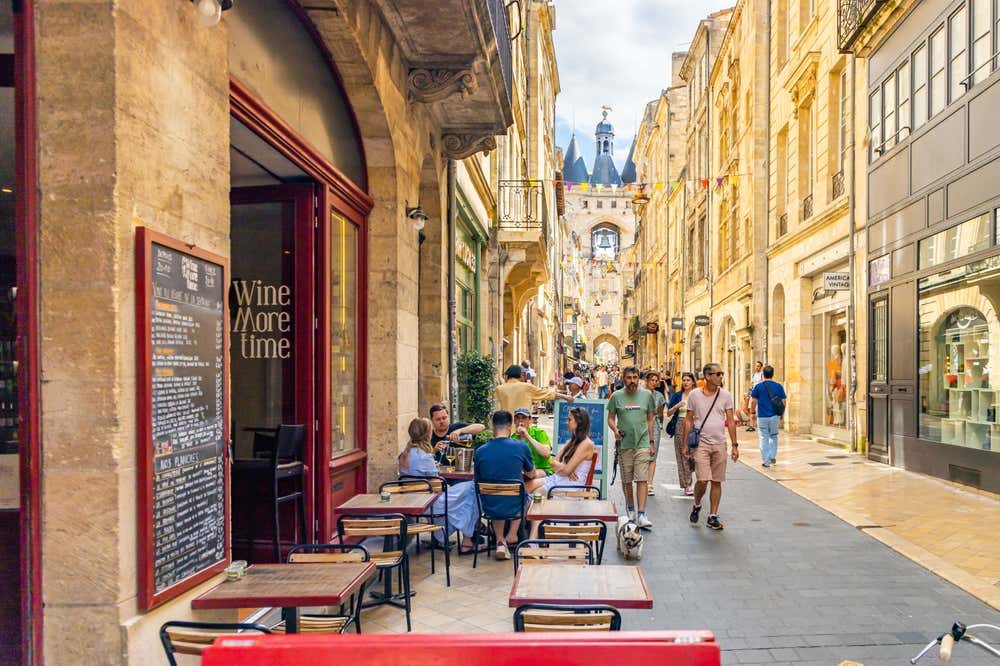
Bordeaux spent decades under a layer of grime and then cleaned itself. The eighteenth-century limestone frontage along the Garonne came up pale gold, and the city went from industrial port to one of the best-looking places in France inside a generation. UNESCO listed the center, the Port of the Moon, in 2007.
The Miroir d’Eau opposite the Place de la Bourse is the largest reflecting pool in the world, and in summer it alternates between a thin sheet of water and a cloud of mist. La Cité du Vin explains the wine without being solemn about it. The old town is compact enough to cross on foot in half an hour.
Then there are the vineyards. Saint-Émilion lies about 25 miles (40 kilometers) east, a medieval hill town over a monolithic church carved directly into the rock, and it is the classic half-day out. The wine tours and tastings from Bordeaux reach the Médoc and Saint-Émilion estates, and the activities based in Saint-Émilion cover the village itself.
9. Toulouse
Toulouse is built from pink brick, which is why everyone calls it la Ville Rose. In late afternoon the whole center turns a warm terracotta, and the effect is genuinely worth timing a walk around.
The Basilica of Saint-Sernin is the largest surviving Romanesque church in Europe, built as a stop on the pilgrimage route to Santiago. The Place du Capitole anchors the center with its arcades and its Sunday market. Running past the city, the Canal du Midi has been a World Heritage Site since 1996 and makes an easy flat cycle out of town under plane trees.
Toulouse is also where Europe builds aircraft and satellites, and the Cité de l’Espace makes that accessible with full-size rocket models and a genuine Soyuz capsule. It is the rare science museum that works equally well for adults. The guided tours and day trips from Toulouse take in the old town and the canal.
10. Carcassonne
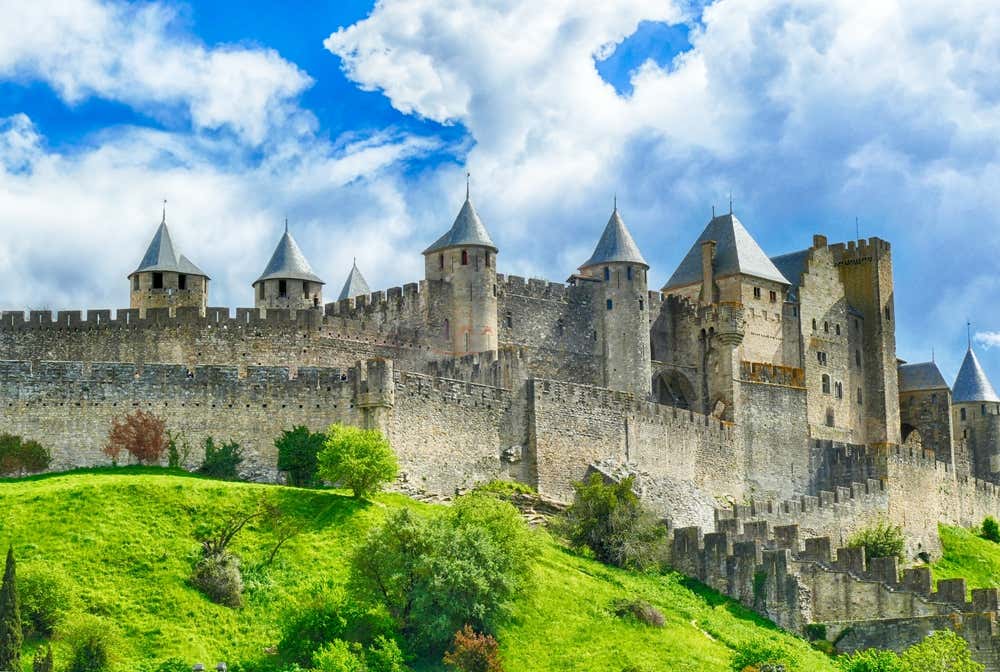
Carcassonne looks invented. A double ring of walls with 52 towers, conical slate roofs, and a fortified town still lived in behind the gates, sitting on a hill above the Aude with vineyards running off in every direction.
Some of it genuinely is invented. The citadel was a ruin by the nineteenth century until Viollet-le-Duc restored it, adding the pointed roofs that historians still argue about, since they belong to northern France rather than the Languedoc. That does not much matter once you are inside. UNESCO listed the site in 1997, and the ramparts walk gives you the whole valley.
Stay the night if you can. Day visitors clear out by evening and the lit walls after dark are the version worth seeing. The lower town across the river has the better restaurants and costs considerably less. The guided tours of Carcassonne cover the citadel and the Cathar castles in the hills nearby.
11. Lourdes
Lourdes is one of the most-visited places in France and one of the least-covered in travel writing, which says more about travel writing than about Lourdes. Roughly six million people come here a year, and the town has more hotel beds than anywhere in the country outside Paris.
The reason is 1858, when a fourteen-year-old named Bernadette Soubirous reported a series of visions at a grotto by the river. The sanctuary built around it now covers a large riverside site with three basilicas stacked into the hillside. The evening torchlight procession draws thousands, and you do not need to share the faith to find it moving.
The setting helps. Lourdes sits at the foot of the Pyrenees, and a funicular runs up the Pic du Jer for a view across the range. Combine it with the mountain valleys south of town rather than treating it as a single-purpose stop. The excursions across Occitania cover this corner of the southwest.
12. Marseille
Marseille is the oldest city in France, founded by Greek sailors from Phocaea around 600 BC, and it has never much cared what Paris thinks of it. Loud, Mediterranean, North African as much as Provençal, and improving fast.
Start at the Vieux-Port, where the fish market still sets up in the mornings on the quay. Notre-Dame de la Garde crowns the hill above with a gilded Virgin visible from most of the city. The MuCEM, opened in 2013, is a lattice-clad box connected to a seventeenth-century fort by a footbridge, and it did more than any single building to change how Marseille is seen.
The Calanques begin right at the edge of town: limestone inlets with water an improbable green, reachable by boat, on foot, or not at all in high fire-risk periods. Eat bouillabaisse somewhere that asks you to order it a day ahead, which is the sign it will be made properly. The Marseille sunset cruise with dinner takes in the coast from the water, and the full list of Marseille tours and boat trips includes the Calanques circuits.
13. Provence
Provence is the France that sells calendars, and for once the calendars are accurate. Stone villages on hillsides, plane trees over market squares, and light that made Cézanne and Van Gogh move here permanently.
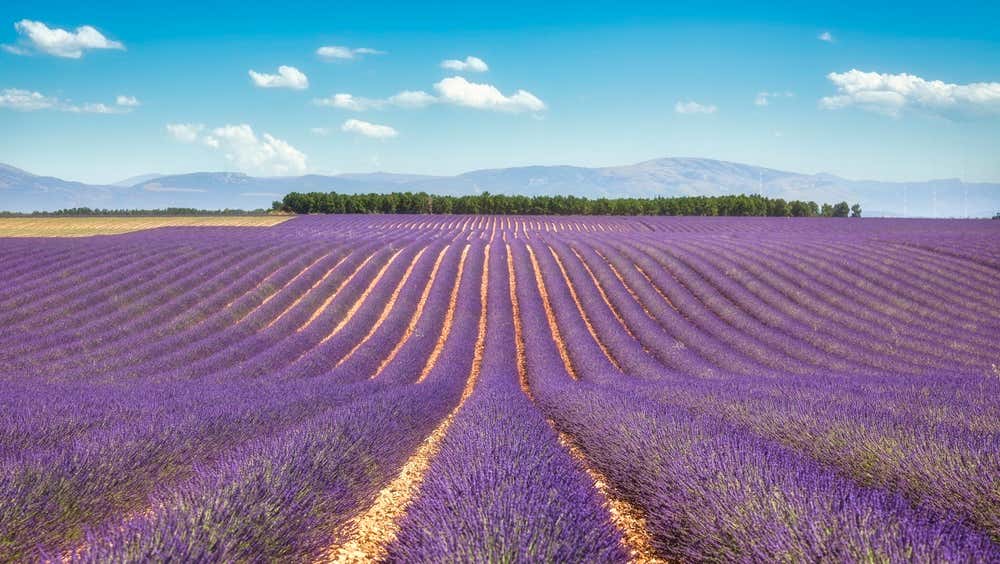
The lavender is the thing most people come for, and the timing is narrow. Bloom on the Valensole plateau typically runs from late June to early August, with harvest cutting it short, and the exact window shifts with the year. Check locally before you build a trip around it. The Luberon villages of Gordes and Roussillon are the postcard ones, the latter built in ochre so vivid it looks painted.
Avignon anchors the region, and its Palais des Papes housed the papacy from 1309 to 1377, which explains a Gothic palace of startling size in a mid-sized town. West of it, the Pont du Gard carries a Roman aqueduct across the river in three tiers. The day trips and village tours across Provence link the Luberon and the Roman sites, and the tours based in Avignon cover the papal city
14. Saint-Tropez
Saint-Tropez was a fishing village nobody had heard of until 1956, when Brigitte Bardot filmed here and the world arrived the following summer. The remarkable thing is how much of the village survived it.
Behind the superyachts, the old port is still a row of ochre and pink houses, and the Place des Lices holds a proper Provençal market on Tuesday and Saturday mornings. La Ponche, the old fishermen’s quarter, is a few minutes’ walk and a different century. The citadel above the town gives you the gulf in one view.
Pampelonne beach, a couple of miles south, is where the famous beach clubs sit, though the sand between them is public and free. Arriving by boat avoids the summer traffic entirely, which is a genuine problem in August. The Saint-Tropez day trip from Cannes includes a stop at Port-Grimaud, and the excursion to Saint-Tropez from Nice runs along the coast road.
15. Cannes
Cannes is better out of season than in it. Strip away the festival and you have a Riviera town with a good market, a steep medieval quarter, and two islands a short ferry ride offshore.
The Film Festival has run each May since 1946 and takes the town over completely for eleven days, which is either the reason to come or the reason to avoid it. La Croisette runs along the seafront past the grand hotels. Behind it, Le Suquet climbs to a castle keep and a view over the terracotta roofs, and the Marché Forville below it is the best food market on this stretch of coast.
The Îles de Lérins are the surprise. Fifteen minutes by boat and you are on a pine-covered island with no cars, a working monastery on one, and the fort where the Man in the Iron Mask was held on the other. The tours and boat trips from Cannes cover the bay and the islands, and nearby activities in Antibes add the Picasso museum and the old ramparts.
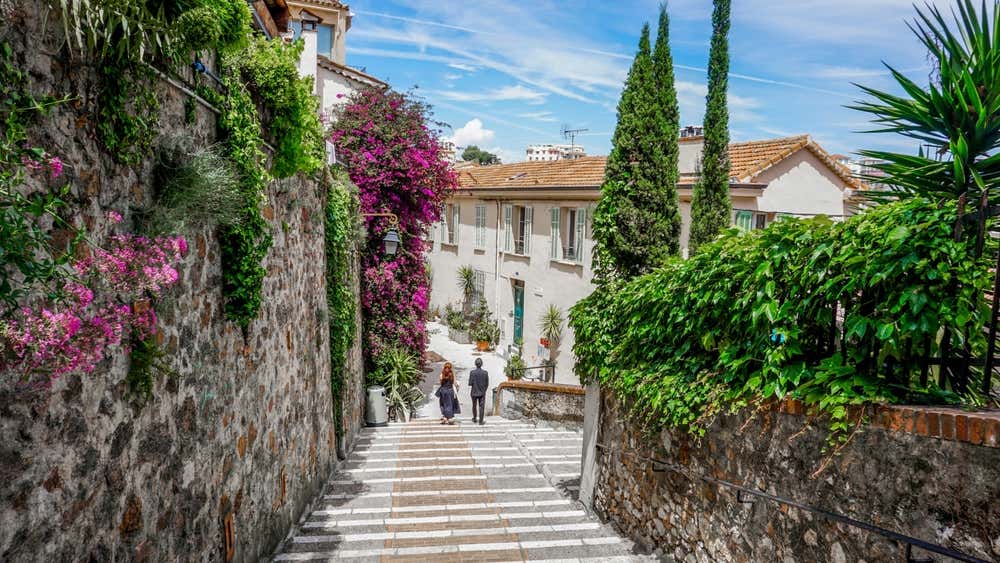
16. Nice
Nice belonged to Savoy and then to Italy’s predecessors for most of its history, joining France only in 1860, and the old town still tastes and sounds more Ligurian than Provençal. Socca, pissaladière, ravioli. It is the best-value food on the Riviera by a distance.
The Promenade des Anglais runs about 4 miles (7 kilometers) along the Baie des Anges, built originally so wintering English visitors had somewhere to walk. UNESCO listed the city in 2021 specifically as a winter resort town, which is an unusual category and a fair description. Vieux Nice packs its market into the Cours Saleya every morning except Monday, when antiques take over instead.
Climb the Colline du Château at the end of the old town for the view along the whole bay. Nice also works as the best base on the coast, with Monaco, Èze, and Menton all inside an hour by train or bus. The guided tours and excursions from Nice reach most of them, and the activities along the Côte d’Azur cover the coast end to end.
17. Corsica
Corsica is French by administration and Corsican by every other measure. A mountain range in the sea, with a coastline most Mediterranean islands would trade everything for and an interior that stays empty even in August.
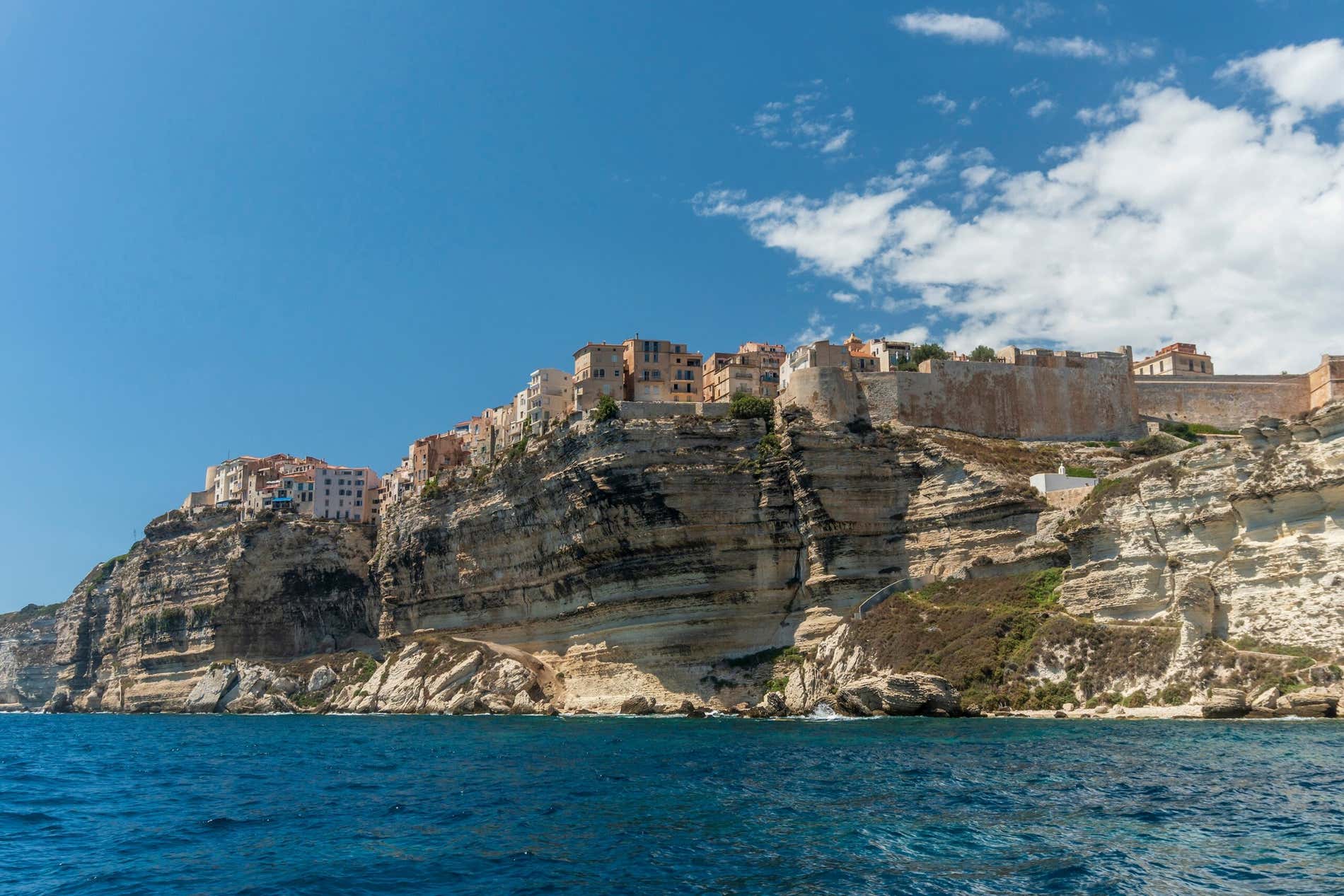
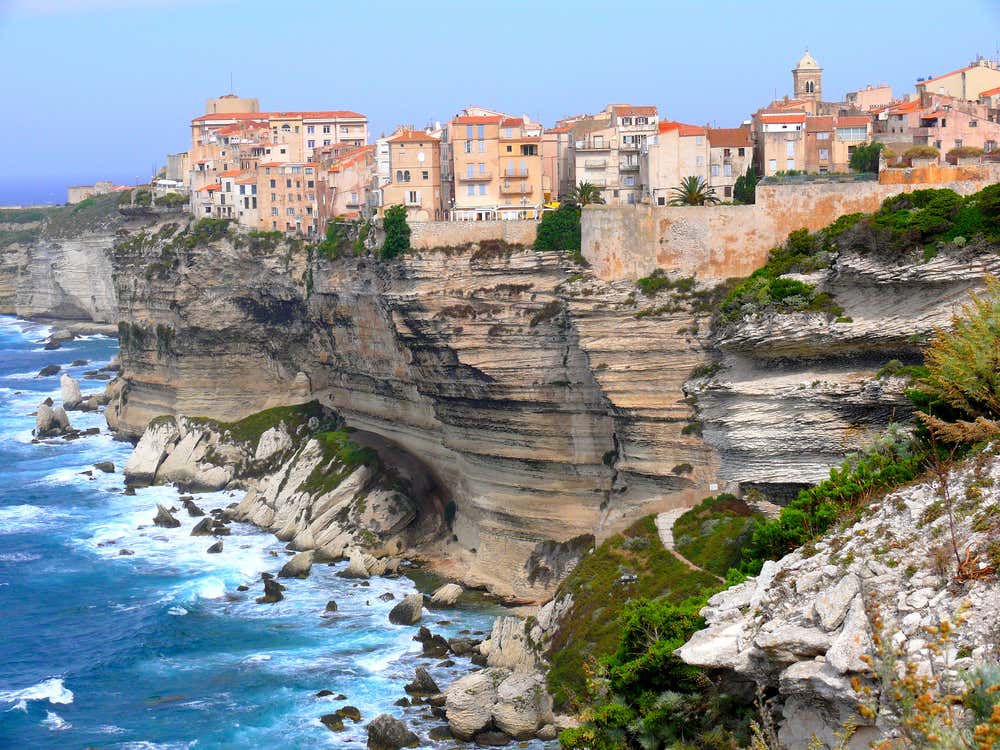
Bonifacio is the image that sells the island: a town on white limestone cliffs undercut by the sea, with houses that appear to be leaning out over nothing. On the west coast, the Calanques de Piana are red granite formations dropping into the water, listed by UNESCO along with the Scandola nature reserve. Ajaccio, the capital, is where Napoleon was born in 1769, and his family home is now a museum.
Walkers come for the GR20, a high route across the spine of the island with a reputation as one of the hardest long-distance trails in Europe. Most visitors sensibly take a day section instead. Ferries run from Marseille, Nice, and Toulon, and there are flights to Ajaccio, Bastia, Calvi, and Figari. The boat trips and excursions around Corsica reach Scandola and the southern cliffs.
France’s most famous landmarks
If you are working from a list of famous landmarks in France rather than regions, five carry the most recognition worldwide: the Eiffel Tower and the Louvre in Paris, the Palace of Versailles just outside it, Mont Saint Michel on the Normandy border, and the walled city of Carcassonne in the south.
Behind those sit the Pont du Gard, Strasbourg Cathedral, the Loire châteaux at Chambord and Chenonceau, Notre-Dame, and Sacré-Cœur. All except the Loire castles appear somewhere in the sections above, and the château tours across the Loire Valley cover the ones that do not.
When to go
France has no single best month, because the north and the Mediterranean run on different calendars. As a broad rule, May, June, and September give you the best combination of weather and manageable crowds almost everywhere. Opening hours and event dates change, so confirm with an official source close to your trip.
| Destination | Best months | Worth planning around |
|---|---|---|
| Paris | April to June, September to October | Many restaurants close in August |
| Versailles | April to October | Closed Mondays; fountains run on show days |
| Normandy | May to September | D-Day anniversary week fills every hotel |
| Mont Saint Michel | April to June, September | Spring tides give the fullest encirclement |
| Strasbourg | May to September, December | Christmas market weeks book out months ahead |
| Lyon | May to October | Fête des Lumières falls in early December |
| Chamonix | June to September, December to April | Cable cars close in shoulder season |
| Bordeaux | May to October | Harvest runs September into October |
| Toulouse | April to June, September to October | Midsummer heat can be heavy inland |
| Carcassonne | May to June, September | Bastille Day fireworks light the ramparts |
| Lourdes | April to October | Pilgrimage season peaks in high summer |
| Marseille | May to June, September to October | Calanques access is limited on high fire-risk days |
| Provence | May to September | Lavender runs late June to early August |
| Saint-Tropez | May to June, September | August road traffic is heavy; arrive by boat |
| Cannes | April to June, September to October | The Film Festival takes over the town in May |
| Nice | April to June, September to October | Carnival lands in February |
| Corsica | May to June, September | Many coastal businesses close November to March |
How long you need
A week gets you Paris plus one region: Normandy and Mont Saint Michel, or the Loire, or a run down to Lyon and Provence. Ten days lets you add a second. Two weeks is where you can take the TGV south and give the Mediterranean coast the time it deserves without rushing the north.
The train network makes this easy. Paris to Lyon runs under two hours, Paris to Bordeaux around two, Paris to Marseille about three. Booking a few weeks ahead cuts the fare sharply. If you would rather not assemble the logistics, the 3-day trip to Normandy, Mont Saint Michel, and the Loire Valley packages the classic northern circuit out of Paris.
TGV fares rise steeply close to departure, so the earliest booking window is usually the cheapest.
Practical details before you fly
France is in the Schengen Area, and travelers from many countries, including the United States, can visit for short stays without a visa. A new ETIAS travel authorization is being introduced for visa-exempt visitors and its start date has moved more than once, so confirm the current requirement with the French embassy or consulate before you book.
A few things smooth the rest. Greet people with bonjour before anything else, because skipping it reads as rude in a way that surprises visitors. Lunch service in smaller towns often ends by 2 PM, and many museums close one day a week, usually Monday or Tuesday. Sort out data before you land so maps and train tickets work from the airport. The full catalog of tours and activities across France lists what is bookable in each destination above.
Prices and opening hours change seasonally, so check directly with each site before you travel.
Choosing your route
The temptation with France is to treat it as a checklist, and the country punishes that approach. It is small enough that you can move fast and varied enough that moving fast wastes it. A week in Provence will give you more than a fortnight of train stations.
Pick your two regions, book the headline sights ahead, and keep a couple of days unstructured for the market town somebody recommends over dinner. When you are ready to fill in the details, Civitatis’s full catalog covers guided tours, day trips, and transfers in every destination on this list.


Most read of #France
17 Best Places to Visit in France in 2026
7 August 2026The 12 Best Loire Valley Châteaux to Visit in 2026
16 April 2026Most read #France
The 12 Best Loire Valley Châteaux to Visit in 2026
16 April 2026