Top 13: A Local’s Guide to What to Do in Málaga
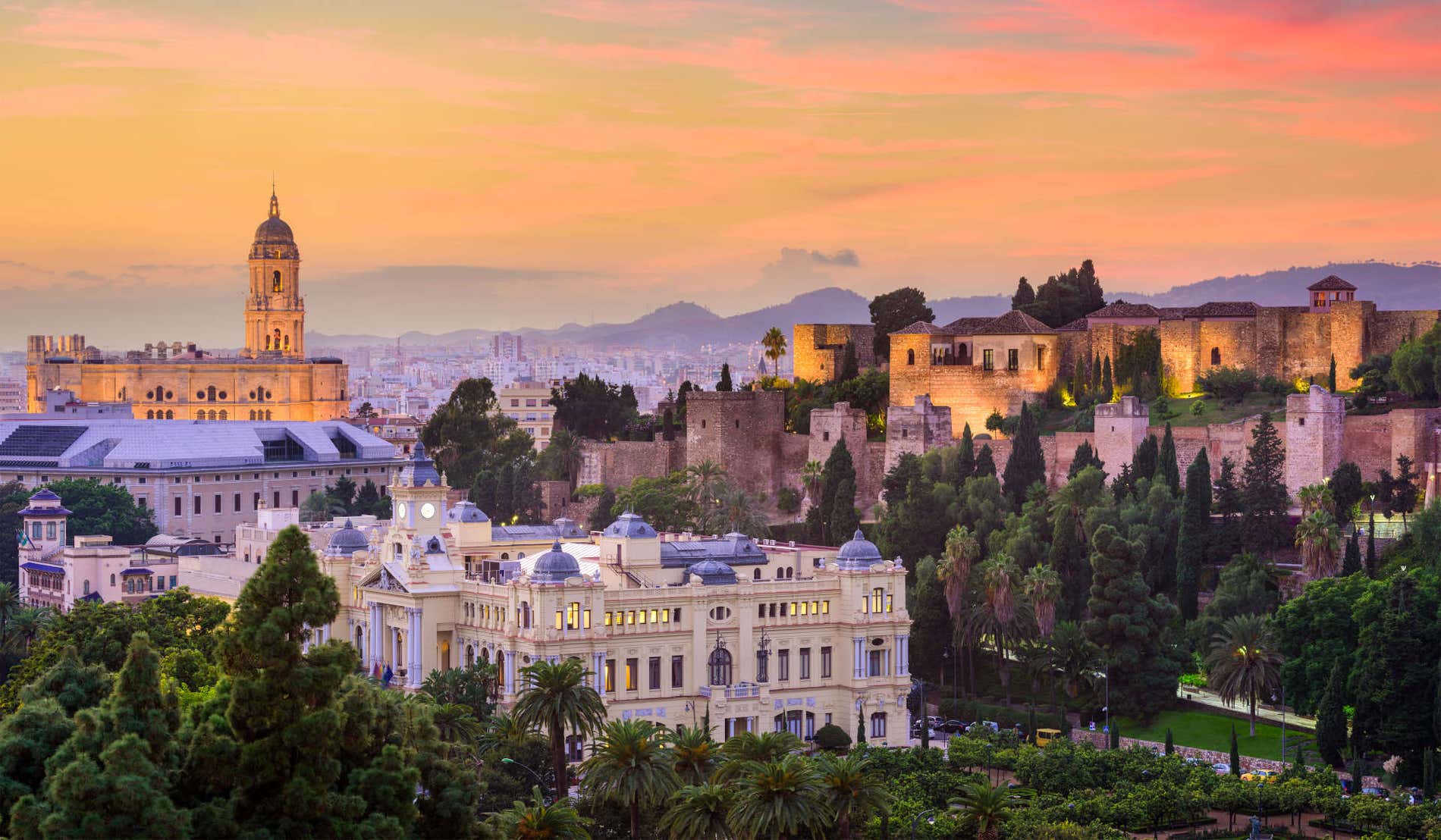

As someone who has lived in Málaga, I can tell you—this city has a special kind of magic. Founded by the Phoenicians and shaped by centuries of Roman and Moorish history, Málaga is so much more than just beaches and sunshine. From its lively center to its nearby towns, you’ll see how culture, food, and modernity come together in the city.
Wondering what to do in Málaga? No worries! I’ve put together the places I truly believe show the spirit of the city, plus some helpful tips. We’ll start in the historic center and move through museums, neighborhoods, and beaches so you can discover the best things to do in Málaga. Bienvenido!
Best Things to Do in Málaga
1. Wander Around Calle Larios
The best way to start exploring this Andalusian city is on its main street, Calle Marqués de Larios, popularly known as Calle Larios. This pedestrian street is the most important and famous in Málaga, stretching 1148 ft (350 m) and lined with 19th-century noble buildings and classic lamposts. It’s also one of the best areas for shopping in Málaga, where you’ll find countless clothes and shoes stores, as well as popular brand shops. Did you know it’s considered one of the most elegant streets in Spain?
If you continue up Calle Larios, you’ll reach the Plaza de Uncibay and Plaza de la Merced, two lively squares with restaurants and bars, perfect for enjoying Málaga’s cuisine. To get your bearings in the city, join a free walking tour or enjoy this complete tour of Málaga to learn about its Phoenician history. Afterward, I recommend you enjoy some delicious tostas at Los Gatos, one of my favorite local spots for a bite.
Events in Málaga
Several major city events take place in Calle Larios, like the Pasarela Larios Málaga Fashion Week and the Holy Week processions, which fill this street and Alameda Principal. The annual Málaga Film Festival starts on Calle Larios, celebrating Spanish and Latin American cinema. Its most important prize awarded is the Biznaga de Oro (Golden Biznaga), inspired by the city’s aromatic flower. This festival projects films in the Cine Albéniz, the Teatro Echegaray, and the Teatro Cervantes, which you can see lit up on this evening free tour of Málaga.
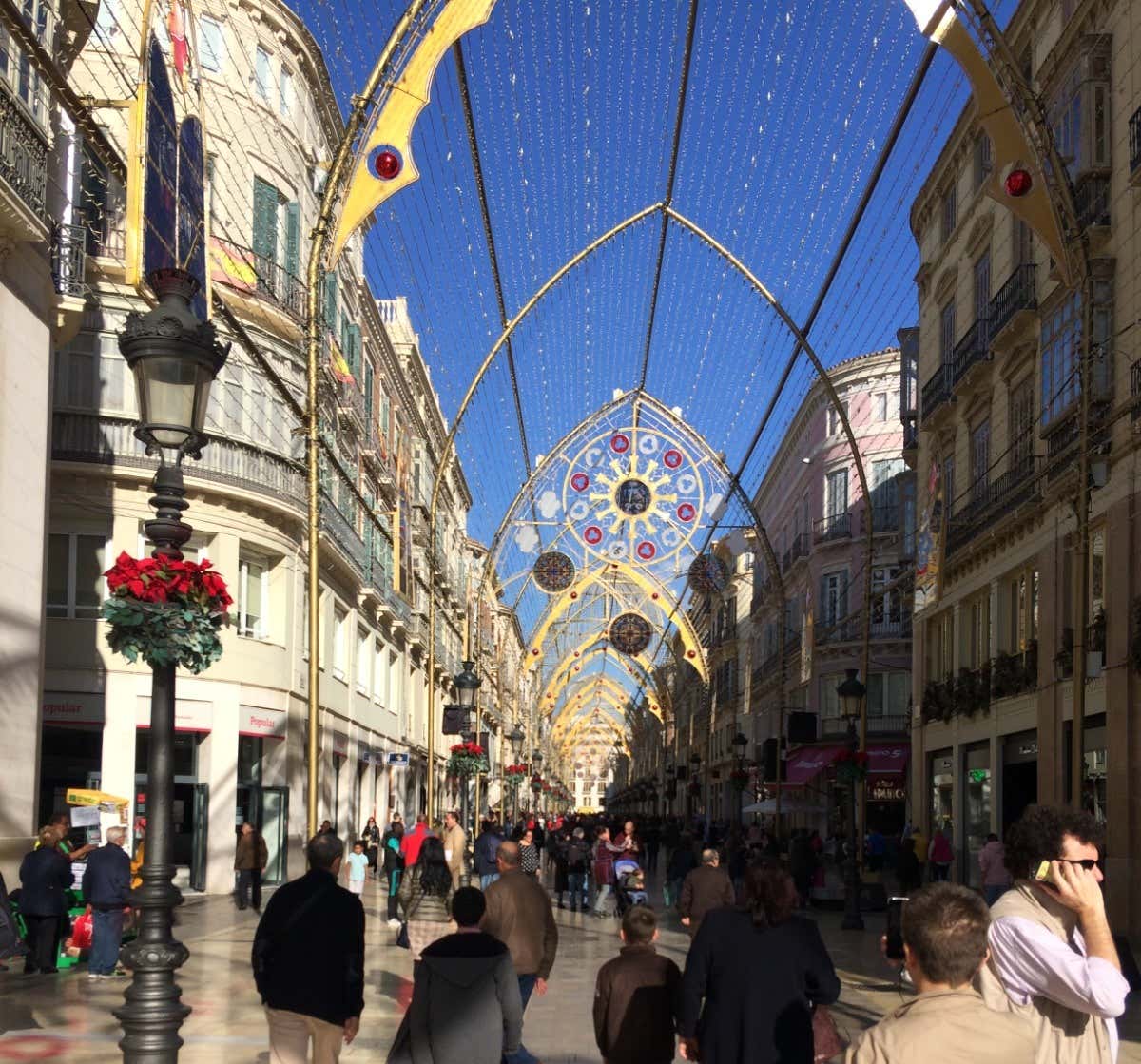
For me, it’s a tradition to visit Calle Larios twice a year: Christmas and mid-August, when the Feria de Agosto is celebrated. During Christmas, the entire street is decorated with spectacular lights, and you’ll be amazed by its dazzling light and sound show playing popular Christmas songs during the evening.
Calle Larios is at its busiest during the Feria de Agosto, with locals and visitors ready to celebrate the city’s fair. Adorned with paper lanterns, floral displays, and booths set up along the street, you’ll see people dancing the local verdiales and hear modern songs blasting in the Plaza de la Constitución. Málaga’s fair is special among Andalusian fairs because it has both a day and a night celebration. The first is in the city center, and the second is in the Real de la Feria, in Cortijo de Torres. It’s also more casual when it comes to dress code, as Málaga is very hot in August!
Pro tip: Calle Larios is even busier than usual during the Holy Week processions and the Feria de Agosto. If you’re looking to escape the crowds, I would avoid passing through Calle Larios during these events!
2. Enjoy Local Cuisine at the Mercado Central de Atarazanas
Craving traditional ajoblanco or some crispy fried fish? You’re in the right place! In the center of Málaga lies the Mercado Central de Atarazanas, a bustling foodie paradise where you can shop for fresh produce and savor delicious tapas. This market is, without a doubt, one of the best places to eat in Málaga.
The Mercado Central de Ataranzas is also a prime example of 19th-century architecture in the city. The site once housed Nasrid shipyards, and over the centuries, it served as a warehouse, military hospital, and even a barracks. It wasn’t until 1870 that plans were laid to transform it into the public market we know today.

3. See Andalusian Art at the Carmen Thyssen Museum
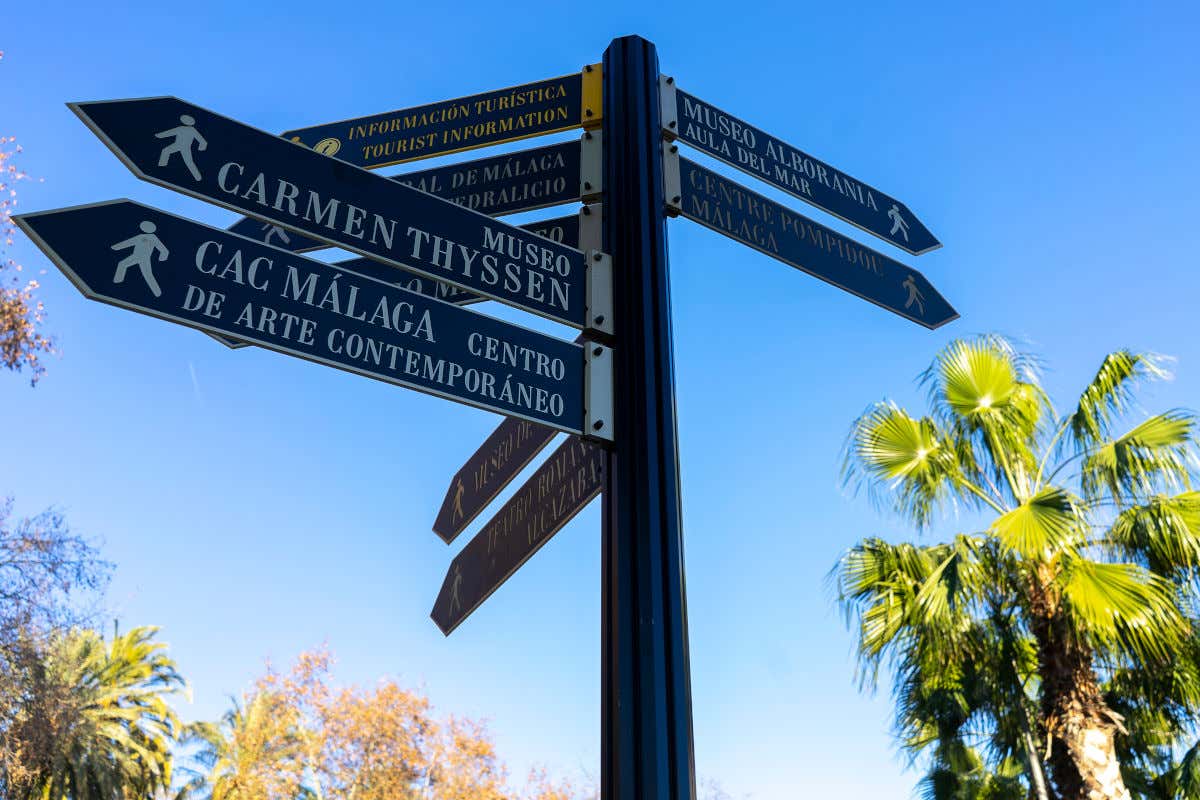
One of Málaga’s most important art museums is the Carmen Thyssen Museum. This museum is a must-see for art lovers, as it houses one of the finest exhibitions of 19th-century Spanish painting, mainly Andalusian art. Just like the Thyssen-Bornemisza National Museum in Madrid, the museum has an important collection of works belonging to the Thyssen family.
This museum is in the heart of the city, less than a 5-minute walk from other major landmarks, such as the Cathedral of Málaga and Calle Larios. With this ticket to the Carmen Thyssen Museum, you’ll have access to the museum’s permanent collection and temporary exhibitions.
4. Marvel at the Iconic Cathedral of Málaga
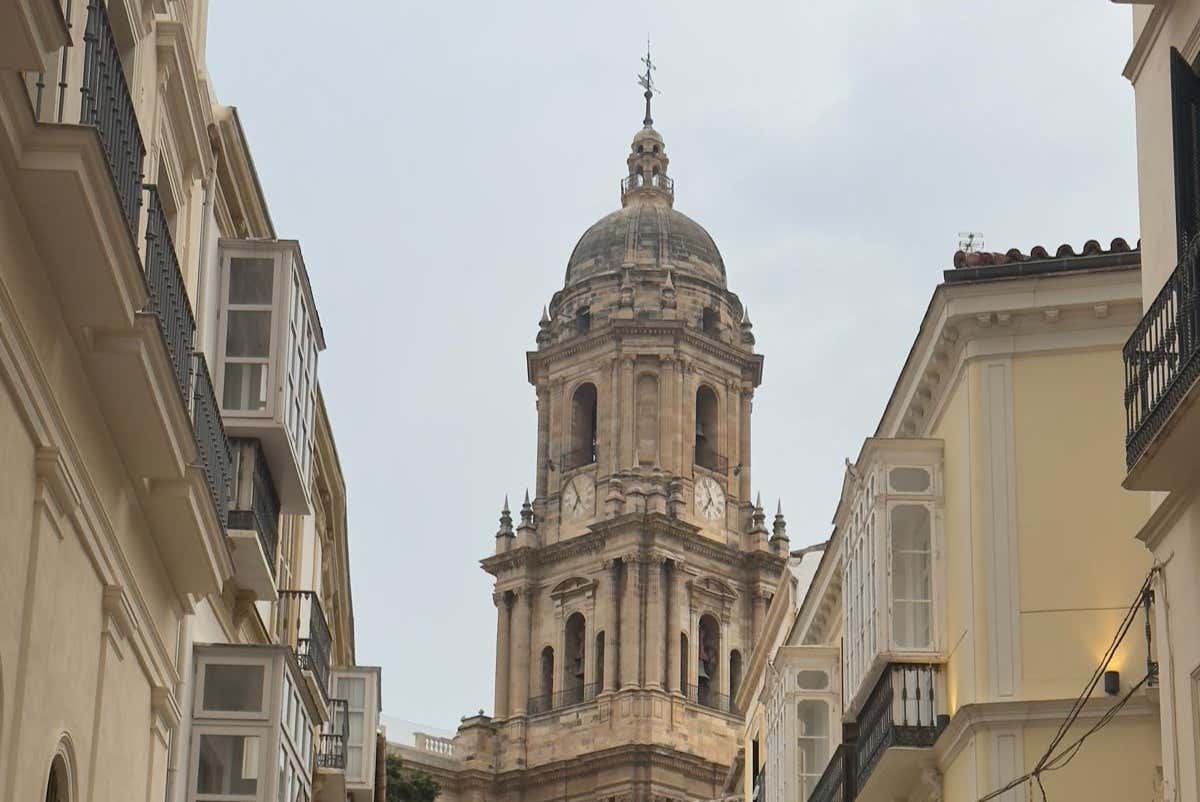
Near Calle Larios stands the Cathedral of Málaga, the second-tallest building in Andalusia after Seville’s Giralda. It’s one of the most famous Renaissance monuments in Spain and is known as “La Manquita,” which means “The One-Armed Lady.” This nickname is due to its construction taking more than two centuries, and due to funding issues, parts of the building were never completed.
Because its construction spanned so many years, the cathedral showcases not only Renaissance features, but also Gothic and Baroque elements. Its highlights include the magnificent choir stalls, the organ, the vaults rising over 131 ft (40 m) high, and the cathedral treasury, home to many valuable artworks.
With this guided tour of the Cathedral of Málaga, you’ll step into this iconic monument and explore the city’s center. Or, if you want to travel back in time to witness the history of Málaga, enjoy this virtual reality tour of Málaga! If you have time, I recommend visiting the Interactive Music Museum, a lesser-known yet interesting museum in the center, very close to the cathedral. It reveals the history of music and features touch-screen displays and playable instruments. Plus, it costs under €2 to visit!
5. Step into the Ancient Roman Theater
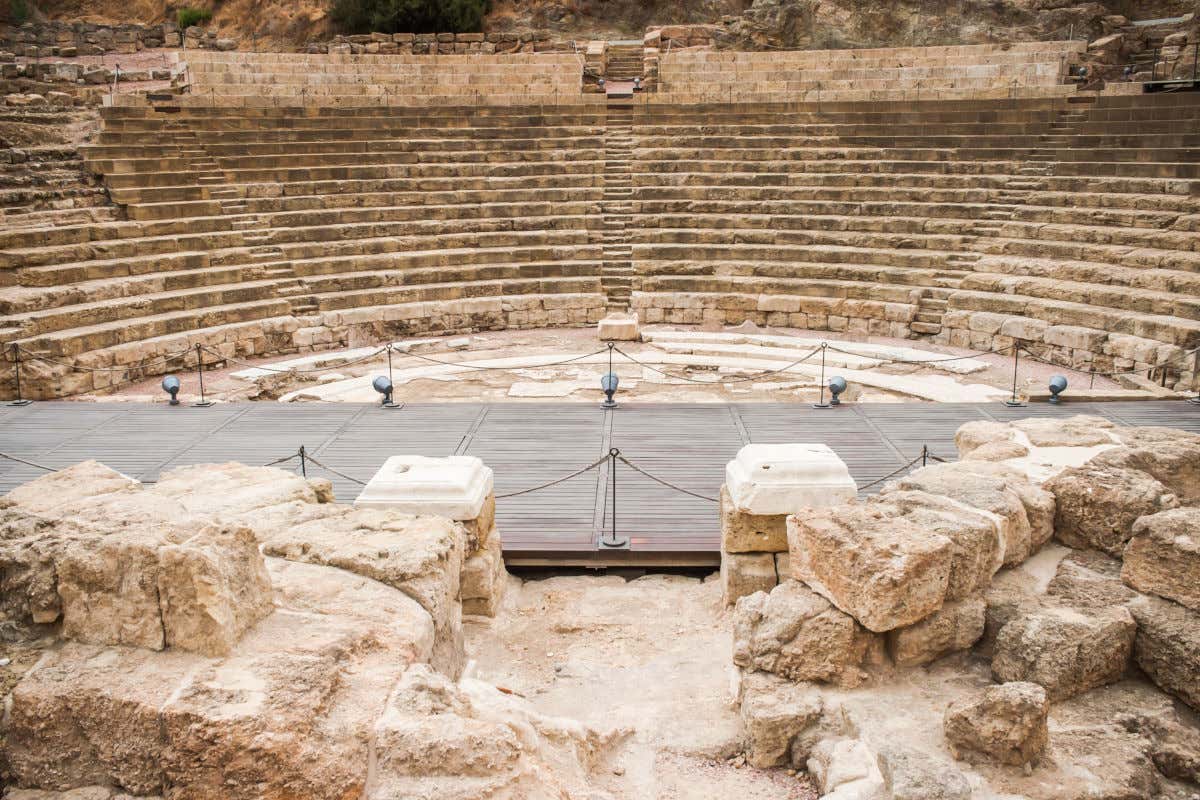
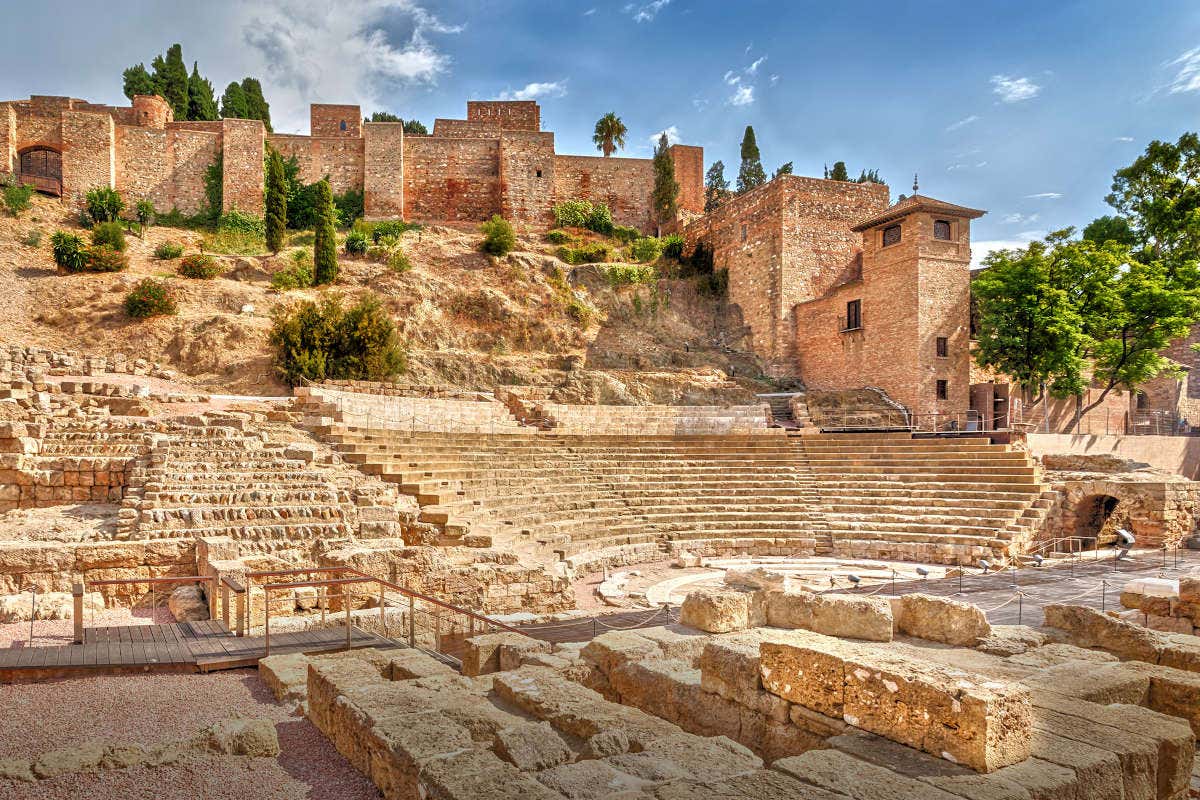
In the city center, located at the feet of the Alcazaba, you’ll find the oldest landmark in Málaga, the Roman Theater, built on the site of former thermal baths. Today, this archaeological treasure is one of the city’s most popular attractions and is a designated Bien de Interés Cultural (Asset of Cultural Interest).
Although it dates back to the 1st century, the theater was hidden until 1951. It was uncovered during construction work for the gardens of Malaga’s Municipal Historical Archive. At first, the remains were believed to belong to the old Roman wall system, but as excavation continued, it became clear that it was an extraordinary theater. There’s no excuse to miss it, as admission is free for both locals and visitors!
Right in front of the theater is a signature spot in Málaga, El Pimpi, a traditional wine cellar founded in 1971. It preserves a classic Andalusian bodega style, with old wooden barrels, flamenco decoration, and photos of visiting celebrities who have signed their own barrel. Although it’s become touristy, El Pimpi still maintains its history and connection to local culture. Here, I recommend you enjoy a glass of Málaga’s sweet wine!
Next to the Roman Theater, you’ll also find the Cine Albéniz, a must-visit spot if you love the 7th art. It opened in 1945 and is one of my favorite movie theaters in the city, as it still preserves the elegance of old European cinemas. Instead of blockbusters, you’ll find independent films, classics, and movies in their original version. The Málaga Film Festival shows films here in spring, as well as the Fantastic Film Festival of the University of Málaga, known locally as the Fancine. This annual film festival is held in November and focuses on fantastic, science fiction, and horror movies.
6. Discover the Alcazaba of Málaga
Majestically perched on the slopes of Mount Gibralfaro stands an iconic landmark in Andalusia, the Alcazaba. This fortress was built in the 11th century during the Islamic period and is considered one of the best-preserved examples of Andalusian military architecture in Spain.
From the outside, you’ll see its defensive towers and crenelated walls, and inside, you’ll find palatial rooms, peaceful courtyards, and charming gardens that cover over 16,145 square feet (15,000 square meters). To dive deeper into its history, check out this guided tour, where you’ll explore the Alcazaba and the Roman Theater, two of the city’s oldest and most important landmarks.
7. Take in the Views from Mount Gibralfaro
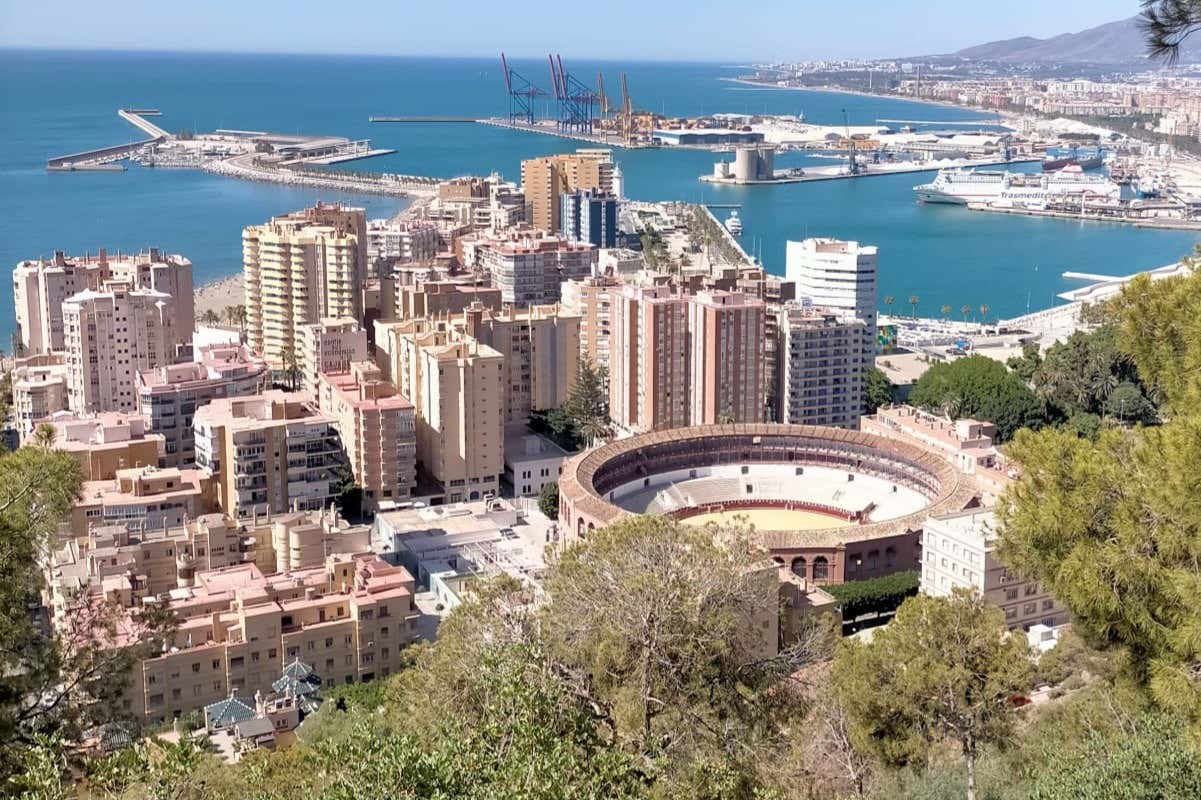
Among the top things to do in Málaga, climbing up Mount Gibralfaro is a must. Standing at 426 ft (130 m) tall, you’ll enjoy some of the best panoramic views of the city from the top, where you’ll see the Cathedral of Málaga, the port, Playa de La Malagueta, and the surrounding coastline. It’s a great place to admire the sunset!
At the top of Mount Gibralfaro is its historic fortress, built during the Al-Andalus period to protect the Alcazaba from enemy attacks. Thanks to its strategic location and strong defenses, it became a powerful castle in the Iberian Peninsula. With two massive defensive walls and almost a dozen towers, it’s one of the most impressive monuments in the city. The castle is famous for its three-month siege by King Ferdinand II and Queen Isabella, after Málaga was taken by Christian forces during the Reconquista.
8. Visit the Museo Picasso Málaga & the Museo Casa Natal Picasso
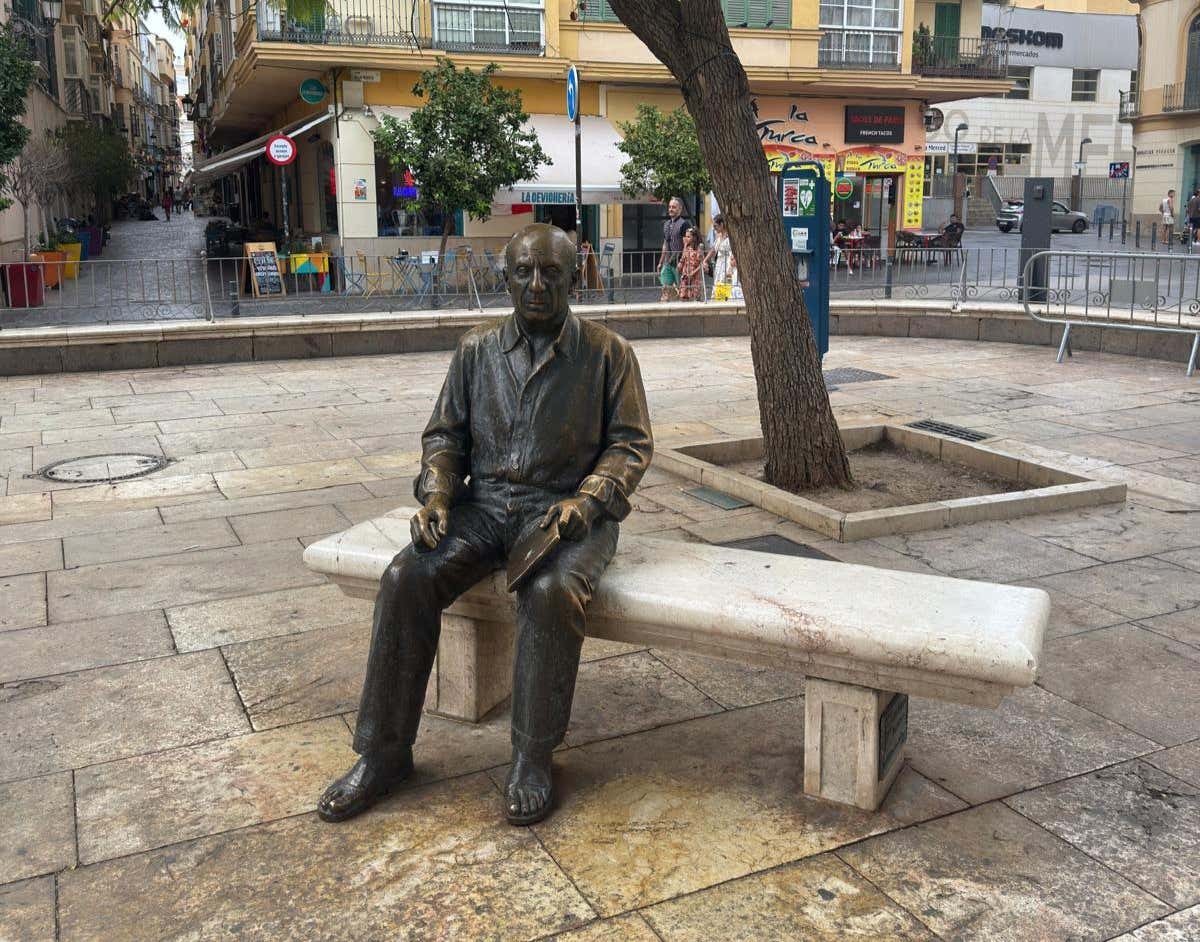
Málaga is the birthplace of a pioneer of Cubism, and one of the most influential artists in the world, Pablo Ruiz Picasso. His legacy lives on in the city, where you’ll find two museums dedicated to his life and work: the Museo Picasso Málaga, housed in the Buenavista Palace, and the Museo Casa Natal, located in the Plaza Merced, where the artist was born.
With this guided tour of the Museo Picasso Málaga, you’ll uncover fascinating facts about the artist and his masterpieces. Did you know he created the first modern collage? Or that he painted his first artwork before turning 10? If you’d rather explore at your own pace, you can book tickets to the Museo Picasso Málaga with an audio guide.
The Museo Casa Natal (“Birthplace Museum”) is just a short walk away, where you’ll have the chance to step into Picasso’s world, learn about his childhood and hobbies, and discover his role in Spanish cultural and political history. If you purchase a ticket to the Museo Casa Natal, you’ll visit the museum and have access to its permanent collection and temporary exhibitions.
9. Stroll Around Málaga Park & Muelle Uno
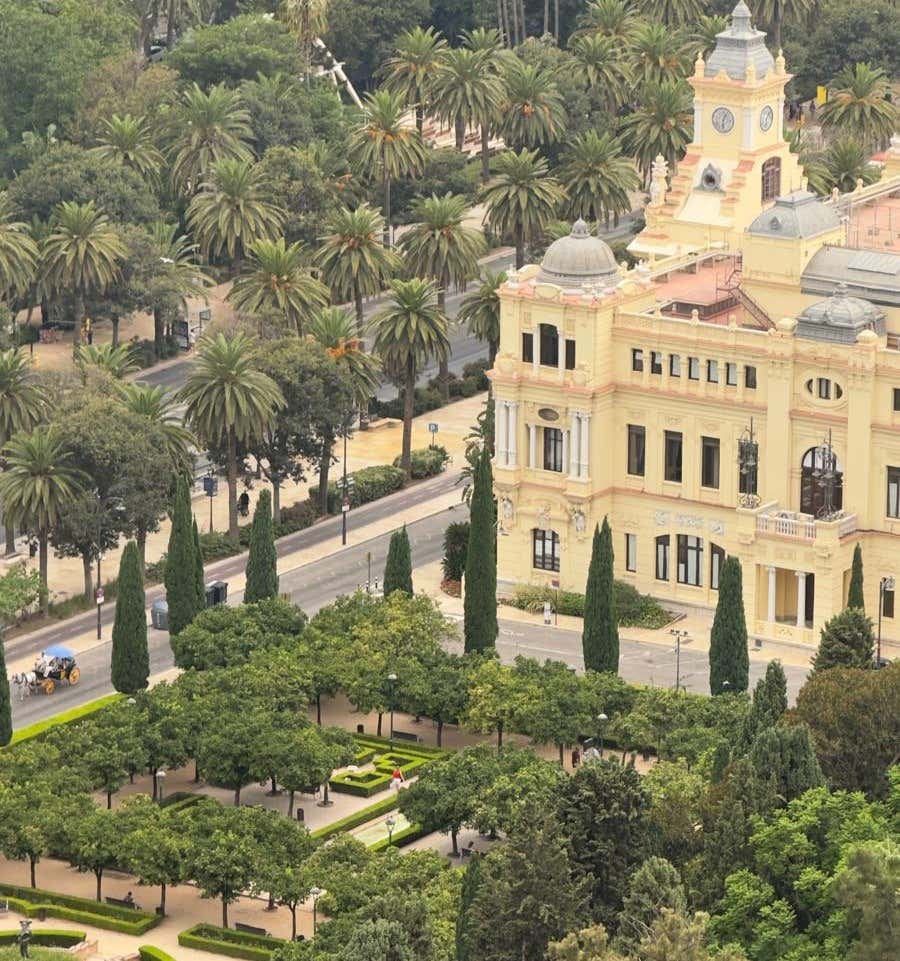
Originally designed as an extension of the main street of Alameda Principal, Málaga Park, also known as the Parque de la Alameda, is a green oasis in the heart of the city. This park is divided into two sections by the main avenue, where grand buildings like the elegant Málaga City Hall stand, with the Alcazaba rising just above them.
In this park, you’ll find an impressive collection of exotic plants and trees, charming romantic corners, and benches decorated with colorful ceramic tiles. As you wander through the gardens, you’ll come across statues and monuments honoring important local and cultural figures and beautiful fountains.
If you continue strolling east toward the waterfront, you’ll arrive at Muelle Uno, the Port of Málaga, one of my favorite places to spend a nice evening. Inaugurated in 2011, this is the city’s modern harbor promenade filled with luxury yachts, open-air terraces, boutique shops, and the colorful Centre Pompidou Málaga. Many boat rides depart from the port, where you’ll also see the city’s iconic lighthouse, La Farola. Speaking of boat rides, why not enjoy a catamaran cruise along the bay? You’ll have the chance to admire the sunset and even listen to live music on board!
10. Immerse Yourself in Art at the Centre Pompidou Málaga
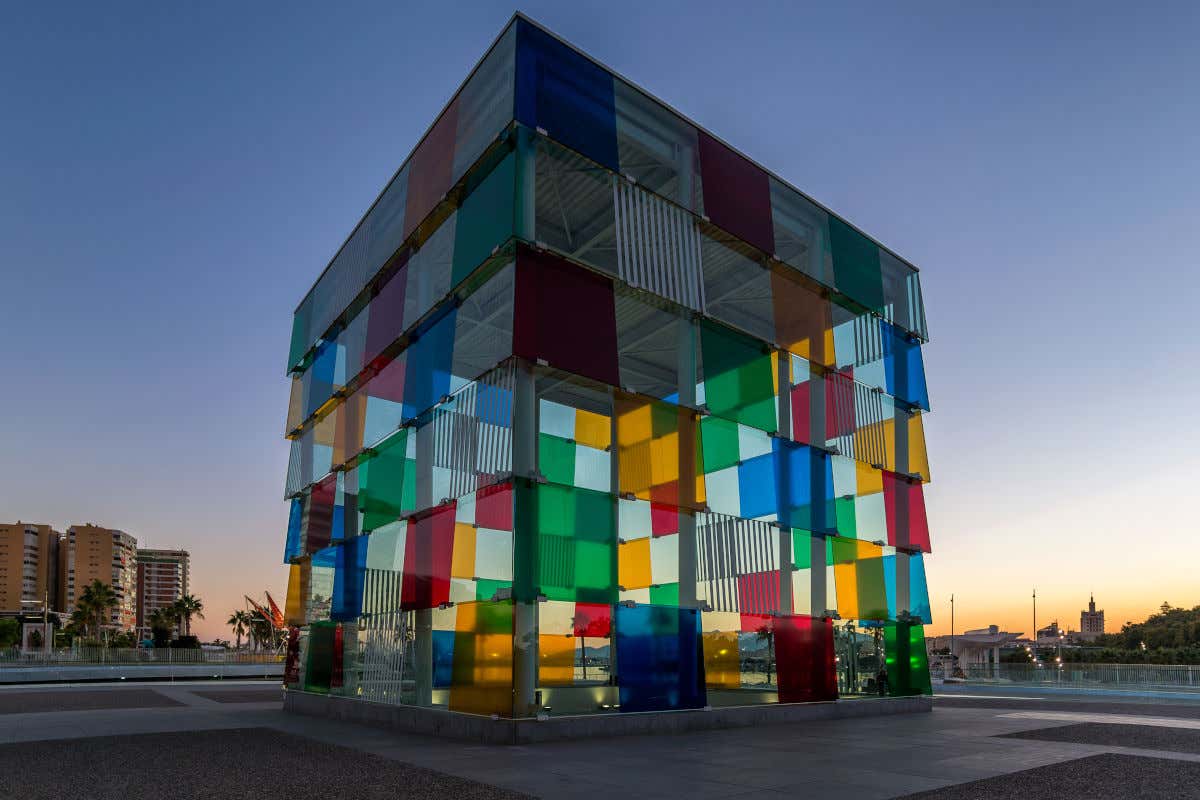
As you stroll on the Muelle Uno, you’ll find the eye-catching, colorful glass cube known as El Cubo, which houses the Centre Pompidou Málaga. This cultural space is one of the city’s most striking cultural landmarks and a symbol of its modern artistic spirit. It’s the first international branch of Paris’ iconic Centre Pompidou and has become a must-see for those looking to explore contemporary and modern art in Málaga since opening its doors in 2015.
Inside, you’ll find an impressive permanent collection showcasing artwork from the 20th and 21st centuries, featuring artists such as Pablo Picasso, Frida Kahlo, Salvador Dalí, and Joan Miró, among others. The museum also has rotating temporary exhibitions, interactive installations for families with free admission, and cultural programming, including film screenings, workshops, and performances. With this ticket to the Centre Pompidou Málaga, you’ll have the chance to explore all of its exhibitions with an audio guide.
11. Admire Street Art in the Soho District
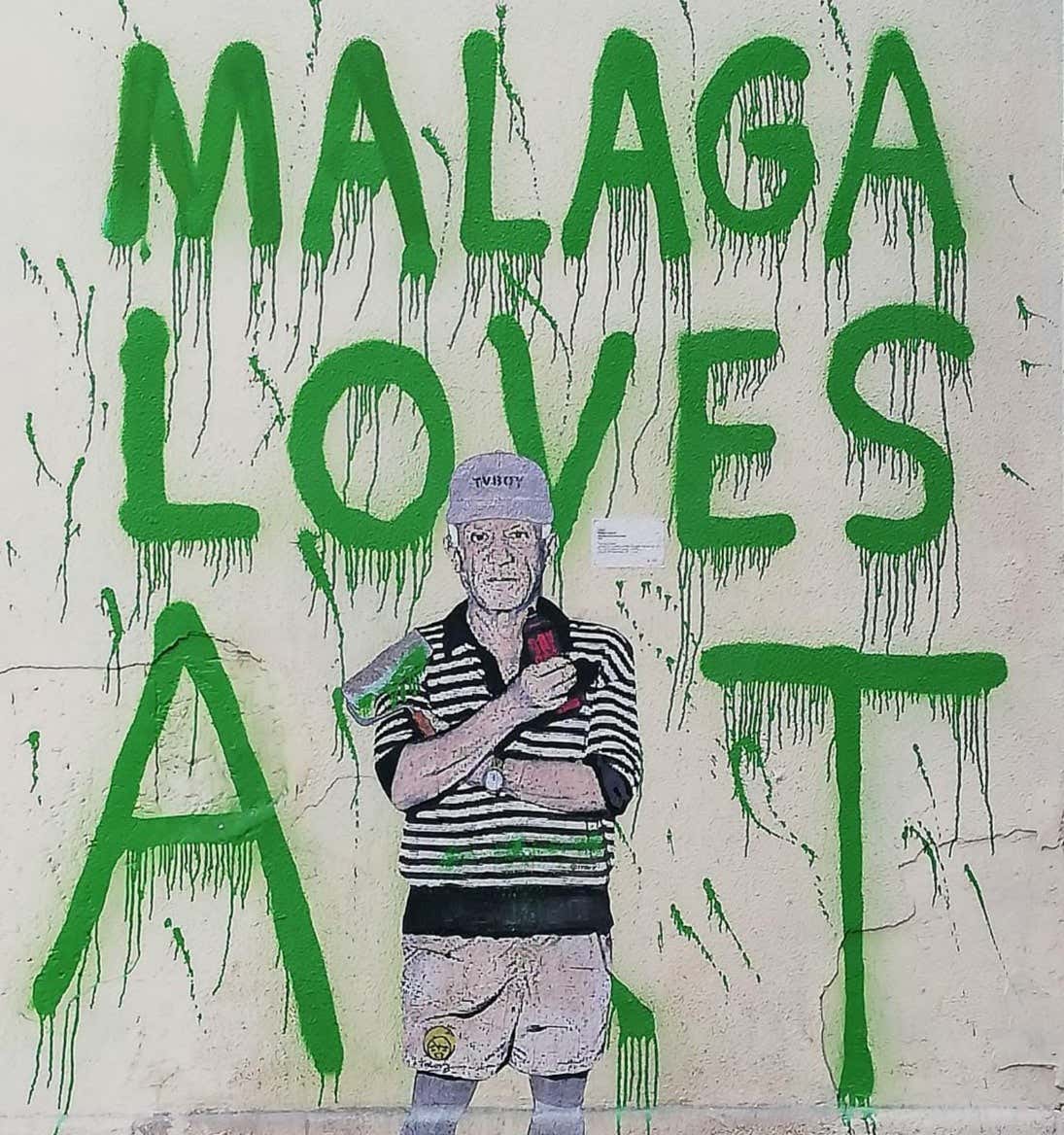
On the southwest, just a short walk from Calle Larios and the Atarazanas Market, is the creative Soho district. This area often goes unnoticed by many, but I believe that’s part of its charm. The district has earned a reputation as an urban underground hub, where you’ll see vibrant street art and colorful murals covering the facades of the buildings. It’s an open-air gallery at every corner!
In the Soho district, you’ll find the Teatro del Soho, a theater founded by Málaga’s Antonio Banderas, as well as many independent shops, creative studios, trendy cafés, and craft beer venues. I recommend checking out El Rincón del Cervecero and La Fábrica, popular breweries among locals. After exploring the Soho district, you might be interested in diving into Málaga’s nightlife. Why not join this pub crawl in Málaga to see for yourself what the party scene in the city is like?
12. Explore West Málaga
Wondering what to do in Málaga outside the historic center? Explore a less touristy side of the city (and one of my favorite areas!) by heading to West Málaga (Málaga Oeste)! This district stretches along the western coastline of the city, blending residential neighborhoods and wide sandy beaches like Playa La Misericordia. It’s easy to reach from the center by bus, and along its long promenade, you’ll find plenty of restaurants and chiringuitos serving local seafood.
A highlight in Málaga Oeste is Tabacalera, a beautifully restored former tobacco factory now transformed into a major cultural complex. It houses two museums: the Museo Ruso de Málaga, known for rotating exhibitions of Russian art, and the Automobile and Fashion Museum, showcasing classic cars paired with haute fashion. Book this ticket to explore the automotive design and vintage style through the decades.
Also in West Málaga is La Térmica, one of the city’s most dynamic cultural spaces. It hosts art exhibitions, craft markets, creative workshops, film screenings, and concerts. If you’re looking for an authentic glimpse into the city’s modern cultural scene, definitely stop at La Térmica. It’s my absolute favorite spot!

A short walk from La Térmica is the lovely Parque del Oeste. This large park combines nature, contemporary art, and recreational spaces, with tree-lined paths and modern sculptures scattered throughout the park. There’s also a large lake with ducks, black swans, and turtles, plus a small animal enclosure with emus and wallabies. Not something you thought you could see this close to the beach, right?
Pro tip: West Málaga is known for its tapas spots and traditional bars. It’s one of the best places to enjoy the campero, the city’s beloved sandwich made with a soft mollete de Antequera bread. Try this sandwich and thank me later!
13. Unwind at Málaga’s Beaches
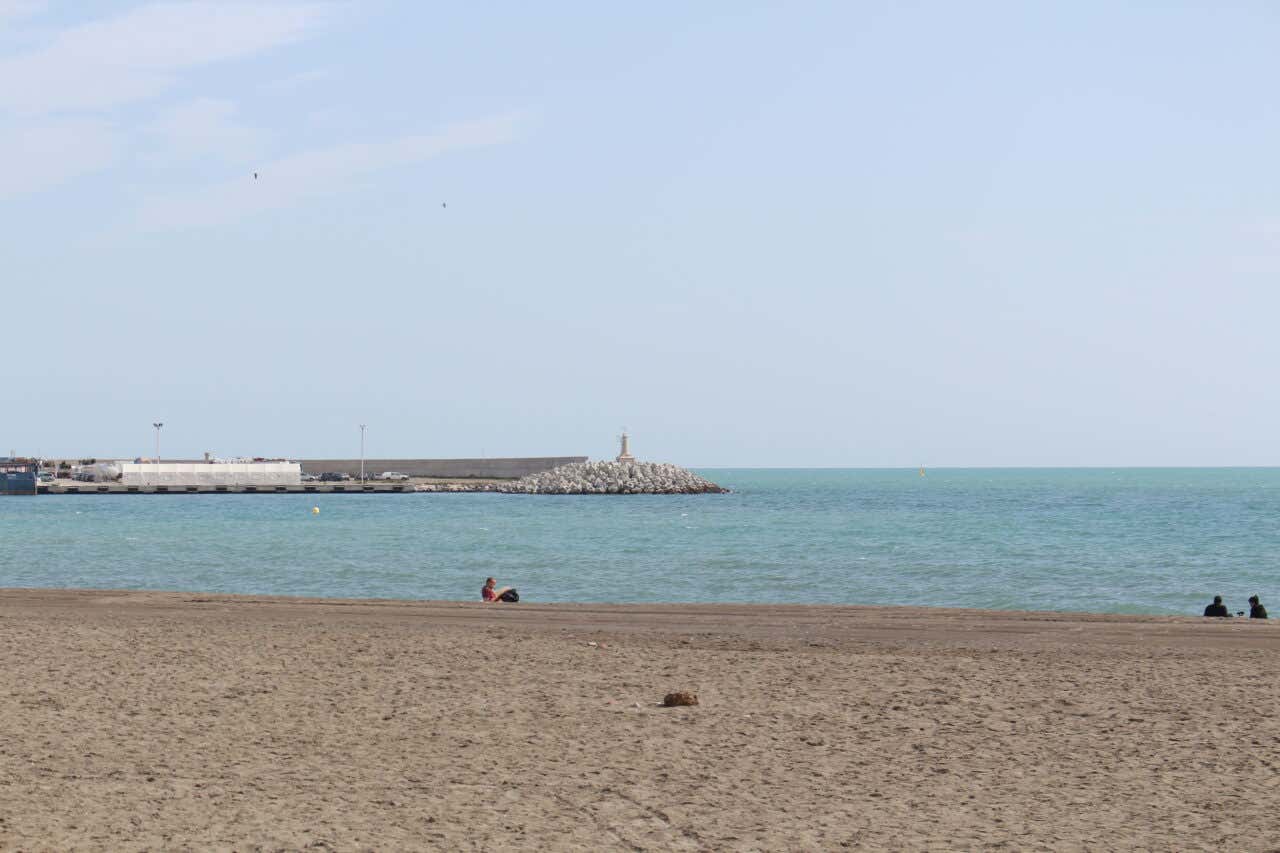
Of course, visiting Málaga wouldn’t be the same without its beaches! One of the most famous urban beaches is Playa La Malagueta, featuring fine golden sand and an excellent location in the heart of Málaga. The beach is fully equipped with everything you might need, from sunbeds and showers to playgrounds and restaurants. When the Feria de Agosto starts, La Malagueta displays a fireworks show to announce the arrival of the city’s fair. However, in recent years, these fireworks have been replaced with equally stunning drones.
Beyond the city center, there are several other great beaches in Málaga where you can enjoy a more local vibe:
- Playas de El Palo: a traditional fishing neighborhood with authentic seaside chiringuitos. The El Tintero restaurant is here, famous for its auction-style serving method. Don’t miss tasting an Espeto, Málaga’s signature sardine skewer grilled over firewood right on the sand!
- Playa del Peñón del Cuervo: a quiet beach east of Málaga known for its dramatic rock formation that divides the shore into two. This natural, untamed beach is popular among locals for picnics and summer bonfires.
- Playa de Maro: located near Nerja, this small cove is one of the most beautiful beaches on the Costa del Sol. Surrounded by cliffs and crystal-clear waters, it’s perfect for swimming, kayaking, or snorkeling. It’s my favorite beach to visit when in Málaga for the summer!
- Baños del Carmen: this former spa is considered a symbol of the city, built in the 1920s as a leisure area for the upper class. Today, it has a beach, a bar with a terrace, and a large green area.
- Playa de Pedregalejo: located on the east, it’s known for its relaxed atmosphere and seafood restaurants. It’s protected by stone breakwaters that form six small coves.
Best Towns in Málaga
Málaga isn’t just its historic center—beyond the city, the province has charming towns, coastal resorts, and incredible natural landscapes worth exploring. Some are just a short bus ride away, while others make fantastic day trips. If you have extra time during your trip, here are some of the best towns and attractions near Málaga to add to your itinerary:
Frigiliana & Caves of Nerja
Frigiliana is a pretty white village with narrow cobbled streets, whitewashed houses decorated with colorful flower pots, and stunning Moorish-inspired architecture. As you wander through its maze-like alleys, you’ll find local artisan shops, cozy cafés, and scenic viewpoints overlooking the Mediterranean Sea. Don’t miss trying the local sweet wine or sugar-cane syrup, two specialties in the region.
Just a 15-minute drive from Frigiliana lies the Caves of Nerja, an impressive and popular natural attraction in southern Spain. These ancient caves, stretching over 2.4 mi (4 km), are home to dramatic stalactites and stalagmites, prehistoric paintings, and even an underground amphitheater that hosts concerts in the summer. Exploring these caves is a must-see for nature lovers and history buffs alike, where you’ll feel like you’re stepping back in time. Discover Frigiliana and the Caves of Nerja on this day trip in a small group!
Ronda
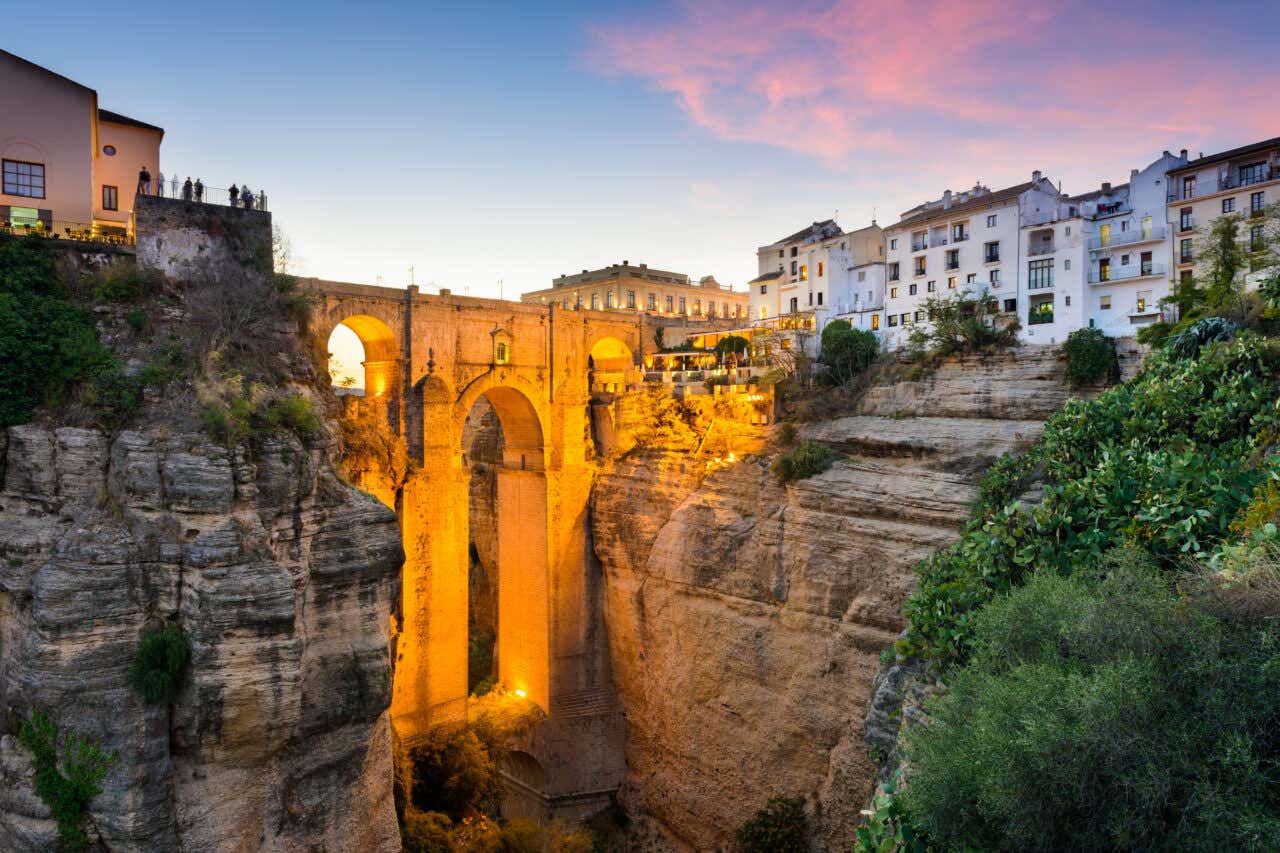
Ronda is one of Andalusia’s most impressive and historic towns, located about 62 mi (100 km) from Málaga. Perched dramatically on a cliffside, the town is split in two by the deep El Tajo gorge, which is crossed by the stunning Puente Nuevo. This bridge is one of Spain’s most photographed landmarks! From here, you can enjoy incredible scenic views of the surrounding mountains and the Guadelevín River.
Ronda’s old town, La Ciudad, is filled with history and charm. Its cobblestone streets, Moorish walls, and Arab baths reflect its rich past under Muslim rule. Another highlight is the Plaza de Toros de Ronda, one of Spain’s oldest bullrings, which also has a museum. Explore this beautiful town on this free walking tour of Ronda!
Fun fact: Did you know Ronda’s dramatic landscape inspired famous writers and artists such as Ernest Hemingway and Orson Welles?
Torremolinos
A popular destination on the Costa del Sol is Torremolinos. This town is known for its long sandy beaches, including La Carihuela and El Bajondillo, perfect for sunbathing, swimming, and seaside walks with plenty of chiringuitos along the coast. Rent a paddleboard and experience a fun day at the beach!
Torremolinos has a vibrant atmosphere with great nightlife, shopping streets, and the historic Casa de las Navajas, a beautiful Neo-Mudejar palace overlooking the sea, which you’ll see on this free walking tour. It’s also one of Spain’s most LGBTQ+ welcoming destinations, known for its inclusive events and festivals.
Marbella
Looking for some luxury? Marbella is the place to go! This town is known for its extravagant lifestyle, beaches, and vibrant nightlife. Stroll through its old town, where you’ll see whitewashed houses in narrow streets, and lively squares like the Plaza de los Naranjos, which you can admire on this private tour. Along the coast, the Golden Mile is lined with upscale resorts, exclusive beach clubs, and fine-dining restaurants that have made Marbella an international hotspot.
Puerto Banús is Marbella’s iconic marina filled with luxury yachts, designer boutiques, and glamorous bars. It’s the ideal place to enjoy a cocktail while people-watching or take a seaside walk with mountain and ocean views. Next to the marina, you’ll find the Playa de Puerto Banús, which is also a popular starting point for boat rides. Embark on a sailboat ride with paddleboarding and snorkeling equipment at your disposal, or watch dolphins on this catamaran cruise!
Benalmádena
Known for its beaches, marina, and family-friendly attractions, Benalmádena is another popular town on the Costa del Sol. It’s divided into Benalmádena Costa, Arroyo de la Miel, and Benalmádena Pueblo. On the coast, the town’s Puerto Marina is perfect for strolling past luxury yachts, enjoying waterfront restaurants, or joining a boat tour. In Arroyo de la Miel, you’ll find Selwo Marina, a small marine park featuring dolphins, penguins, and tropical birds, making it a favorite stop for families. Book this ticket to Selwo Marina and discover the park’s fascinating animals.
Beyond the coastline, Benalmádena has unforgettable viewpoints and cultural spots. Take the Benalmádena Cable Car up to Mount Calamorro for panoramic views and hiking trails. You can even enjoy a bird show! On this free walking tour, you can explore the charming whitewashed streets of Benalmádena Pueblo. Don’t miss the unique Colomares Castle, dedicated to Columbus, or the impressive Buddhist Stupa, the largest in Europe.

Mijas
One of the most charming white villages in Málaga is Mijas, offering a mix of history, beaches, and Andalusian culture. Perched on the hillside, Mijas Pueblo is the most famous part of the town, known for its limewashed houses, flower-filled balconies, and stunning mountain views over the Costa del Sol. Highlights include the Ermita de la Virgen de la Peña, the Mirador del Compás viewpoint, and the unique bullring built into the rock. Explore Mijas with this private tour, where you’ll have an exclusive guide just for you.
Closer to the sea is Mijas Costa, home to long beaches, family-friendly resorts, and water sports. Here, you’ll also find the popular La Cala de Mijas, a quiet, laid-back seaside town with golden beaches and a beautiful promenade, perfect for strolls along the sea. If you enjoy nature, don’t miss the Senda Litoral, a scenic wooden boardwalk that hugs the coastline with views of the Mediterranean. Did you know Mijas is also famous for its donkey taxis? Once used for transport, they now mostly cater to tourists. While some see them as a tradition, others avoid them for ethical reasons.
Antequera & the Caminito del Rey
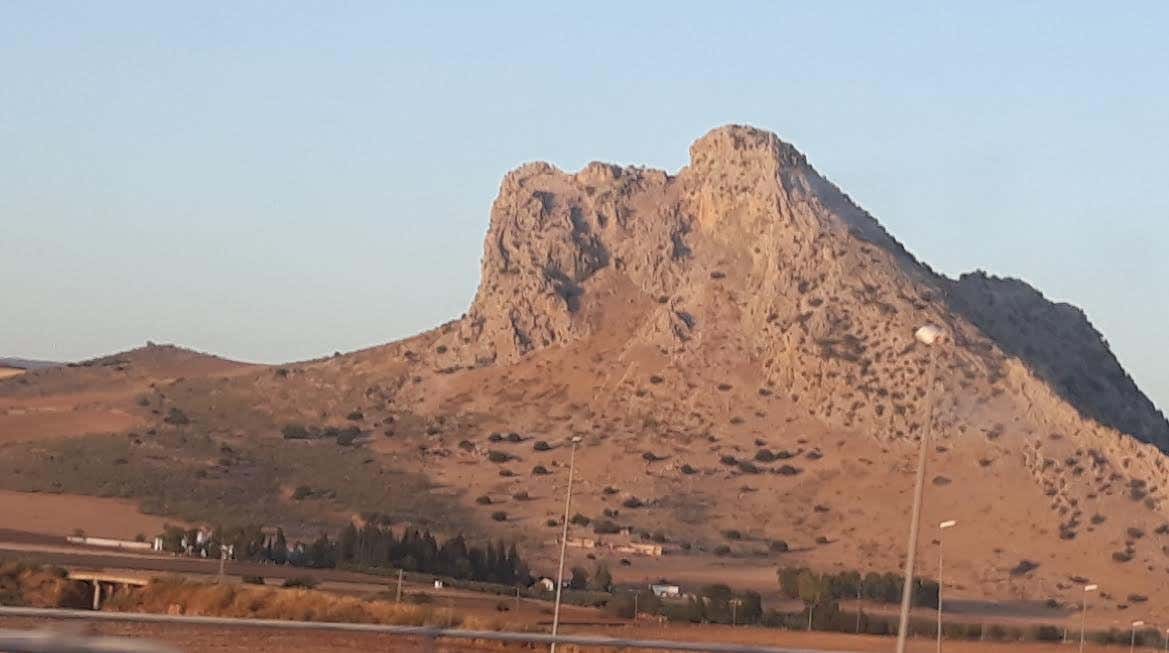
Antequera and the Caminito del Rey make some of the best day trips in the province. Start by exploring Antequera, known for its charming old town and the Moorish Alcazaba of Antequera. Its biggest highlights are the Dolmens of Antequera, a UNESCO World Heritage Site featuring prehistoric burial structures dating back 5,000 years. If you have extra time, don’t miss El Torcal de Antequera, a stunning nature reserve with unique limestone rock formations. Spend a day in nature on this hike in El Torcal de Antequera! Or, to discover both the Dolmens of Antequera and El Torcal, check out this day trip.
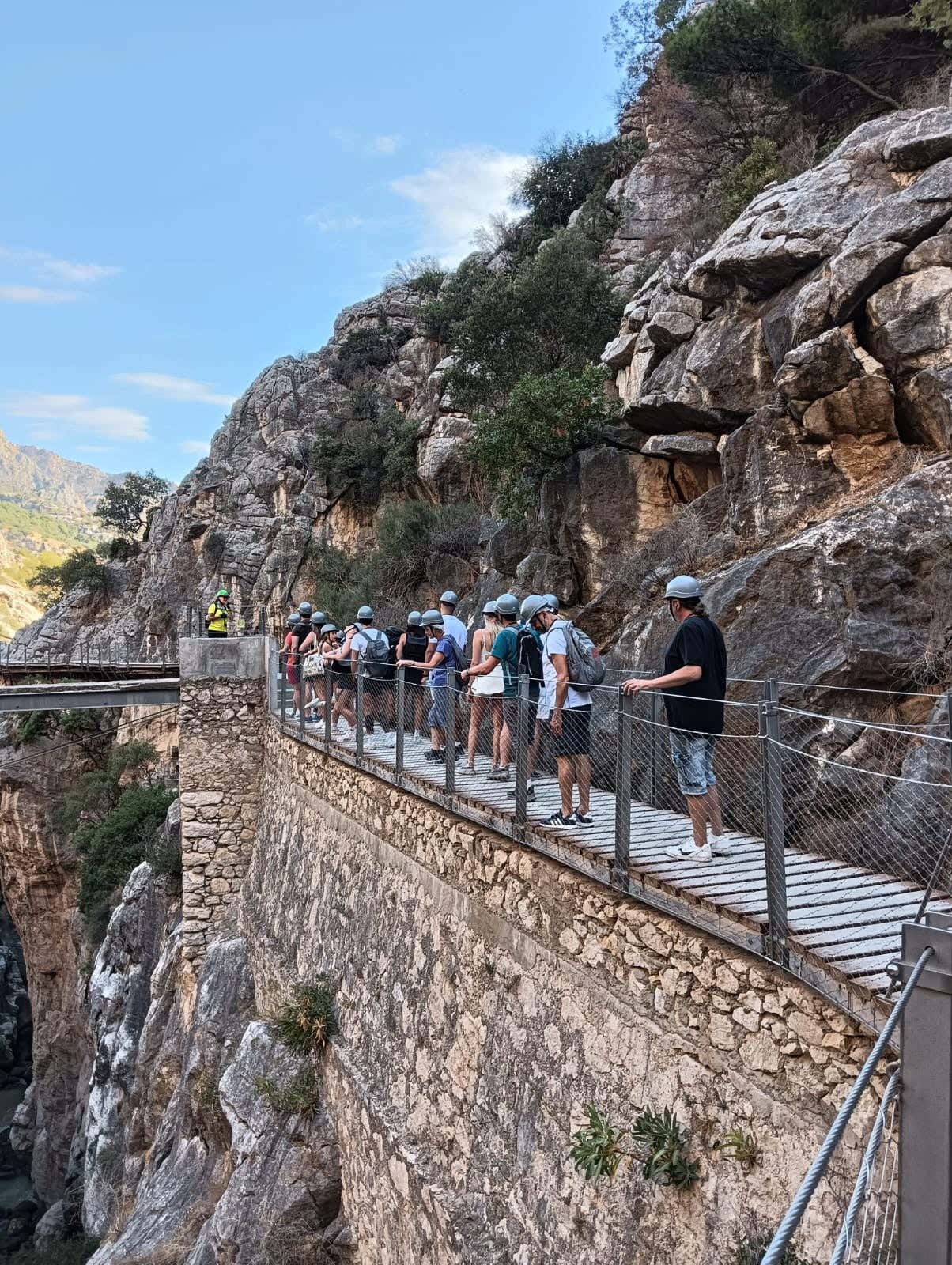
Then, head to the famous Caminito del Rey, one of Spain’s most iconic hikes. Once known as the most dangerous walkway in the world, today, it’s a safe boardwalk route that runs along the walls of the Desfiladero de los Gaitanes (Gaitanes Gorge). You’ll cross impressive bridges and walk above turquoise river waters with epic canyon views, perfect for thrill-seekers and nature lovers. I recommend you book a ticket to the Caminito del Rey with plenty of time in advance, as tickets often sell out quickly.
Travel Tips & Info
When on a trip, it’s important to have the basics organized before traveling. In this section, I’ll share some of the most practical travel tips to make sure you’re ready for your trip. For starters, I suggest taking out travel insurance for added peace of mind, as well as purchasing a Civitatis eSIM card and booking your necessary transfers in the city.
What’s the Best Month to Go to Málaga?
The best time to visit Málaga is from March to May or September to November. During these months, the weather is warm without being unbearably hot, making it perfect for exploring the city or enjoying the beach. Although it’s very hot in the summer, I personally would consider visiting Málaga in August if you want to experience the city’s fair. But be warned—temperatures can reach up to 86-88°F (30-31°C)!
How Long Should I Visit?
If you’re visiting from the US, I recommend spending at least a week in Málaga, as you’ll have time to explore the city, relax, and enjoy a few day trips. If you’re coming from England, Ireland, or somewhere else in Europe, 2-3 days is plenty of time to see the main highlights. However, if you also want to visit nearby towns or enjoy the Caminito del Rey hike, plan for 4-7 days. That way, you can make the most of the city, its beaches, and day trips without feeling rushed.
Transport
Málaga is a walkable city, and most of the attractions are within walking distance of each other, but there are many different transport options, including taxis, buses, the metro, and trains. For travelers wanting to explore independently or visit Málaga’s towns, renting a car is a great option. However, parking is quite difficult to find in Málaga, especially during the summer. I once spent 2 hours looking for free parking! It’s best to simply pay for parking.
Pro tip: If you’re going to take the bus, I strongly recommend bringing cash just in case, as not all buses accept credit cards.
Living in Málaga has taught me that the city reveals itself little by little. The more you wander, the more you discover, whether it’s strolling along historic streets, relaxing by the sea, or venturing to nearby towns. I hope this guide helps you fall in love with Málaga and inspires you to explore beyond the typical attractions. For even more ideas of what to do in Málaga, take a look at the full catalog of tours and activities with Civitatis. As you can see, the capital of the Costa del Sol has plenty to offer!


Most read of #Spain
48 Hours in Barcelona: The Best 2-Day Itinerary
29 March 2026Ultimate Madrid Food Tour Guide: Tapas, Wine, & Markets
26 March 2026

Most read #Spain
48 Hours in Barcelona: The Best 2-Day Itinerary
29 March 2026
Seville or Granada? Where to Stay in Andalusia 2026
19 March 2026How Many Days in Granada? The Perfect 3-Day Itinerary
12 March 2026
Top 10: What to Do in Lanzarote (2026)
4 March 2026
Top 10: What to Do in Barcelona + Travel Tips
17 February 2026UNESCO Sites in Madrid: 3 City Escapes off the Beaten Path
16 February 2026What to Do in Ibiza: 10 Awesome Plans (2026)
12 January 2026Top 10: Things to Do in Toledo, Spain in 2026
9 January 2026