

What to Do in Aruba: 10 ‘Musts’ + Unique Plans in 2026
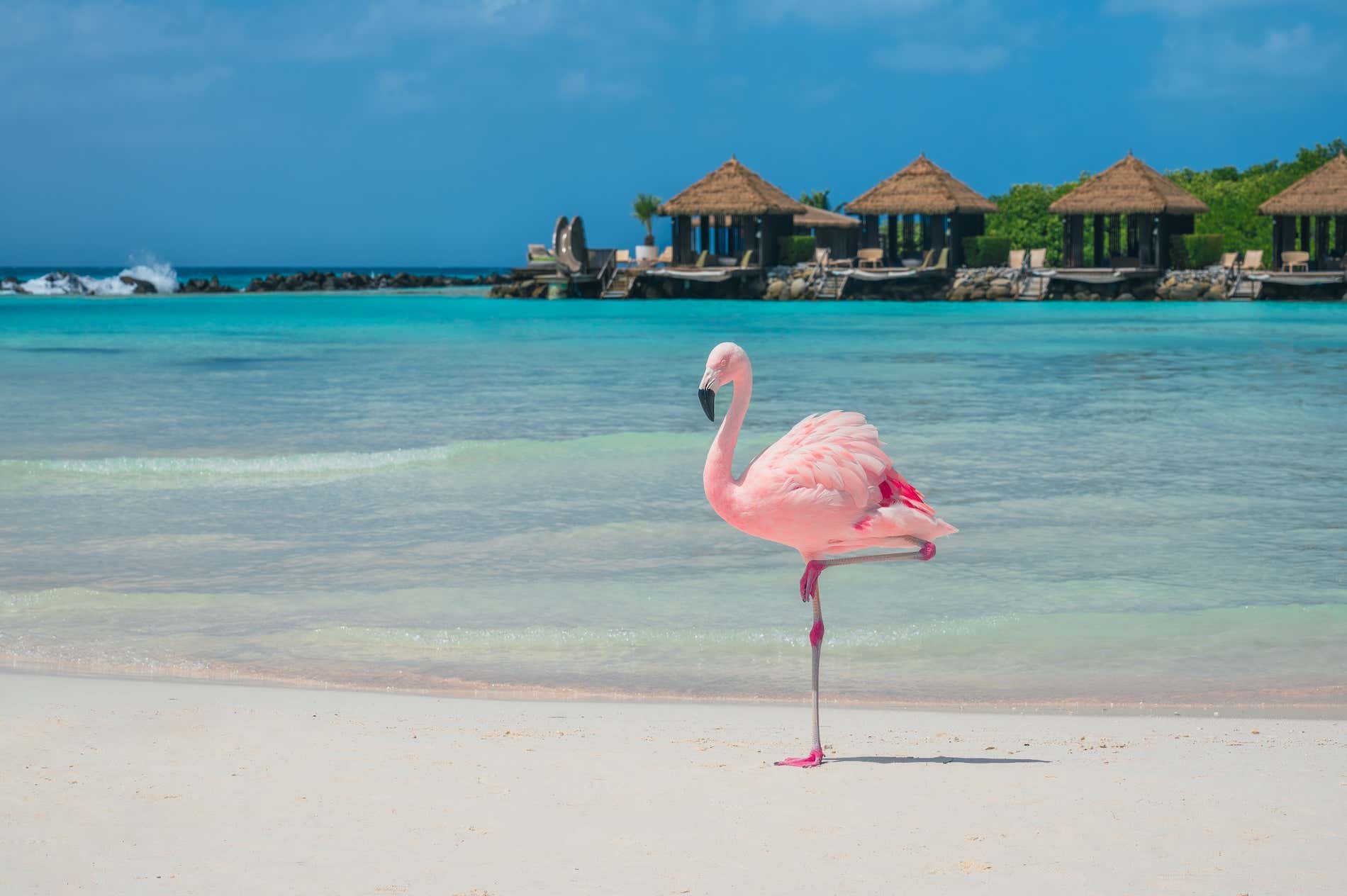

Aruba is a Caribbean destination that captivates all its visitors thanks to its landscapes that combine idyllic white sand beaches and turquoise seas, rock formations, caves, and desert areas. And do you know what to do in Aruba? The island has plans that go beyond enjoying its beaches or resorts. Today, we at Civitatis have made a list of what to do in Aruba.
Aruba is located off the coast of northern South America, near Venezuela, and like Curaçao, and Sint Maarten, this island has been under Dutch control since 1636. Today, Aruba is an autonomous country, but it is part of the Kingdom of the Netherlands. It has its own government but maintains close ties with the Netherlands, which is reflected in the language, architecture, and various cultural aspects of everyday life.
Things to do in Aruba (2025)
1. Enjoy Aruba’s Beaches
A list of what to do in Aruba can’t start anywhere else. This island is home to some of the world’s most idyllic beaches, famous for their white sand and bright turquoise waters.
Eagle Beach
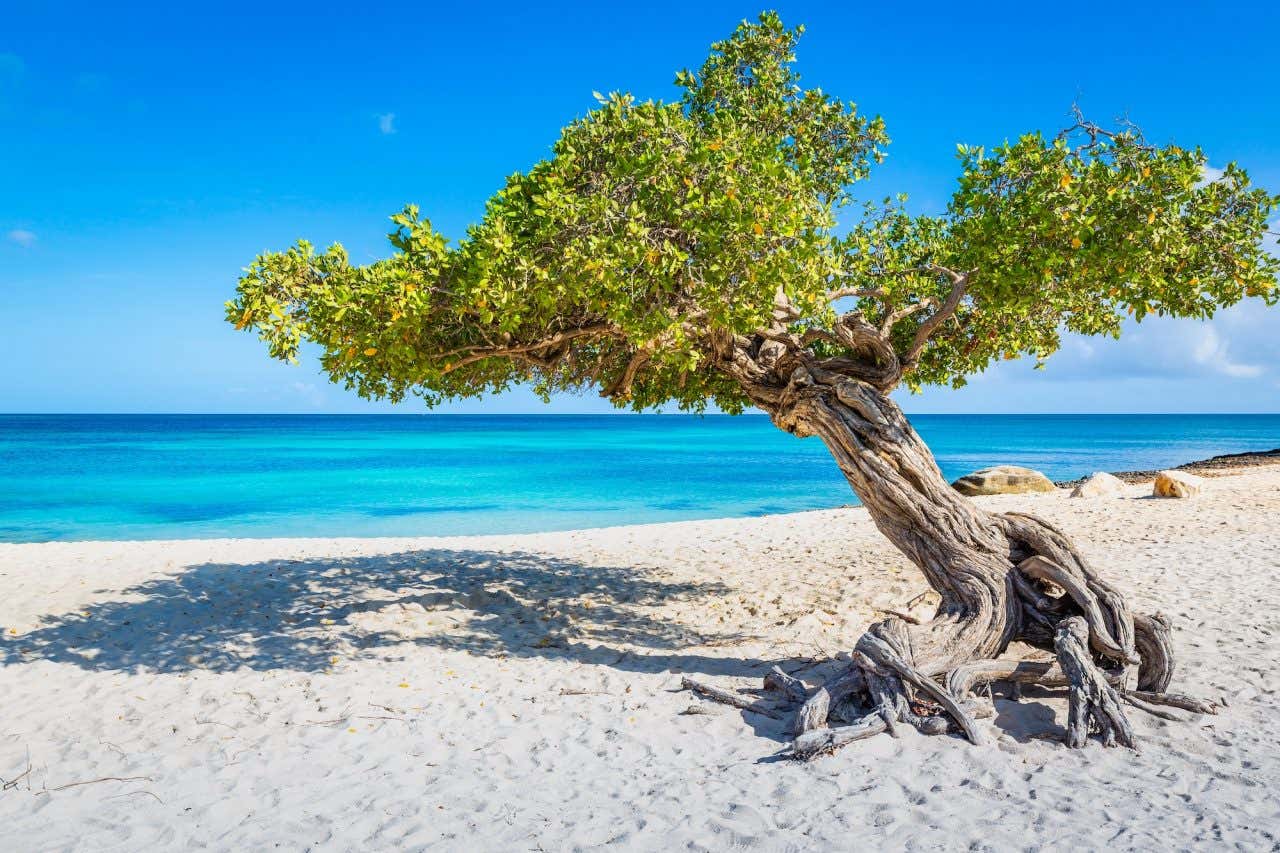
Consistently picked in lists covering the ‘most beautiful beaches in the world’, Eagle Beach is long, with all of the white sand and turquoise waters you could want. Lined with hotels, Eagle Beach certainly has its fair share of resorts, but it also has plenty of free space, and despite its popularity, this is a fairly relaxed beach. After a day of enjoying the sun, there are various restaurants and kiosks to enjoy.
Eagle Beach is also particularly well known for its Divi Divi tree, which grows in a southwesterly direction due to the wind, creating a fascinating ‘swept’ appearance.
Palm Beach
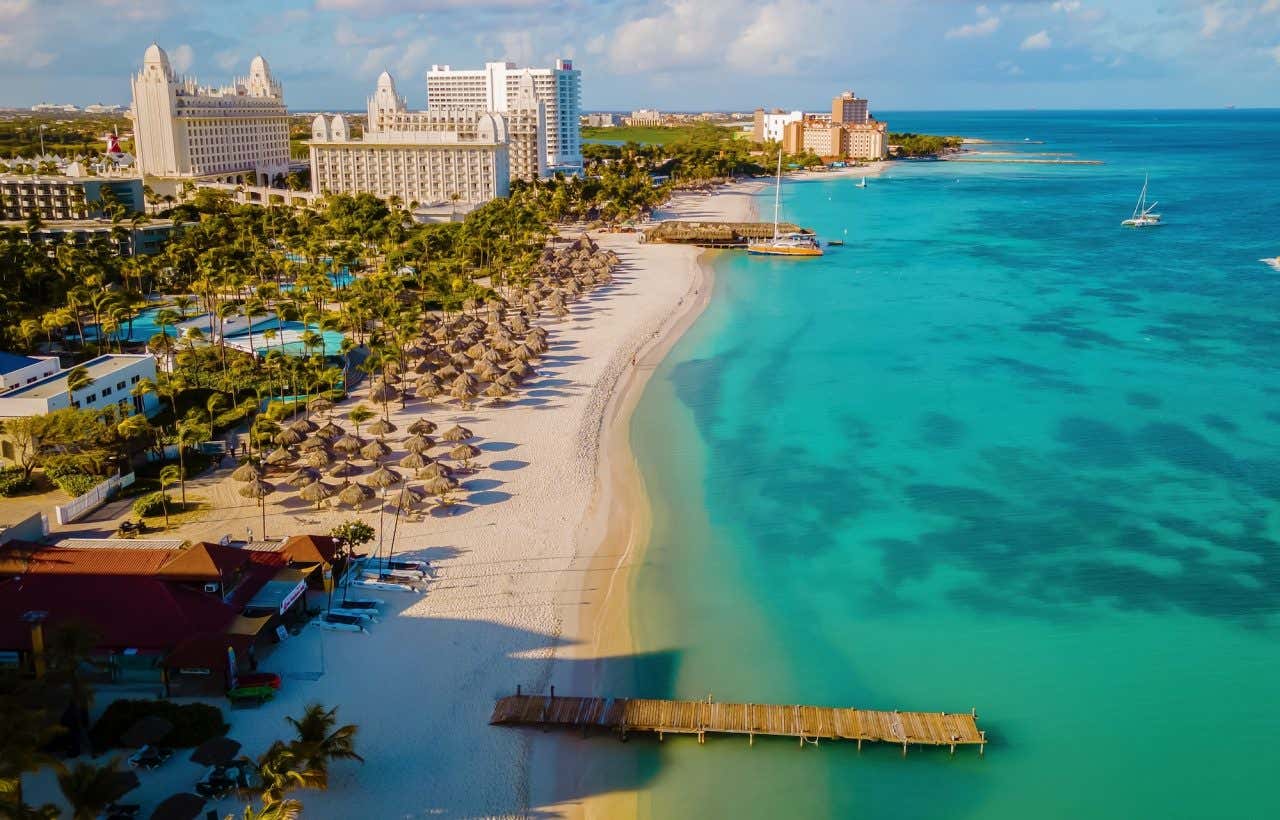
If you prefer a livelier beach, be sure to visit Palm Beach, the most popular beach in Aruba, located in the North district (Noord) of the island, where you’ll also find Aruba’s largest resorts. This beach has warm, calm waters perfect for a relaxing swim, and also for water sports. Along the beach, you’ll find plenty of businesses offering jet skiing, parasailing, paddleboarding, and snorkeling, as well as cruises.
Along the beach, which stretches 2 miles (3.2 kilometers) along the shore, you’ll have your pick of kiosks, restaurants, casinos, and shops. What’s more, Palm Beach is famous for its nightlife, and you can enjoy live music, drinks, and parties at the beachfront bars.
Baby Beach
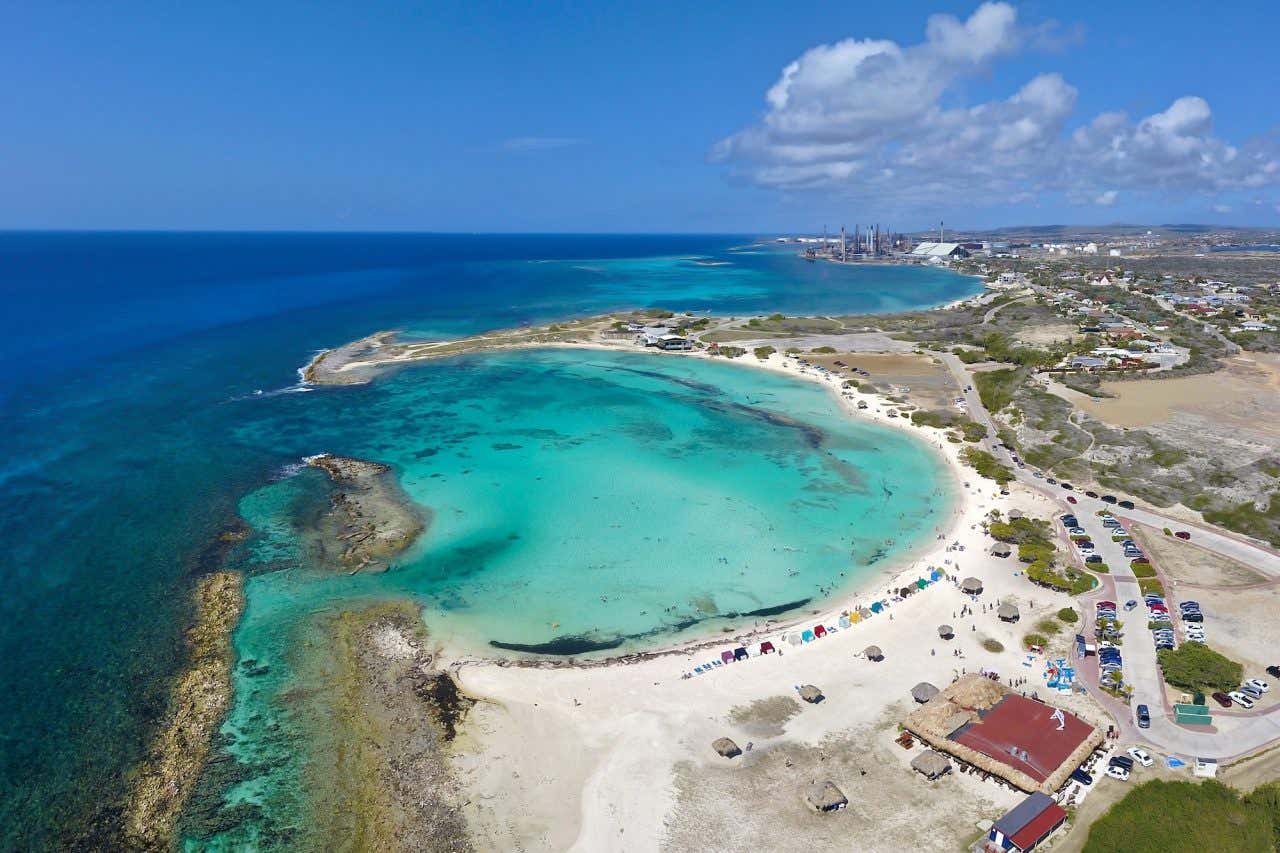
Are you traveling to Aruba with children? Baby Beach lives up to its name as Aruba’s most suitable beach for little ones. This gorgeous, crescent-shaped cove is located on the south of the island and has shallow, very calm waters that are ideal for children and unconfident swimmers. It is also a great place for snorkeling!
While Baby Beach doesn’t have quite the same plentiful supply of restaurants and other facilities in the north, you’ll find some straw huts, local restaurants, and some stands renting out equipment. You can visit Baby Beach by booking this tour of southern Aruba, which passes through other famous beaches on the island as well. Don’t miss it!
2. Enjoy a Cruise in the Caribbean Sea
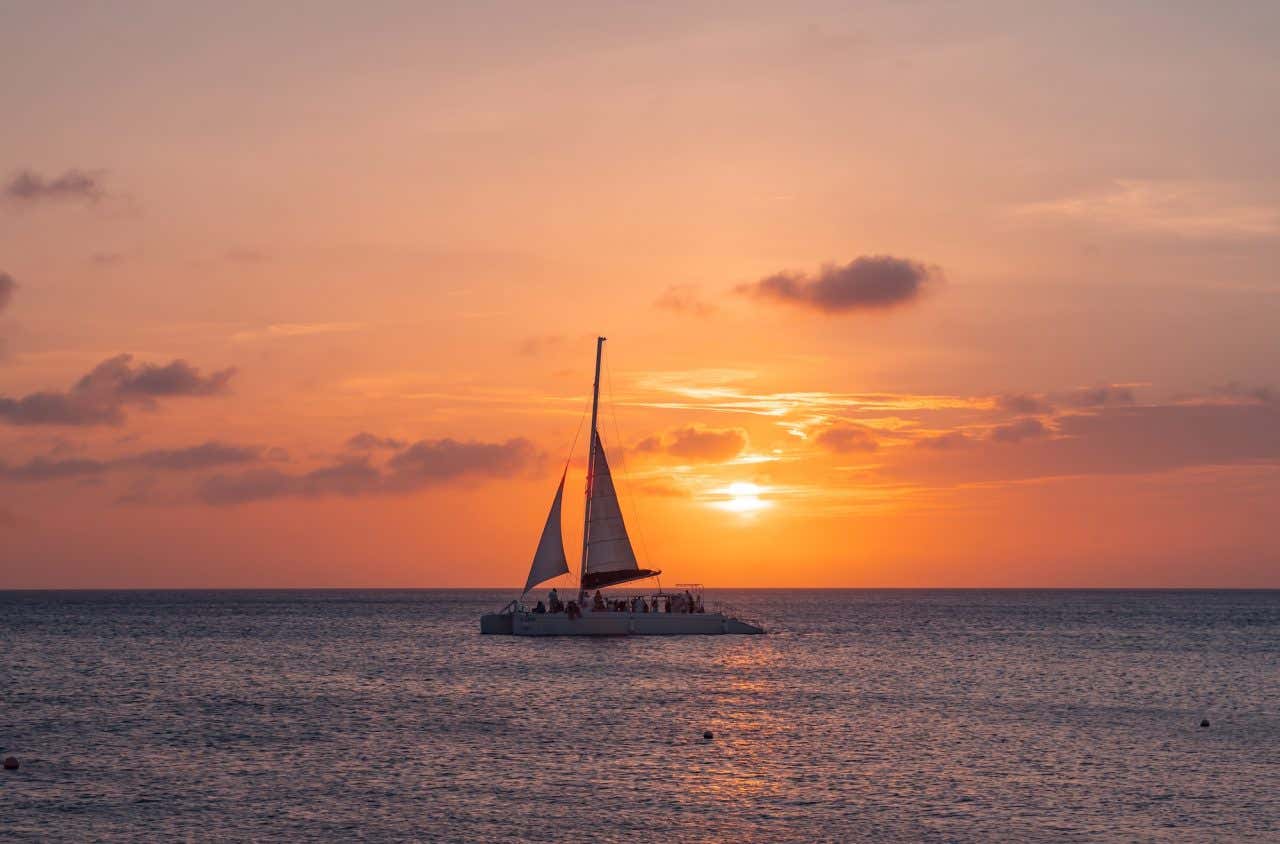
Experiencing Aruba from the Carribean Sea offers a new and unique perspective on this island paradise’s beauty. On this Aruba sunset cruise, you can watch the sun’s orange hue descend on the island as it sets over the horizon. This cruise includes unlimited drinks, fresh fruit, and more snacks to enjoy.
Another option is this boat ride & snorkeling excursion, which is a slightly more adventurous option, though it still includes the food and drink of the aforementioned boat tour. A highlight of the snorkeling section of this trip is seeing the SS Antilla wreck, a shipwreck dating back to 1940.
3. Explore Arikok National Park
Covering nearly 20% of the territory of Aruba, Arikok National Park is a semi-arid, rugged, remote landscape that feels a world away from the island’s busier coastal areas. This national park is filled with giant cacti and other desert shrubs, as well as unique formations of lava, limestone, and quartz create an otherworldly terrain.
Arikok is also home to an incredible diversity of wildlife, including lizards, wild goats, donkeys, the burrowing owl, and some non-venemous snakes.
However, the real star of this national park is its caves. The Fontein cave is considered to have the greatest historical significance, being home toremarkable cave paintings created by the indigenous Arawak people, who are thought to be the first people to settle on the island. Dating these paintings is difficult, but some are thought to be around 1,000 years old.
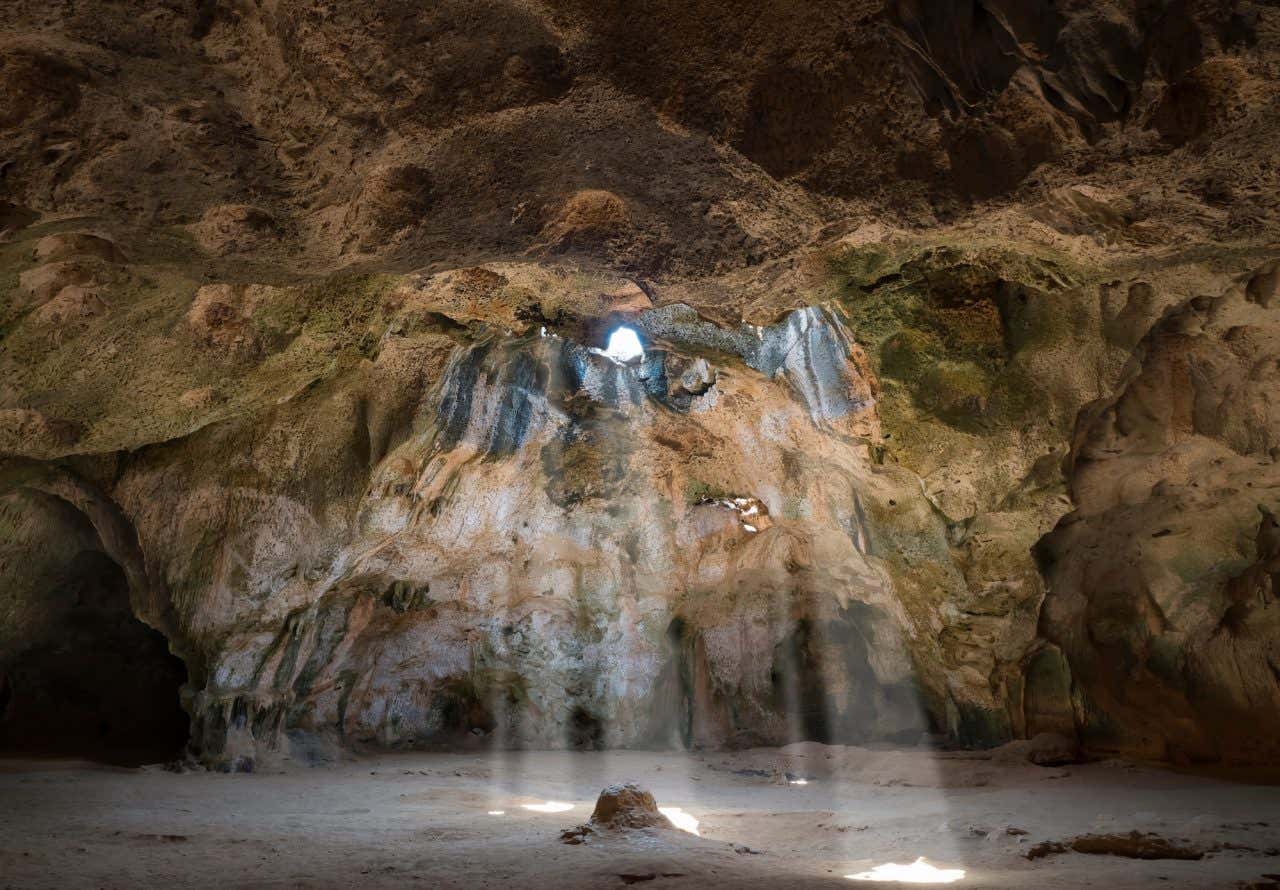
The Quadirikiri cave is larger and perhaps visually more impressive. The cave has two chambers that are lit up by natural skylights, creating an epic, ethereal atmosphere. Local legends say that the cave was used as a hiding place by lovers forbidden to be together, giving the cave a more mysterious and romantic air.
Another ‘must’ in Arikoka is the Jamanota Hill viewpoint, the highest point in Aruba, standing at 616 feet (188 meters) above sea level. From there, you will have spectacular views of the whole island. To explore the park in the most practical and fun way, you can book this buggy tour or this 4×4 tour of Aruba. If you are more adventurous, you can join us on this hiking trail through Arikok.
4. Enjoy Natural Pool (the Conchi)
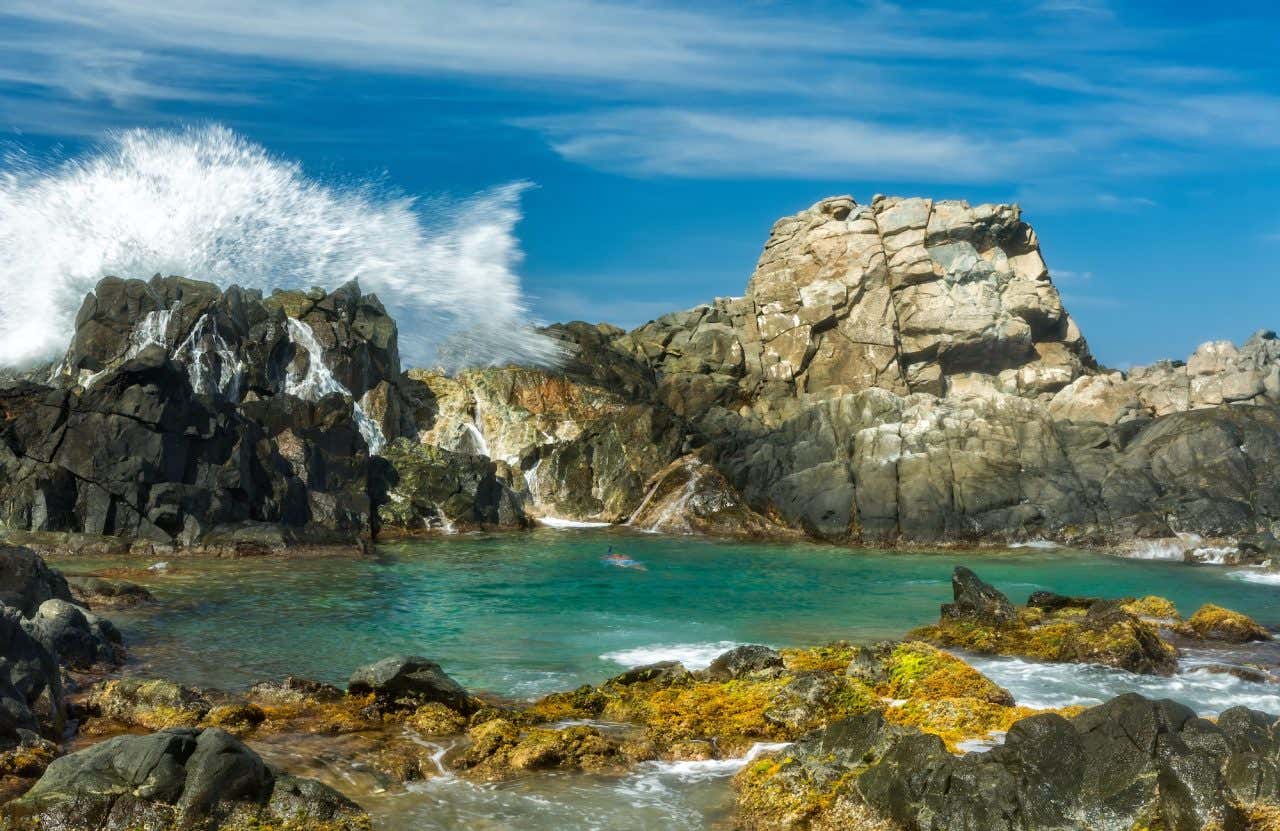
Also within Arikok National Park, you can visit the Natural Pool, also known as Conchi. This natural pool was formed by volcanic rocks that create a protective barrier against the sea and create a create a calm, relaxing lagoon. The strong ocean waves crashing against the rocks and the serenity of the pool creates a dramatic contrast that is well worth making the journey.
5. Visit the California Lighthouse
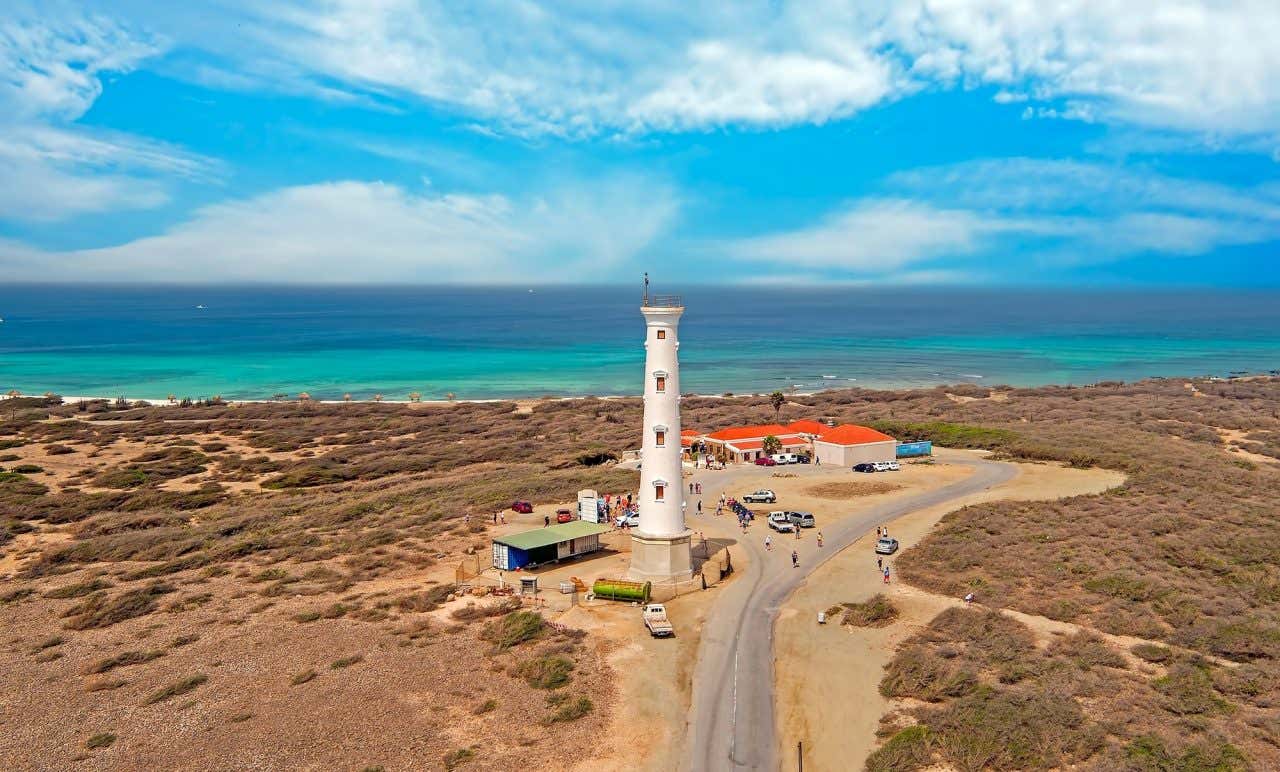
Another must-see in Aruba is the California Lighthouse (Faro), located on the northwestern tip of the island, in an arid landscape overlooking the Caribbean Sea. Built in 1916, the lighthouse was named after the steamship California, which sank off the coast in the late 19th century.
A popular spot for taking photos, the California Lighthouse is an icon of Aruba, and the tallest structure in Aruba. If you climb to the top of the lighthouse, you’ll enjoy a lovely view of the surrounding dunes, the urban desert, and the turquoise waters of the Dutch Caribbean.
6. Walk through the Butterfly Farm
Near Palm Beach, you’ll find the tropical sanctuary for butterflies. The Butterfly Farm is a fascinating place to visit these beautiful insects.
The Butterfly Farm is a lush, beautiful garden, full of flowers, trees, and small waterfalls, creating the perfect environment for hundreds of exotic butterflies from around the world to fly freely around you.
You can learn about and observe the different stages of this insect’s life, from eggs, through caterpillars and chrysalises, to the incredible moment when they become magnificent butterflies.
For more information on schedules and tickets, visit the official Butterfly Farm website.
7. Discover the Capital City of Oranjestad
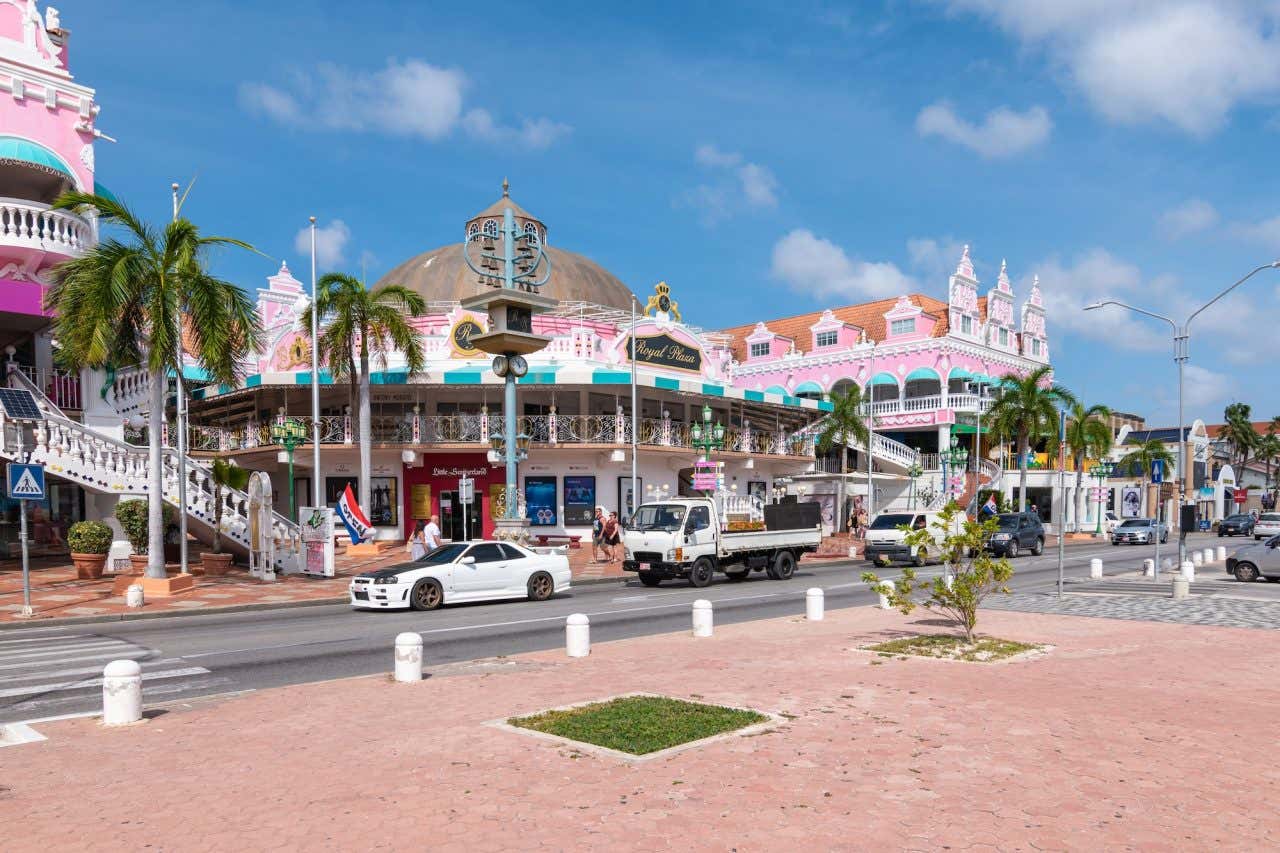
Another must while in Aruba is to spend the day at the capital and main commercial center of the island, Oranjestad. The city’s streets, which blend colorful Dutch colonial architecture with Caribbean influences, creating a really unique vibe.
In Oranjestad, check out Fort Zoutman, the oldest building in Aruba, which houses the island’s Historical Museum. Another highlight is the modern National Archaeological Museum, which brings together artifacts from the Amerindian peoples who inhabited Aruba for millennia, providing a true immersion in the island’s origins.
A good option for getting around Oranjestad is to take the electric tram, which makes sightseeing easy and passes through the main points of the city center. And best of all? It’s free!
8. Visit the Alto Vista Chapel
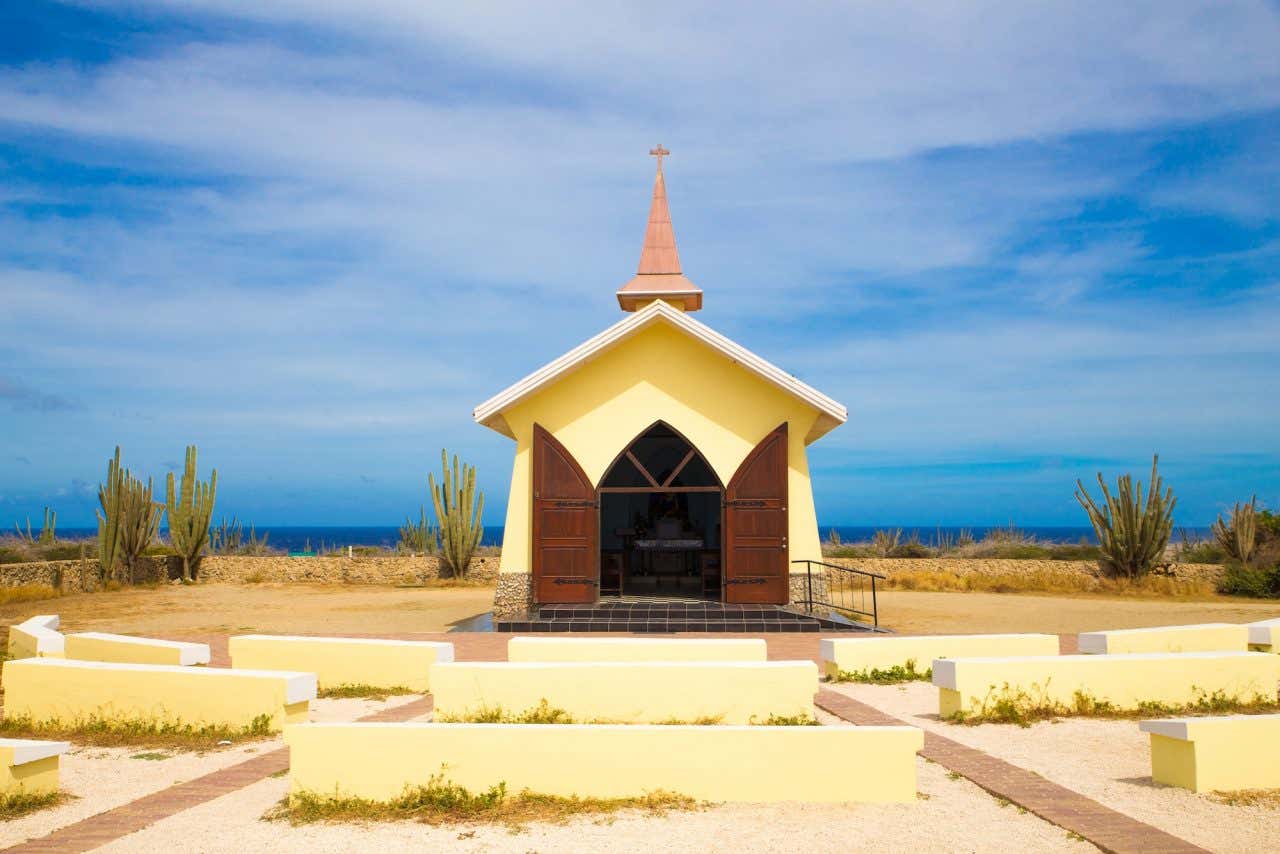
Near the town of Noord, in the north of the island, you will find the Alto Vista Chapel, one of Aruba’s most iconic religious temples. Built in 1750 by missionary Domingo Antonio Silvestre, it was the first Catholic church on the island. While the original structure fell into ruin over time, in 1952, the chapel was rebuilt on the same site.
The path to the Alto Vista Chapel is marked by crosses representing the ‘Way of the Cross‘, and it has become a place of pilgrimage, especially during Holy Week. Its name, Alto Vista, refers to its elevated location on the island, which provides incredible panoramic views of the Caribbean Sea and the arid landscapes around it.
9. Try Traditional Aruban Cuisine
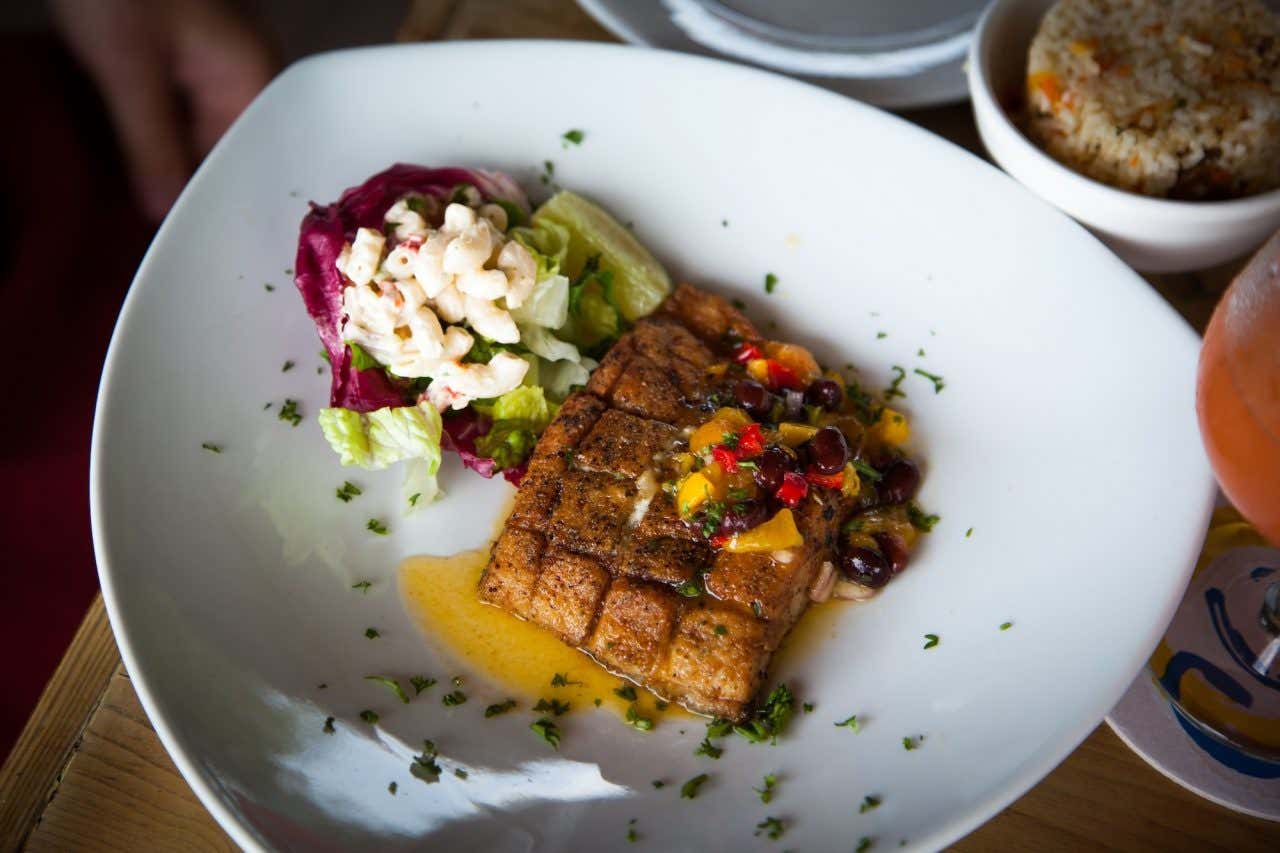
A list of things to do in Aruba would not be complete without mentioning the island’s delicious cuisine. Aruban food combines a wonderful mixture of Caribbean, Dutch, African, and Latin American influences, heavily featuring fresh seafood and hearty stews. In terms of seafood, lobster, shrimp, mahi-mahi, Red Snapper, Barracuda, and tuna are all widely used in grilled dishes, stews, and fried dishes.
Keshi yena is one of Aruba’s most famous dishes, generally attributed to slaves on the island in the 17th century. This dish is made with Dutch Gouda cheese stuffed with shredded meat, olives, raisins, and spices, baked until golden brown. Another popular option on the island is stobá, a thick stew usually made with beef or goat meat and vegetables.
Dutch Pancakes are another very popular dish, which is generally eaten for breakfast with apple, banana, and pineapple, or for dinner with savory additions like salami, cheese, and tuna.
Tips to Enjoy Aruba to the Fullest
What currency is used in Aruba?
The official currency of Aruba is the Aruban florin. However, the US dollar is widely accepted throughout the island, in hotels, restaurants, shops, and even on buses. Even so, we recommend carrying a small amount of cash for purchases in smaller establishments, tips, or small purchases.
What language is used in Aruba?
In Aruba, the official languages are Papiamento (a Creole language with Portuguese, Spanish, Dutch, English, and African languages) and Dutch. However, most of the population also speaks English and Spanish fluently, especially in tourist areas. Check out some words and phrases to use while you’re there!
- Hello – Bon dia/Halo
- How are you? – Conbai cubo?
- I’m good, thanks, and you? – Mi ta bon, danki. Y abo?
- My name is … – Mi nomber ta …
- I’m from the US – Mi ta di Merka
- Pleased to meet you – Contento di mira bo
- Goodbye – Ajo (pronounced ayo)
What is the best way to get from Aruba airport to hotel?
To get from Reina Beatrix International Airport (AUA) to your hotel in Aruba, you can call a taxi, rent a car directly at the airport, or take the public bus (Arubus). However, keep in mind that the latter option requires a walk to the nearest stop, which can be difficult if you have luggage.
Therefore, the best option is to book a transfer with Civitatis, which can take you from the airport to hotels in Oranjestad, Palm Beach, and Eagle Beach. You will be taken directly to your hotel and won’t have to worry about a thing. In addition, you can also book your return to the airport at the end of your trip.
Can you go offroading in Aruba?
Absolutely! Off-roading is one of the most enjoyable activities on the island. We’d highly recommend this Aruba Off-Roading tour with Civitatis. As part of this experience (which lasts for 8 hours), you’ll be picked up from your hotel and brought on a fantastic tour of Aruba. You’ll check out various cultural highlights, including Arikok National Park, the street art of San Nicolas, the Bushiribana gold mill ruins, and the California Lighthouse.
Aruba to Curacao day trip
Technically? Yes. Is it worth it? Probably not.
Really, Curacao is a much larger island than Aruba, and you really won’t get much out of it in a day once you factor in travel. What’s more, travel between islands is likely to cost you 200-500 USD per person alone. If you do decide to visit Curacao, I’d recommend planning for at least 3 days and taking a look at our list of the best things to do in Curacao!
What’s the most beautiful beach in Aruba?
Aruba has dozens of beautiful beaches, but these are consistently considered the most scenic and visitor favorites:
- Eagle Beach: Famous for its powder-soft white sand and calm, turquoise waters. It’s widely regarded as Aruba’s most iconic beach and frequently ranks among the best in the Caribbean.
- Arashi Beach: Located near the California Lighthouse, this quieter stretch of sand is known for clear water, good snorkeling, and excellent sunset views.
- Baby Beach: A sheltered lagoon with extremely calm, shallow water — ideal for families and beginner snorkelers.
Other excellent but less crowded options include Rodgers Beach (peaceful and great for swimming) and Boca Catalina, one of the island’s top snorkeling spots.
What to beware of in Aruba?
Aruba is one of the safest and most stable islands in the Caribbean, but there are a few practical things to keep in mind:
- Strong sun and constant wind: The trade winds make the heat feel milder than it actually is. Sunburn and dehydration happen quickly, even on cloudy days. Reapply sunscreen and drink more water than you think you need.
- Rough seas on the east coast: Beaches like Wariruri Beach and other windward areas are beautiful but not suitable for swimming due to strong currents and waves. Stick to calmer beaches such as Eagle Beach or Baby Beach for safe bathing.
- Driving style & roundabouts: If you rent a car, expect frequent roundabouts and confident local driving. It’s manageable, just stay alert.
- Prices: Aruba imports almost everything. Food, alcohol, and tours can be noticeably more expensive than in mainland destinations.
- Iguanas and wildlife: They’re harmless, but they’re everywhere — including hotel grounds and roads. Don’t feed them.
Gift ideas from Aruba
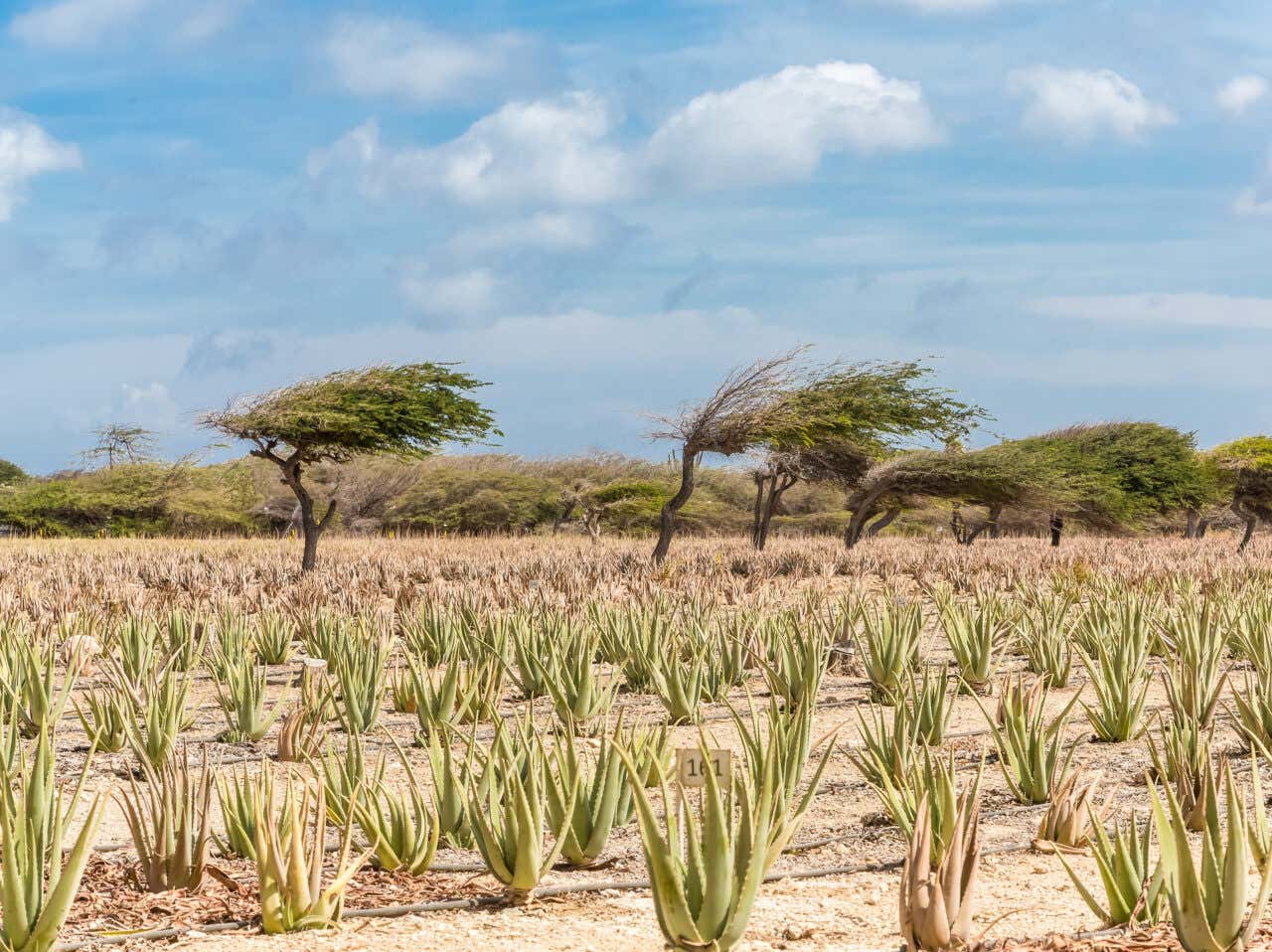
If you’re looking for gifts or souvenirs from Aruba, I’d recommend buying either Aruban Rum or an aloe vera product. Aruban Rum is often used to make Aruba Ariba: the island’s take on Caribbean rum punch and the most popular mixed drink on the land!
If you’re looking for aloe vera, look out for Aruba Aloe, a company that traces its origins back to 1890, when it was founded as Aruba Aloe Balm. It was one of the first companies in the world to cultivate, harvest, and process aloe vera on site, growing the plants in Aruba’s arid soil and extracting the gel directly on the island.
Is Aruba Safe?
Yes, Aruba is one of the safest destinations in the Caribbean. Violent crime is rare, the island is politically stable, and tourist areas are well-maintained and generally well-lit at night. The main things to watch out for are practical rather than serious: petty theft on crowded beaches (don’t leave valuables unattended), strong sun and dehydrating trade winds, and rough surf on the eastern coast, which looks beautiful but is genuinely not safe for swimming. Stick to the western beaches like Eagle Beach and Palm Beach for calm, safe bathing, apply sunscreen more often than you think you need to, and you’ll have very few concerns.
What is the Best Time to Visit Aruba?
Aruba sits just outside the hurricane belt, which means it avoids the worst of the Caribbean storm season and has reliably good weather year-round. That said, the peak season runs from mid-December through April, when temperatures hover around 82°F (28°C), rainfall is minimal, and the trade winds keep things comfortable. If you want good weather with fewer crowds and lower prices, January and February are probably the sweet spot. The months of August and September are the quietest on the island and can offer real value, though there is slightly more chance of rain. Whenever you go, you’re unlikely to be rained out entirely.
What are the Best Things to do in Aruba with Kids?
Aruba is a genuinely great family destination. Baby Beach, on the southern tip of the island, is the obvious starting point: its shallow, sheltered lagoon is calm enough for young children and nervous swimmers, and the snorkeling is accessible even for beginners. The Butterfly Farm near Palm Beach is another reliable hit with younger visitors, with hundreds of exotic butterflies flying freely through a lush tropical garden. For something more active, the buggy and 4×4 tours through Arikok National Park tend to go down well with older kids, and the Natural Pool (Conchi) makes for a memorable stop along the way. The capital Oranjestad is also very manageable with a family, particularly if you hop on the free electric tram that loops through the city center.
We have reached the end of our list of what to do in Aruba. Now that you know the best plans on this island, a little piece of the Netherlands in the Caribbean, you can start planning your trip and book the best activities in Aruba with Civitatis.


2 thoughts on “What to Do in Aruba: 10 ‘Musts’ + Unique Plans in 2026”
Leave a Reply
Most read of #More of the Caribbean
What is a Free Tour & How Much do They Cost?
16 October 202615 Bucket List Travel Experiences to Gift in 2026
14 October 2026What to Do in Athens: 11 ‘Musts’ in the Greek Capital
13 October 2026Top 11: What to Do in Belize in 2026
12 October 202611 Unmissable Day Trips from Rome (& How to Get There)
11 October 2026Top 12: What are the Best Things To Do in NYC With Kids? (2026)
10 October 2026Most read #United States

Iconic Food in Chicago: 17 Dishes You Have to Try
30 September 2026Best Time to Visit Hawaii: A Season-by-Season Guide
29 September 2026
NBA Game Tickets in New York: A Complete Guide
3 June 2026Top Fun Facts About New York
3 June 2026
The Ultimate 3-Day Boston Itinerary for First-Time Travelers
14 January 2026Top 11: Best Day Trips from Miami (2026)
10 January 2026The 12 Best Day Trips from Los Angeles (+ Travel Time)
22 November 2025Top 11: Things to Do in Las Vegas Besides Gambling
14 February 2025Top 10: Things to Do in Washington, DC
22 November 2024
Wonderful article! I appreciate the detailed overview of Aruba’s top attractions and experiences.
Thank you for the kind words!