
Food in China: A Regional Guide to What to Eat (2026)
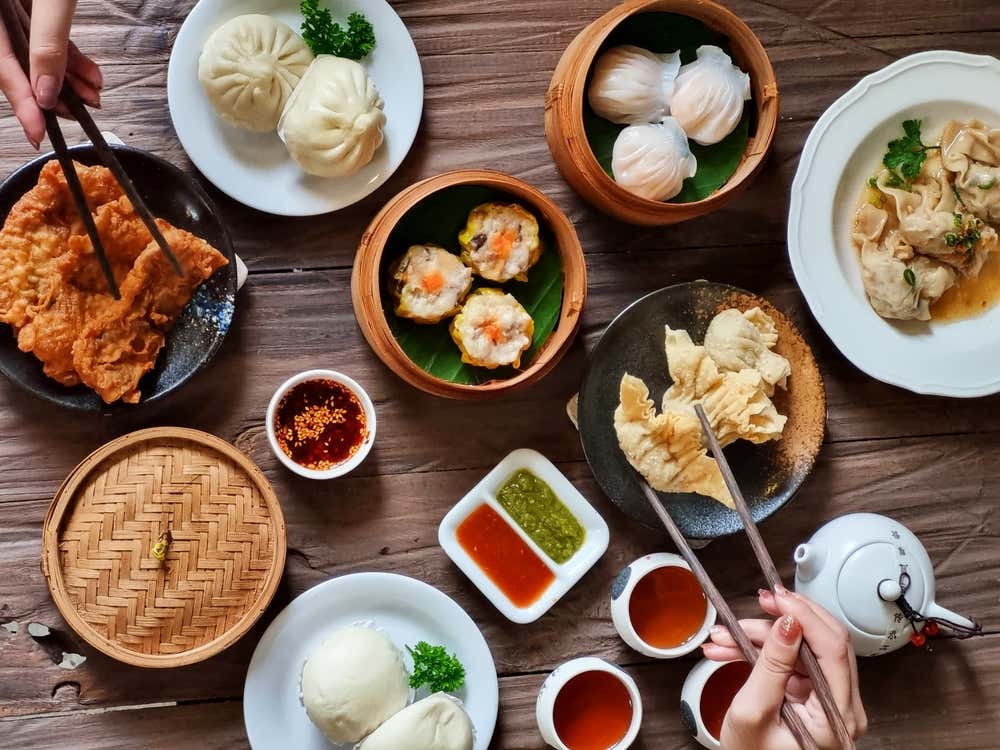

If you’re planning a trip and wondering what the food in China is actually like, the honest answer is that there’s no single version of it. What most Western Chinese restaurants serve represents a narrow slice of an enormous set of cooking traditions that change ingredient by ingredient, technique by technique, and province by province.
Chinese cuisine splits by region: wheat noodles and dumplings dominate the north, the east coast leans sweet and brothy, the southwest builds everything on a numbing heat, and Canton is known for lightness and dim sum. Taiwan adds its own layer on top.
What follows is a run through those regions from north to south, with the dishes each one is known for. Before you go, keep in mind that dish names shift from one restaurant to the next and some specialties are seasonal, so it’s always worth asking the staff or checking locally.
Food to Try in China in 2026
Beijing and Northern China: Wheat and Dumplings
In the north, cold winters and a shortage of rice paddies made wheat the foundation of the local table. This is where China’s dumplings, steamed breads and hand-pulled noodles come from, usually served alongside thick sauces built on fermented soybean.
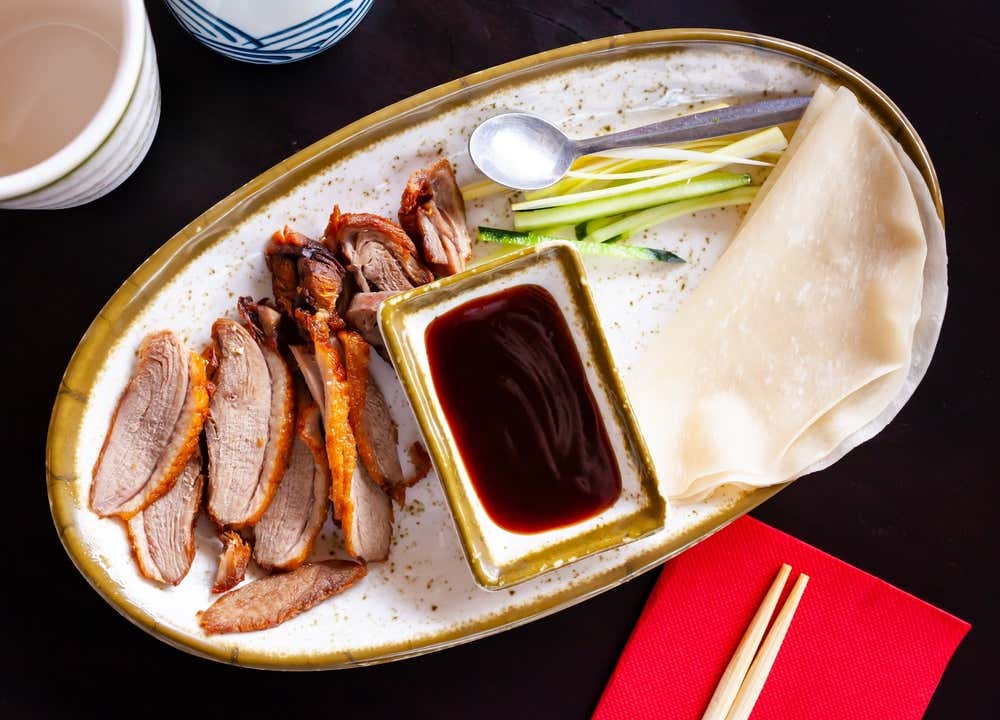
Peking Duck (Beijing Kaoya)
The capital’s most famous dish, and the reason plenty of travelers book a table before they book anything else. The skin is roasted until it turns crisp and glossy, then the meat is sliced thin and served with scallion pancakes, cucumber batons and hoisin sauce, a thick fermented soybean paste that gets its character from sugar, vinegar, garlic and five-spice powder. It’s treated as a shared main course, usually arriving toward the end of the meal.
Jiaozi and Baozi
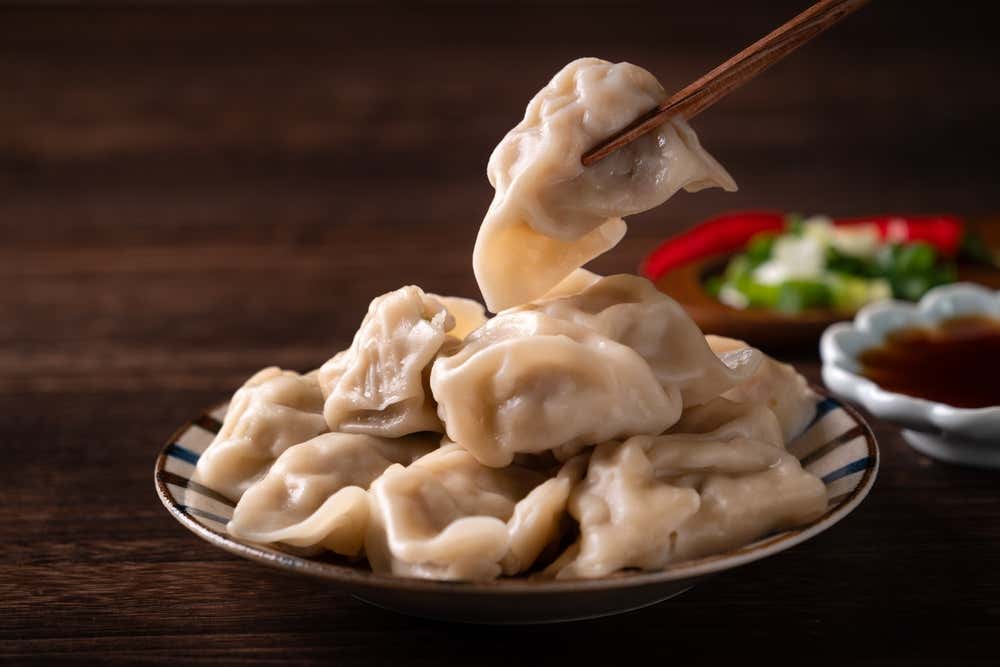
Jiaozi are dumplings filled with meat or vegetables, boiled, steamed or pan-fried, in which case they’re called guotie. Baozi are soft steamed buns stuffed with pork, vegetables or red bean paste, eaten at breakfast as readily as at lunch, and they remain among the most widespread street foods in the country. Both will look familiar from Chinese restaurants back home, and both taste noticeably different eaten where they came from.
Beijing Street Food
In the capital’s historic alleys, the hutong, night stalls sell spiced lamb skewers, stir-fried potatoes and the candied fruit on a stick known as tanghulu. Nanluoguxiang is the busiest lane for this kind of grazing, and it draws a heavy crowd for exactly that reason. A private Beijing tour that takes in the hutongs puts the neighborhood in context, and the Beijing evening tour covers the city after dark, when the stalls are at their busiest.
Dongbei: The Northeast Toward the Russian Border
China’s northeast, known as Dongbei, has very long winters and a kitchen built to warm people up: generous portions, assertive flavors and a light Russian and Korean influence that comes from sharing a border with both.
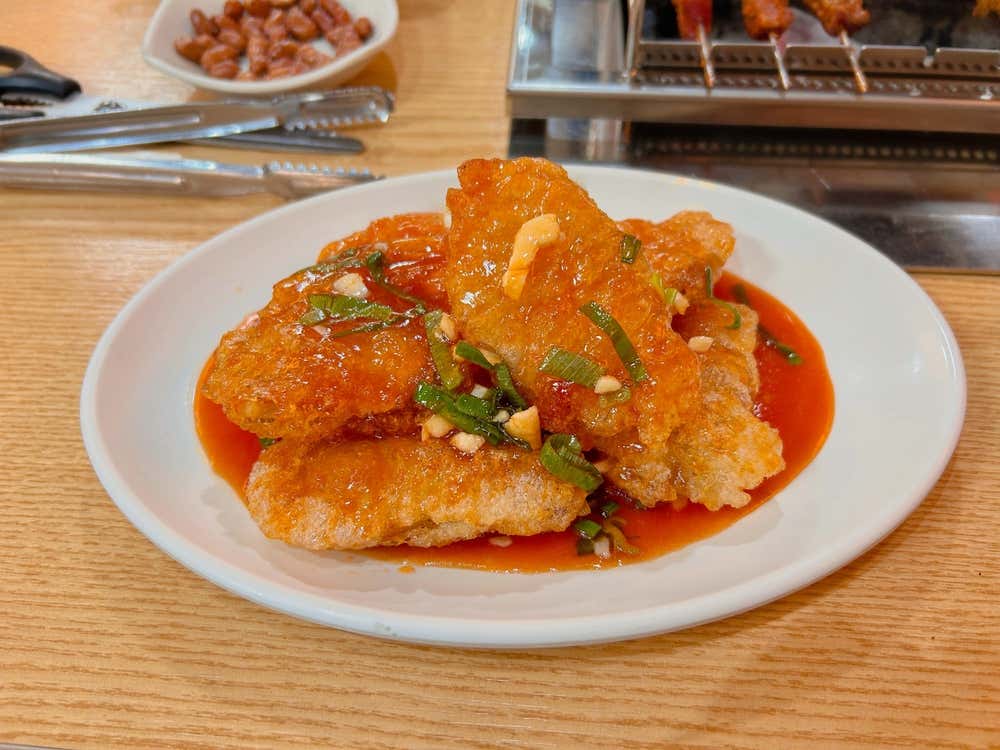
Guo Bao Rou
Strips of pork, battered and fried, then tossed in a sweet and sour sauce built on vinegar and sugar that tastes nothing like its Cantonese cousin. It’s one of the most ordered dishes in restaurants in Harbin and Shenyang, the region’s two main cities.
Suancai and Chuan’r
Fermented cabbage, or suancai, turns up alongside almost every winter meal and forms the base of soups and pork stews. Out on the street the staple is chuan’r, grilled meat skewers dusted with cumin and chili powder, cooked over improvised braziers set up outside restaurants.
Xi’an and the Northwest on the Silk Road
Xi’an, the eastern end of the ancient Silk Road, has a cooking tradition shaped by the Hui Muslim community that has lived in the city for centuries. The Muslim Quarter, lit up after dark, is one of the most rewarding places to eat anywhere in the country.
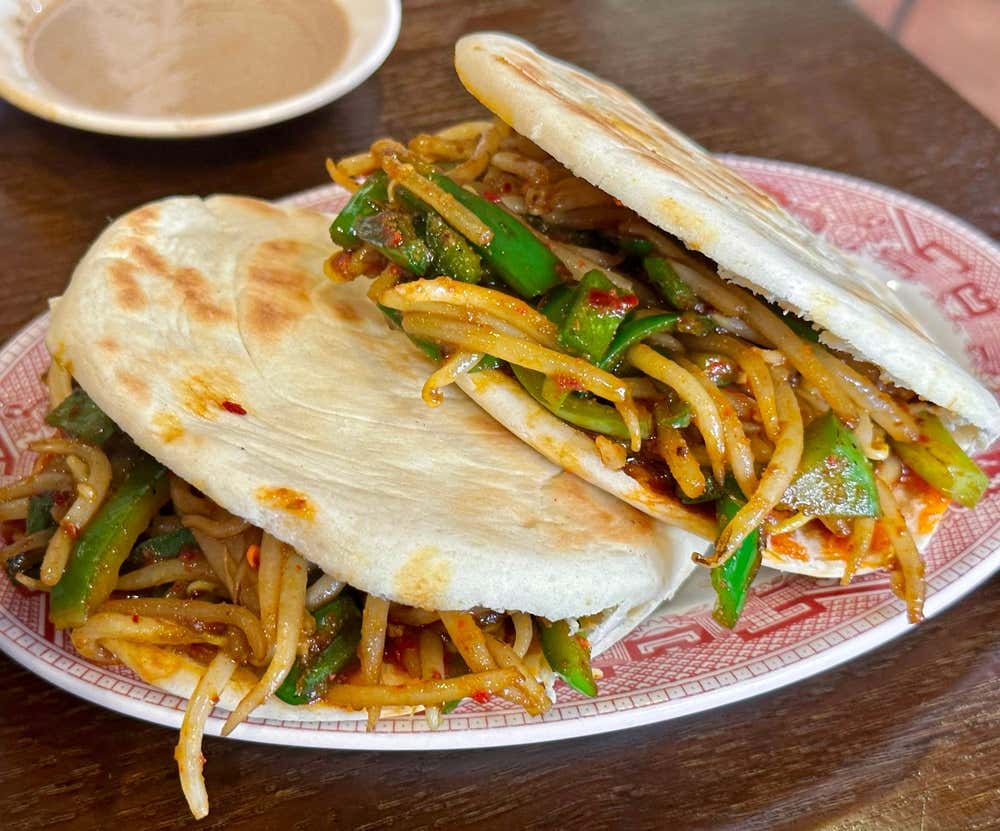
Rou Jia Mo
Often called the Chinese hamburger, it’s a crisp flatbread bun packed with meat, beef or pork slow-stewed with spices, cut thick and messy to eat. It’s cheap, sold everywhere, and designed to be eaten while walking.
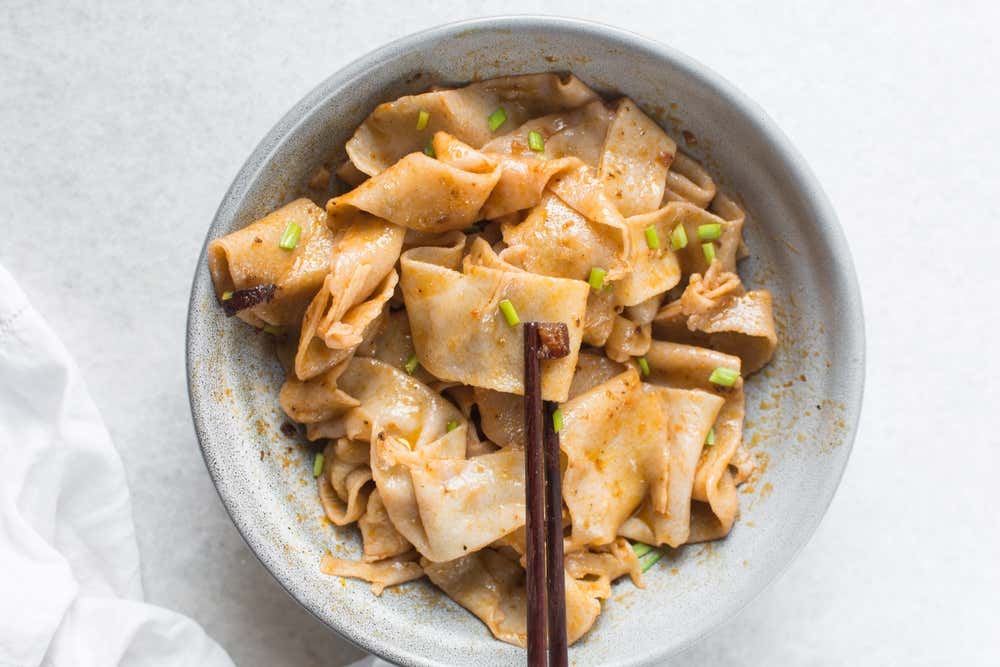
Biang Biang Noodles
The name comes from the sound the dough makes when it’s slapped against the counter to stretch it. These are wide hand-pulled noodles, served with chili, garlic and stir-fried vegetables, and they make a substantial main course typical of Shaanxi province.
Cumin Lamb Skewers
Central Asia shows up clearly in the grilled lamb skewers, marinated with cumin, chili and sesame. They point straight west toward Xinjiang cooking, where lamb is the default meat. While you’re in the city, the Terracotta Army day trip pairs naturally with an evening in the Muslim Quarter, and the wider list of tours and activities in Xi’an covers the city walls and the Silk Road sites.
Shanghai and the East Coast: Sweet and Brothy
The cooking of Shanghai and the coastal provinces of Jiangsu and Zhejiang favors rice over wheat, a generous hand with sugar and dark soy sauce, and long braises in broth. It’s a much milder kitchen than the southwest, and a good place to start if you don’t want heat.
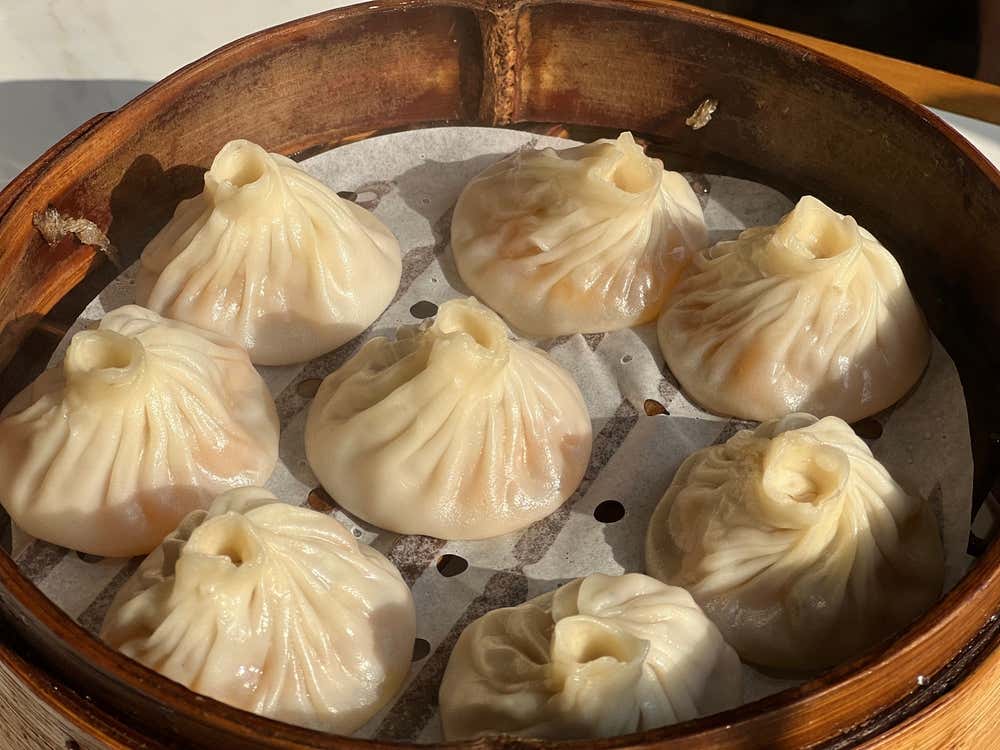
Xiaolongbao
The most celebrated steamed dumplings in eastern China: a thin wrapper holding pork and a mouthful of hot broth that releases the moment you bite. Eat them from a spoon, piercing the dough gently first so you can drink the liquid without burning yourself. The order matters more than it sounds.
Hongshao Rou
Pork belly braised slowly in soy sauce, caramelized sugar and rice wine until it turns meltingly soft. It’s the home-cooked main course of Zhejiang province, and it turns up on the menu of most traditional restaurants in Shanghai.
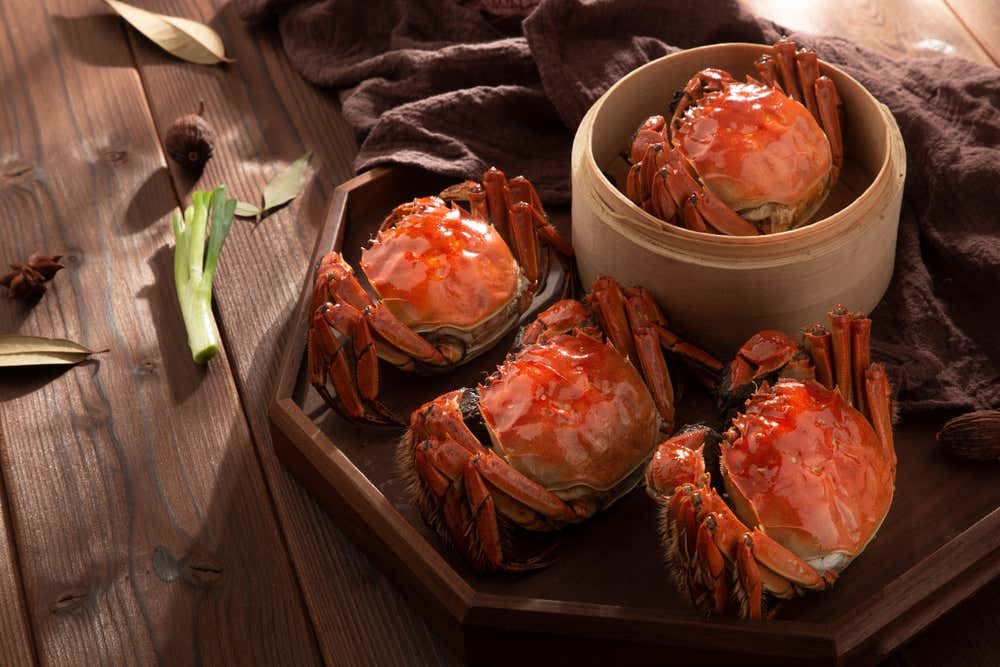
Dazhaxie, the Hairy Crab
From late September to December, dazhaxie arrives on Shanghai tables, the hairy crab from the lakes near the city. It’s steamed and served with black rice vinegar and ginger, and it counts as a seasonal delicacy, which is why the price moves so much across the year. To see the city’s food in its own setting, the range of tours and experiences in Shanghai includes evening walks through the old town and the former French Concession.
Sichuan and Chongqing: The Home of Heat
If you’ve heard people describe a tingling, buzzing sensation on the tongue after a Chinese meal, they were almost certainly eating Sichuanese food. The heat here produces a distinctive numbing effect called mala, and it comes from Sichuan peppercorn rather than chili.
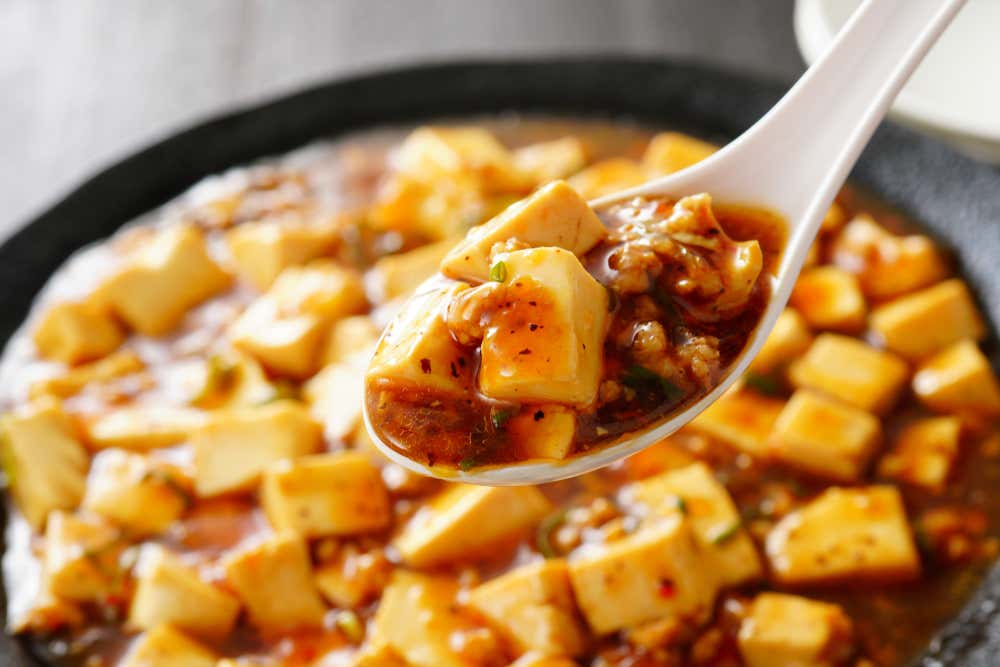
Mapo Tofu
Soft tofu cooked in a fiery sauce of fermented bean paste, ground meat and a heavy dose of Sichuan peppercorn. It’s among the best known Chinese dishes outside the country, though the original is considerably more intense than the version served elsewhere.
Dan Dan Noodles
Thin noodles dressed with sesame paste, chili oil and minced pork, sold more often as a street snack than a full meal. The name comes from the carrying poles that vendors once used to balance pots and noodles at either end.
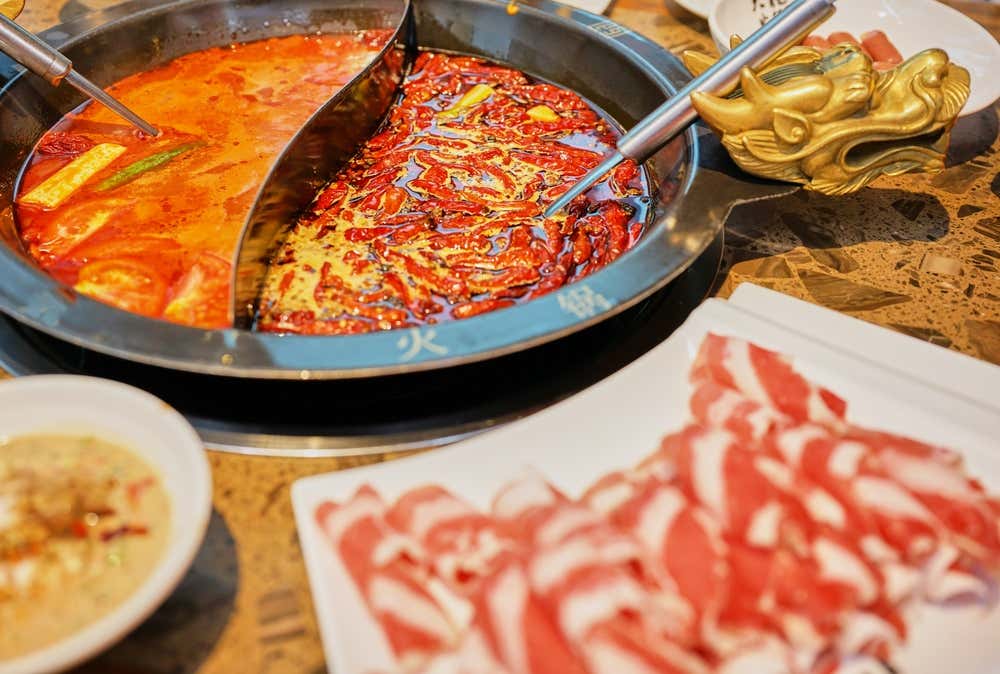
Huoguo, the Hot Pot of Chengdu and Chongqing
A pot of boiling broth, often divided in two so one half is fierce and the other mild, sits in the middle of the table. Everyone cooks their own meat, vegetables and tofu by dipping them in with chopsticks. In Chengdu the broth tends to be more aromatic and less punishing, while Chongqing, widely considered the birthplace of the spicy version, goes much heavier on red oil and chili. Chengdu also makes a good base for the Leshan Giant Buddha and panda base day trip, and you can browse everything else on offer in Chengdu and Chongqing.
Hunan: Smoke and Direct Heat
Bordering Sichuan, Hunan shares the love of chili but takes a different approach. The heat here is direct rather than numbing, with no Sichuan peppercorn behind it, and it often arrives alongside smoking as a technique.
Duo Jiao Yu Tou
Fish head steamed and buried under a mound of finely chopped red and green chilies. It sounds extreme, but the flesh stays soft under the heat, and it’s one of the province’s emblematic dishes, usually ordered to share in the middle of the table.
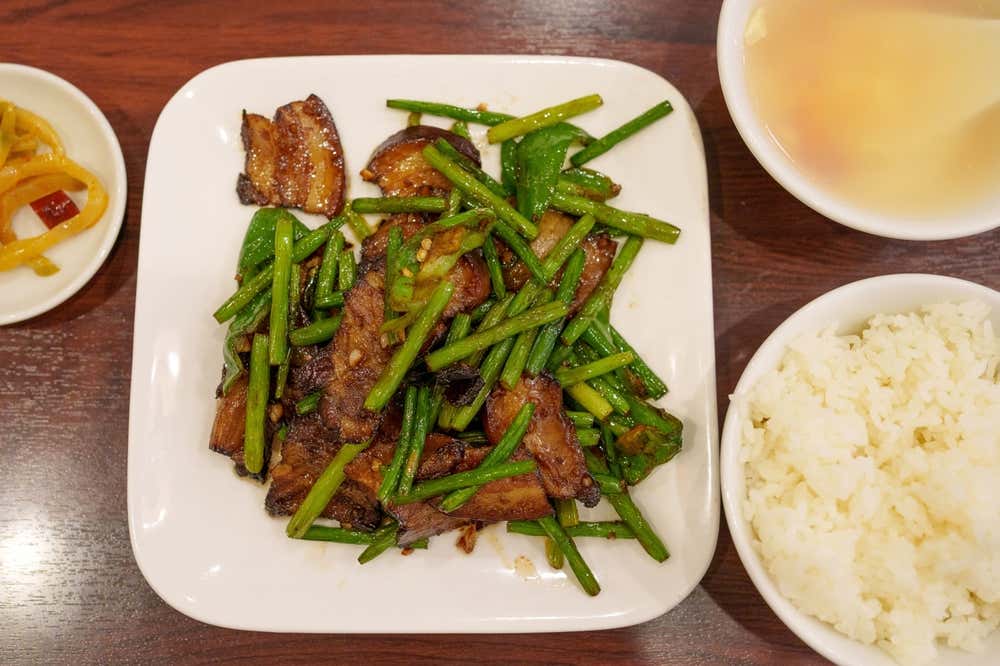
Hunanese Smoked Meat
Larou is pork belly or leg smoked slowly over wood, then stir-fried with dried chilies, garlic stems or leeks. It’s a country dish from rural Hunan, where smoking began as a way of preserving meat through the winter.
Canton and Hong Kong: Dim Sum and Southern Freshness
Cantonese cooking is probably the most exported cuisine in the world, and also the most misread. It favors short cooking times, fresh ingredients and light seasoning, a long way from the heavy flavors of many Chinese restaurants in the West.
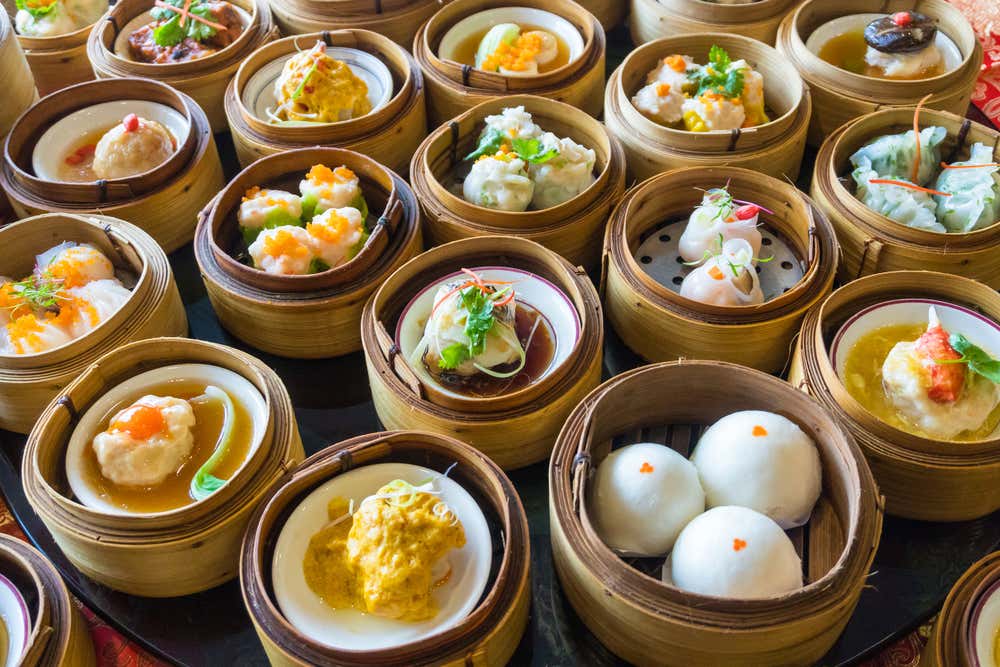
Dim Sum
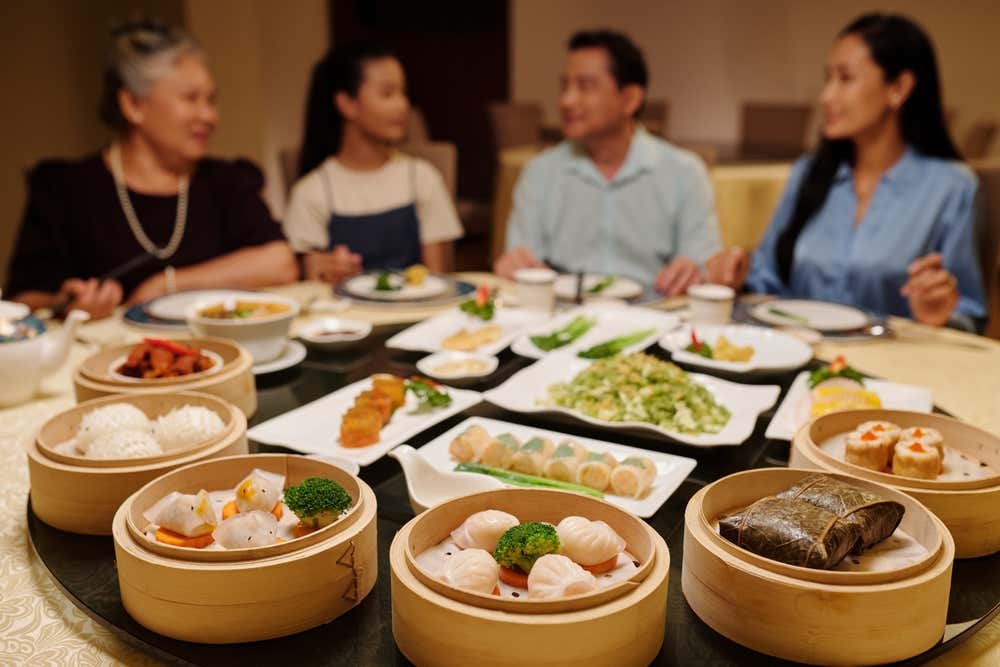
Dim sum are small filled parcels, steamed or fried, brought to the table in bamboo baskets. There are dozens of varieties and they usually come with pots of hot tea. Among the most common are har gow, shrimp dumplings in a translucent wrapper, and char siu bao, buns filled with pork in a sweet sauce.
Char Siu
Pork marinated in a sweet sauce of honey and spices, then roasted until the edges caramelize. You’ll see it hanging in the windows of Hong Kong roast meat shops, sliced to order and served over white rice as a one-plate meal.
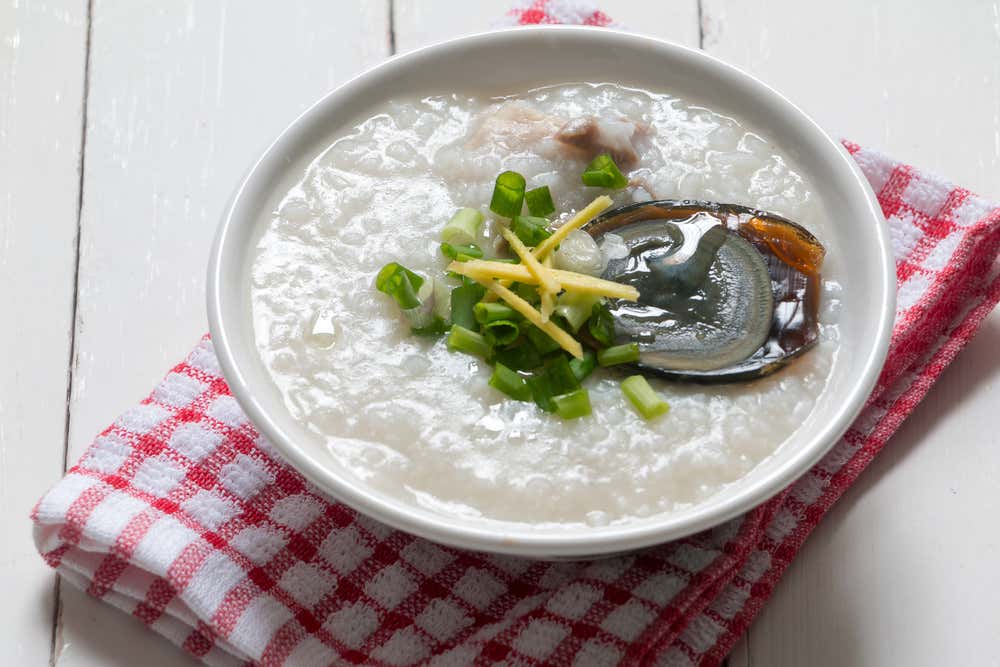
Congee
A rice porridge cooked long enough to turn creamy, eaten at breakfast with a range of toppings: century eggs, produced through a long alkaline fermentation, along with fish, offal, or simply scallion and ginger. It’s the standard Cantonese morning comfort, considered light and easy on the stomach. For the wider picture, the Hong Kong Island tour takes in Aberdeen Harbour and the markets, and there’s more among the activities in Hong Kong and in Guangzhou, the heart of Cantonese cooking.
Fujian: The Coastal Kitchen of Broths
Facing the Taiwan Strait, Fujian province built its cooking on long broths, fresh seafood and a skilled use of red rice wine, often used to marinate meat before cooking.
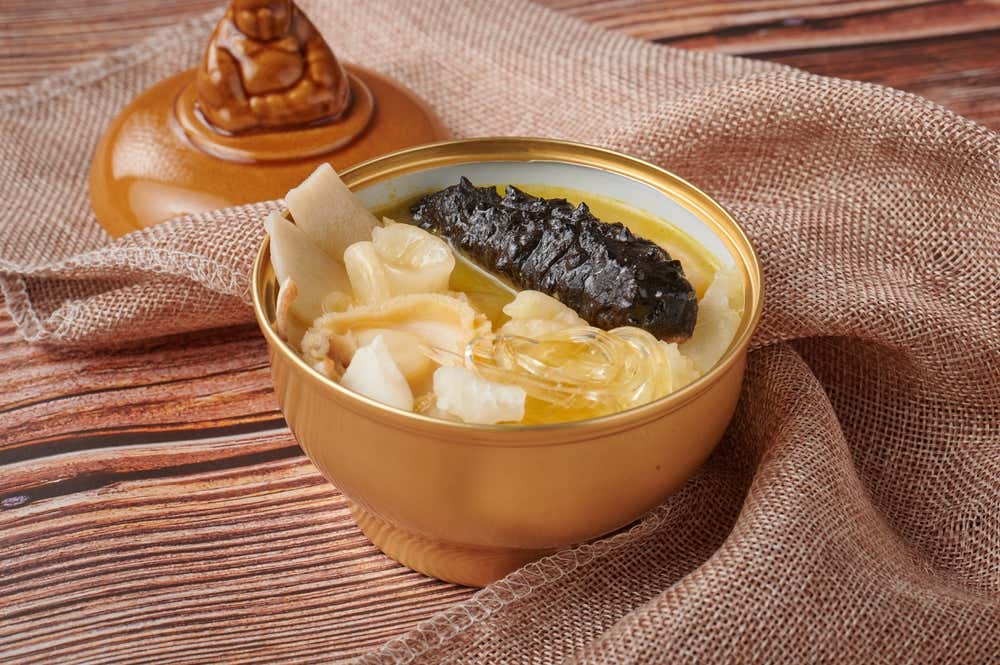
Fotiaoqiang
An elaborate soup, known in English as Buddha jumps over the wall. It’s a rich, layered broth made with abalone, dried scallops, mushrooms and meat, simmered for hours in a single pot. The name comes from a legend that the aroma was strong enough to make even the most devout monks break their fast.
Oyster Omelet
Fresh oysters mixed with egg and sweet potato starch, cooked on a flat griddle until the edges crisp and the center stays soft. It’s one of the most common snacks along the coast and in the night markets, and it spread to Taiwan with migration from Fujian.
Yunnan: Flavors of the Ethnic Minorities
Yunnan, bordering Myanmar, Laos and Vietnam, has the most varied cooking in China, largely because it’s home to a number of ethnic minorities, each with recipes of their own that overlap with those of the neighboring countries.
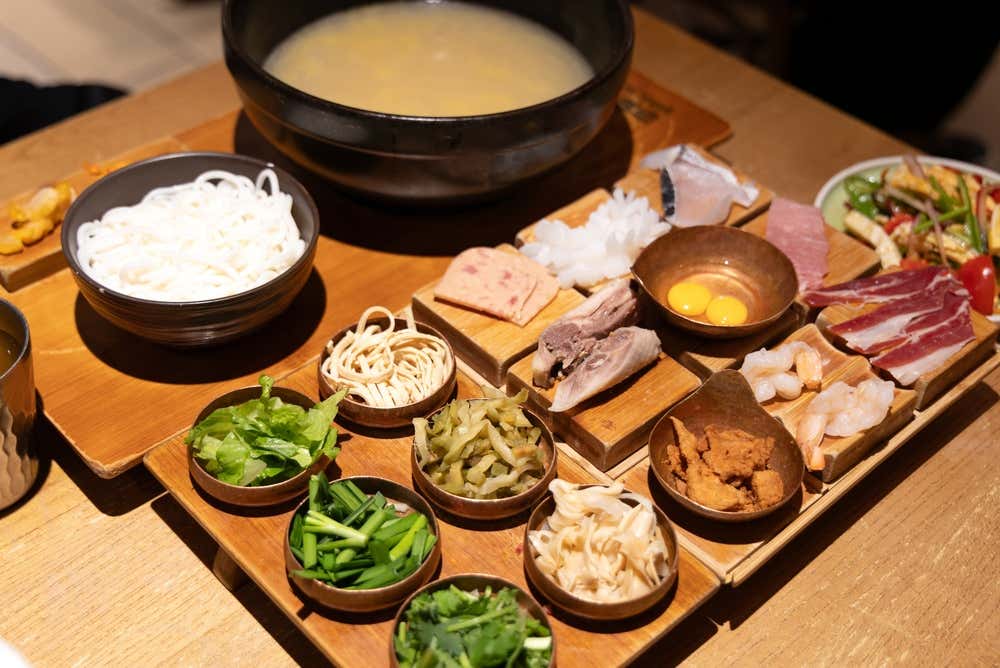
Guoqiao Mixian
A bowl of boiling broth sealed under a thin layer of fat that holds the heat in, served alongside raw meat, vegetables and rice noodles to add at the table. It’s also known as crossing the bridge noodles, after a legend about a woman who needed to carry a hot meal to her husband, who had gone off to study on an islet reachable only by a bridge.
Wild Mushrooms and Goat Cheese
The forests of Yunnan produce dozens of varieties of edible wild mushroom, often simply stir-fried with garlic and chili. The region is also one of the few parts of China producing a local goat cheese, rubing, eaten fried or grilled. Its texture is dense enough that it holds its shape rather than melting when heated.
Taiwan: Stinky Tofu and Reinventions
Taiwan isn’t part of mainland China, but it earns a place on this route because its cooking grew out of the meeting between several Chinese traditions, carried over by migration in the last century, and local island ingredients.
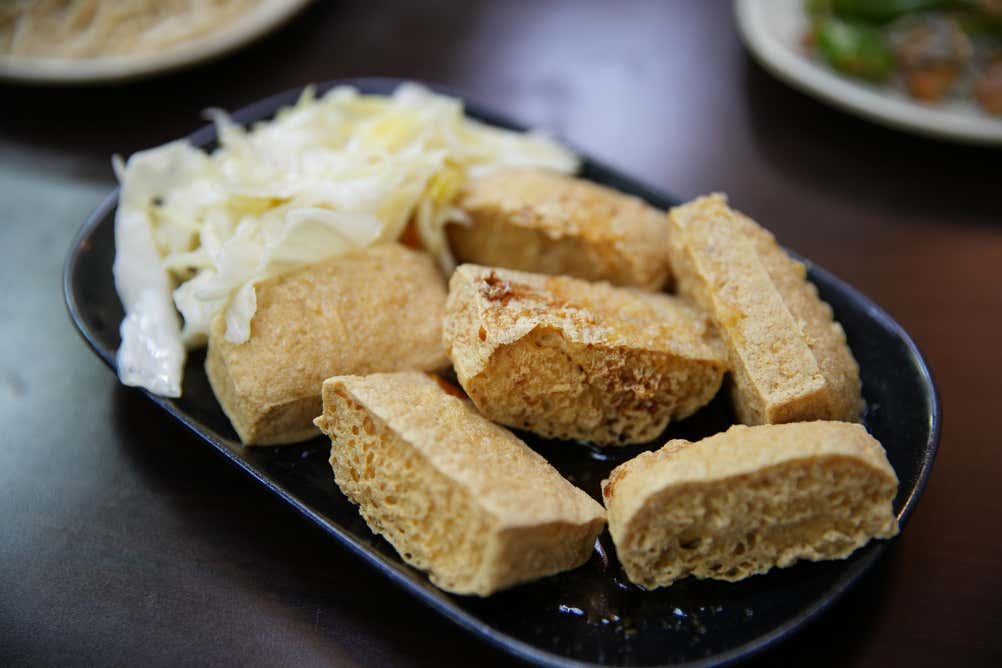
Chou Doufu and Street Food
Stinky tofu, chou doufu, fermented and then deep-fried, is the dish that divides visitors to Taipei more than any other. The smell is powerful, close to off-putting, while the taste is surprisingly mild. Alongside it, the night market stalls sell oyster rolls in sweet sauce and tea eggs, simmered long enough in flavored black tea to marble the white. The Taipei night tour takes in the markets and temples after dark, and the Dadaocheng private tour walks the old spice and medicine shops in the city’s most traditional district.
Taiwanese Xiaolongbao
Taipei is home to one of the most famous restaurant groups in the world for these soup dumplings. They’re close to the mainland version, filled with broth, but wrapped in an exceptionally thin skin with exactly 18 pleats. For the best in the city, book a meal at the Din Tai Fung restaurant, which built its reputation on this one preparation. That reputation turned it into an international chain, with branches in the United States, Japan, South Korea, Singapore, Hong Kong and elsewhere.
Bubble Tea and Tea Culture
Taiwan is the birthplace of bubble tea, the milk tea with chewy tapioca pearls invented here in the 1980s. The island also grows high-quality tea, and the hills outside Taipei hold historic plantations you can visit to watch the leaves being processed. The tea tour through Pinglin and Maokong goes into exactly those hills, well away from the noise of the city.
Drinks to Try in China
A Chinese meal rarely finishes without something to drink, and here too the habits shift from region to region.
Tea
Tea comes with almost every meal and is served hot and unsweetened. The main varieties are green tea, oolong, which is semi-fermented and typical of Taiwan and Fujian, and pu-erh, a dark tea from Yunnan aged in bamboo casks anywhere from two years to fifty. You’ll often see it sold in its characteristic compressed disc.
Baijiu
A sorghum spirit with a high alcohol content, baijiu is the official drink of toasts at any significant meal. The aroma is intense and hay-like, and hard to describe to anyone tasting it for the first time. It arrives in small glasses that everyone empties together after a toast.
Local Beer
Tsingtao beer, brewed in the coastal city of Qingdao thanks to a German colonial legacy, is still the most widely available in restaurants across the country. It’s usually the lighter alternative to baijiu for anyone not used to spirits.
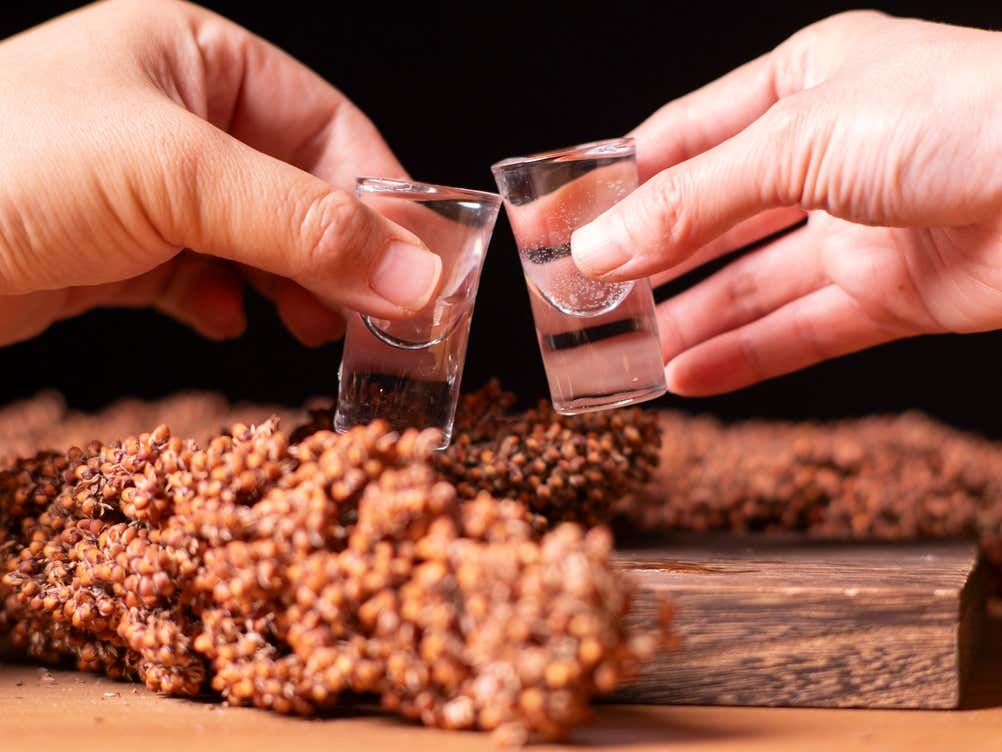
Table Manners in China: Rules and Mistakes to Avoid
Some habits that pass without comment at home can read as rude in China, and the reverse is true too. Knowing a few basics makes a shared table much easier to navigate.
Never stand your chopsticks upright in a bowl of rice, since it echoes the incense sticks used at funeral rites. Wait for the oldest person at the table, or the guest of honor, to begin eating before you serve yourself from the shared dishes.
A little noise while sipping broth or eating soup is fine and isn’t considered bad manners. If someone pours your tea, a light tap on the table with two fingers is the traditional way to thank them without interrupting the conversation.
Leaving a little food on your plate at the end of a meal usually signals that you’ve had enough, while clearing it completely can read as an implicit request for more. Avoid flipping a whole fish over to reach the other side, which is considered unlucky in some coastal regions; lift the bone out from underneath instead.
It’s also worth knowing that the bill in Chinese restaurants is almost always paid by whoever issued the invitation, or by the oldest person in the group. Splitting the check is less common than in the West, though it’s becoming more usual among younger people in the big cities.
Food in China is really a set of regional traditions with surprisingly little in common, running from the steamed breads of the north through the burning heat of Hunan and Sichuan to the delicacy of Cantonese dim sum and the warm broths of Yunnan. Moving between them with some curiosity, ideally alongside someone who already knows the addresses and the customs, turns every meal into a way of reading the country.
If you’d like more Asian food to plan around, the guide to must-try Korean dishes covers the neighboring kitchen. To start filling in the rest of the trip, browse the full range of tours and experiences across China, or explore the best activities in English all over the world.


Most read of #More of Asia
What is a Free Tour & How Much do They Cost?
16 October 202615 Bucket List Travel Experiences to Gift in 2026
14 October 2026What to Do in Athens: 11 ‘Musts’ in the Greek Capital
13 October 2026Top 11: What to Do in Belize in 2026
12 October 202611 Unmissable Day Trips from Rome (& How to Get There)
11 October 2026Top 12: What are the Best Things To Do in NYC With Kids? (2026)
10 October 2026Most read #United States

Iconic Food in Chicago: 17 Dishes You Have to Try
30 September 2026Best Time to Visit Hawaii: A Season-by-Season Guide
29 September 2026
NBA Game Tickets in New York: A Complete Guide
3 June 2026Top Fun Facts About New York
3 June 2026

The Ultimate 3-Day Boston Itinerary for First-Time Travelers
14 January 2026Top 11: Best Day Trips from Miami (2026)
10 January 2026The 12 Best Day Trips from Los Angeles (+ Travel Time)
22 November 2025Top 11: Things to Do in Las Vegas Besides Gambling
14 February 2025Top 10: Things to Do in Washington, DC
22 November 2024