
Costa Rica Food: 15 Traditional Dishes to Try

Costa Rica food doesn’t try to impress with spice or fuss. It’s honest home cooking built on rice, black beans, plantains and some of the freshest fruit you’ll ever taste, and it changes as you move from the cattle country of Guanacaste to the Afro-Caribbean kitchens of Limón. Eating your way through the country is one of the easiest ways to understand its pura vida spirit.
Costa Rica food is simple, fresh and built on rice, black beans, plantains and tropical produce. The dishes to try first are gallo pinto for breakfast, a casado for lunch, chifrijo, olla de carne, ceviche and, on the Caribbean coast, rondón and rice and beans with coconut.
The Best Food to Try in Costa Rica (2026)
1. Gallo Pinto
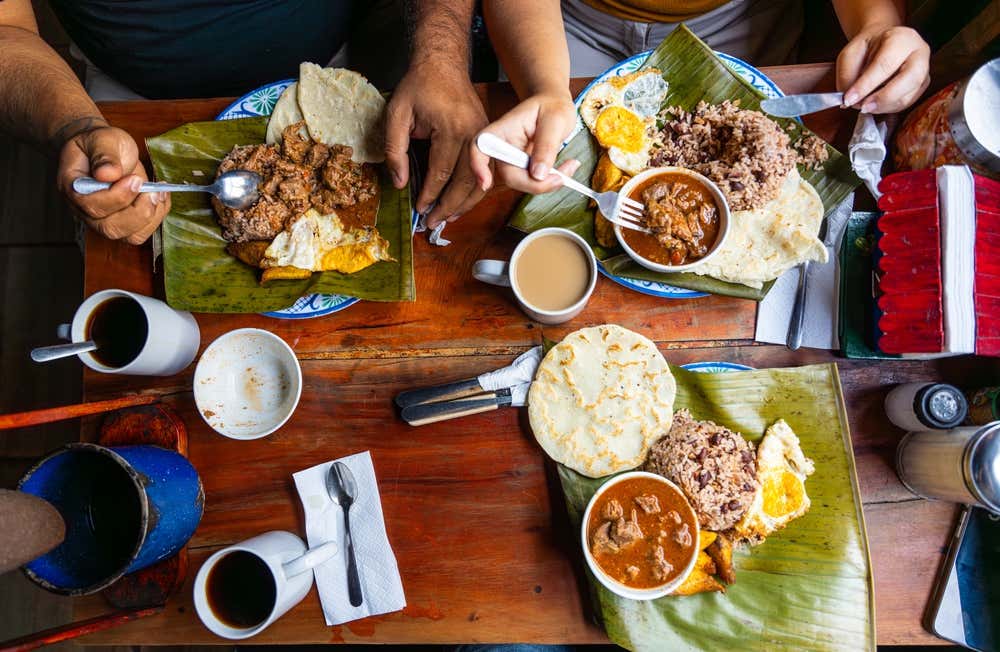
Gallo pinto is the national breakfast, and you’ll see it on almost every table in the morning. Day-old rice and black beans are fried together with onion, sweet pepper and cilantro, then usually served with eggs, fried plantains, fresh cheese and a spoonful of sour cream. The secret ingredient is Salsa Lizano, a tangy, slightly sweet brown sauce that Costa Ricans put on nearly everything.
2. Casado
If you only learn one word for lunch, make it casado, which means “married man.” It’s a generous plate of rice and beans served with salad, fried sweet plantains, and your choice of chicken, beef, pork or fish, sometimes with a scoop of picadillo, a chopped vegetable hash. It’s filling, cheap and the best-value meal in the country.
To learn how to make it yourself, the Quepos food tour and cooking class near Manuel Antonio combines local tastings with a hands-on lesson in some of the most typical dishes.
3. Olla de Carne
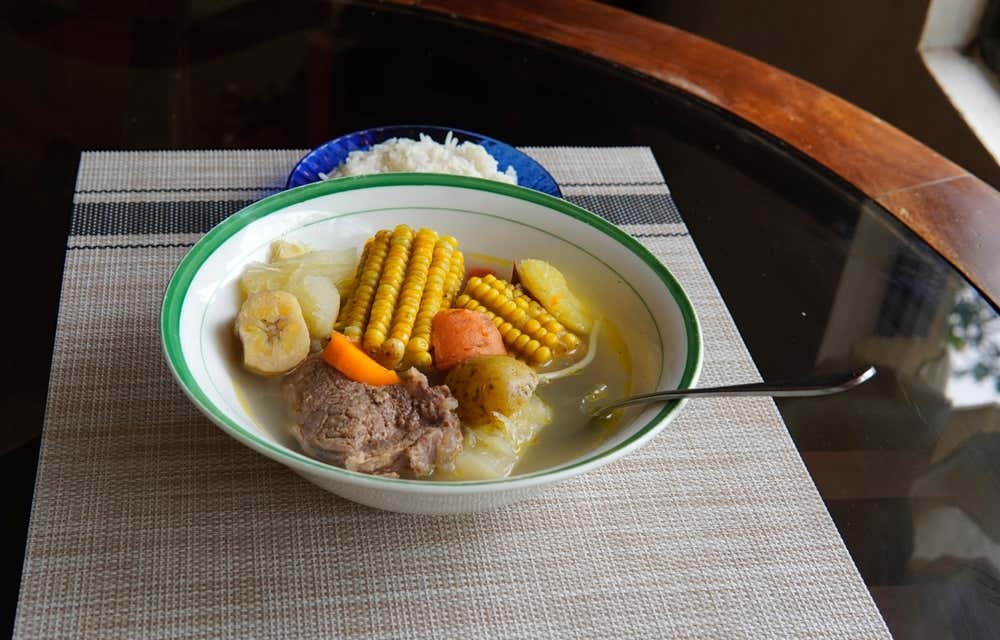
Olla de carne is Costa Rica’s classic comfort stew. Chunks of beef simmer slowly with yuca, chayote, corn, carrots, potatoes and green plantain until the broth is rich and golden. Families often make a big pot on weekends, and you’ll find it on the menu at traditional restaurants, especially on cooler days in the Central Valley.
4. Sopa Negra
This silky black bean soup is flavored with onion, garlic and cilantro and usually served with a hard-boiled egg sliced into the bowl. It’s light enough for lunch but satisfying, and many cooks add a little rice or a splash of sour cream on top.
5. Arroz con Pollo
Arroz con pollo is the dish of birthdays, family gatherings and Sunday lunches. Shredded chicken is cooked with rice, vegetables and achiote, which gives it a warm orange color, and it’s usually served with potato chips and a salad on the side.
6. Chifrijo
Chifrijo is the country’s favorite bar snack, created in the 1990s in a bar in Tibás, just north of San José. Its name blends chicharrón and frijoles, and it layers crispy fried pork and beans over rice with a fresh tomato salsa, avocado and tortilla chips for scooping. Order one with a cold Imperial beer and you’ll fit right in.
7. Ceviche
With two coastlines, it’s no surprise that ceviche is everywhere. The Costa Rican version usually uses white fish cured in lime juice with onion, sweet pepper and plenty of cilantro, and it’s often served with soda crackers instead of tortilla chips. You’ll find it at beach shacks and city markets alike.
8. Patacones
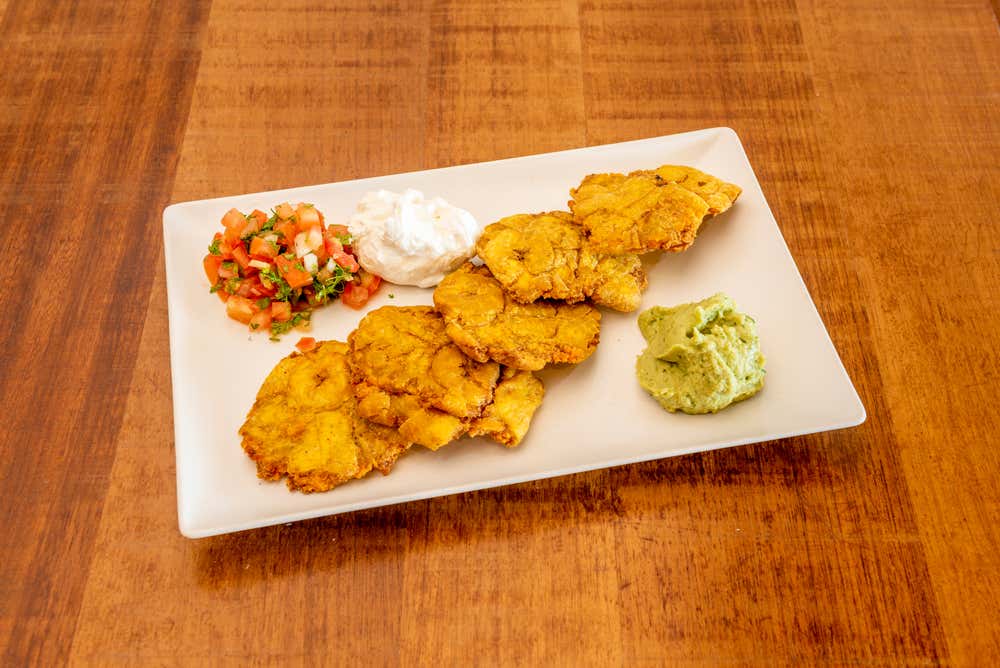
Patacones are slices of green plantain that are fried, flattened and fried again until they’re crisp outside and soft in the middle. They’re served as a side or a snack, often with black bean dip, guacamole or pico de gallo, and they’re especially popular on the Caribbean coast.
9. Tamales
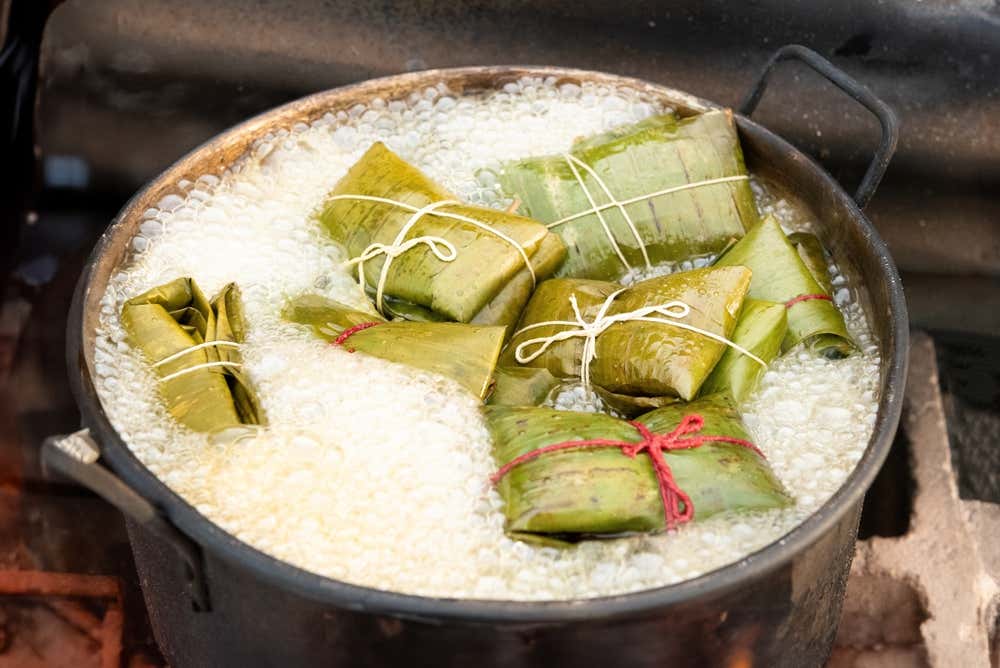
Costa Rican tamales are a Christmas tradition, when families gather to make dozens at a time. Corn dough is filled with pork or chicken, rice, vegetables and sometimes olives or raisins, then wrapped in banana leaves and boiled. They’re often sold in pairs tied together, known as a piña.
10. Rondón
On the Caribbean coast, the flavors change completely. Rondón, whose name comes from the English “run down,” is a coconut milk stew of fish or seafood with yuca, plantain, breadfruit and Caribbean spices. It reflects the Afro-Caribbean heritage of the Limón province, and it’s worth seeking out in towns like Cahuita and Puerto Viejo de Talamanca.
11. Caribbean Rice and Beans
Not to be confused with gallo pinto, Caribbean rice and beans are cooked together in coconut milk with thyme and a hint of chili. They’re usually served with jerk or Caribbean-style chicken and a spicy sauce made from Scotch bonnet peppers, and on the coast they’re a weekend favorite.
12. Churchill
In the port city of Puntarenas, the local treat is a Churchill, a mountain of shaved ice topped with syrup, condensed milk, powdered milk and a scoop of ice cream. It’s said to be named after a local man who looked like Winston Churchill, and eating one on the seafront promenade is a Puntarenas ritual.
13. Tres Leches
This sponge cake soaked in three kinds of milk is one of the most popular desserts in the country. It’s rich, moist and sweet, usually topped with whipped cream or meringue. Look out for arroz con leche, a cinnamon rice pudding, too.
14. Costa Rican Coffee
Costa Rica has grown coffee since the 19th century, and the country only produces Arabica beans. Regions like Tarrazú, in the mountains south of San José, are famous for bright, high-altitude coffee. Locals often brew it with a chorreador, a simple cloth filter held in a wooden stand.
To see how it’s grown, this coffee tour of San Marcos de Tarrazú takes you through the plantations. From San José, the Poás Volcano, La Paz Waterfall and coffee farm tour pairs a farm visit with a volcano and a waterfall. Both are great ways to spend a day in the highlands.
15. Agua Dulce and Refrescos Naturales
Agua dulce is a warm drink made by dissolving tapa de dulce, unrefined cane sugar, in hot water or milk, and it’s a favorite on chilly mornings. On hot days, order a refresco natural, a fresh fruit drink blended with water or milk from whatever’s in season, like passion fruit, mango, blackberry or guanábana. For something stronger, guaro is the local sugarcane liquor.
Where to Eat in Costa Rica
For the most authentic meals, look for a soda, a small family-run restaurant serving home-style food at low prices. Sodas are the best place to try casados, gallo pinto and olla de carne, and every town has at least one.
In the capital, the Mercado Central is a maze of stalls, sodas and spice sellers that’s been feeding locals since the 1880s. The San José free walking tour covers the city’s history, art and food, and it’s a good way to get your bearings before you start eating. For ideas beyond the table, take a look at these things to do in Costa Rica.
From a steaming plate of gallo pinto at sunrise to a coconut-rich rondón on the Caribbean coast, Costa Rican food is at its best when it’s simple and shared. Pull up a chair at a soda, ask what’s fresh and let the cook decide. When you’re ready to plan the rest of your trip, Civitatis’s full catalog has plenty of ideas.


Most read of #South America
Best Beaches in Sicily: 10 Spots for Your Next Trip
2 October 2026Best Time to Visit Japan: A Season-by-Season Guide
1 October 2026Traditional Japanese Food: 10 Dishes to Try in Japan
1 October 2026Iconic Food in Chicago: 17 Dishes You Have to Try
30 September 2026Best Beaches in Costa Rica: 12 Spots on Both Coasts
30 September 2026Best Time to Visit Hawaii: A Season-by-Season Guide
29 September 2026Most read #United States
Best Time to Visit Hawaii: A Season-by-Season Guide
29 September 2026West Coast Road Trip: An 8-Day Itinerary
12 July 2026
The 8 Best Day Trips from Philadelphia in 2026
1 July 2026NBA Game Tickets in New York: A Complete Guide
3 June 2026Top Fun Facts About New York
3 June 2026

The Ultimate 3-Day Boston Itinerary for First-Time Travelers
14 January 2026Top 11: Best Day Trips from Miami (2026)
10 January 2026The 12 Best Day Trips from Los Angeles (+ Travel Time)
22 November 2025Top 11: Things to Do in Las Vegas Besides Gambling
14 February 2025