

Traditional Greek Food: Dishes to Try in Greece
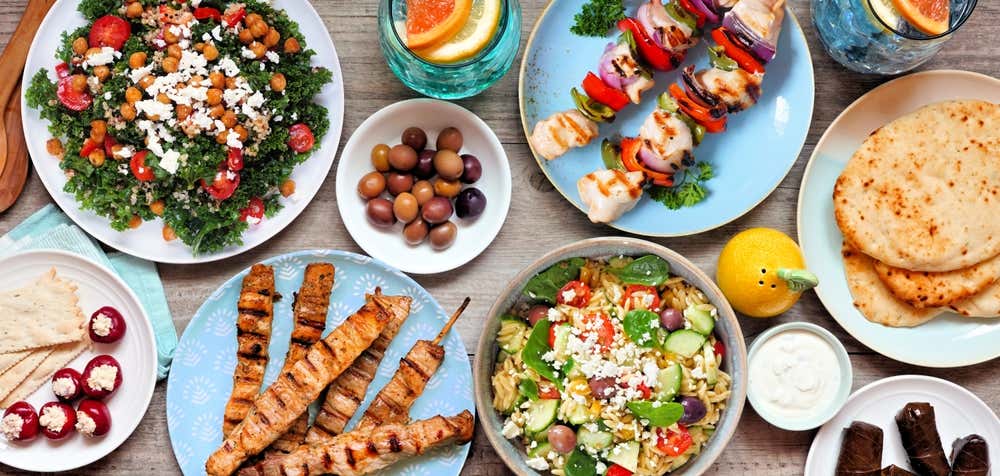

If you’re planning a trip to Greece and want to know which traditional Greek food is worth trying, this practical guide covers the names, the ingredients, and a few tips on where and how to taste each dish. The flavors are pure Mediterranean, built on a handful of simple ingredients: olive oil, bread, fresh cheese, seasonal vegetables, and fresh fish. Underneath it all, there’s an Eastern touch that might surprise you.
The most famous traditional Greek food includes moussaka (baked eggplant, ground meat, and béchamel), souvlaki (grilled meat skewers with pita), spanakopita (spinach and feta pie), and dolmades (vine leaves stuffed with rice). Salads, cheeses, and honey-soaked desserts round out the menu.
What to Eat in Greece 2026
1. Greek Regions and Their Food Traditions
Like Italy, Greece has countless local variations that change with the landscape, the climate, and the peoples who passed through each region over the centuries. Here’s a broad overview of the country’s main regional cuisines, so you’ll know what to order in a taverna once you’re finally there.
Crete
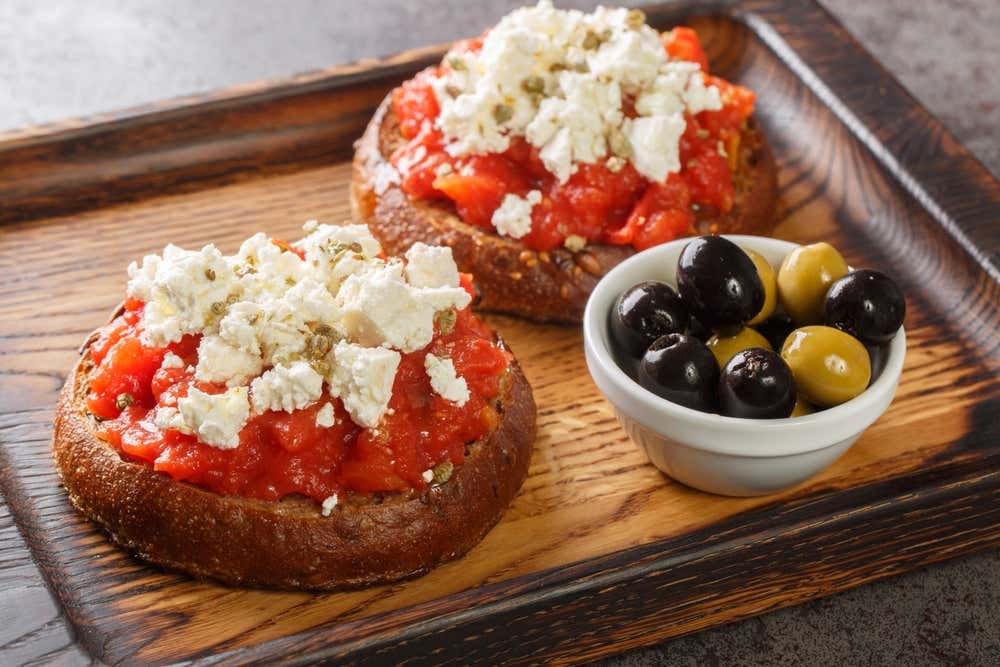
Greece’s largest island has a cuisine considered one of the healthiest in the Mediterranean, rich in vegetables, wild herbs, legumes, and locally pressed olive oil. Here you’ll eat hortopita (a savory pie made with wild greens instead of spinach), dakos (a barley rusk topped with grated tomato, crumbled mizithra or feta, and oregano), and lamb slow-roasted in the oven with potatoes.
Attica
Attica is the home of retsina wine and a cuisine shaped by many cultures. Its beating heart lies in the markets and tavernas of Athens, and you’ll find plenty of ideas in this guide to the best things to do in Athens. The local tradition blends Mediterranean simplicity with spit-roasted meats, fresh fish, and crispy phyllo pastries that reflect the Ottoman influence.
Peloponnese
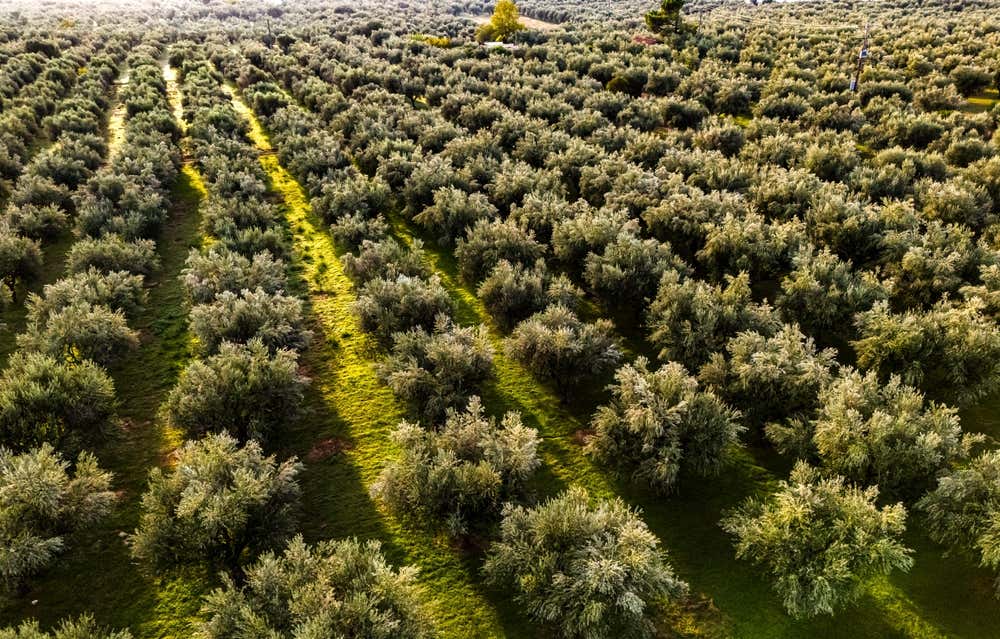
A land of olive groves, citrus, and vineyards, the Peloponnese produces some of the country’s finest extra virgin olive oils and cheeses like kefalotyri, which dates back to Byzantine times. The local cooking also includes grilled meats, stuffed vegetables, and sweets made with honey and almonds, another tradition inherited from the Byzantine era.
Macedonia and Epirus (Northern Greece)
In the colder, mountainous north, the cooking gets heartier. Menus feature grilled meat, smoked sausages, aged cheeses, and oven-baked pasta. Thessaloniki, Greece’s second-largest city, is also the capital of Greek street food, with Ottoman influences still easy to spot in its sweets and spiced meat skewers.
Cyclades Islands (Santorini, Mykonos, Paros)
Santorini’s volcanic soil gives its produce, especially its cherry tomatoes and vegetables, a truly unique flavor. Across the Cyclades, fish and seafood are the stars of almost every dish. Add local cheeses, like the graviera of Naxos, and sweets made with thyme honey, which are found all over these islands.
Ionian Islands (Corfu, Zakynthos, Kefalonia)
Here, the cooking shows a strong Venetian and Italian influence, thanks to centuries of rule by the Republic of Venice. Dishes like sofrito (veal in a garlic and vinegar sauce) or pastitsada (pasta with meat in a spiced tomato sauce) feel closer to the Adriatic than to classic Greek cooking.
2. Meze: Where to Start
Mezedes, or meze, are the perfect starting point on your first trip to Greece. Small and varied, they let you try different textures and flavors in a single meal. They’re a bit like Spanish tapas, and the idea is the same: sitting down to eat is also a way of sharing. Here are some of the most common.
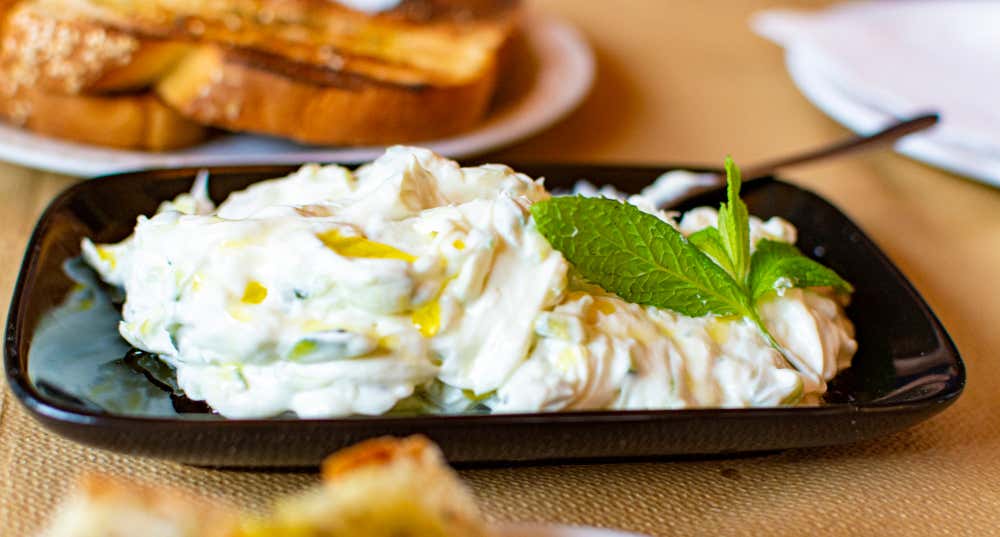
Tzatziki
Strained Greek yogurt, grated cucumber, garlic, dill, and a drizzle of olive oil: tzatziki goes with almost everything, from fresh bread to grilled meat. The version served in country tavernas is usually thicker and more garlicky than in the tourist chains of Athens, and that’s the one to look for if you want the original recipe.
Fava
Not to be confused with fava beans, Greek fava is a creamy purée of yellow split peas, served with raw olive oil, chopped red onion, and sometimes capers. It’s a specialty of Santorini, where the volcanic soil gives the legume an especially intense flavor.
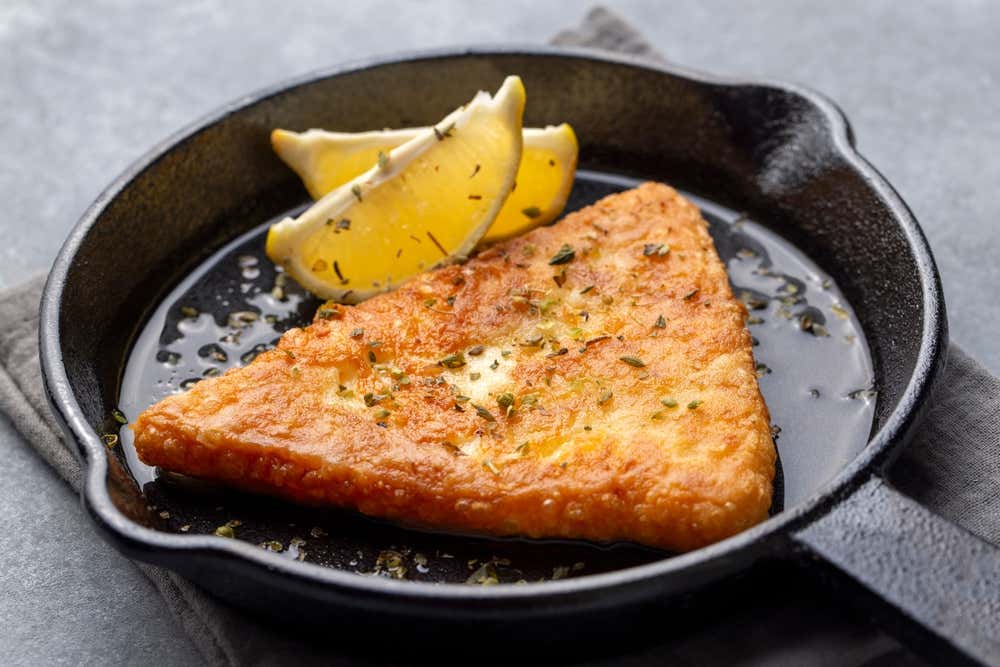
Saganaki
A slab of semi-hard cheese, usually kefalotyri or graviera, is pan-fried until it forms a golden crust. Some places flambé it at the table, with a sudden burst of flame and a cheerful “opa!” to go with the show.
Taramasalata
This creamy spread is made with fish roe and lemon. It’s served with other seafood meze in a small bowl in the middle of the table, ready to spread on warm bread, pita, or toast.
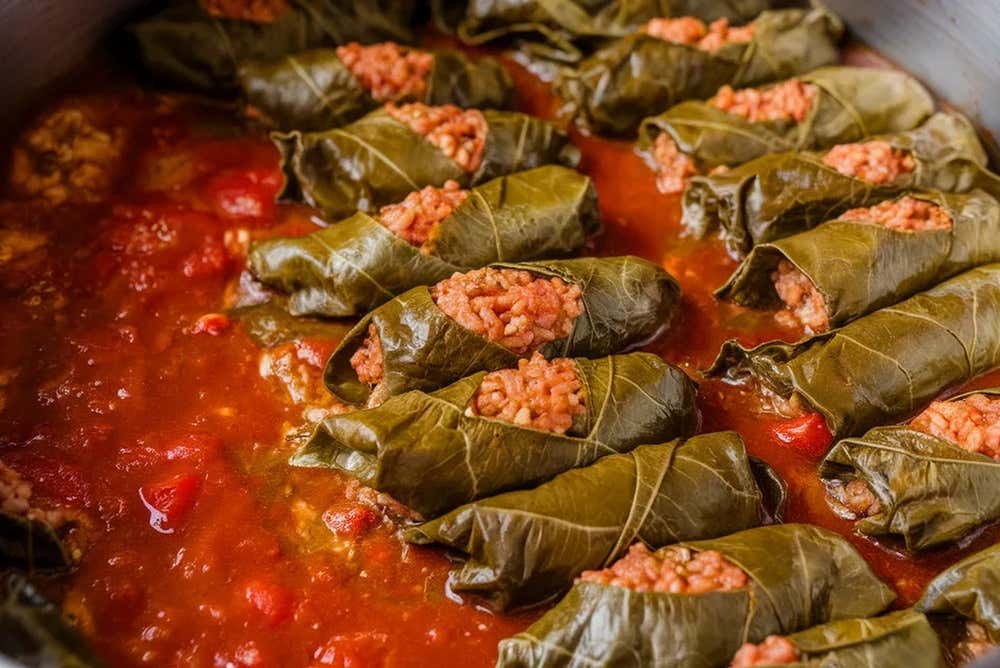
Dolmades
These little rolls of vine leaves are stuffed with rice, fragrant herbs, and, in some versions, ground meat. They’re eaten warm or cold, with a squeeze of lemon that balances the leafy flavor.
3. Main Dishes of Greek Cuisine
After the starters come the dishes that, more than any others, represent Greek cooking around the world. You’ve probably heard of them before you even board the plane.
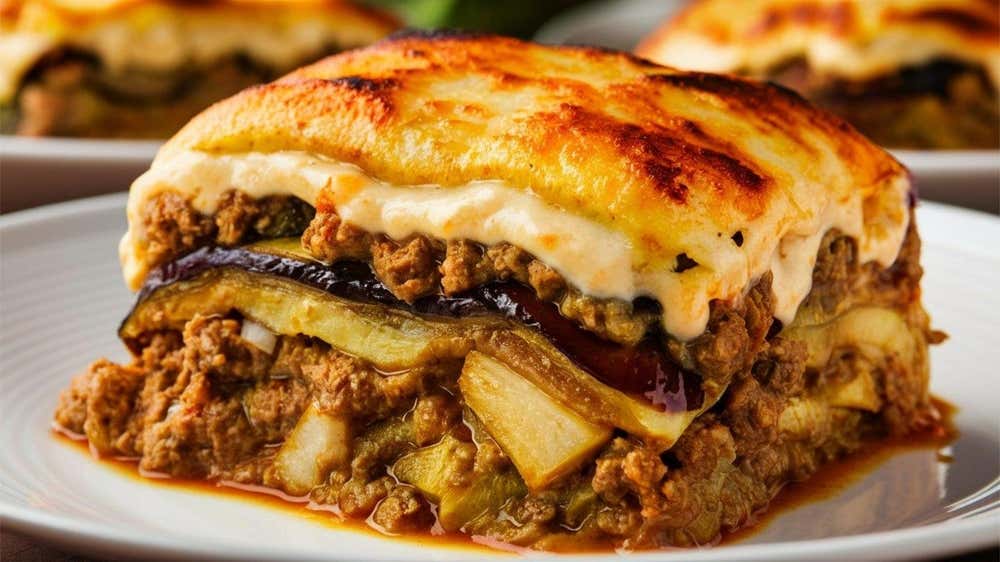
Moussaka
This bake layers grilled eggplant with ground lamb or beef cooked in tomato and spices, then tops it all with a thick layer of béchamel and browns it in the oven. Moussaka takes a long time to make, so many restaurants only serve it on certain days of the week. If you see it on the menu, ordering it is practically a must.
Giouvetsi
Less famous outside Greece but much loved by locals, giouvetsi is a stew of lamb or veal baked in the oven with tomato and kritharaki, a small orzo-like pasta. It’s a hearty one-pot meal, especially popular in the northern regions.
Souvlaki and Gyros
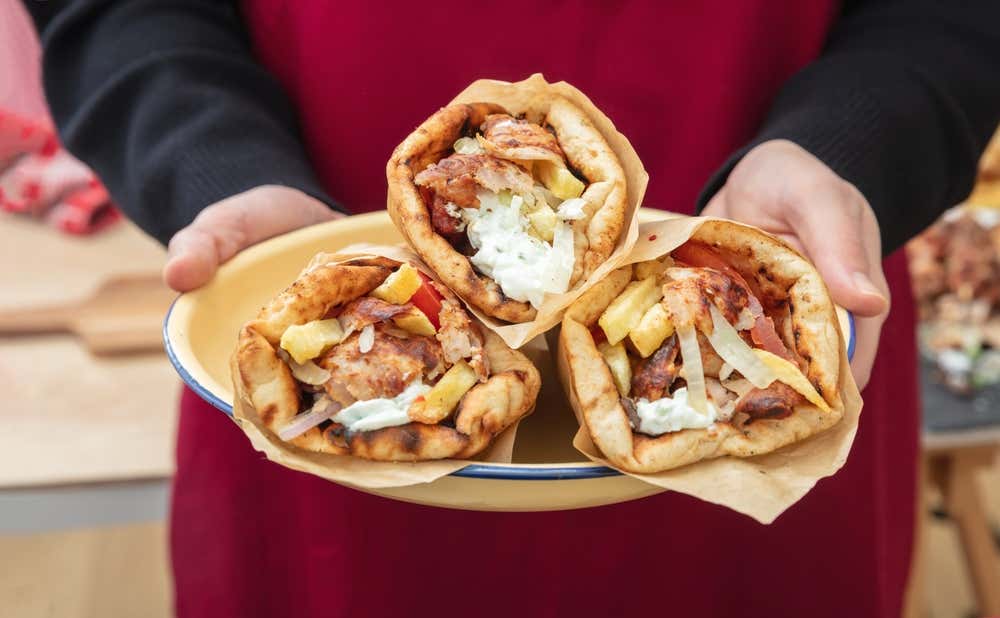
Souvlaki is a skewer of marinated meat (pork, chicken, or lamb) grilled and served with pita, fries, tzatziki, and raw vegetables. Gyros, often mixed up with souvlaki, is meat slow-roasted on a vertical spit and shaved into thin slices, much like Turkish kebab. It’s also used to fill pita, creating the juicy gyro pita. Both are sold at takeout stands in every Greek city for very little money, which makes them the ultimate quick meal.
Fish Dishes
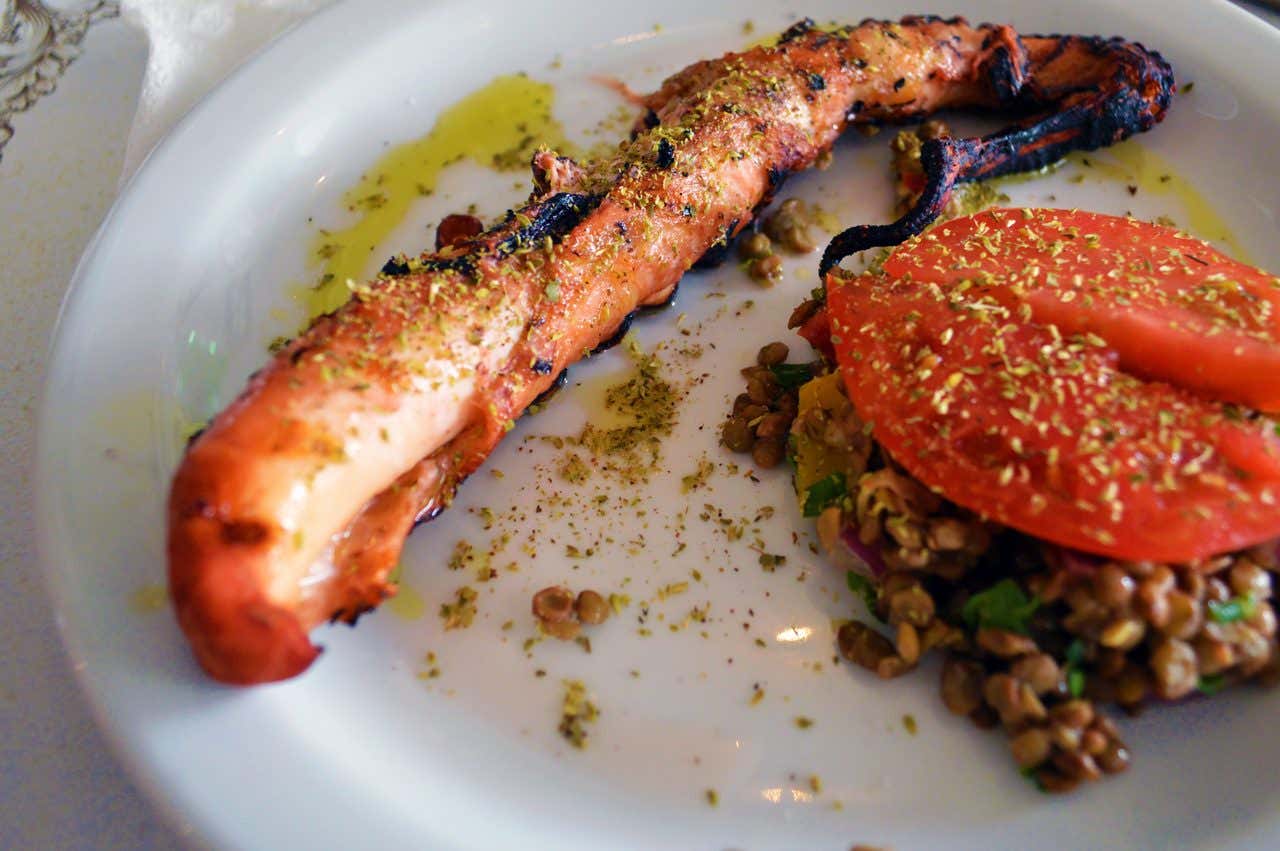
On the islands and along the coast, fish is the star of the table. The most common dish is psaria sti schara, grilled sea bream dressed only with olive oil, lemon, and oregano, but there are more elaborate options too. Try the shrimp saganaki (in tomato sauce with feta), chtapodi me fakes (grilled octopus served on lentils), and the grilled sardines you’ll find in village tavernas. A fun way to pair seafood flavors with the scenery is this Santorini caldera cruise with lunch or dinner, with a Greek meal served on board as you explore the coast.
Savory Pies
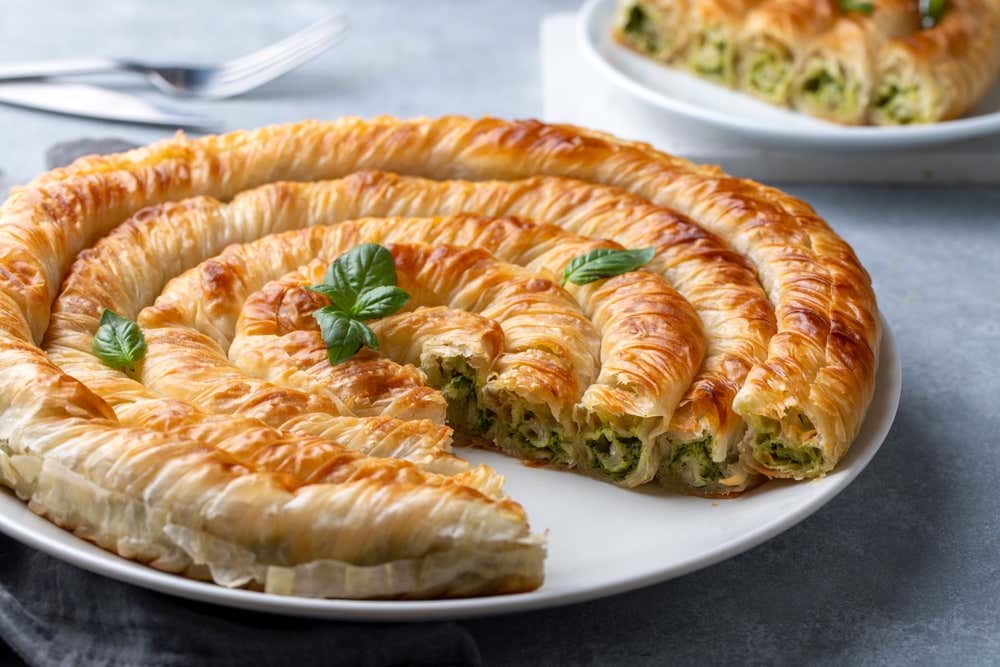
Often made with phyllo dough, Greece has a huge variety of savory pies. There’s spanakopita, filled with spinach and crumbled feta, but also tyropita, with a creamy blend of cheeses, and kolokithopita, served mostly in summer, with zucchini, herbs, and feta.
4. Classic Salads and Sides
Beyond the main dishes, there’s always room on a Greek table for simple sides that add a fresh touch. Seasonal vegetables, a drizzle of olive oil, and little else are enough to complete the meal without weighing it down.
Horiatiki
What most of the world calls “Greek salad” is called horiatiki in Greece, literally “village salad.” It’s tomato, cucumber, red onion, green pepper, kalamata olives, and a whole slab of feta on top, dressed with olive oil and oregano. It has no lettuce, unlike many versions served abroad, and it’s meant to be shared in the middle of the table with bread.
Gemista
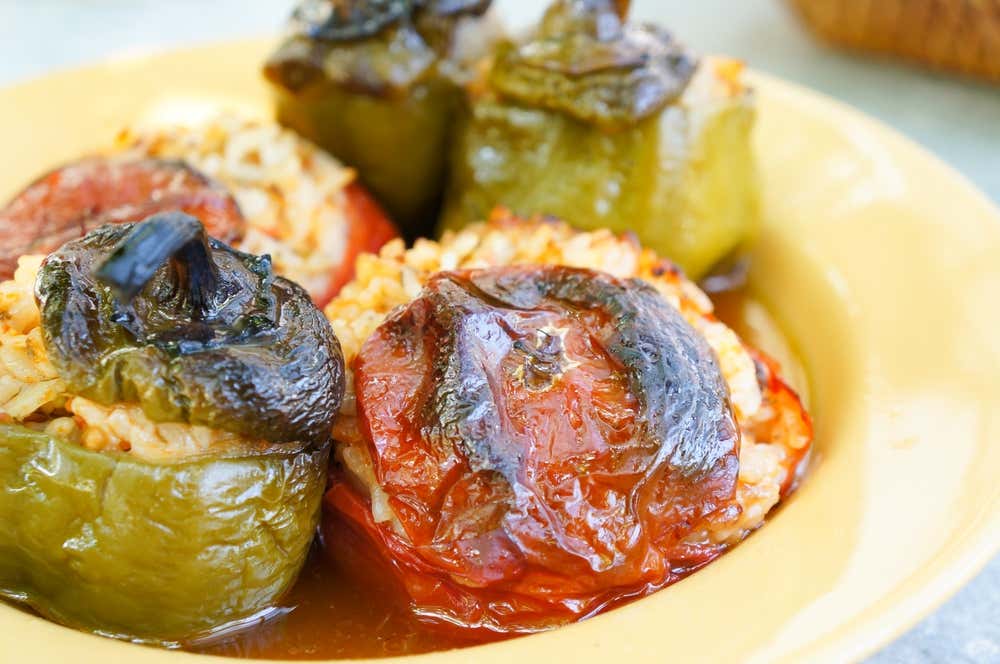
Gemista are summer vegetables, mostly tomatoes and peppers, stuffed with rice, herbs, and sometimes meat. It’s a classic home-cooked dish, often made in big batches in summer when vegetables are plentiful. Potatoes roasted with lemon and oregano, meanwhile, go with almost every meat dish.
5. Traditional Greek Desserts
Greek pastry has its roots in Turkish and Middle Eastern traditions, with ingredients like honey, nuts, and phyllo dough. They may be small, but these sweets are an explosion of flavor that will satisfy even the biggest sweet tooth.
Baklava
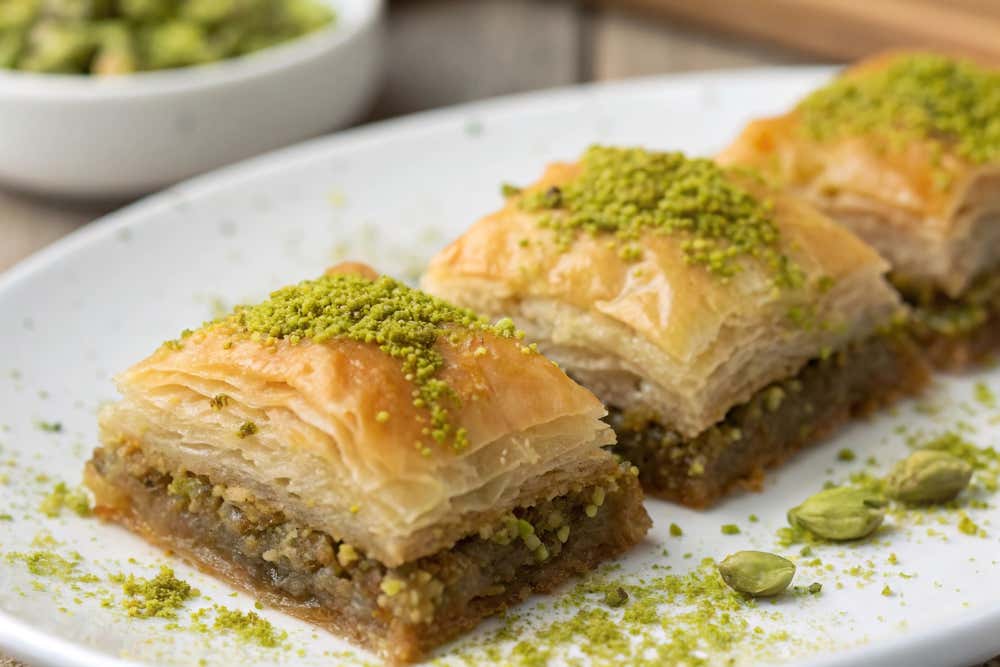
Paper-thin layers of phyllo are stacked with chopped walnuts or pistachios, then soaked in a syrup of honey and cloves. It’s sweet and dense, so it’s served in small portions.
Loukoumades
These little balls of fried dough are crispy outside and fluffy inside, served hot with honey, cinnamon, and sometimes chopped walnuts. They’re the most popular sweet street food in Greek cities, sold by the bagful at food stalls everywhere.
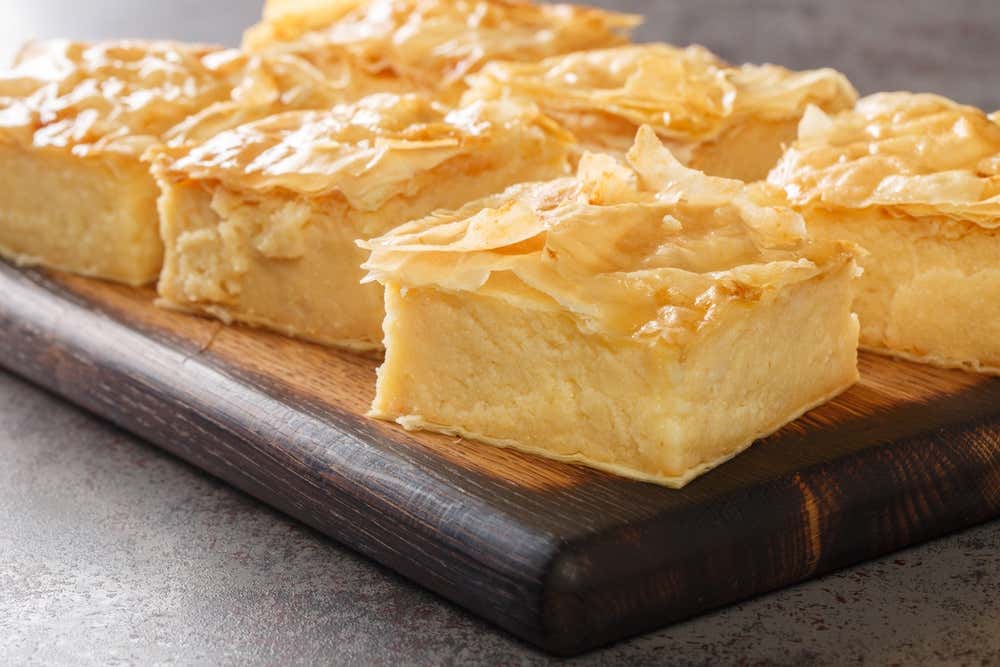
Galaktoboureko
A thick semolina custard is wrapped in sheets of phyllo and soaked in syrup. It’s built like baklava, but with a soft filling instead of a crunchy one. Less known abroad, it’s one of the desserts Greeks love most.
6. What to Drink in Greece
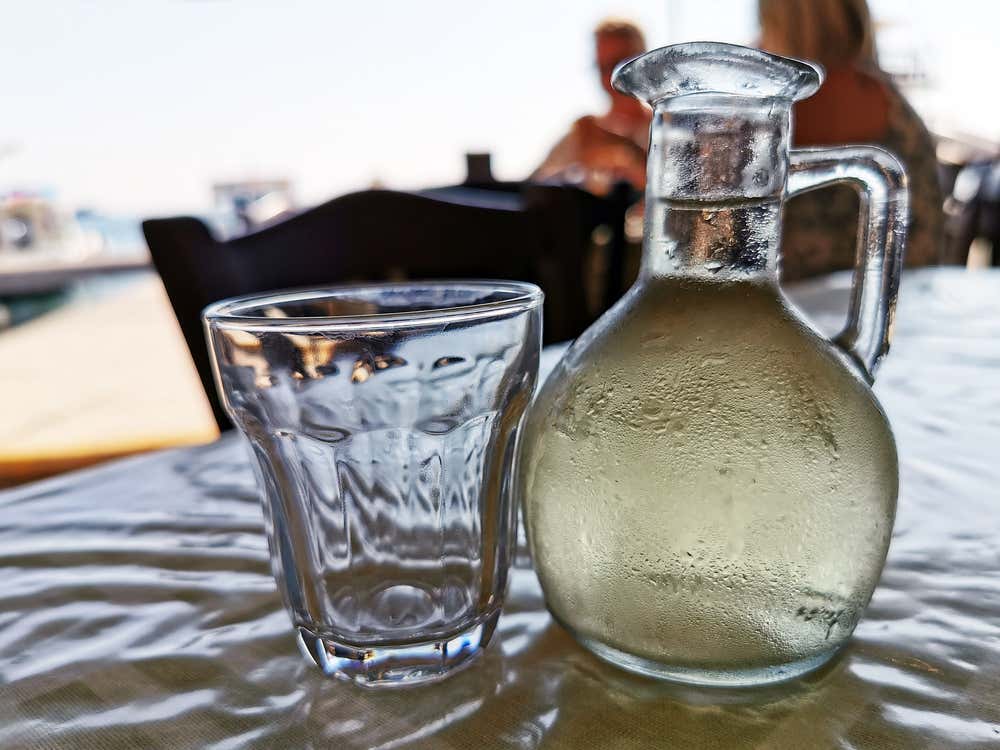
Ouzo, an anise-flavored spirit that turns milky white when you add water and ice, is traditionally sipped with meze, almost never on its own or on an empty stomach. Tsipouro, a pomace brandy similar to grappa, is more common in the north. If you prefer wine, try retsina, a white wine flavored with pine resin, or Santorini’s wines made from the assyrtiko grape, grown in volcanic soil that gives them a salty note that’s hard to find anywhere else. Beer lovers will also find plenty of craft brews, along with a wide range of commercial brands, mostly lagers and pilsners.
7. Where to Eat Traditional Greek Food: Practical Tips
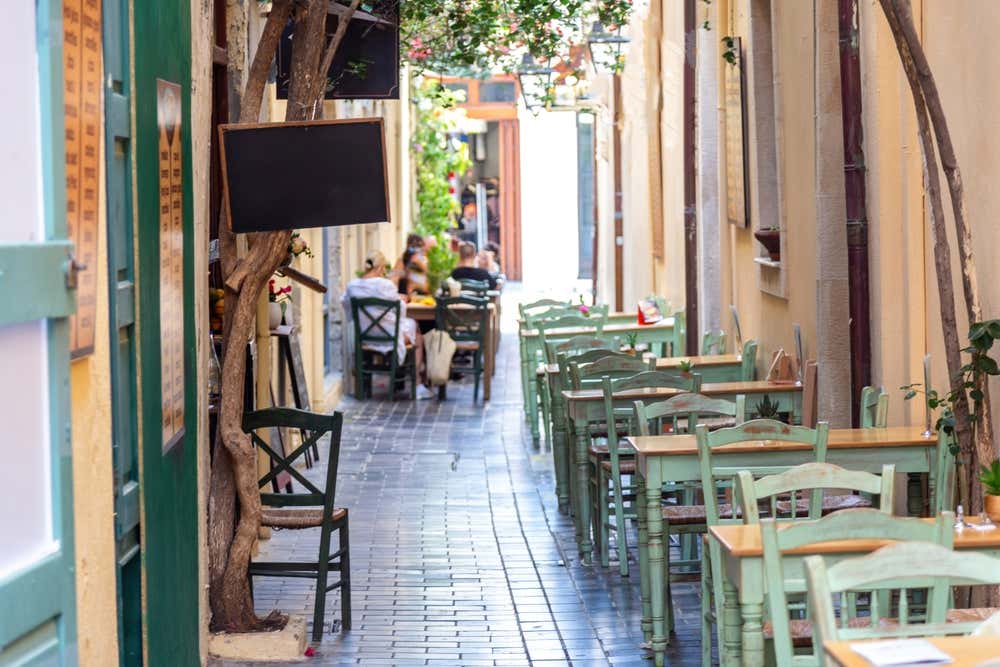
Family-run tavernas, recognizable by their simply set tables and menus handwritten on chalkboards outside or on slips of paper, almost always offer better value. In general, the rules for avoiding tourist traps are the same as anywhere else. The best clue is a dining room full of locals and a menu written mostly in Greek.
In Athens, an easy way to find your way around the city’s food neighborhoods is to follow someone who knows the right addresses. This Athens food tour lets you taste souvlaki, savory pies, loukoumades, and more in a few hours, with the story behind each recipe. The same goes for Thessaloniki, often called the unofficial capital of Greek street food, where this Thessaloniki food tour takes you through bakeries, covered markets, and food shops you’d be unlikely to find without a local guide.
On the islands, the experience changes, since meals are often tied to the scenery. In Santorini, for example, dinner while the sun sets behind the caldera is almost a ritual, and this Santorini sunset cruise with dinner combines exactly those two things. On Mykonos, a boat trip along the south coast is a great way to reach quiet coves and stop for fresh fish at a small local restaurant.
In Rhodes, where the old town looks straight out to sea, dinner can turn into a short cruise. This sunset catamaran cruise with dinner pairs views of the coast with a menu of local favorites like Greek salad and tzatziki.

8. What to Know About Greek Food Before You Go
In Greece, meals are deeply social and can go on for hours, especially at night. Don’t be surprised if the server doesn’t bring the check right away. Use that time to slow down and enjoy the evening, since it’s an essential part of the experience. Most local restaurants work on a meze-style menu of small plates to share, rather than separate main courses and sides. Ordering three or four meze per person and putting them in the middle of the table is the most authentic way to discover Greek food.
Extra virgin olive oil goes with almost every dish, as does lemon, which seasons meat, fish, and vegetables alike. If you’d like to master the classic recipes yourself, sign up for this Greek cooking class in Paros and spend an afternoon of your trip getting your hands dirty.
Traditional Greek food mirrors a culture built on sharing: starters in the middle of the table, slow-baked dishes from the oven, fish dressed with nothing more than olive oil and lemon, and honey-rich desserts that end every meal on a sweet note. Eating in Greece means slowing down and recharging before you carry on with your trip. Whether you plan everything yourself or follow someone who knows the best spots, the best way to discover these flavors is to sit down and let the menu of the day win you over. And to fill the rest of your trip with unforgettable experiences, Civitatis’s full catalog has the best activities in English all over the country.


Most read of #Greece
What to Do in Athens: 11 ‘Musts’ in the Greek Capital
13 October 202610 Famous Historical Sites in Greece: Athens to Crete
24 September 2026Most read #Greece

10 Famous Historical Sites in Greece: Athens to Crete
24 September 2026