10 Famous Historical Sites in Greece: Athens to Crete

Greece holds around 5,000 years of history in its stones. From Athenian democracy to the Minoan palaces of Crete, by way of the most famous oracle of the ancient world, the country is home to some of the most important archaeological sites on the planet. These 10 historical sites in Greece tell the story of Greek civilization from start to finish, from Athens to the islands of Crete, Santorini and Rhodes.
10 Historical Sites in Greece
The most famous historical sites in Greece are the Acropolis and Ancient Agora in Athens, Delphi, Olympia, Mycenae and Ancient Corinth on the mainland, the monasteries of Meteora, the Palace of Knossos in Crete, Akrotiri in Santorini and the Medieval City of Rhodes.
1. Acropolis of Athens
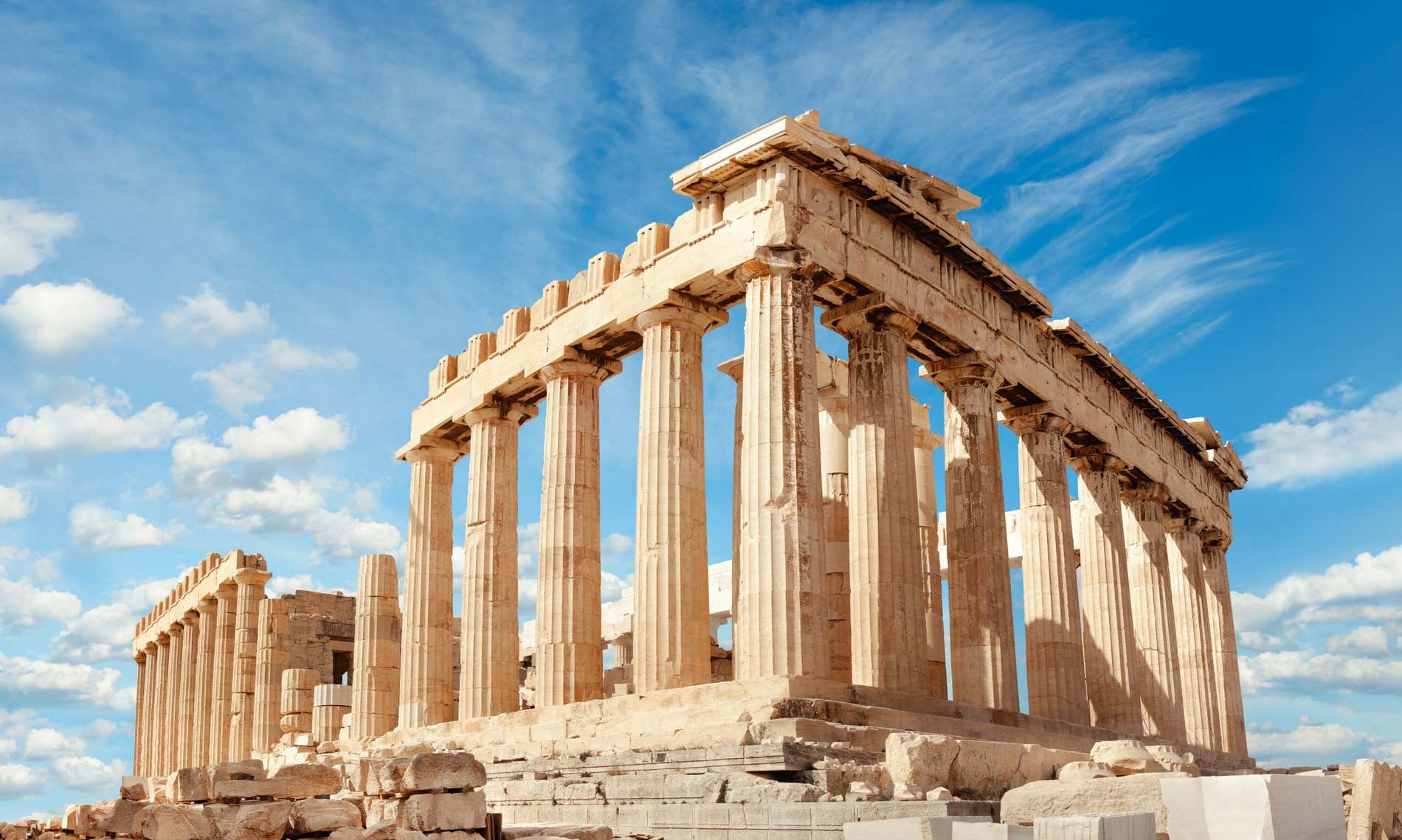
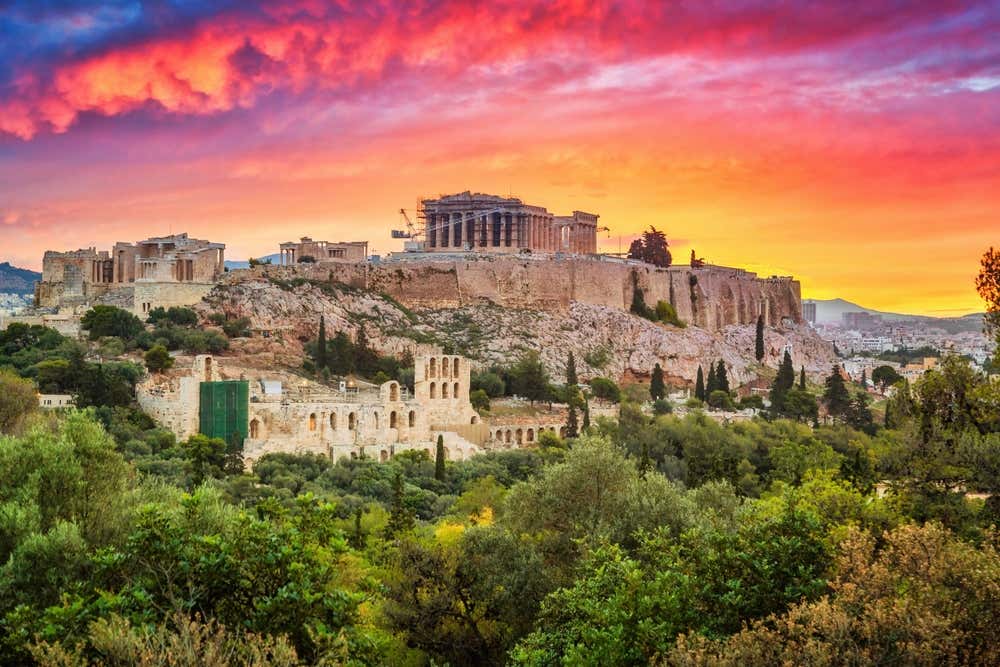
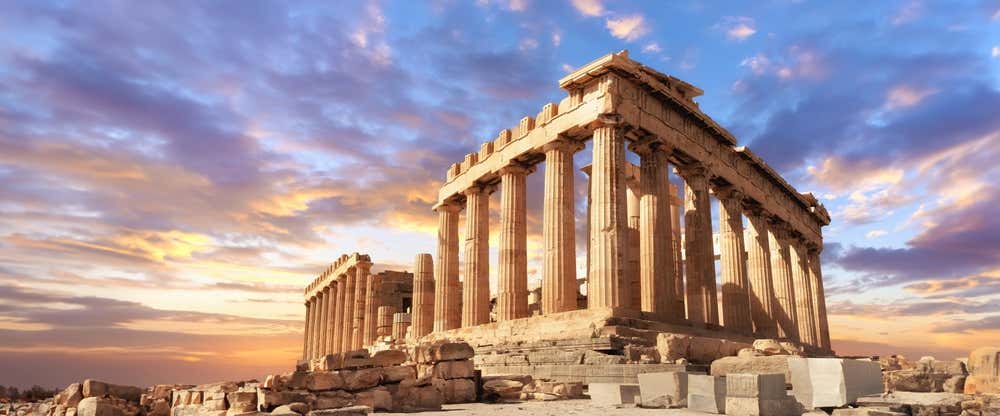
No list of historical sites in Greece is complete without the Acropolis of Athens. Built in the 5th century BC under Pericles, this hilltop citadel is home to the Parthenon, the most recognizable temple of classical antiquity, dedicated to the goddess Athena. As you walk in through the Propylaea, you’ll feel the weight of history right away. The marble columns were carved with subtle curves, designed on purpose so they’d look perfectly straight to anyone walking past.
Beyond the Parthenon, take time to explore the Erechtheion, with its famous caryatids, and the Temple of Athena Nike. To make the most of the visit, you can book your Acropolis of Athens tickets and explore on your own. You can also join this Acropolis guided tour, which helps you understand the story behind each monument.
2. Ancient Agora of Athens
If the Acropolis stood for the religious power of ancient Greece, the Ancient Agora stood for its political power. This old central marketplace of Athens is where democracy was born. For centuries, citizens gathered in this open space to debate and vote on laws that would shape Western civilization. Socrates was put on trial here, and Pericles gave speeches where only columns remain today.
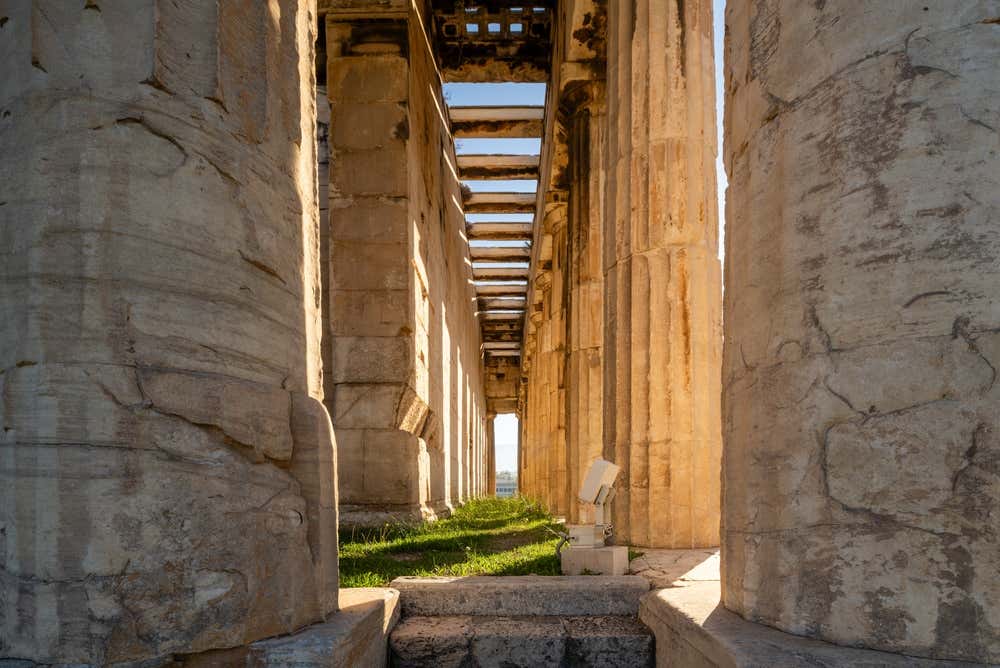
The highlight of the visit is the Temple of Hephaestus, considered the best-preserved Doric temple in the world, which still keeps much of its original roof. It’s also worth stepping into the Stoa of Attalos, a reconstructed colonnade that now houses a museum. You can explore the site on this Agora of Athens tour, or pair it with the Acropolis on this Acropolis and Agora guided tour.
3. Ancient Corinth
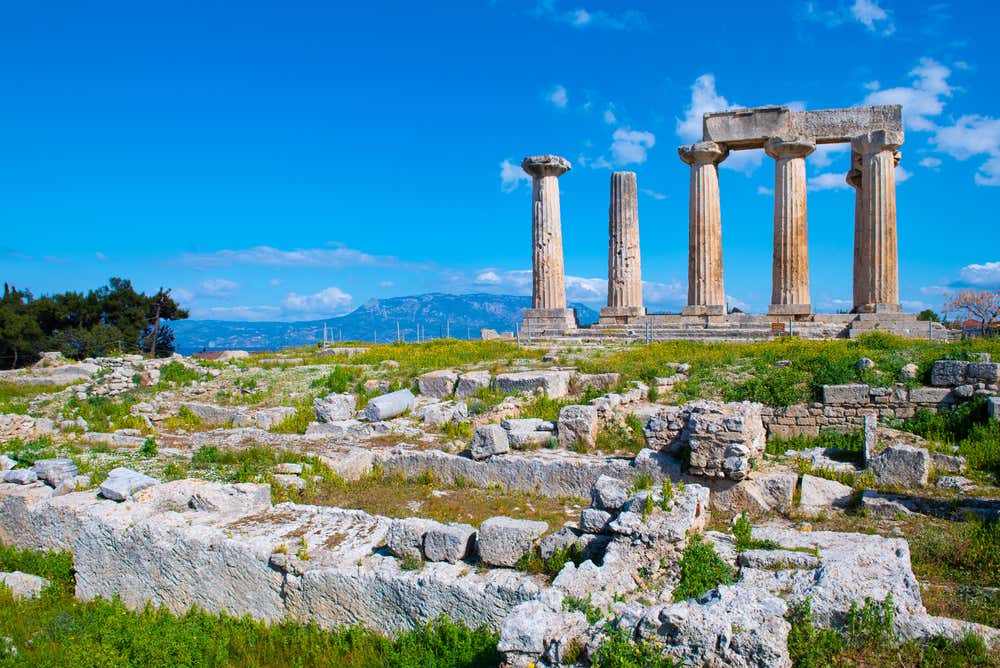
About an hour from Athens, Ancient Corinth was one of the richest and most strategic centers of the Greco-Roman world. It sat between two seas and controlled one of the most important trade routes of antiquity. The seven remaining Doric columns of the Temple of Apollo, from the 6th century BC, are the site’s signature image, and the ruins also include the Roman forum where the apostle Paul is said to have preached.
Many tours combine Ancient Corinth with the Corinth Canal, a 19th-century engineering feat that cuts through the isthmus and links the Ionian Sea with the Aegean. You can book this Ancient Corinth day trip from Athens, which stops at the canal before exploring the site at a relaxed pace.
4. Mycenae
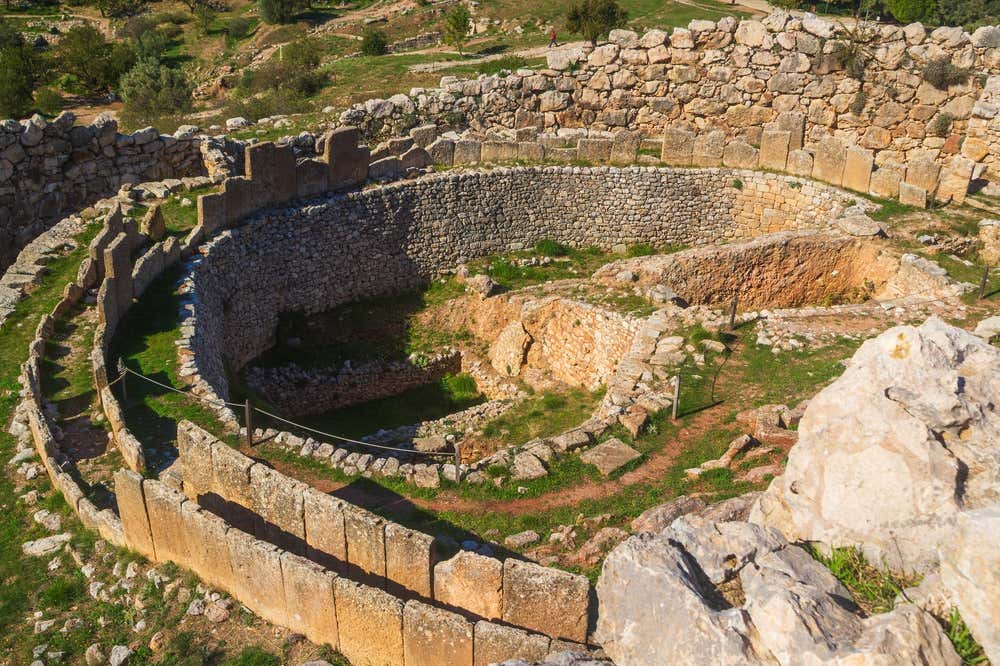
Long before classical Greece, there was the Mycenaean civilization, which inspired much of Greek mythology and appears in Homer’s Iliad and Odyssey. The archaeological site of Mycenae, in the Peloponnese, holds the remains of the city of the legendary King Agamemnon. You enter through the Lion Gate, one of the oldest symbols of power in Europe, carved around the 13th century BC.
Just outside the citadel, it’s worth heading down to the Treasury of Atreus, a beehive-shaped tomb that still impresses with its engineering. Many visitors only see it from outside, but stepping into the burial chamber gives you a real sense of its scale. This Corinth, Mycenae, Nafplion and Epidaurus day trip covers Mycenae in a single day from Athens.
5. Olympia
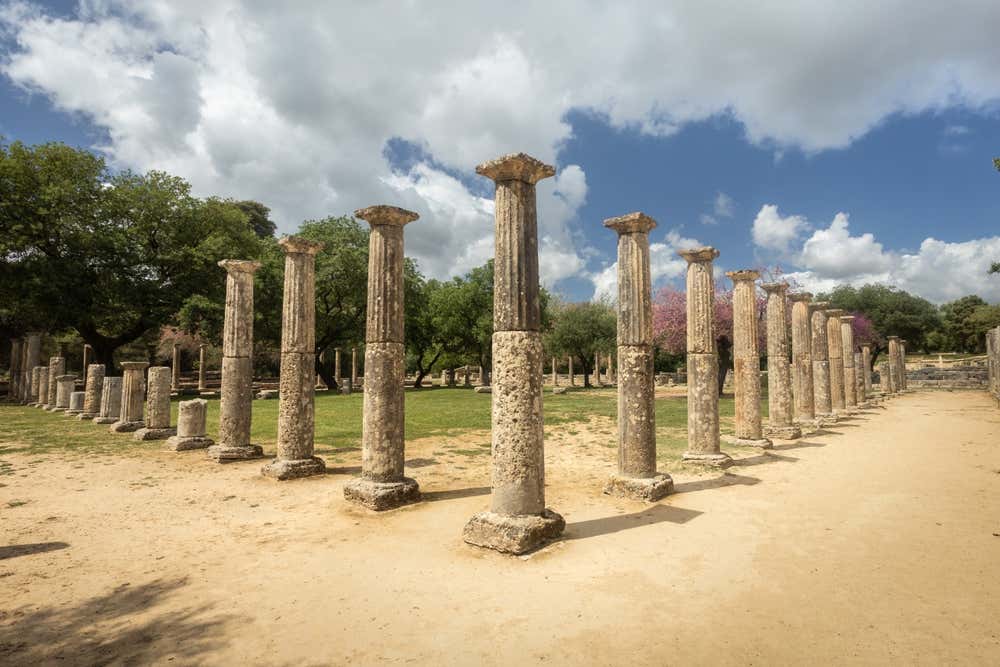
The Olympic Games were born in Olympia, in the Peloponnese, in the 8th century BC. For almost 1,200 years, athletes from all over Greece gathered here every four years to compete, completely naked, for glory and an olive wreath. The archaeological site includes the ancient stadium, with its 630-foot (192-meter) track, and the remains of the Temple of Zeus, which once housed one of the Seven Wonders of the Ancient World: a colossal statue of Zeus himself.
To this day, the flame for every modern Olympic Games is lit at this same spot, in a ceremony that links the present directly to antiquity. To see Olympia without worrying about transportation, this 3-day Classical Greece tour includes it along with Epidaurus, Mycenae and Delphi.
6. Delphi
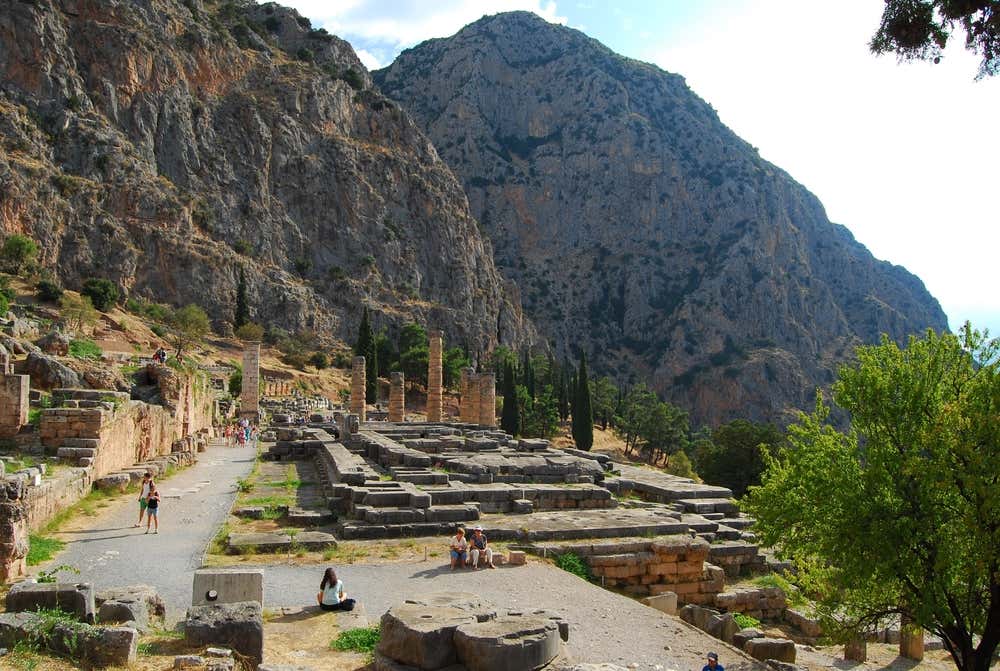
The ancient Greeks considered Delphi the “navel of the world,” and it was home to the Oracle, the priestess believed to be able to see the future. Kings, generals and ordinary citizens traveled here to consult her prophecies before making important decisions, including military ones. The archaeological site holds the Temple of Apollo, where the Oracle gave her predictions, as well as the ancient theater and stadium, all surrounded by the mountains of Parnassus.
About two and a half hours from Athens, Delphi is one of the most popular day trips from the Greek capital. You can book this Delphi day trip and explore the site with a guide who covers all the history along the way.
7. Meteora
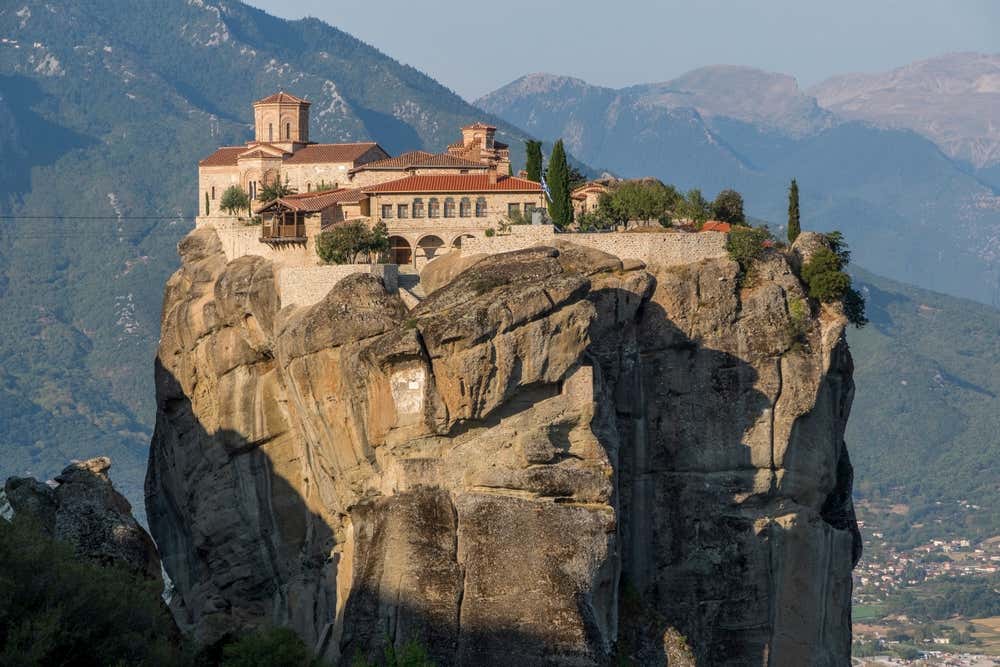
Few places in the world combine nature and religious history like Meteora. In the region of Thessaly, huge sandstone pillars rise more than 1,300 feet (400 meters), topped by a group of Byzantine monasteries built mostly in the 14th century. Six of them are still active and open to visitors, although each one has its own opening days and hours.
Late afternoon is a smart time to go. You’ll avoid the midday heat and the biggest crowds, and the light on the rocks at sunset is spectacular. To get there from the capital, book this Meteora day trip from Athens, which takes you to the monasteries perched on top of the rocks.
8. Palace of Knossos, Crete
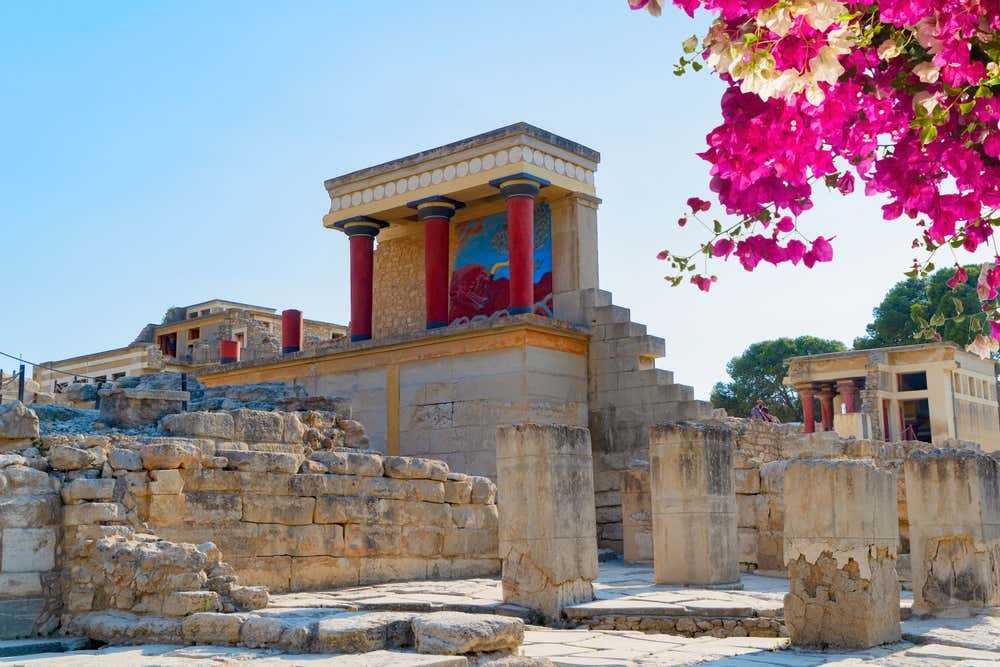
On the island of Crete, the Palace of Knossos is considered the cradle of the Minoan civilization, the first advanced civilization in Europe. Built around 2000 BC, the complex stands out for its engineering. Archaeologists found a sophisticated plumbing system with running water, naturally ventilated rooms and even a way to reuse water for irrigation in dry seasons.
Knossos is where the myth of the labyrinth and the Minotaur begins. Its more than a thousand rooms linked by corridors are said to have inspired the legend of the half-man, half-bull creature that King Minos kept deep inside the palace. The restored red columns and frescoes like the famous “Prince of the Lilies” are the most photographed spots on the site. To visit, book your Knossos Palace tickets in Heraklion, the capital of Crete.
9. Akrotiri, Santorini
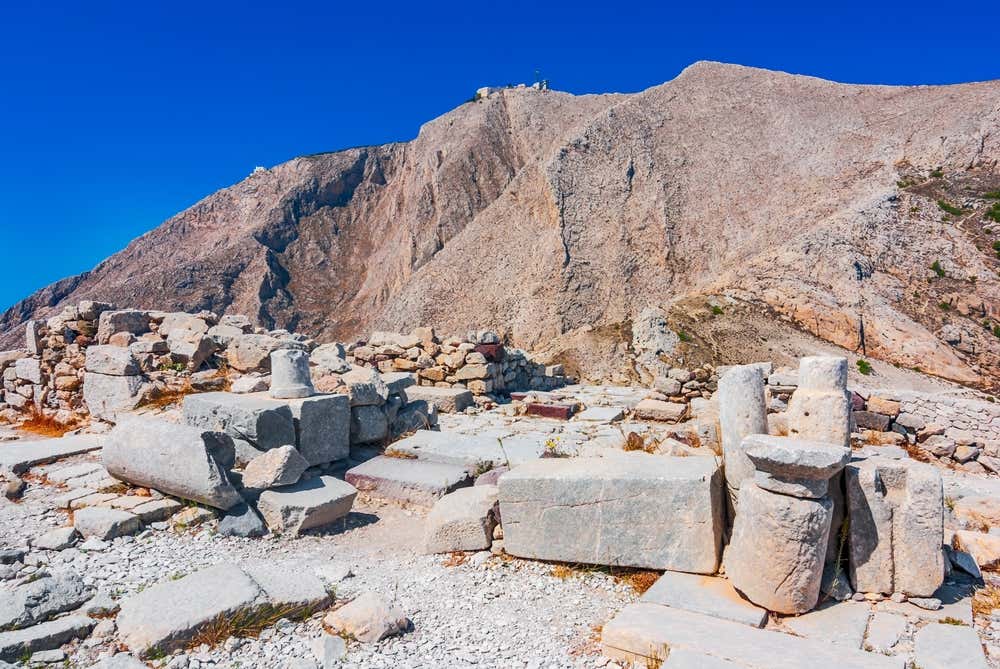
In Santorini, the archaeological site of Akrotiri is known as the “Pompeii of the Aegean,” with one important difference. Unlike the Italian city, the people of Akrotiri managed to escape before the huge volcanic eruption that buried the town around 1600 BC. That’s why archaeologists found no bodies, only everyday objects, furniture and remarkably well-preserved frescoes under the volcanic ash.
The site sits under a roof, with raised walkways over the ruins, so the visit is comfortable even on the hottest summer days. You can see it on this Akrotiri, Red Beach and Oia day trip, which ends with the sunset in Oia. If you’d rather focus on the island’s villages, this complete guided tour of Santorini stops in Megalochori and Profitis Ilias before the same sunset.
10. Medieval City of Rhodes
Closing the list, the island of Rhodes represents a very different period of Greek history: the Middle Ages. For about 200 years, the Knights Hospitaller, a military order born during the Crusades, ruled the island. Their legacy is the Medieval City of Rhodes, a UNESCO World Heritage Site, and the imposing Palace of the Grand Master. Legend has it that the Gothic fortress was built on the spot where the Colossus of Rhodes once stood, one of the Seven Wonders of the Ancient World, destroyed by an earthquake in the 3rd century BC.
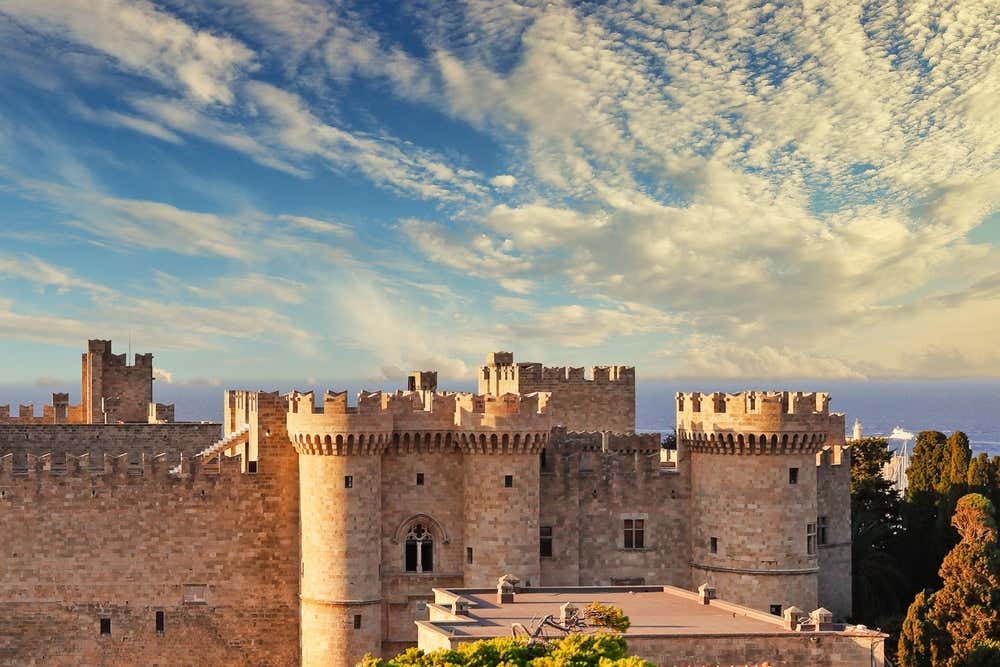
Inside the palace, mosaics brought over from the nearby island of Kos decorate the upper floor. To explore the monument, book your Palace of the Grand Master of the Knights of Rhodes tickets. If you have a spare day on the island, the Acropolis of Lindos is another impressive historical site, and this Lindos boat excursion from Rhodes is an easy way to get there.
These 10 places show how Greece brings together, in a single country, the birthplace of democracy, the stories of classical mythology, the height of Byzantine faith and the medieval legacy of the Knights of Rhodes. If you’re planning the trip, this guide to the best things to do in Athens is a good place to start, since the capital is the gateway to most of these historical routes. And for everything else along the way, Civitatis’s full catalog has you covered.


Most read of #Greece
10 Famous Historical Sites in Greece: Athens to Crete
24 September 2026Most read #Greece