Moroccan Food: 12 Dishes to Try in Morocco

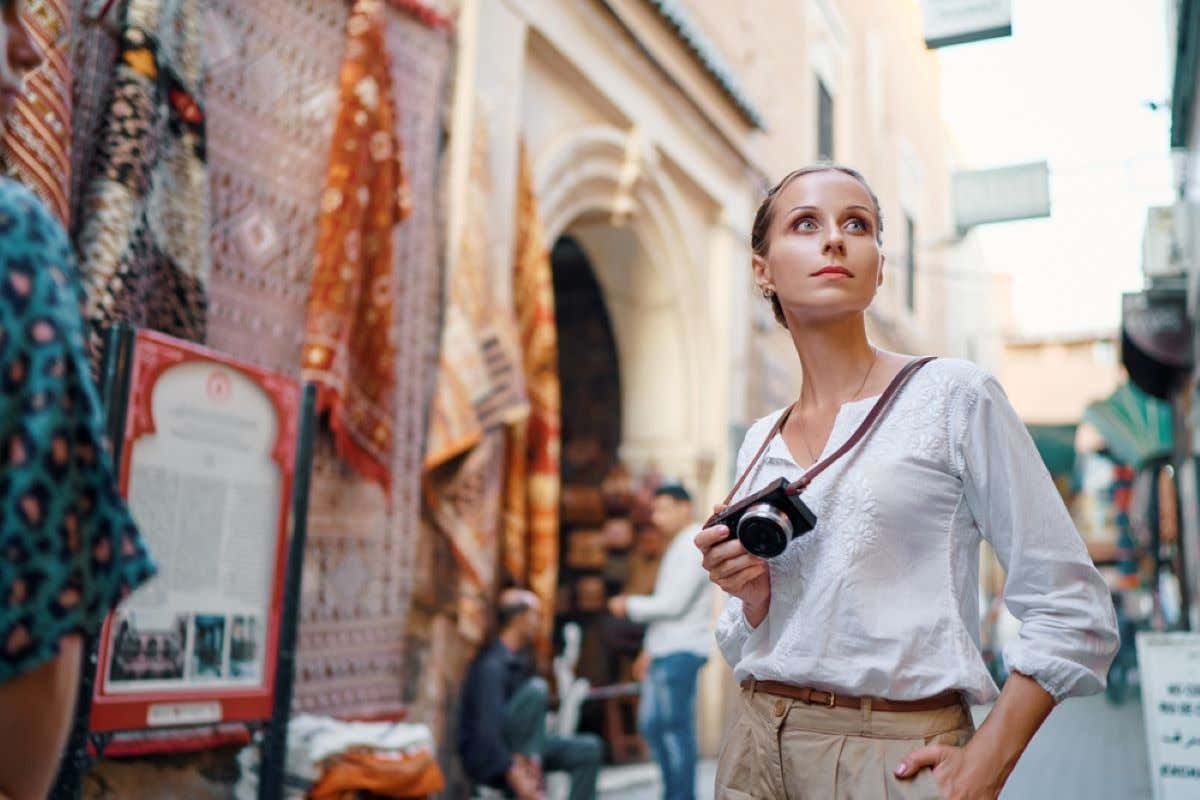
Moroccan food runs on spice, slow heat and a few centuries of cultural layering. Berber, Arab, Andalusian and Mediterranean cooking all left something behind, and what came out the other side is a cuisine built around patience: meat that falls apart, semolina steamed three times, sugar where you did not expect it.
The dishes to know are lamb tagine, the Friday couscous, the sweet and savory pastilla, and harira soup. You will find them at street stalls in Jemaa el-Fna, in the courtyards of traditional riads, and on food tours through the medinas of Marrakech and Fez, which is the fastest way to eat well without guessing.
What to Eat in Morocco
What ties it together is the balance of sweet and savory, plus a generous hand with saffron, cumin, cinnamon and the house spice blend called ras el hanout. Here are the twelve worth planning meals around.
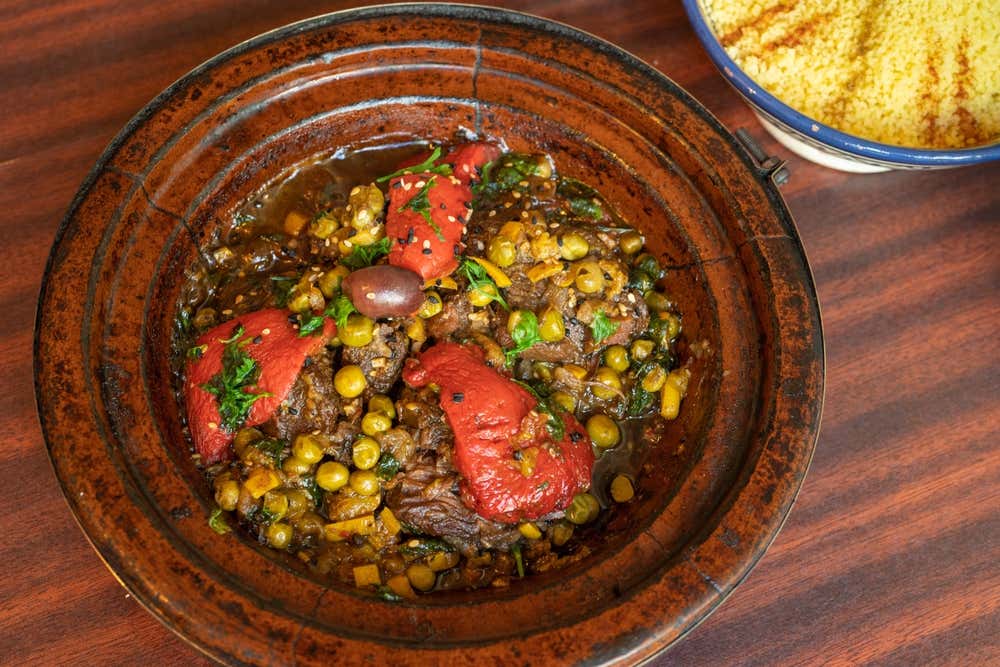
1. Tagine
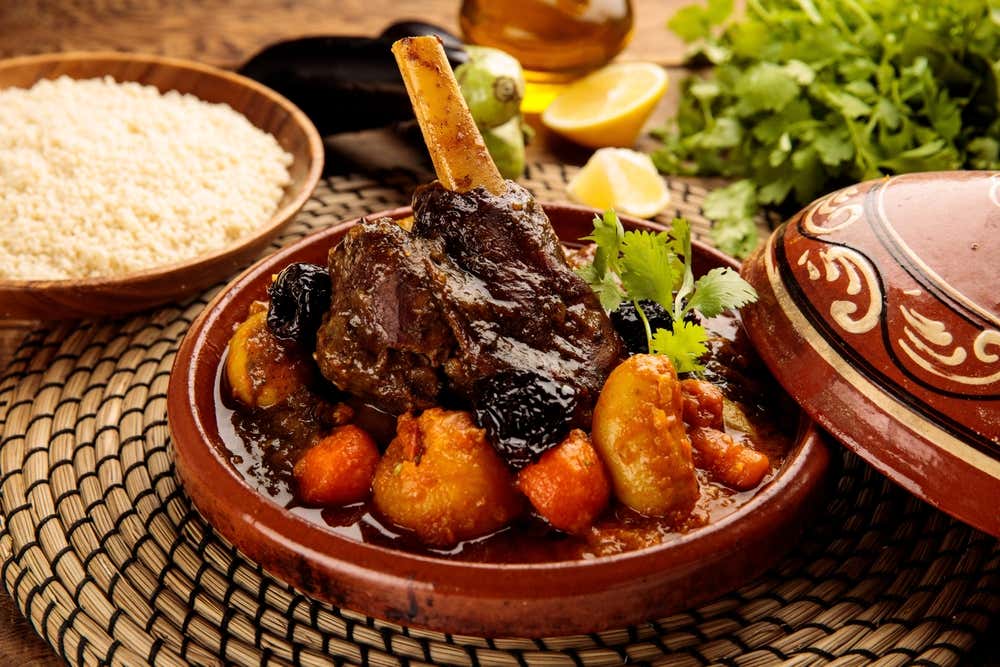
The tagine is the dish everyone knows, and it takes its name from the conical clay pot it cooks in. That cone is the whole point: steam rises, hits the sloped lid, condenses and runs back down into the food. Meat goes tender, vegetables hold their shape, and nothing dries out.
The variations do not end. Chicken with preserved lemon and olives, lamb with prunes and toasted almonds, or vegetable versions that need no meat at all. To see how it is built from the market up, the Marrakech food tour makes six stops through the medina and finishes with a tagine at a local restaurant.
2. Couscous
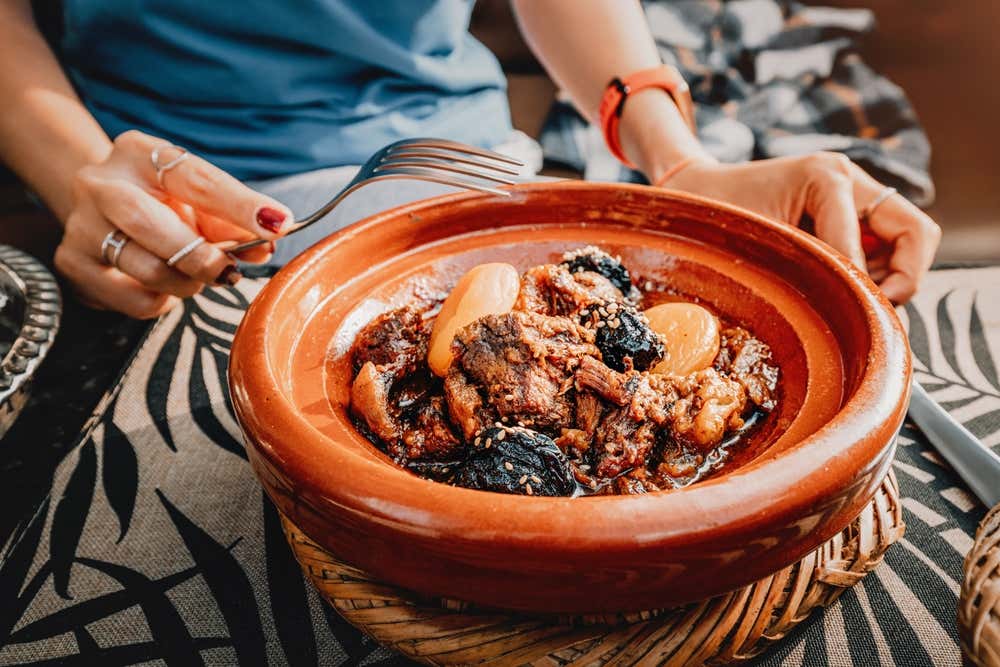
Forget the box that takes five minutes. Real Moroccan couscous is steamed over simmering broth three separate times, raked by hand between rounds, until the semolina is light and every grain sits loose. It arrives under a mound of stewed vegetables with lamb, chicken or beef.
Couscous is a Friday dish, eaten after midday prayers, with the whole family working through one enormous shared platter. If you are invited to a Friday couscous, cancel whatever else you had planned.
3. Pastilla
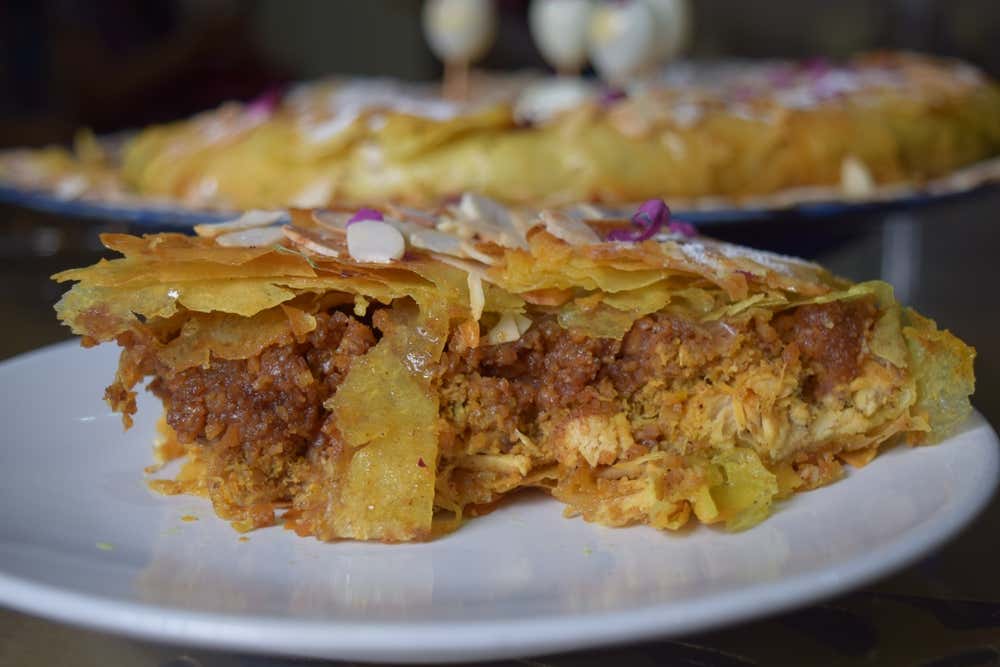
Pastilla comes from Fez and it is the strangest, best thing on this list. Paper thin warqa pastry wraps shredded meat, traditionally pigeon and now usually chicken, along with crushed almonds, eggs and spices. Then the whole pie gets dusted with powdered sugar and cinnamon.
Sweet crust, savory filling, crunch and softness in the same bite. It should not work and it completely does. Walk the old city on the Fez medina guided tour to find the historic restaurants that still make the original version, or go straight for the Fez food tour.
4. Harira Soup
Harira is a thick, velvety soup of tomato, lentils and chickpeas, loaded with cilantro, parsley and fine celery, sometimes with pieces of meat and a handful of thin noodles. It is what breaks the fast at sunset during Ramadan, served alongside dates and honey soaked chebakia.
You do not have to visit during Ramadan to eat it. Street stalls and small local restaurants serve harira all year for very little money, and a bowl of it after a long afternoon in the souks is exactly right.
5. Tangia
Do not confuse it with the tagine. Tangia is a Marrakech specialty tied to the workers of the souks, historically cooked by men for men on their days off. Beef or lamb is seasoned with cumin, saffron, garlic, preserved lemon and smen, a salted preserved butter, then sealed in a tall clay urn.
The urn goes to the farnatchi, the wood fired furnace that heats the water for the public hammams, and sits buried in the embers for hours. You will only find it in Marrakech. The Marrakech free walking tour takes you past the hammams and communal ovens that make it possible.
6. Zaalouk and Moroccan Salads
Meals here open with a spread of cooked salads, served warm or cold, and you eat them with bread before anything else arrives. The standout is zaalouk, a smoky mash of roasted eggplant, tomato, garlic, olive oil, cumin and paprika.
You will also see cooked carrot salad with orange blossom water and cinnamon, and the chopped Moroccan salad of raw tomato, onion and green pepper. Order several and let the table fill up.
7. Mechoui
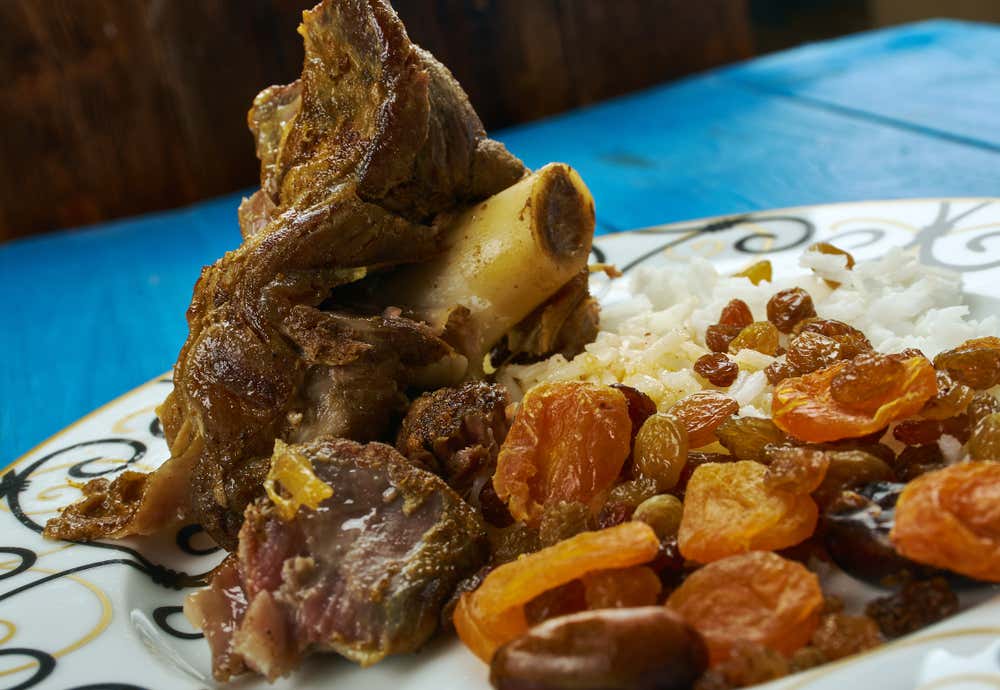
Mechoui is a whole lamb seasoned with nothing but salt and cumin, roasted slowly in an underground pit until the meat pulls off the bone with your fingers. It is celebration food, the centerpiece at weddings and festivals, and the simplicity is the point.
In Marrakech there is an alley off Jemaa el-Fna where vendors sell it by weight from morning until it runs out, which it does. Go early.
8. Briouats
Briouats are small triangles or cigars of crisp pastry, fried until golden. Fillings run from spiced ground meat to chicken with almonds to fresh cheese, and some come brushed with honey. They are the ideal thing to eat with one hand while walking the souks.
9. Fish on the Atlantic Coast
Inland Morocco belongs to slow cooked meat, but the coastal cities land seriously good fish. In Essaouira, sardines grilled over charcoal and marinated in chermoula, a paste of cilantro, garlic, lemon and spices, are the thing to order and cost very little.
The numbered stalls beside the fishing boats grill whatever came in that morning at fixed, posted prices. Take the Essaouira day trip from Marrakech and have lunch looking at the Atlantic, or see everything on offer in Essaouira.
10. Msemen and Breakfast Breads
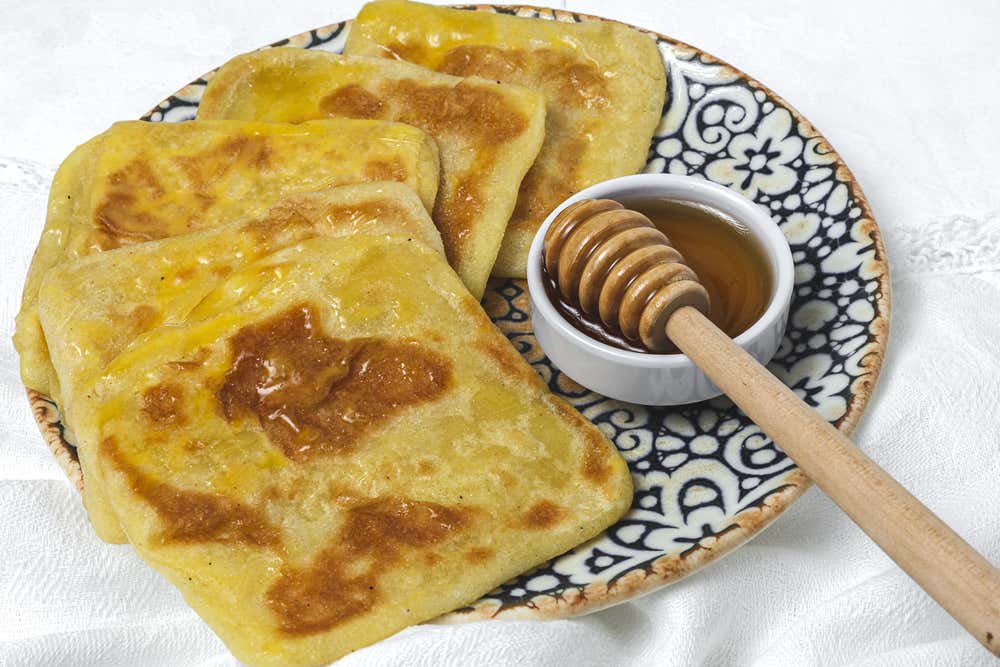
Moroccan breakfast is a bread event. Msemen is dough folded over itself many times and griddled with oil or butter, which gives you flaky layers and a soft center. It comes hot, with honey, soft cheese, or amlou, a spread of almonds, argan oil and honey that is worth carrying home in your luggage.
11. Traditional Sweets
Moroccan pastry runs on almonds, orange blossom water, honey and sesame. Cornes de gazelle, gazelle horns, are crescent cookies filled with fragrant almond paste. Chebakia is dough shaped into a flower, fried, drenched in honey and rolled in sesame seeds, and it appears everywhere during Ramadan.
12. Mint Tea
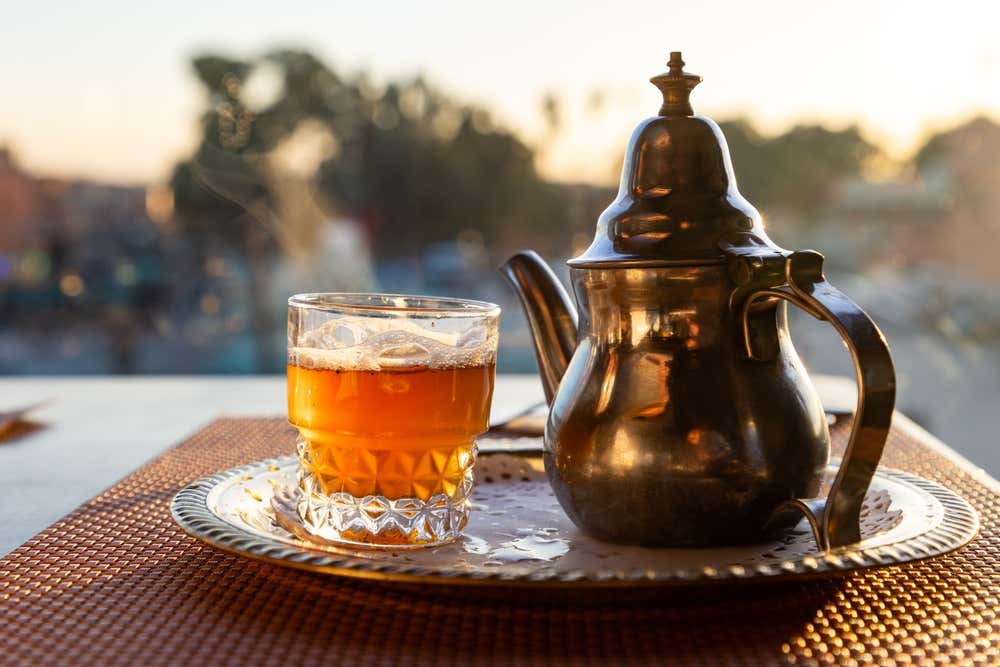
Known affectionately as Moroccan whiskey, green tea with fresh mint and a lot of sugar is far more than a drink. It is the country’s hospitality made physical, offered when you arrive, when you negotiate, and when you leave.
It arrives in decorated glasses, poured from a height so a thin layer of foam forms on top and holds the aroma in. Watch how high the pot goes. That part is showmanship and it is meant to be.
Where to Eat in Morocco
Knowing where to sit down matters as much as knowing what to order. The range runs from open air grills to formal dinners in the courtyards of restored palaces:
- Jemaa el-Fna, Marrakech: at dusk the main square becomes an enormous open air restaurant, with dozens of numbered stalls serving grills, brochettes, soups and tangia. Stalls generally run from about 6 PM to 1 AM, subject to seasonal changes
- Traditional riads: for a quiet, polished dinner, book a table in a riad courtyard. The menu is usually set and cooked that day from market ingredients
- Fez medina restaurants: dining rooms in centuries old buildings lined with zellij tilework serve tasting menus built around proper pastilla and refined tagines. Hours tend to run from around noon to 11 PM, worth confirming before you go
- Essaouira port stalls: right beside the fishing boats, numbered stalls grill fresh fish and squid at fixed prices. Generally open from about 11 AM to 8 PM, varying with the day’s catch and sea conditions
Moroccan Food FAQ
What Is the National Dish of Morocco?
Couscous is generally considered the national dish, eaten across the country every Friday. Tagine runs a very close second and is the one most visitors encounter first, since it appears on practically every menu.
What Is a Good Moroccan Dish for Beginners?
Chicken tagine with preserved lemon and olives. It is savory rather than sweet, gently spiced rather than hot, and it shows you what the clay pot does without asking you to commit to prunes and cinnamon on your first night.
Is Moroccan Food Spicy?
Aromatic rather than hot. Cumin, saffron, cinnamon, ginger and ras el hanout carry the flavor, and chili heat is usually served on the side as harissa so you decide how much goes in.
Can Vegetarians Eat Well in Morocco?
Yes, more easily than you might expect. Vegetable tagines, zaalouk and the other cooked salads, lentil harira and bread with amlou are all standard. Say so when you book a tour or a riad dinner and most kitchens will adapt.
Practical Tips for Eating in Morocco
Wash your hands before eating. Many dishes, couscous and tagine included, are eaten communally using khobz, the round Moroccan flatbread, as a scoop, with the fingers of the right hand. Watch what the table does and follow it.
Drink bottled water and make sure the seal is broken in front of you. Restaurant and market hours can shift considerably during Ramadan, so check with the venue before setting out.
US citizens can enter Morocco for tourism with a valid passport and no visa for short stays, though requirements change. Confirm yours with the Moroccan embassy or consulate before you travel.
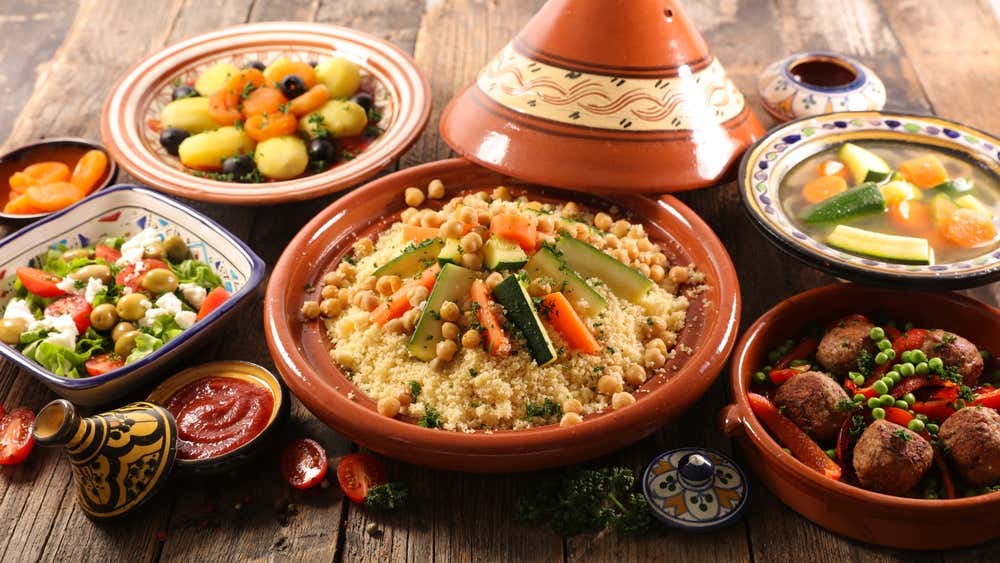
Moroccan food is the clearest window into the country you will get. A meal here is rarely just a meal, and eating your way through the medinas tells you more about the place than any monument will.
For more on where to go between meals, see our guide to what to do in Morocco, and browse Civitatis’s full catalog for the best activities in English all over the world.


Most read of #Morocco
Moroccan Food: 12 Dishes to Try in Morocco
29 August 2026Top 12: What to Do in Marrakech (2026)
20 July 2026Is Marrakech Cheap? Budget Guide & Real Travel Costs
27 June 2026Most read #Morocco
Top 12: What to Do in Marrakech (2026)
20 July 2026Is Marrakech Cheap? Budget Guide & Real Travel Costs
27 June 2026