
Traditional French Food: 11 Dishes to Try in France
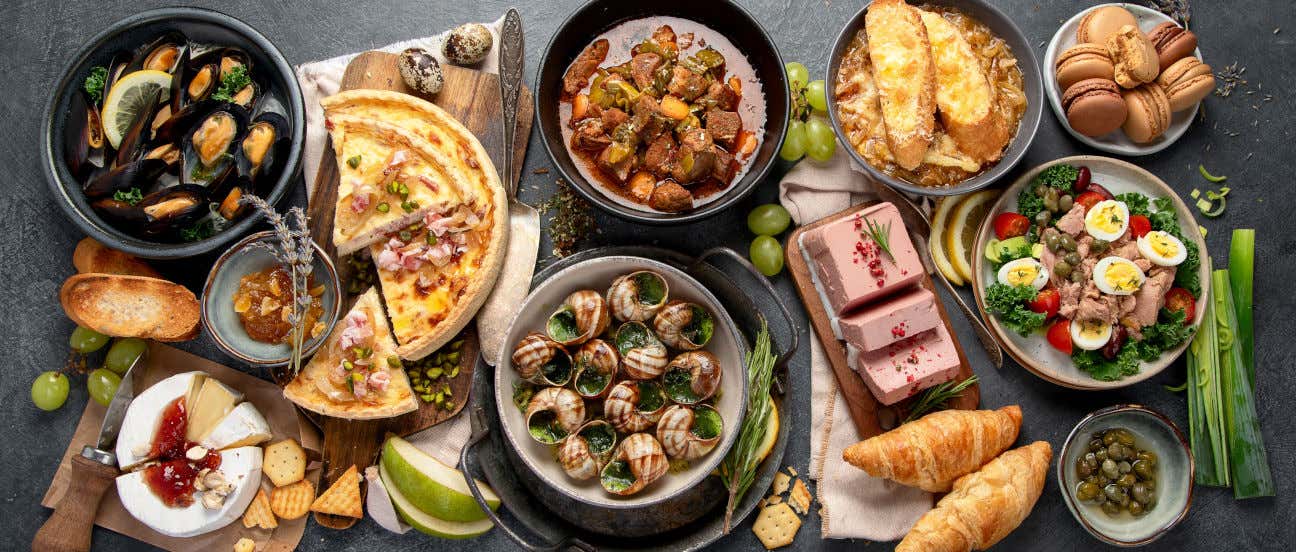

French cooking earned its reputation as a global benchmark the hard way. Beyond the Michelin stars there’s a far simpler recipe book, born in farmhouse and market kitchens, and it’s still the base of traditional French food served in any bistro in the country.
What is the typical food of France? The croissant and the baguette are the best known symbols of French baking, while dishes like coq au vin, bouillabaisse and cassoulet better represent the traditional kitchen. Add the cheeses, central to any meal, and desserts like tarte tatin.
The Best Dishes to Try in France
1. Croissant
The croissant has a slightly less French origin than you’d expect. The recipe arrived from Austria in the 19th century, and it was in French bakeries that it was refined into the breakfast symbol you know today.
A popular legend credits Marie Antoinette with bringing the croissant to France when she married Louis XVI in 1770. The firmer documentation points to the Austrian baker August Zang, who opened a Viennese pastry shop in Paris in 1839 and popularized the kipferl among Parisians, the seed of what later evolved into the croissant as you know it.
The modern French recipe, with its butter-laminated layers, wasn’t written down until 1915, by the pastry chef Sylvain Claudius Goy. The word croissant, incidentally, literally means crescent in French.

2. Baguette
Few foods sum up French identity as neatly as the baguette. It’s made with nothing but flour, water, yeast and salt, and yet every bakery gets a slightly different result depending on its technique. Since 1993, a decree has ruled that the baguette de tradition can’t contain additives or preservatives, which sets it apart from more industrial versions.
You can dig further into the French food scene through the food and wine experiences in Paris, with workshops and routes built around both savory products and local pastry.
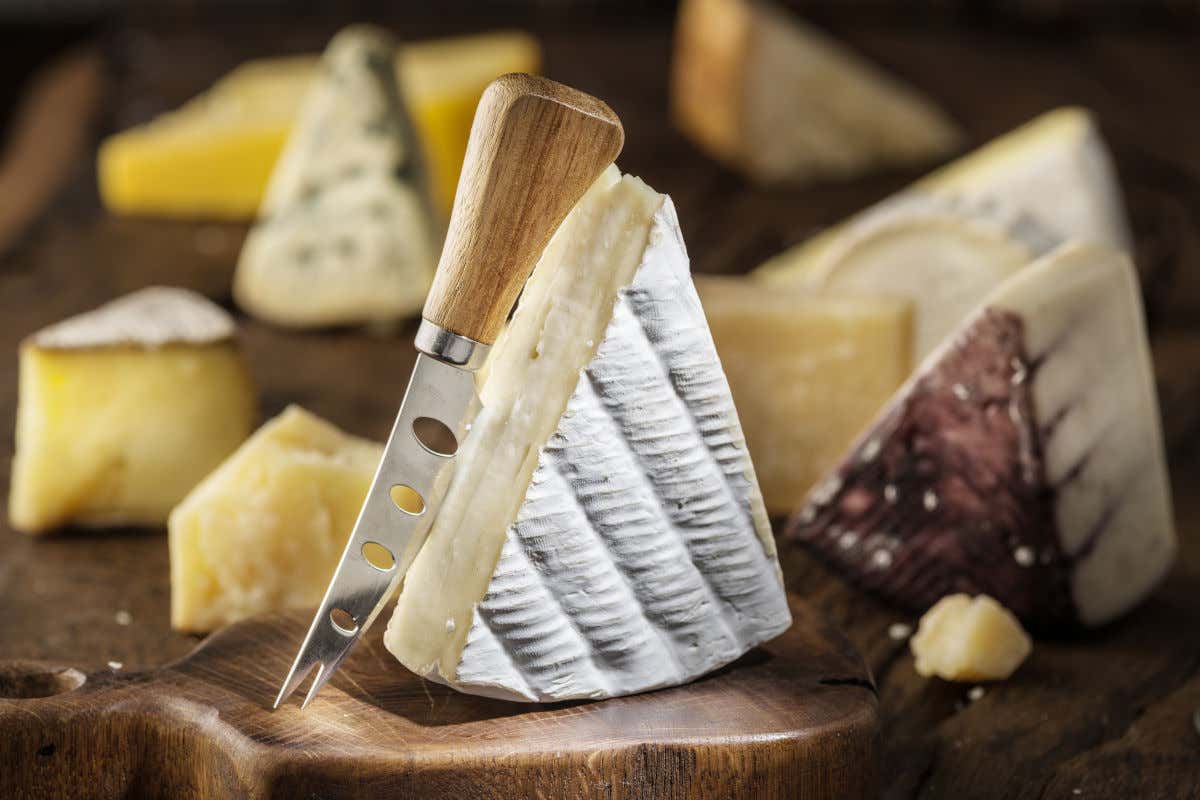
3. French Cheeses
France produces more than 1,000 varieties of cheese, from Normandy camembert to comté from the Jura and goat’s milk crottin de chèvre. General Charles de Gaulle is said to have joked that it was impossible to govern a country with so many different cheeses. Pairing them with wine is close to an unwritten rule at any French meal.
You can book the Cheese & Wine Tasting Tour, which takes you into a traditional wine cellar in the 11th arrondissement for three French wines paired with two kinds of cheese. An expert guide walks you through how the pairings actually work, which is a far more useful hour and a half than reading about it. The activity is for over-18s only, and start times are worth confirming when you book.
4. Coq au Vin
Coq au vin is a chicken stew cooked slowly in red wine with mushrooms, onion and bacon. It was born in Burgundy as a way to tenderize tough farm birds using the local Pinot Noir. Over time it became one of the most representative dishes of French winter cooking.
It’s almost always served with mashed potato so nothing of the sauce goes to waste. There’s also a variant known as coq au vin blanc, made with white wine instead of red, more common in some central regions of the country.
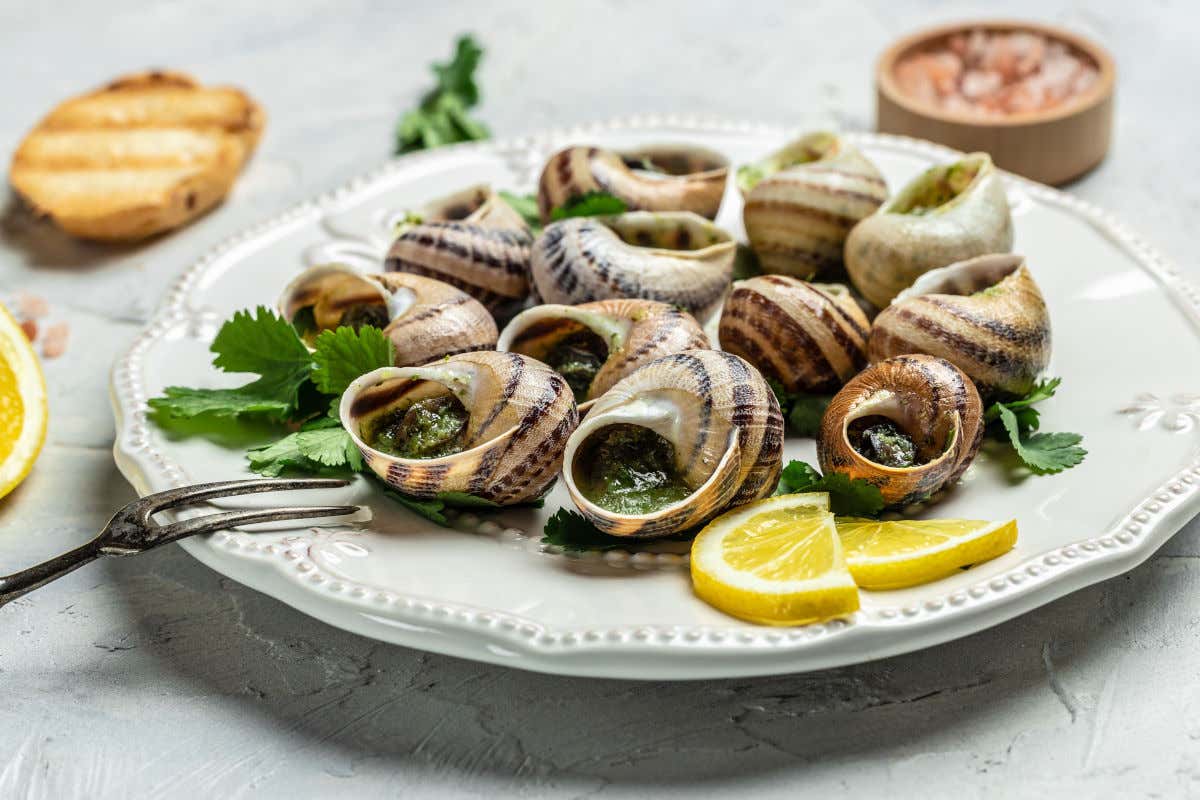
5. Escargots de Bourgogne
Burgundy snails are one of the best examples of how French cooking turns humble ingredients into something gourmet. They’re cooked with butter, garlic and parsley, then served straight in the shell with a special fork to pull them out. They come from Burgundy, the region that also gives the dish its name.
They’re usually paired with a cool Chablis or a light Pinot Noir, and a good part of the ritual lies in getting them out of the shell.
6. Ratatouille
Beyond the animated movie that shares its name, ratatouille is a vegetable stew from Provence. It usually brings together zucchini, eggplant, tomato and bell pepper, cooked slowly with Provençal herbs until the flavors melt into each other. It works as a side or as a light main course, and it sums up the rural cooking of the south.
It’s at its best in the summer months, when these vegetables peak in the markets of Provence, and it’s usually served with a chilled rosé from the region.
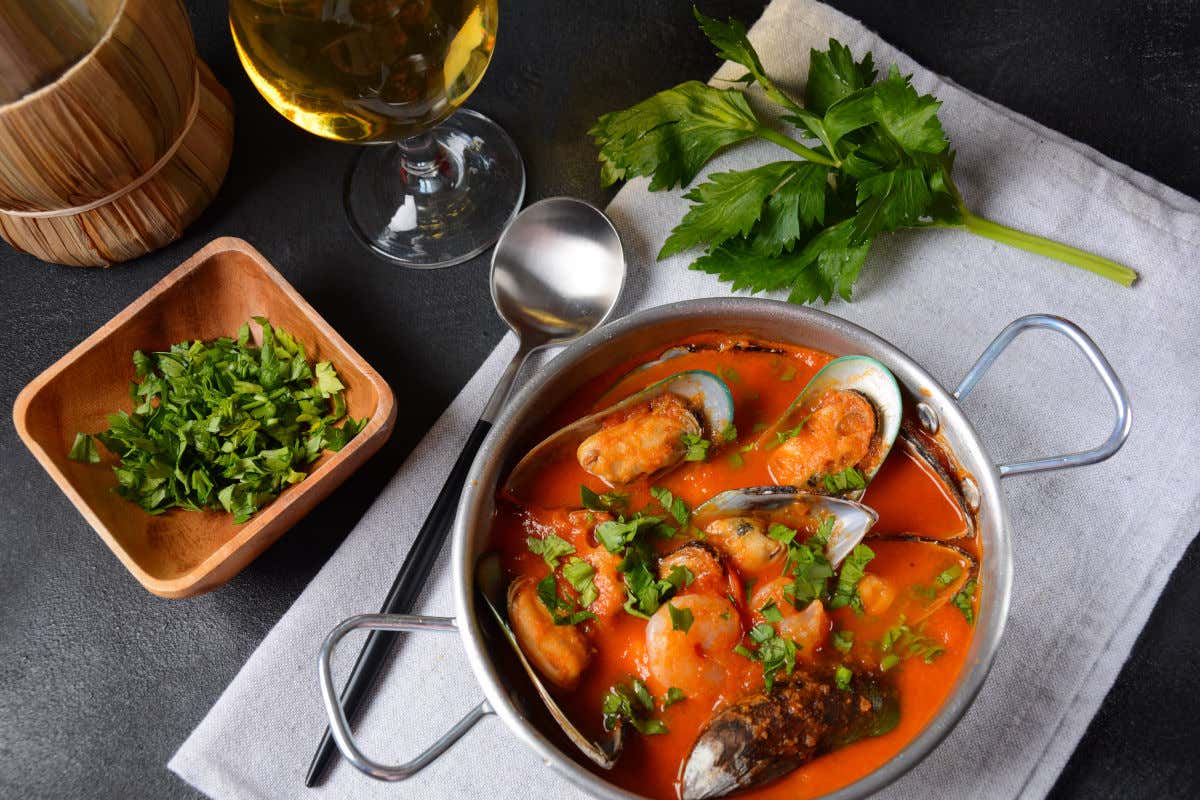
7. Bouillabaisse
Bouillabaisse started as a humble stew made by Marseille fishermen from the catch they couldn’t sell. Today it’s one of the most refined dishes in French gastronomy. It combines sea bass, monkfish and mussels in a saffron broth, served with rouille, a garlic and saffron sauce spread over toasted bread.
The Old Port of Marseille is still the reference point for trying it, in restaurants that have been serving it the same way for decades. If you want to get to know the city properly first, there’s a full guide to the top things to do in Marseille.
8. Crêpes and Galettes
Originally from Brittany in the 13th century, sweet crêpes (wheat flour, filled with sugar, fruit or chocolate) and savory galettes (buckwheat flour, with ham, cheese or egg) are two sides of the same Breton tradition. They’ve grown so popular that they’re now associated with France as a whole rather than with the region, and you’ll find them at most street food stalls and restaurants.
In Brittany it’s normal to pair them with local cider, a habit that holds in most traditional crêperies in the region.
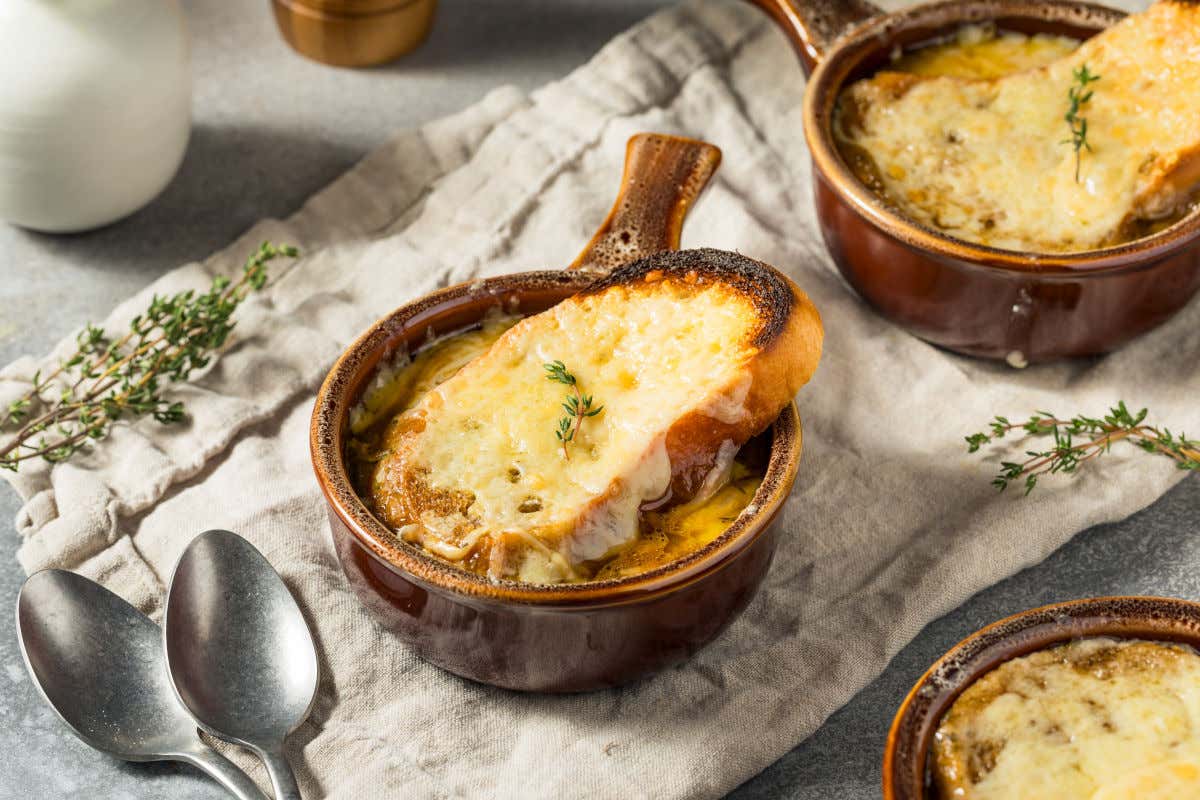
9. French Onion Soup
Born in the Parisian markets of Les Halles as late-night food for traders, French onion soup combines caramelized onion, beef broth and a lid of bread gratinated with gruyère. It’s one of the most comforting bistro dishes in the country, especially on winter nights.
10. Tarte Tatin
This upside-down caramelized apple and puff pastry tart was born, so the story goes, from a slip in the kitchen of a hotel in the Loire Valley in the late 19th century. The Tatin sisters are said to have forgotten the pastry base and, trying to fix it, covered the already caramelized apples with dough before baking. That’s how a dessert this popular in France and beyond came about.
The tart is normally served warm, sometimes with a scoop of ice cream or pouring cream, and it goes well with a sweet wine like Riesling or Chenin Blanc.
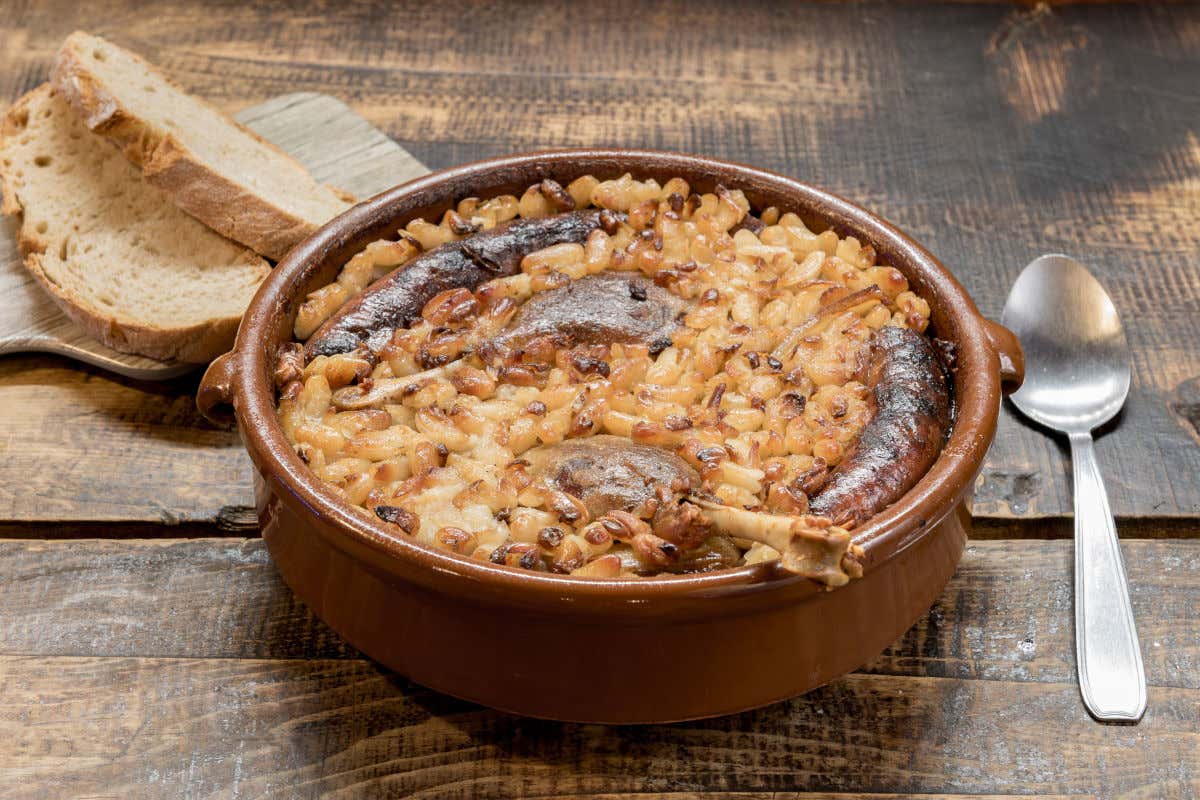
11. Cassoulet
From Languedoc, cassoulet is the great slow-cooked dish of southwest France. It brings together white beans simmered very gently with duck confit, garlic sausage and pork, all in the same earthenware pot that gives it its name. Castelnaudary and Toulouse both claim to be its birthplace.
It’s a dish built for the cold, dense and rich, descended from the siege kitchens of the Middle Ages where a lot of people had to be fed with very few ingredients.
Frequently Asked Questions About French Food
What Is a Typical French Menu?
A traditional French menu usually opens with a soup or starter, followed by a green salad and a meat main course with vegetables, then finishes with a cheese selection and a dessert. This multi-course structure is still standard in bistros and traditional restaurants.
What Is a French Croissant Exactly?
An authentic croissant is a crescent-shaped laminated pastry made with butter and several layers of dough folded repeatedly, which gives it a crisp outside and an airy inside. It’s the centerpiece of the French breakfast, normally with coffee.
What Is the Most Representative Dish in France?
Coq au vin, cassoulet and bouillabaisse are usually named among the best dishes in French cooking, alongside baking symbols like the croissant and the baguette. There’s no single national dish, though, since French food varies a lot from region to region.
Seen this way, French food stops being a couple of clichés and turns into a map of regions, history and farmhouse tradition that’s still alive at any table in the country. Trying several of these dishes on your trip is one of the best ways to understand it, and Civitatis’s full catalog covers tastings, workshops and guided tours right across France.


Most read of #France
17 Best Places to Visit in France in 2026
7 August 2026The 12 Best Loire Valley Châteaux to Visit in 2026
16 April 2026Most read #France
The 12 Best Loire Valley Châteaux to Visit in 2026
16 April 2026