

Traditional Swiss Food: 12 Dishes to Try in Switzerland

Swiss cooking has a reputation for beginning and ending with cheese and chocolate. Both do fill a good part of the country’s pantry, but the national recipe book also holds mountain dishes built to put your energy back after a day in the snow or on the trail, inherited directly from its Alpine herders.
So what is the typical food of Switzerland? Cheese fondue and raclette are the most international dishes, followed by potato rösti and Swiss chocolate. Alongside those sit specialties less known outside the country, like Zürcher Geschnetzeltes and Älplermagronen, which you’ll see again and again on any traditional restaurant menu.
What to Eat in Swizerland: 12 Must-Try Dishes
1. Cheese Fondue
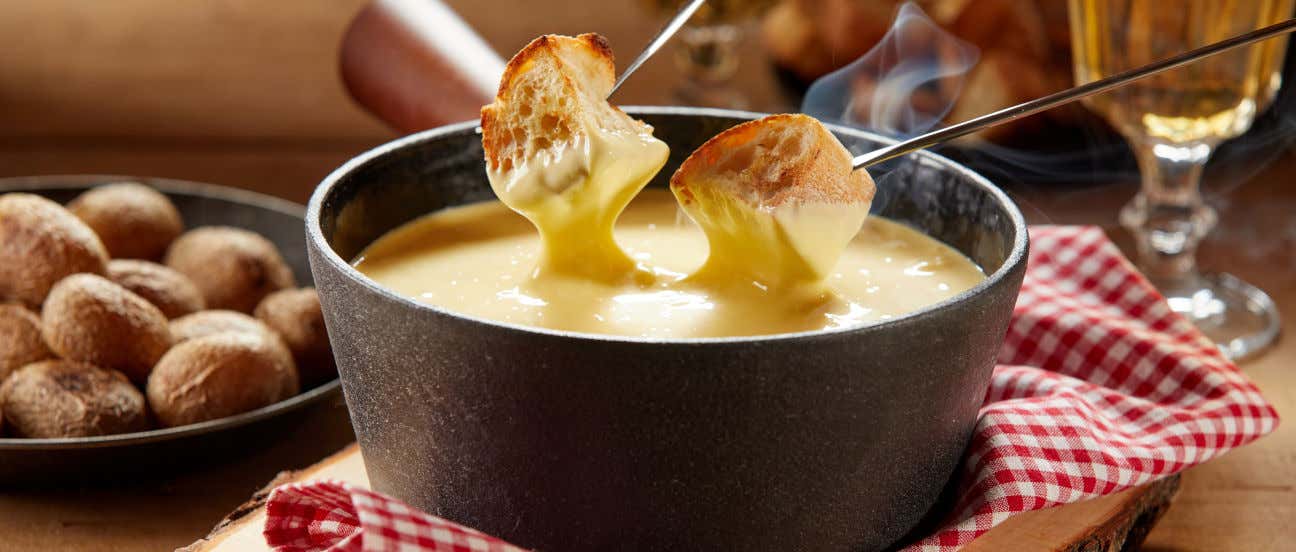
Fondue is probably the Swiss dish most recognizable beyond the country’s borders. It’s a pot of melted cheese, usually a mix of Gruyère and Emmental, into which you dip cubes of bread on a long fork. It began as a way of using up hard cheese and slightly stale bread through the Alpine winter, when fresh supplies ran short.
You’ll find restaurants specializing in it in almost any Swiss city or village. If you want something a little different, the Zurich sunset tour with fondue dinner takes you up the Felsenegg cable car to a restaurant terrace overlooking the lake, where a Swiss cheese fondue is always part of the four-course meal.
2. Raclette
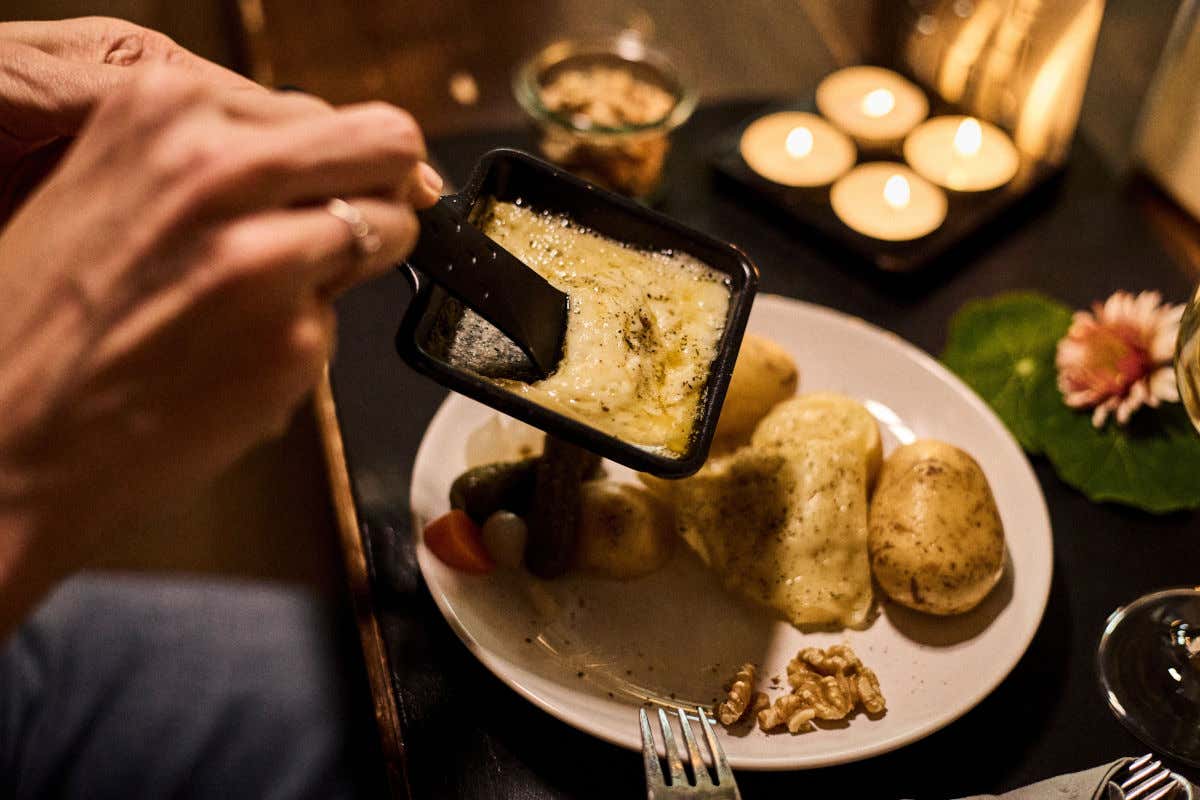
Raclette shares the spotlight with fondue, and the star ingredient again, but it changes the serving method completely. Here, half a wheel of raclette cheese is melted beside a heat source and scraped straight onto your plate, alongside boiled potatoes, pickles, and cured meats. The name comes from the French verb racler, meaning to scrape.
It’s a dish you’ll see constantly at Swiss Alpine ski resorts through winter, though traditional restaurants now serve it year-round. If you travel in snow season, it’s a common way to close out a day on the slopes in any of the Alpine cantons.
3. Rösti
Rösti, considered by many the national dish of Switzerland, began as breakfast for farmers in the canton of Bern before spreading across the country. It’s grated potato fried into a golden cake, crisp outside and soft within, and some versions work in cheese, onion, or bacon.
The linguistic border between German-speaking and French-speaking Switzerland is even known informally as the Röstigraben, the rösti ditch, a nod to how deeply the dish is rooted in the German-speaking half of the country.
4. Swiss Cheese, Gruyère and Emmental
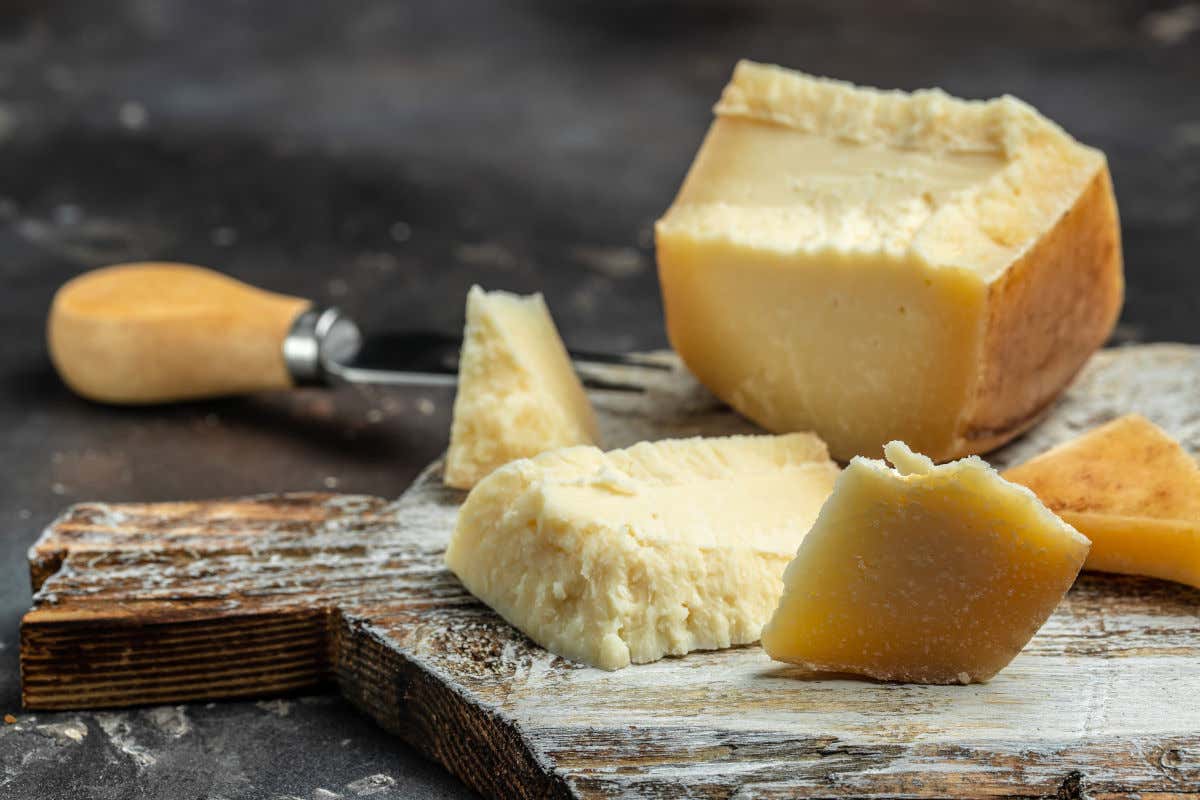
Beyond the dishes that melt it, Swiss cheese deserves its own mention. Gruyère, made in the region of the same name since the Middle Ages, and Emmental, recognizable by its holes, are the two cheeses holding up much of the country’s cooking and the undisputed stars of any fondue. Appenzeller is another variety with its own protected designation of origin.
To see how these are actually made, the Gruyères tour from Lausanne visits the Maison du Gruyère, a working factory-museum, along with the Maison Cailler chocolate factory at Broc. Over in eastern Switzerland, the Appenzell region runs similar cheese dairy visits.
5. Swiss Chocolate
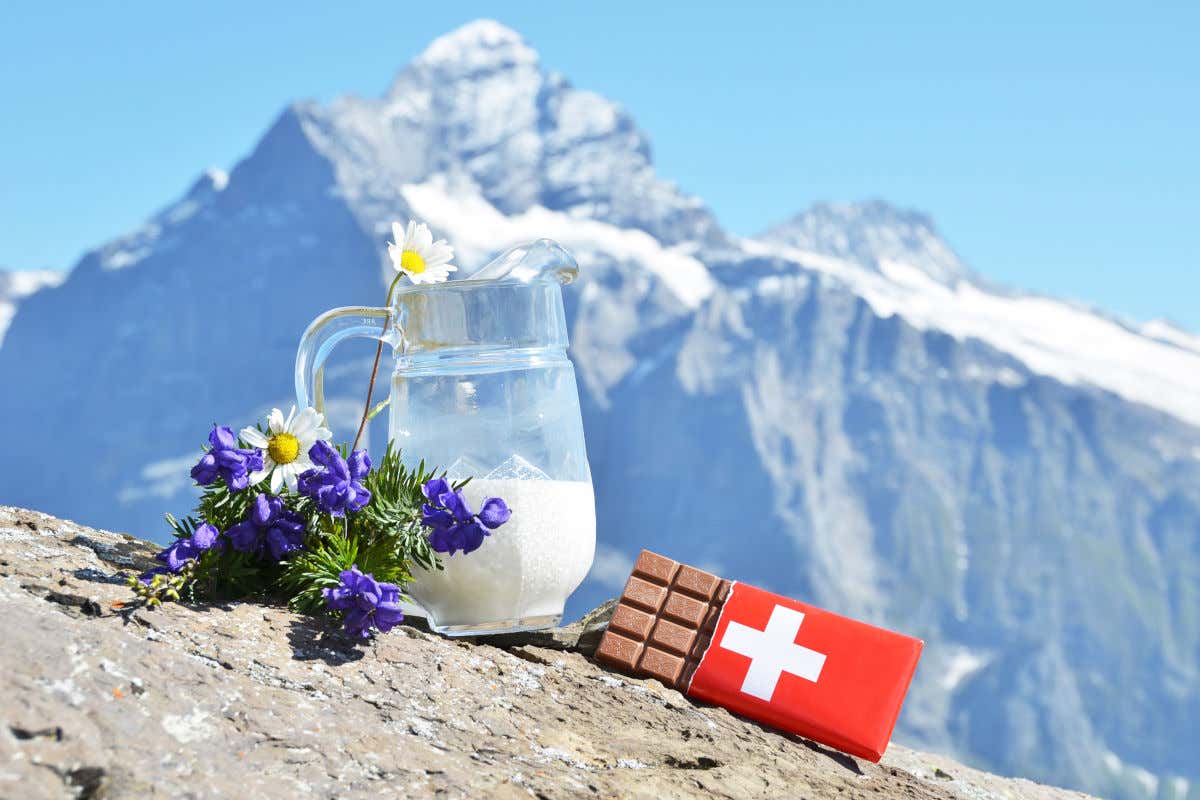
Switzerland has been synonymous with chocolate since the 19th century. That was when advances like the addition of powdered milk, the work of Daniel Peter alongside Henri Nestlé, and the conching process developed by Rodolphe Lindt laid the groundwork for the smooth texture that still defines Swiss chocolate today.
You can book the Zurich tour with boat trip and Lindt Museum entry to visit one of the country’s most important chocolate museums. It holds the world’s tallest chocolate fountain, and the ticket includes a tasting and access to the largest Lindt shop anywhere.
Geneva, for its part, has several artisan chocolatiers of real standing, heirs to a tradition of pralines and truffles that’s still alive in the old town.
6. Zürcher Geschnetzeltes
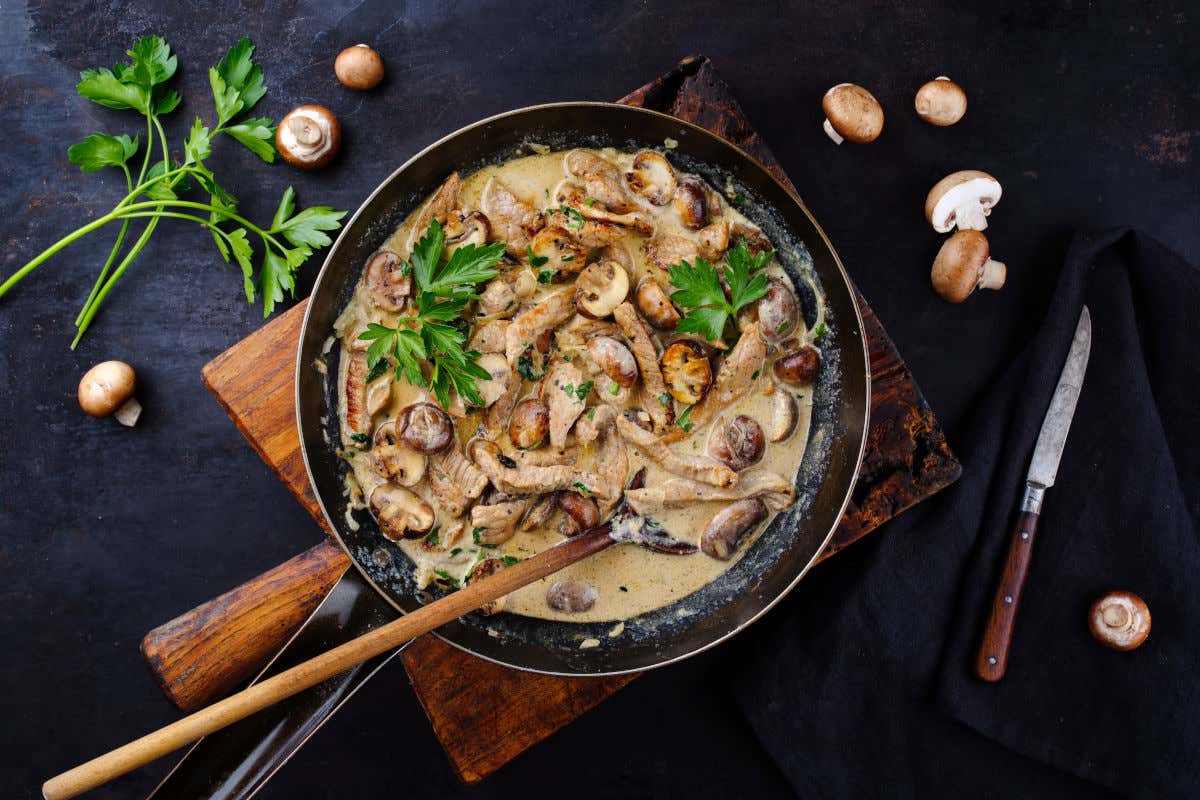
Zürcher Geschnetzeltes is a stew of sliced veal in a creamy white wine and mushroom sauce, born in Zurich in the middle of the 20th century. Despite that relatively recent origin, it has become a fixture on the menu of any traditional Swiss restaurant.
Known in English as Zurich-style veal, it brings together mushrooms, strips of veal, and a sauce of wine and cream. It’s almost always served with rösti, setting the creaminess of the sauce against the crispness of the potato.
Look for it in any restaurant in the old town. You’ll find plenty of ways to work it into a day out among the tours and activities in Zurich.
7. Älplermagronen
Älplermagronen is the Swiss take on macaroni and cheese, with a particular twist. It’s cooked with potato, cream, and fried onion, and served with apple sauce on the side, a sweet and savory contrast that catches most people out the first time. Its origins lie with Alpine herders, who needed something filling and simple to make in a mountain hut.
You’ll commonly find it in mountain refuges and ski resort restaurants across the Swiss Alps, particularly in the central region of the country.
8. Birchermüesli
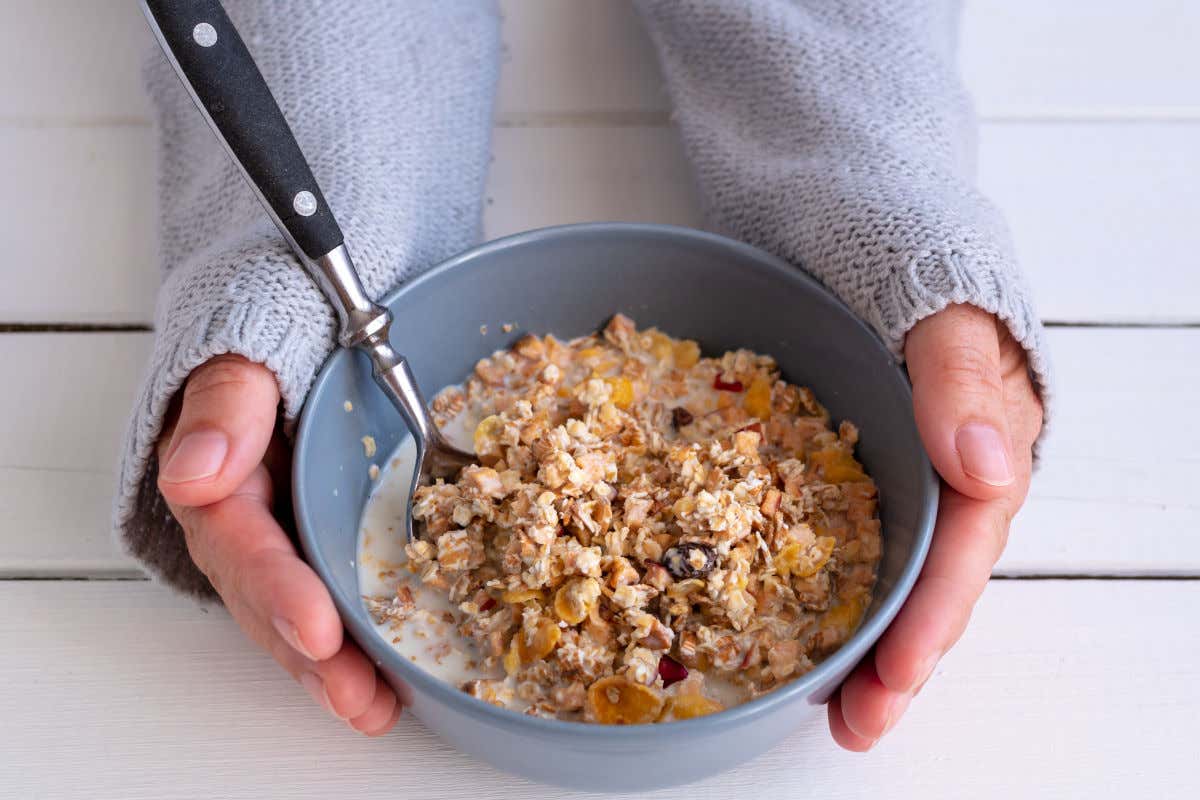
Birchermüesli, a mix of rolled oats, yogurt, fruit, and nuts, was created in the early 20th century by the Swiss doctor Maximilian Bircher-Benner as a therapeutic breakfast for patients at his Zurich clinic. In time that medical recipe became the country’s most popular breakfast, and decades later it’s the origin of every muesli sold in supermarkets worldwide.
The traditional version is made the night before so the oats can soak, which is part of why many Swiss still think of it as something you make at home rather than order out.
9. Basler Läckerli
Basler Läckerli are spiced cookies from Basel combining honey, almonds, candied orange or lemon peel, and a touch of kirsch. They have a firm but chewy texture quite unlike conventional gingerbread. Their origin traces back to the traveling merchants who passed through the city in the Middle Ages, and today they’re sold in decorated boxes that nod to that history.
Basel’s old town is the place to try them, and most bakeries around the Marktplatz will have them fresh.
10. Bratwurst and Cervelat
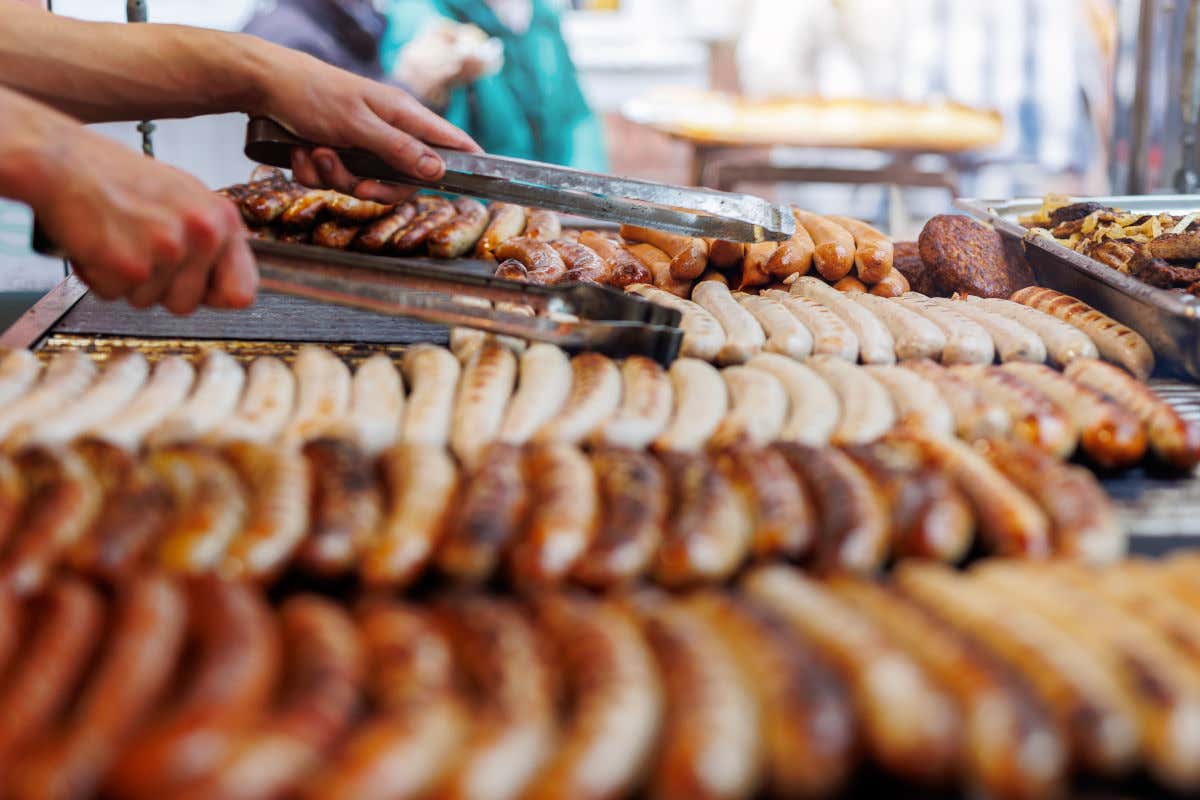
Swiss sausage, whether bratwurst made from veal and pork or cervelat, the most eaten in the country and close to a national symbol, is the street food of choice at markets and festivals. It’s grilled until the skin is well browned and usually comes with a crusty roll or a serving of rösti.
Christmas markets and local festivals in cities like Zurich and Geneva are good places to try one fresh off the grill, particularly through the colder months.
11. Gruyère Meringue With Double Cream
In the same region that gives Gruyère cheese its name, this dessert pairs crisp meringues with double crème, a thick cream from the Vaud and Fribourg area with more than 45% fat content. It’s a simple contrast but a very effective one, sometimes served with strawberries or other berries depending on the season.
You’ll find it in plenty of traditional restaurants across the canton of Fribourg and in the village of Gruyères itself, a medieval town worth a stop in its own right if you’re already exploring western Switzerland.
12. Swiss Wine
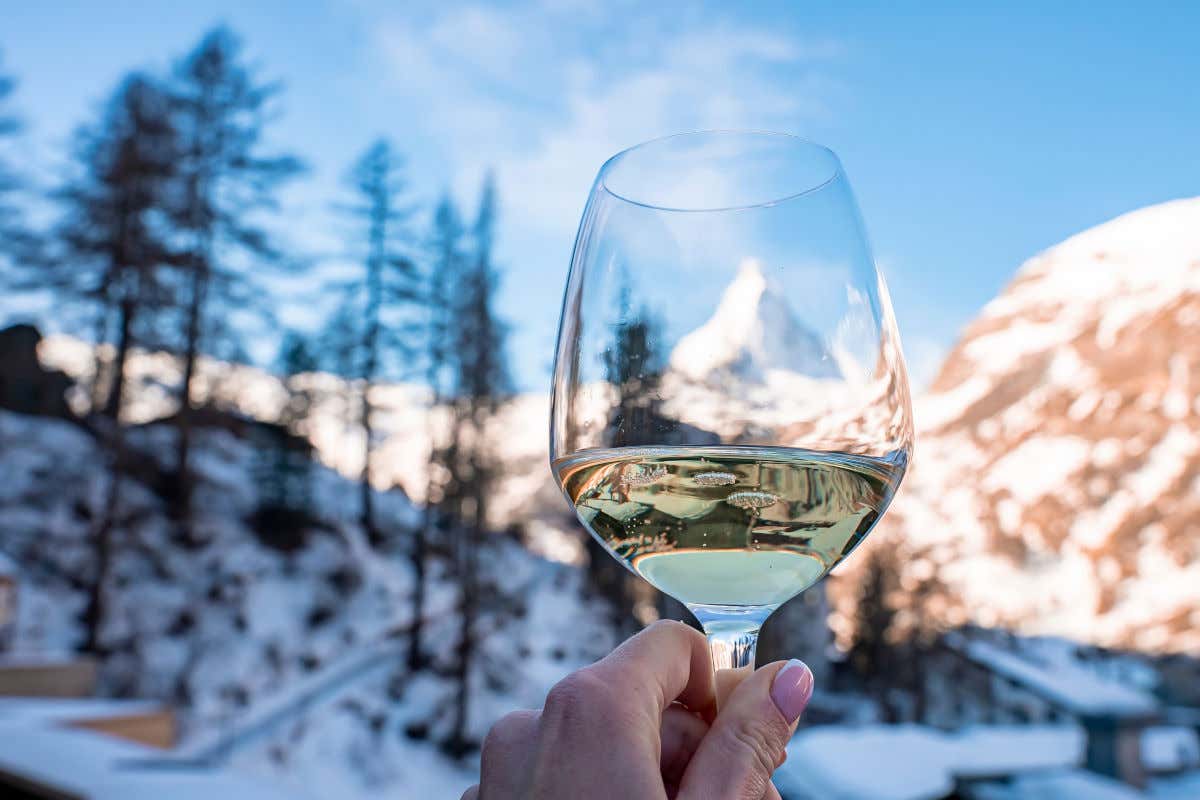
Swiss wines aren’t exported as widely as those of neighboring countries, but they accompany a good deal of this cooking. Chasselas stands out above all, the country’s most characteristic white variety, grown on the slopes beside lakes like Geneva. Pinot Noir and Merlot lead the reds, concentrated mainly in the cantons of Valais and Vaud.
The terraced Lavaux vineyards along Lake Geneva are a UNESCO World Heritage Site and sit within easy reach of the city. You’ll find tastings and vineyard visits among the tours and activities in Lausanne, right at the heart of the wine country.
Where to Try Each Swiss Dish
Frequently Asked Questions About Swiss Food
What Is the Typical Cheese of Switzerland?
Gruyère and Emmental are the two most representative cheeses in the country, both central to a traditional fondue. Appenzeller, with its own protected designation of origin, is another variety eaten widely at the local level, especially in eastern Switzerland.
What Is the National Dish of Switzerland?
Rösti is generally considered the most representative dish, so much so that the cultural border between the German-speaking and French-speaking regions is popularly named after it. Fondue and raclette follow closely as the dishes most associated with Switzerland abroad.
What Is the Difference Between Fondue and Raclette?
Fondue melts several cheeses together in a shared pot that you dip bread into. Raclette melts a single type of cheese beside a heat source and scrapes it over potatoes and other accompaniments, with no communal pot involved.
Work through even a few of these and Swiss food stops being just cheese and chocolate, turning into a decent summary of the country’s rural and Alpine history. Tasting your way around is the most enjoyable way to understand the place. You’ll find food tours, cheese dairies, and chocolate museums across the full range of tours and activities in Switzerland.


