

Turkish Cuisine: 19 Dishes to Try and Where to Find Them
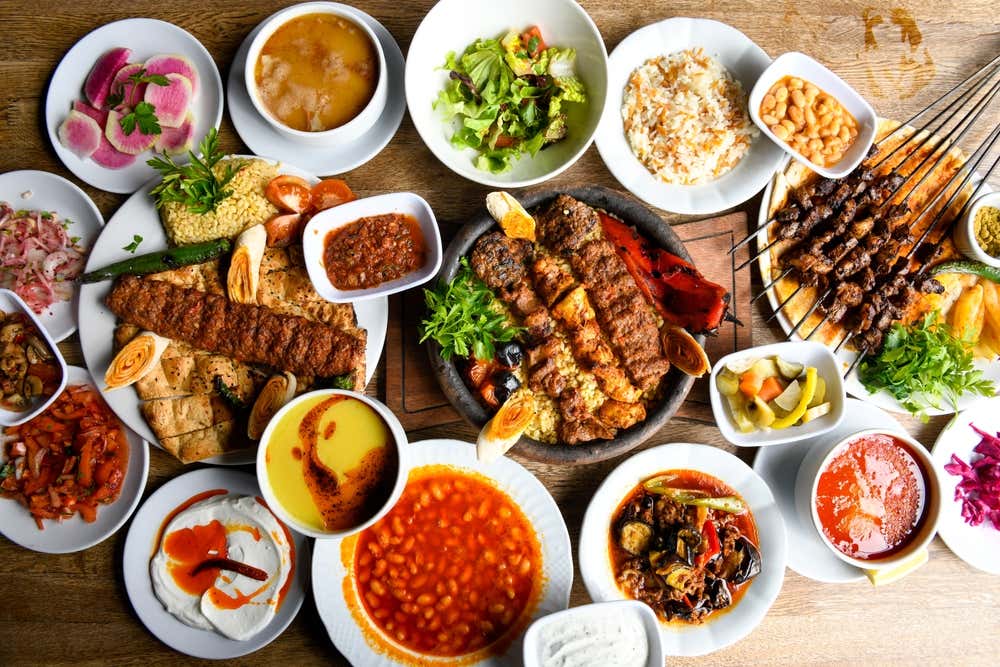

Turkey feeds you constantly, and it is very hard to eat badly there. What sits on the table is the result of centuries of overlap: Ottoman palace cooking, Mediterranean produce, Middle Eastern spicing and the grilled meats the Turkic peoples carried west from Central Asia. The result is a kitchen with real regional character, where the best version of a dish is often tied to one specific city.
Turkish cuisine blends Ottoman, Mediterranean, Middle Eastern and Central Asian cooking. The staples are grilled meats like döner and köfte, flatbreads like lahmacun and pide, meze spreads shared slowly at the table, and syrup-soaked sweets such as baklava and künefe, finished with coffee or tea.
The Best Foods to Try in Turkey (2026)
Below are 19 dishes and drinks worth planning meals around, along with where to find the version that is actually worth the detour.
Kebabs and Grilled Meat
Döner Kebab
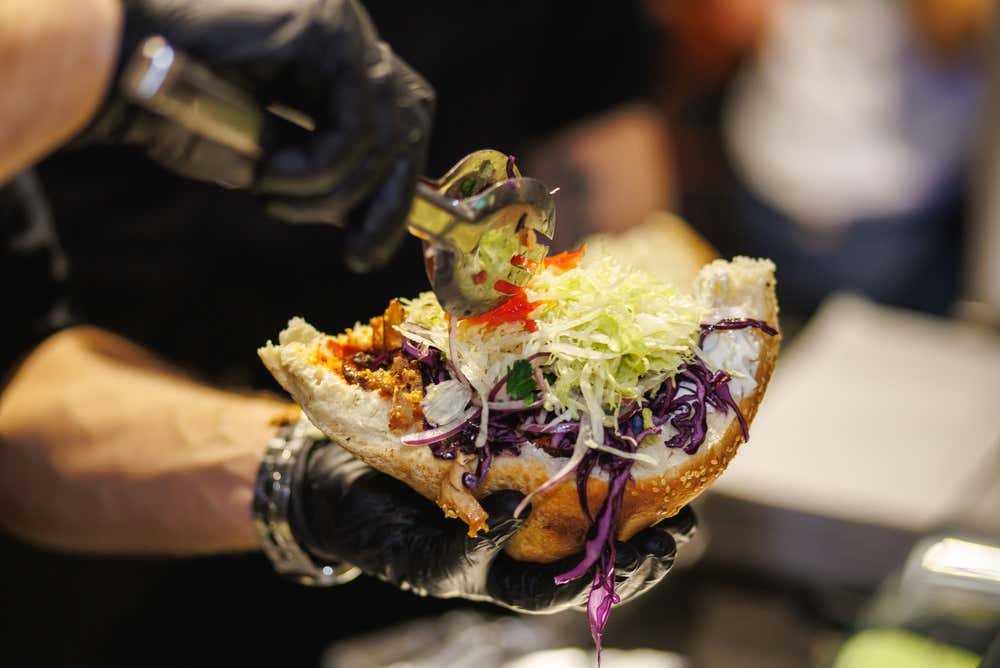
Think of Turkish food and this is probably the first thing that surfaces. Grilled meat cooking is usually traced to the nomadic peoples of Central Asia, who roasted over open fires, and it arrived in Anatolia with them. Döner is the version that conquered the world: seasoned meat stacked on a vertical spit, shaved thin and folded into bread. Adana kebab is the other one to know, made from hand-minced meat pressed onto a flat skewer and generously spiced with chili.
The best way to meet it is walking Istanbul after dark, when grill smoke settles over the busier streets. To go straight to the good stalls, book the Istanbul food tour, which starts in Kadıköy on the Asian side and works through cafés, restaurants and street carts. If you’d rather get your bearings first, the Istanbul free walking tour covers the old city and passes plenty of grills on the way.
İskender Kebab
İskender is what happens when döner stops being street food and sits down for lunch. Slices of grilled lamb are laid over cubes of pide bread, covered in a warm tomato sauce, then finished at the table with melted butter poured over the top and a spoonful of thick yogurt on the side. It comes from Bursa, a couple of hours south of Istanbul, and the city still treats it as local property. Order it there if your route allows.
Köfte
Köfte takes the meatball somewhere more interesting. Usually beef or lamb, it’s worked through with cumin, garlic, onion, parsley and black pepper until the seasoning runs all the way through rather than sitting on the surface. It arrives either plain with fresh bread and grilled peppers, or stewed with potatoes and tomatoes in a thicker sauce. You’ll find it in practically any lokanta, the everyday canteen-style restaurants that feed most of the country at lunchtime, and it’s usually the cheapest good meal on the menu.
Testi Kebabı
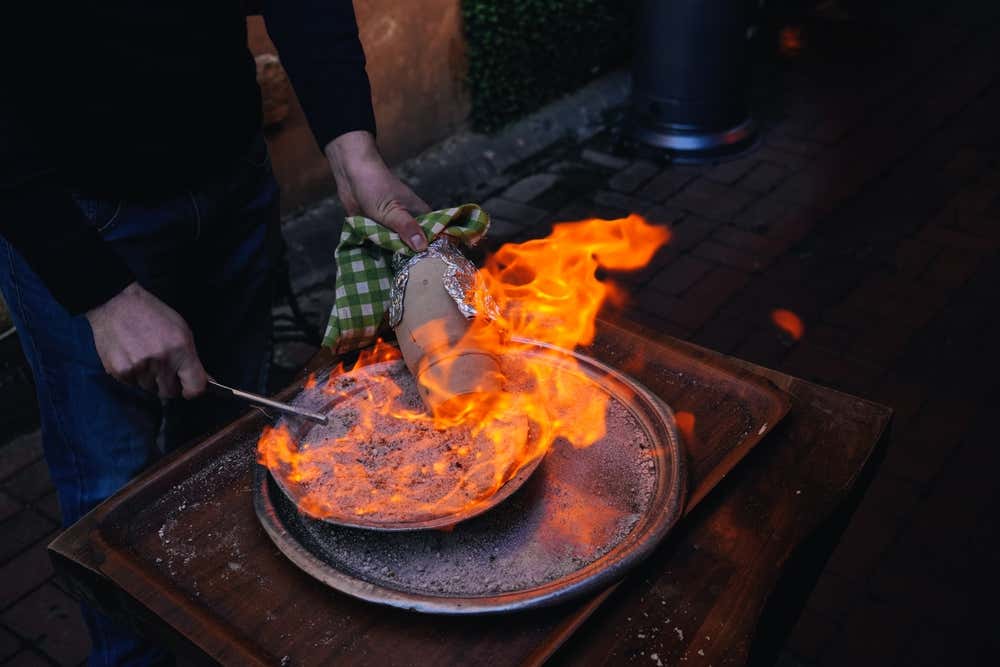
Testi kebabı is as much theater as dinner. The dish comes from Cappadocia and takes its name from the clay pot, the testi, it cooks in. Lamb or beef goes in with tomato, pepper, onion, garlic, herbs and spices, the pot is sealed shut with dough and left to cook slowly until everything has collapsed into everything else. It’s brought to the table still sealed and cracked open in front of you, which is the part people film.
Since you’ll be in the region anyway, see it from above: the Cappadocia hot air balloon ride lifts off before dawn over the fairy chimneys, and lands in time for a long breakfast. There’s plenty more in the full range of activities in Cappadocia if you’re building out a few days there.
Breads and Street Food
Simit
Simit is the ring of sesame-crusted bread you’ll see stacked in towers on red carts on nearly every corner. It looks like a bagel and isn’t one: instead of being boiled, the dough is dipped in molasses-sweetened water before it’s rolled in sesame and baked, which gives it a darker crust and a faint caramel note underneath the toasted seeds. It costs very little, it’s the standard Turkish breakfast on the move, and it’s best eaten within about an hour of leaving the oven.
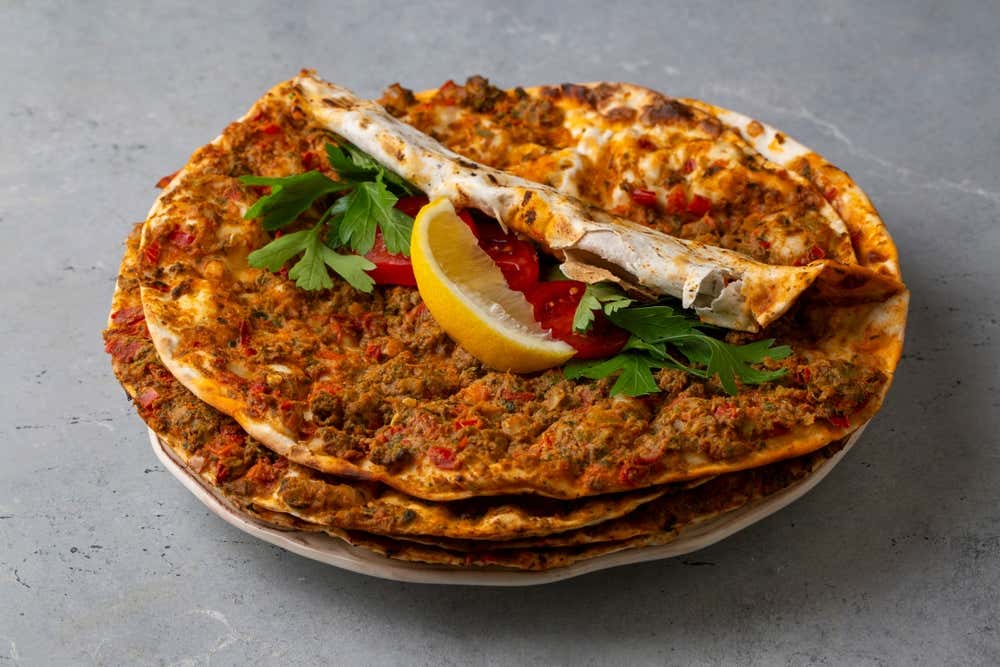
Lahmacun
Anyone who likes pizza will get on with lahmacun immediately, though the comparison undersells it. A very thin round of dough is spread with finely chopped meat, tomato, herbs and spices, then baked fast in a hot oven until the edges crisp. You eat it rolled up, usually with lemon squeezed over and a handful of parsley inside. It became popular across Turkey through the mid twentieth century, though flatbreads topped this way go back much further in the region.
Sultanahmet is an easy place to try one fresh, with ovens working within a few minutes’ walk of the Hagia Sophia. For a wider sense of how locals actually eat, the alternative Istanbul free tour is built around traditions, food and daily life rather than monuments.
Pide
Pide is the boat-shaped one, a long oval of dough with the edges folded up to hold the filling in. Cheese, spiced minced meat, sujuk sausage or egg all turn up, and the dough is thicker and softer than lahmacun so it eats more like a meal than a snack. The Black Sea coast is where it’s taken most seriously, and Trabzon in particular is known for a version loaded with butter and cheese that you order by the length.
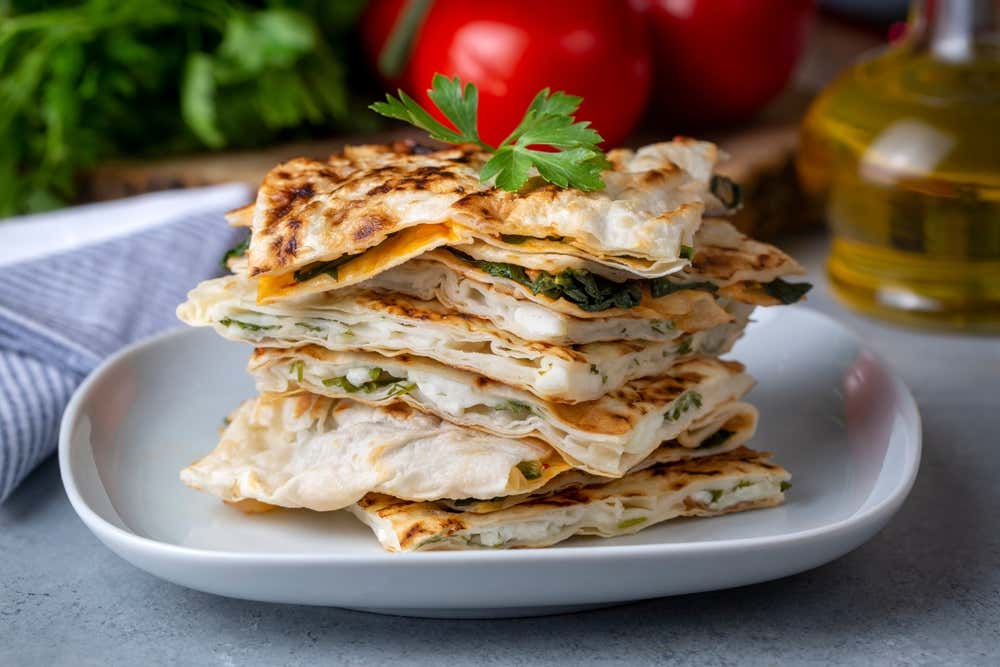
Gözleme
If you want the comfort food end of Turkish cooking, this is it. Gözleme is a thin savory flatbread, filled and cooked flat on a convex griddle until it blisters. Cheese, spinach, potato and minced meat are the usual fillings, and the texture is the point: crisp in patches on the outside, soft and steaming inside. It’s easiest to find at markets, bazaars and roadside stalls, very often made by women who have been rolling the dough by hand for decades.
It’s a good thing to eat while wandering the Spice Bazaar, which you can pair with time on the water on the Bosphorus cruise and Spice Bazaar tour. The Grand Bazaar nearby is worth an hour too, though the food stalls are better at the Spice Bazaar.
Börek
Börek is built from yufka, sheets of very thin pastry layered with filling and baked until the top shatters when you press it. Su böreği, the boiled version, is softer and closer to lasagna; sigara böreği is rolled into cigarette shapes around cheese and fried. It’s a morning food above all. Walk into any decent bakery before ten and there will be a tray of it going fast, sold by weight and eaten standing up with a glass of tea.
Mezes and Home Cooking
Meze
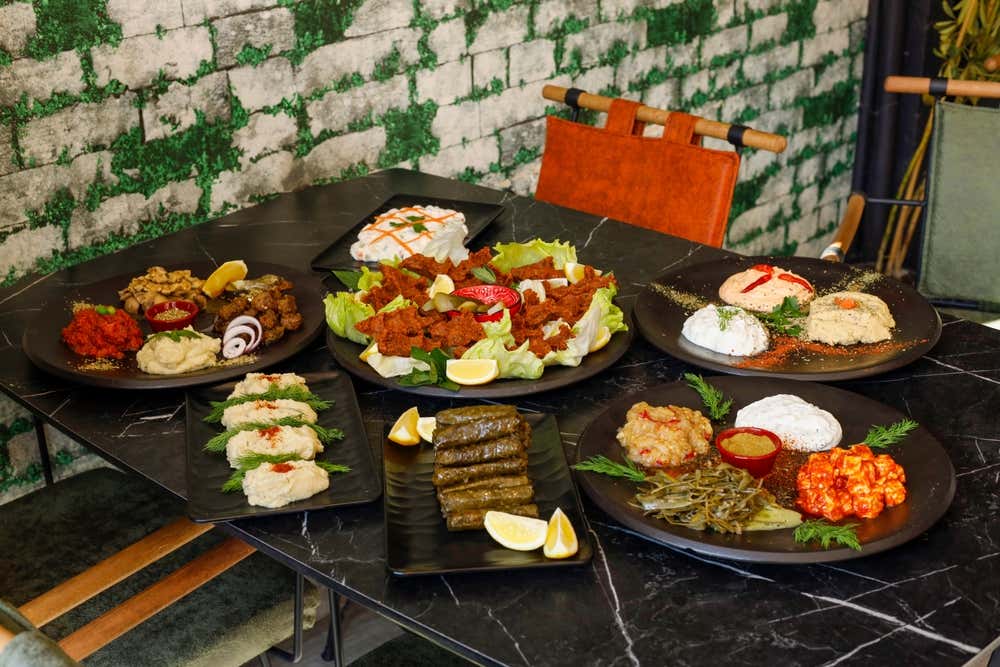
Meze is less a dish than a way of running a meal. Small plates of dips, salads and cheeses arrive together and stay on the table for hours, with roots reaching across the Mediterranean and the Middle East. The regulars include baba ganoush, a smoky eggplant purée, ezme, a sharp chopped salad of tomato and pepper, and haydari, strained yogurt thickened and folded through with herbs and garlic.
The place to do this properly is a meyhane, the traditional tavern where meze is the whole evening rather than a starter. Many of the best sit in older neighborhoods like Fener and Balat, and the tour of the Fener and Balat neighborhoods is a good way to see where people actually eat once you’re off the main tourist axis.
Dolma
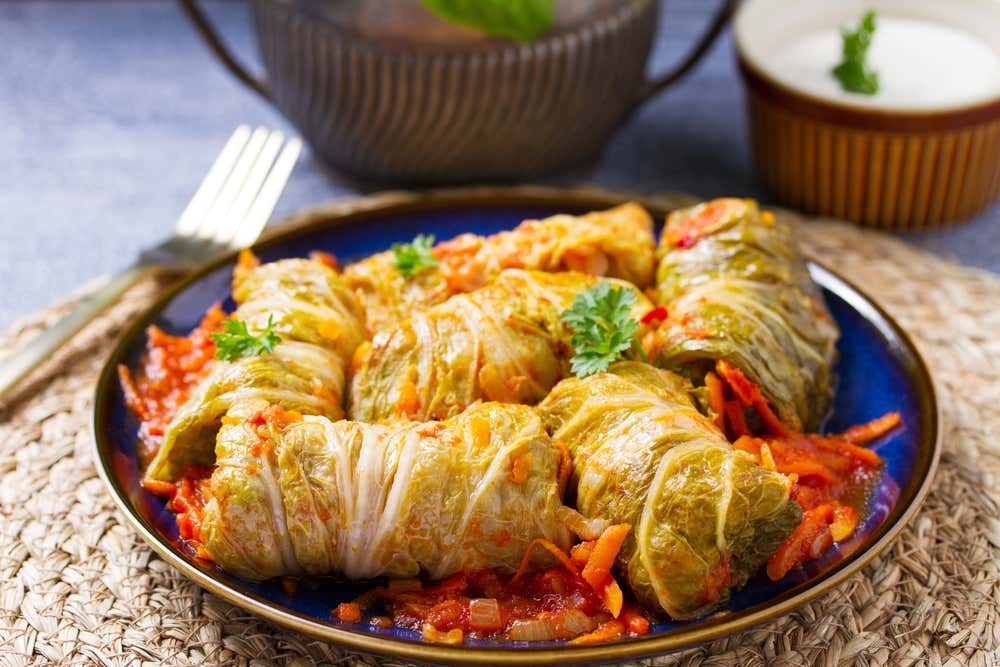
Dolma covers a whole family of stuffed vegetables, and it’s where Turkish cooking is at its best for vegetarians. Vine leaves are the classic wrapper, but peppers, zucchini, eggplant and hollowed tomatoes all get the same treatment. The filling carries the dish: rice worked through with dill, mint and parsley, sometimes with pine nuts and currants. The Aegean is the region to look for zeytinyağlı dolma, made with olive oil and served cold, which makes a genuinely good lunch on a hot day with yogurt spooned over and tea alongside.
Mantı
Every country has its filled pasta and Turkey’s is mantı. It came west from Central Asia along the trade routes and settled into Ottoman cooking, where it was refined into something very small and very labor-intensive. The parcels are filled with minced meat, boiled or steamed, then served under garlicky yogurt with melted butter and dried mint or chili spooned over the top.
Kayseri, in central Anatolia near Cappadocia, is the city that claims the definitive version, where the parcels are made so small that a spoon holds several at once. It’s an easy add-on to time spent in the region, so it’s worth checking the tours and day trips around Cappadocia when you plan those days.
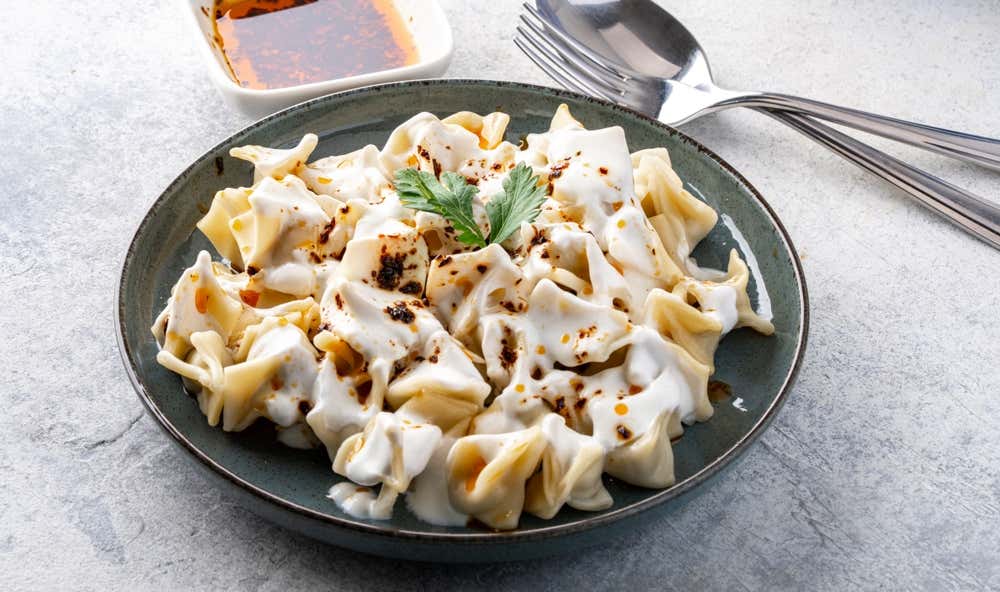
Menemen
Menemen is how Turkey does eggs, and it belongs to breakfast. Tomatoes and green peppers are softened in oil or butter until they break down, then eggs go in and get stirred loosely so the result stays soft and spoonable rather than setting into an omelet. It arrives in the pan it was cooked in, with bread for scooping. The long argument over whether onions belong in it is not going to be resolved here, but ordering it with soğanlı or soğansız will mark you out as someone who has been paying attention.
Sweets
Baklava
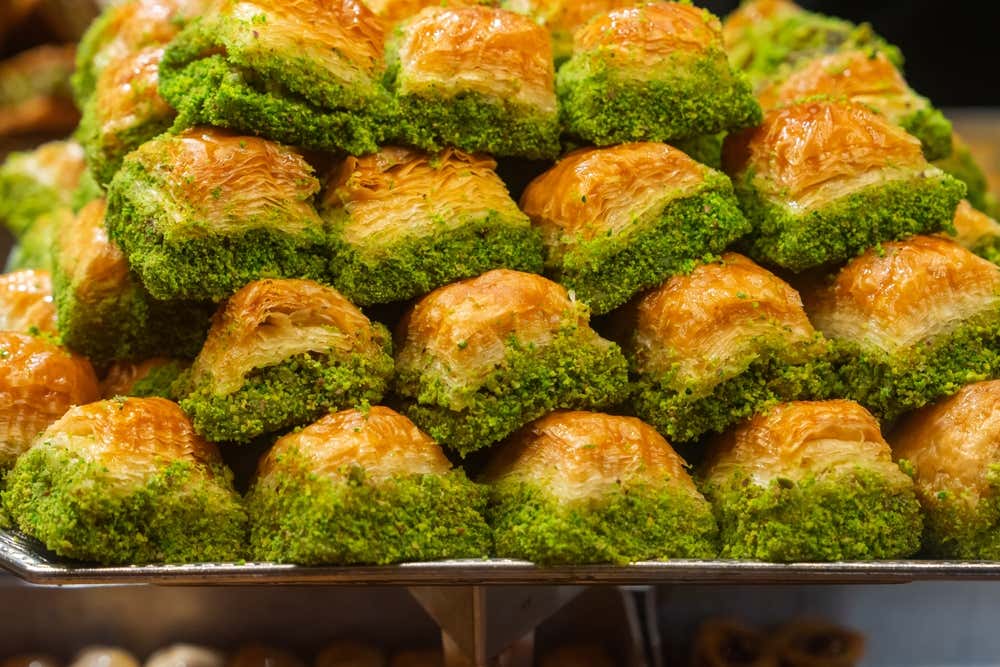
No list of Turkish food works without baklava. Early versions are often traced back as far as the Assyrians, but the pastry as it’s eaten now was developed in the Ottoman kitchens. Sheets of filo are layered with chopped nuts and bound with syrup or honey, then cut into diamonds and baked until the top layers separate.
Gaziantep, in the southeast, is the acknowledged capital, largely thanks to the quality of its pistachios. In 2013 Gaziantep baklava became the first Turkish product to receive protected geographical indication status from the European Union. If your route doesn’t reach that far, you’ll still eat well in Istanbul, including on the Bosphorus night cruise with dinner and a show, which pairs a full meal with live Turkish music and dancing on the water.
Künefe
Künefe is the one to order if you only have room for one dessert. Shredded kadayıf pastry is packed around a layer of mild unsalted cheese, baked in a shallow copper dish until both sides go deep gold, then soaked in syrup and scattered with pistachio. It has to be eaten immediately, while the cheese still pulls into strings when you lift the spoon. Hatay, down near the Syrian border, is where it’s said to be at its best, but good versions turn up in dessert houses across the country.
Lokum
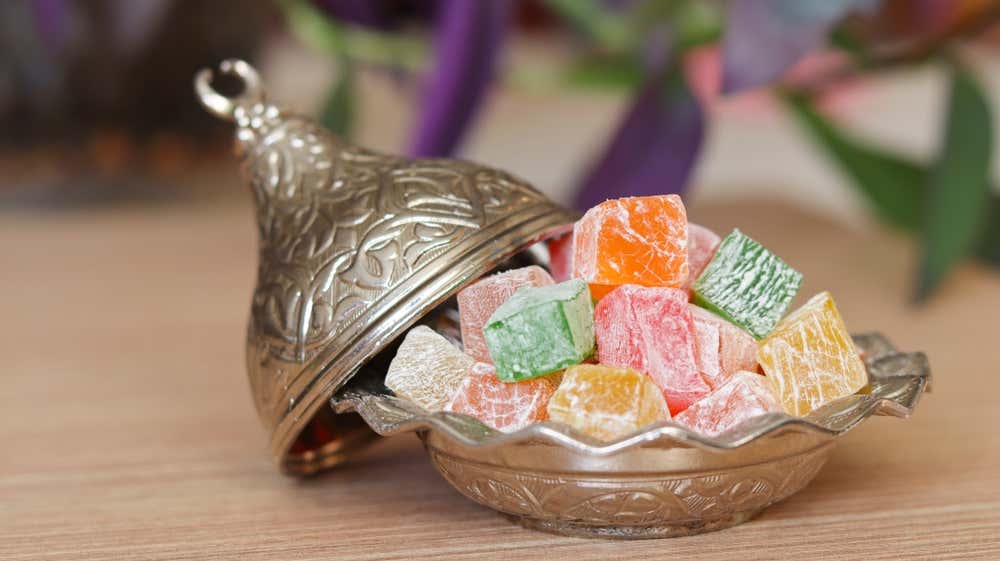
Known in English as Turkish delight, lokum is a soft starch-and-sugar sweet, usually scented with rosewater, lemon or orange and often studded with pistachio or hazelnut. It’s dusted with powdered sugar or coconut to keep the pieces from sticking. The modern recipe is credited to Hacı Bekir Efendi, an Istanbul confectioner who is said to have introduced cornstarch to the mixture in 1777, producing the yielding texture it has today.
The Spice Bazaar is the obvious place to buy it, with stalls stacked in blocks of every color alongside the spices and teas. Buy from somewhere that lets you taste first, and expect the price to drop noticeably a few streets back from the main entrances.
What to Drink
Turkish Coffee
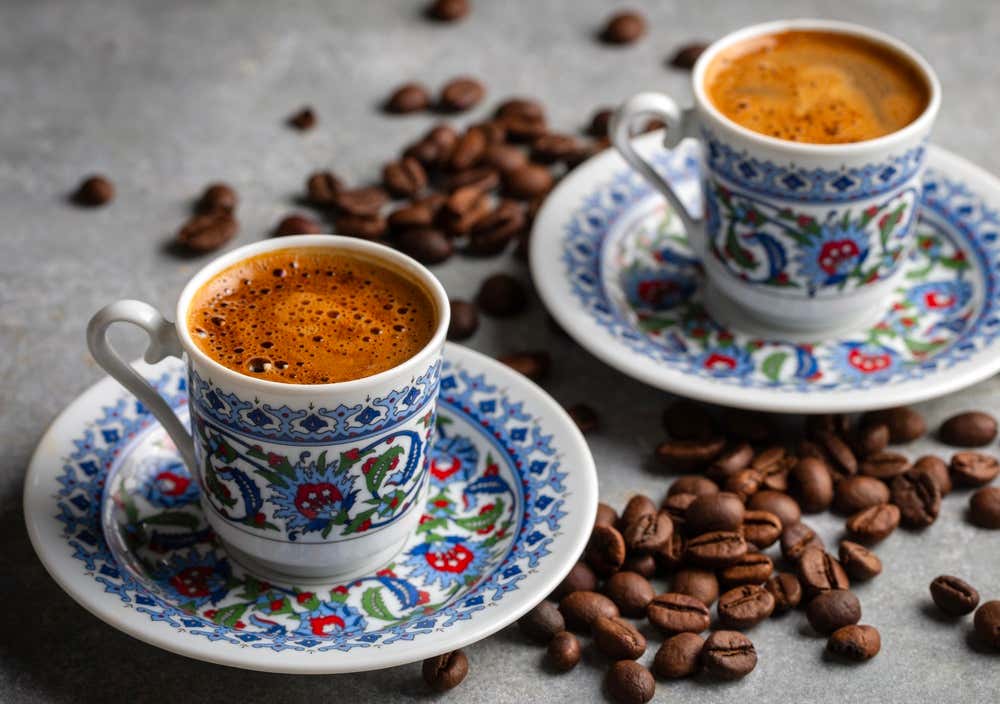
Turkish coffee is ground almost to powder and brewed in a cezve, a small long-handled copper pot, then poured unfiltered so the grounds settle at the bottom. It comes with a glass of water and often a piece of lokum on the side, and you order it by sweetness rather than size. The tradition was added to the UNESCO list of intangible cultural heritage in 2013. Let the cup stand for a minute before you drink, and stop before you reach the sludge.
To learn the method rather than just drink the result, the Turkish coffee workshop in Istanbul teaches the traditional technique of brewing over hot sand, and sends you home with a cezve of your own.
Turkish Tea
Çay is the real national drink, well ahead of coffee by volume. It’s brewed strong in a stacked double kettle and diluted to taste from the pot below, then served in small tulip-shaped glasses that show the color and keep your fingers off the hot sides. It runs all day, with breakfast, after meals, during negotiations in a shop, and you’ll be offered it constantly. Accepting is the polite move and it’s almost always free.
Ayran
Ayran is yogurt whisked with water and salt, served very cold and often with a head of foam on top. Sweet drinks fight with grilled meat and heavy spicing; this one cuts straight through both, which is why it’s the standard partner to a kebab rather than a soda. It takes some adjusting to if you expect yogurt drinks to be sweet, but by the third day most people are ordering it without thinking.
Planning a Trip Around the Food
The through line in all of this is regionality. Baklava belongs to Gaziantep, mantı to Kayseri, künefe to Hatay, İskender to Bursa, pide to the Black Sea. You can eat all of it in Istanbul and eat well, but a route that takes in two or three regions turns a good food trip into a memorable one.
If you’re still shaping the itinerary, take a look at what to see in Istanbul for the days between meals, browse the activities and excursions across Turkey, or explore the best activities in English all over the world. Then turn up hungry.


Most read of #Turkey
Turkish Cuisine: 19 Dishes to Try and Where to Find Them
9 September 2026What to Do in Istanbul: 12 Unforgettable Adventures
25 June 2026Most read #Turkey