
15 Must-Try Korean Dishes to Eat in South Korea
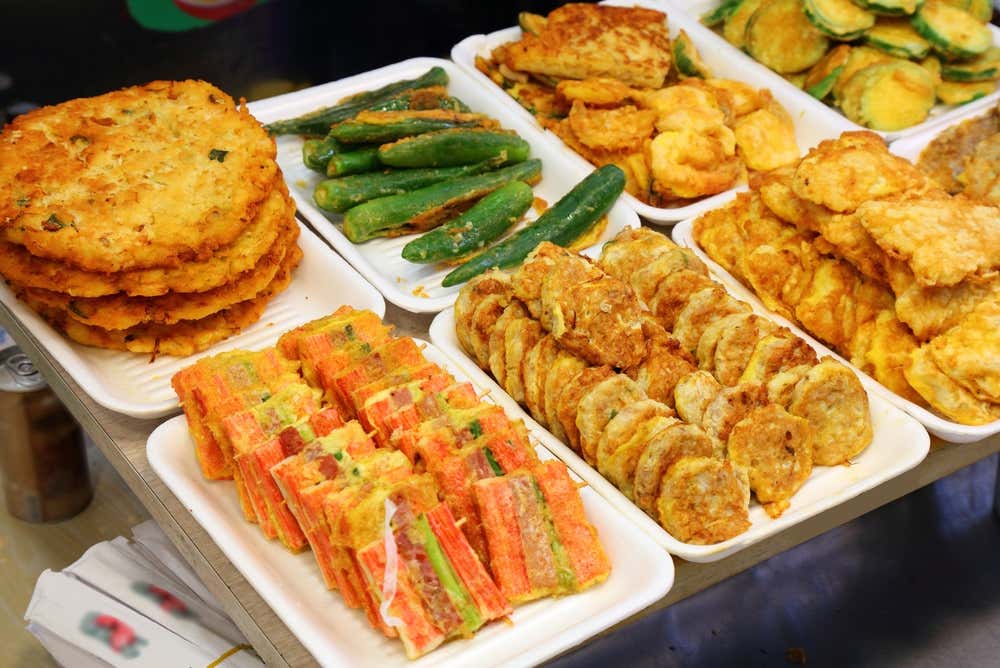

Korean food has won over the world in the last few years, and it is no accident. The cuisine of South Korea brings together bold flavors, centuries-old fermentation techniques, and a strong social side that revolves around the table. If you are planning a trip to Seoul, or simply want to know the country’s most famous Korean dishes before you book, we at Civitatis have gathered the Korean foods that belong on your list, from the base of the daily diet to the desserts the country loves most.
Guia dos pratos típicos da Coreia do Sul
The must-try Korean dishes start with kimchi, bibimbap, and Korean barbecue such as samgyeopsal and galbi. From there it moves on to street snacks like tteokbokki and kimbap, warming stews such as sundubu-jjigae, and sweet treats like hotteok and bingsu. Below are fifteen dishes worth seeking out, plus the drinks, markets and customs that make eating in Korea so memorable.
What Is the Base of Korean Food?
The foundation of Korean food is steamed rice, served at almost every meal and surrounded by a spread of small side dishes called banchan. Alongside the rice, you will nearly always find a soup or stew, kimchi (fermented vegetables, usually cabbage, with chili), and a protein, whether meat, fish, or tofu. This shared format, with several little plates in the middle of the table, is what gives Korean food its social character. You do not eat one closed plate alone, but a set of flavors that complete one another.
The other pillar is fermentation. Beyond kimchi, sauces like gochujang (fermented chili paste), doenjang (fermented soybean paste) and ganjang (soy sauce) form the backbone of Korean seasoning. They explain why the dishes carry such layered flavor, somewhere between spicy, umami and gently sweet.
The Most Famous Korean Dishes
This is the rundown of the most famous Korean foods, perfect if you want to know exactly what to order when you land in South Korea.
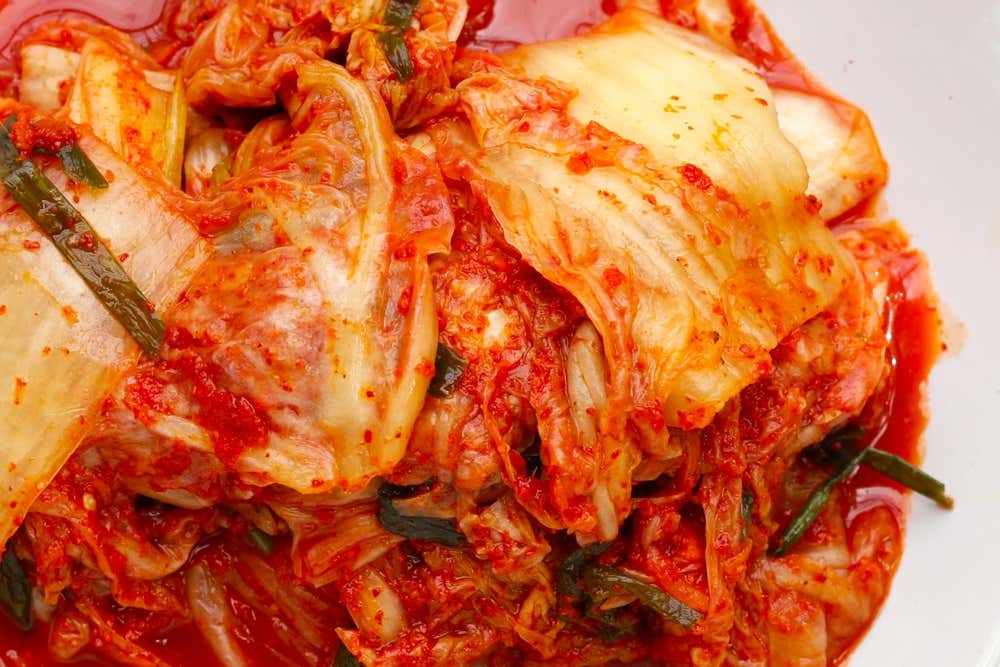
Kimchi
The most emblematic dish of Korean cuisine. It is made with cabbage (or radish, cucumber, and other vegetables) fermented with salt, red chili, garlic, and ginger. There are hundreds of regional variations, and it turns up at almost every meal of the day.
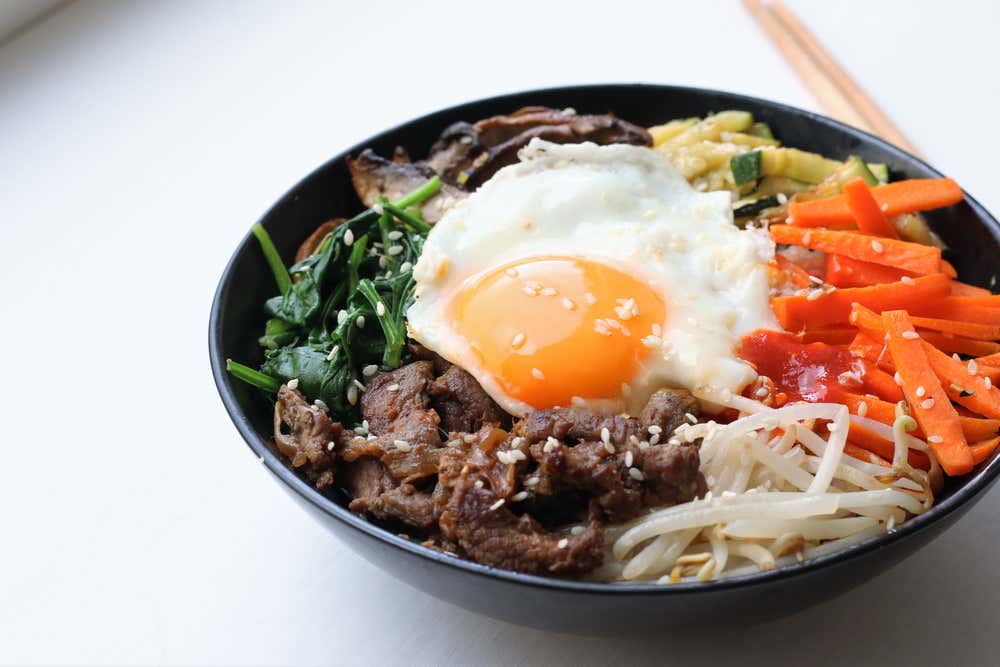
Bibimbap
A bowl of rice topped with sautéed vegetables, meat (usually beef), a fried egg, and a generous spoonful of gochujang. Everything is mixed together at the table before you eat, and the name itself means “mixed rice.” If you are in Seoul, do not miss the chance to try it on our food tour of Seoul.
Bulgogi
Thin slices of beef marinated in soy sauce, pear, garlic, and sugar, then grilled to order. It is one of the milder, most approachable Korean dishes for anyone trying the cuisine for the first time.
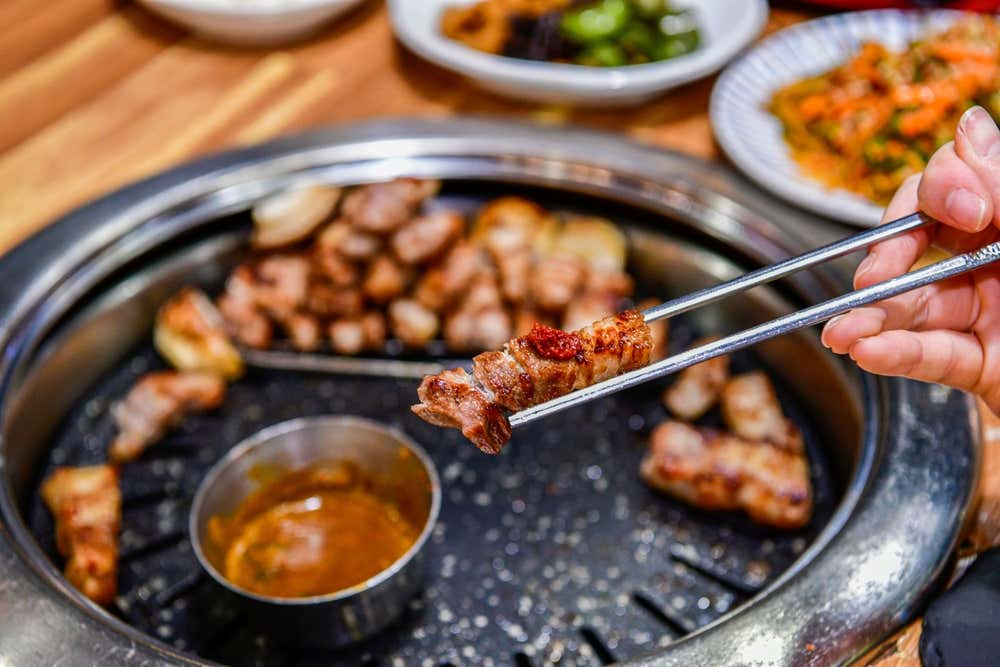
Samgyeopsal
Pork belly grilled right at your table on a built-in barbecue, the classic Korean barbecue experience known as gogigui. It usually comes with lettuce leaves for wrapping the meat together with rice and sauces.
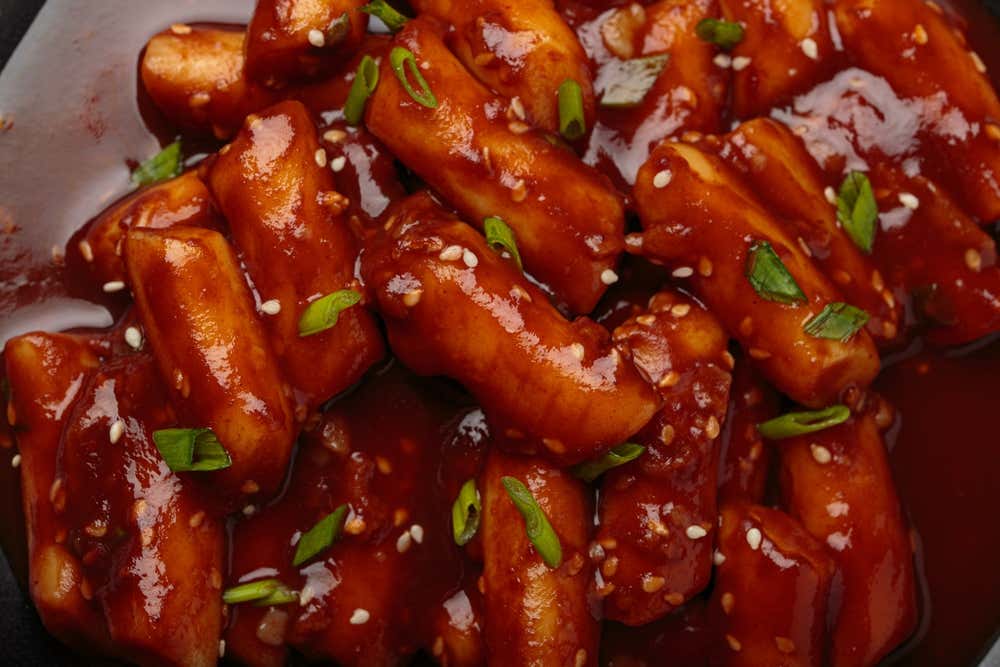
Tteokbokki
Cylindrical rice cakes simmered in a spicy gochujang-based sauce. It is the most popular street food in South Korea, sold from stalls all over the country.
Kimbap
Rolls of rice and mixed fillings (vegetables, egg, meat or tuna) wrapped in seaweed, similar to Japanese sushi but with an identity all their own. It is the practical choice to take along as a snack or on a picnic.
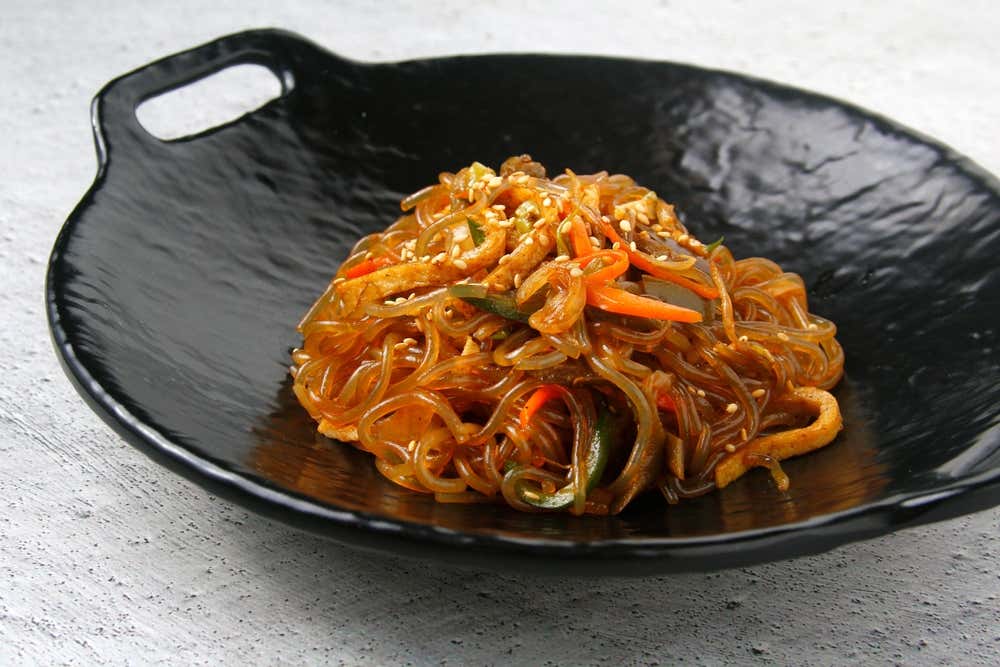
Japchae
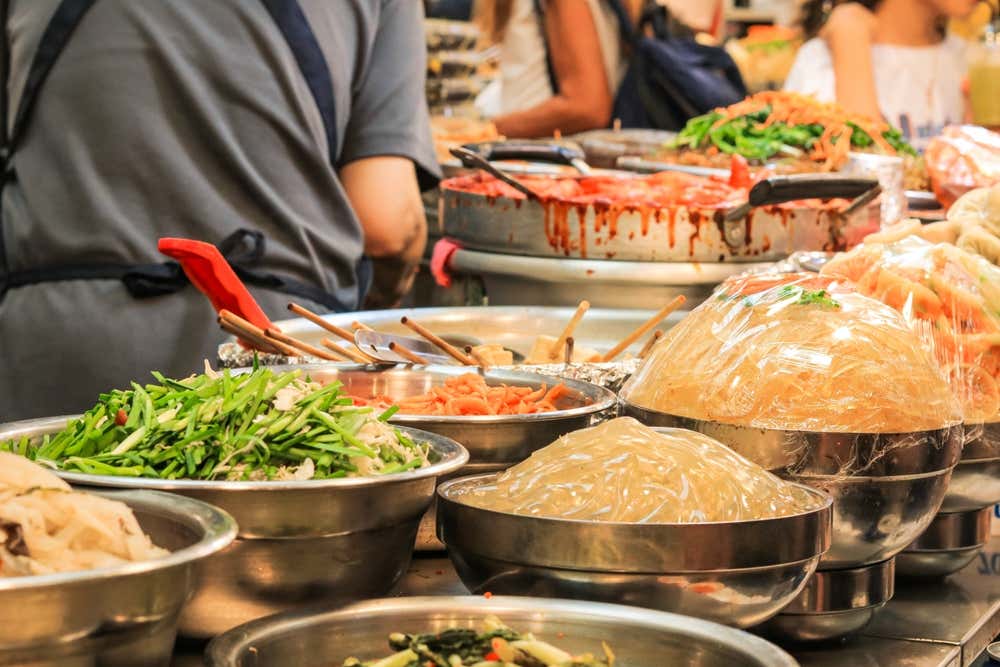
Sweet-potato glass noodles stir-fried with an array of vegetables and sometimes meat, seasoned with sesame oil and soy sauce. It is a lightly sweet dish, served both day-to-day and at celebrations.
Naengmyeon
Cold noodles, served in an icy broth or with a spicy sauce, hugely popular in the Korean summer for cooling off on hot days.
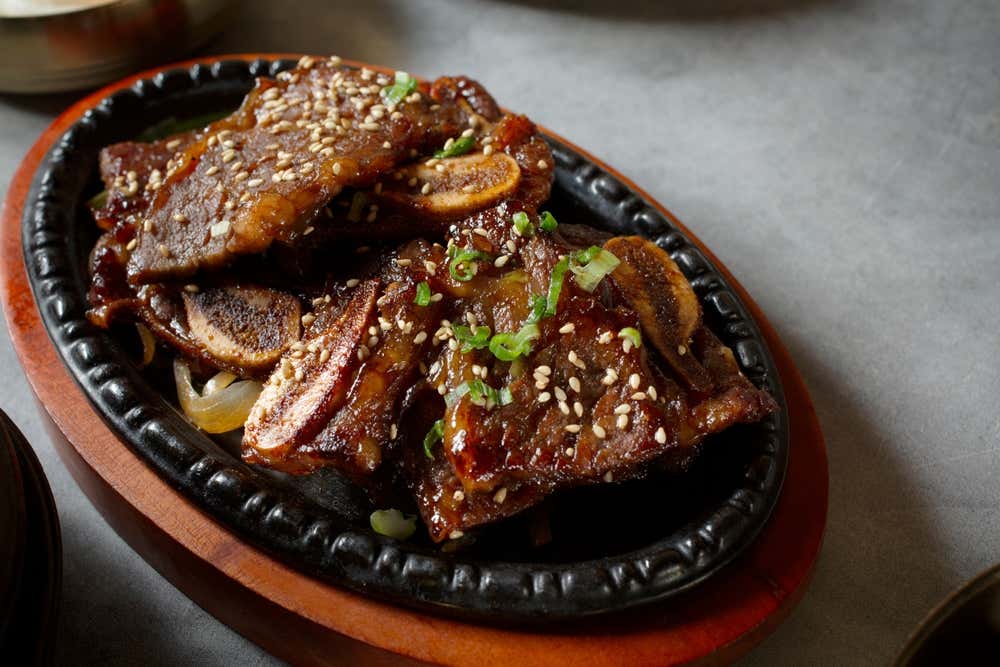
Galbi
Marinated and grilled short ribs (pork or beef), one of the most festive dishes in Korean cooking, traditionally served on special occasions.
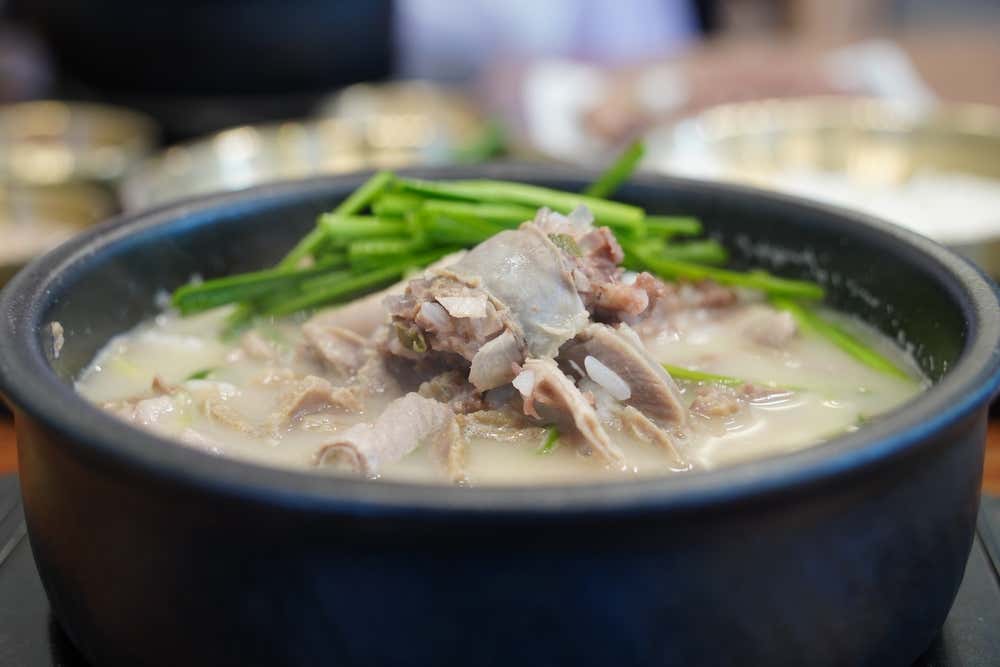
Sundubu-jjigae
A spicy stew of soft tofu, served bubbling in a stone bowl, usually with seafood or meat and a raw egg cracked on top.
Soups and Stews: the Heart of the Meal
No Korean meal feels complete without a soup (guk) or a heartier stew (jjigae). Kimchi-jjigae, made with fermented kimchi, tofu, and pork, is perhaps the most popular of them all. Doenjang-jjigae, based on fermented soybean paste, is the Korean equivalent of an everyday comfort dish. These preparations show exactly what Korean food is built on: fermented flavors, served hot and shared around the table.
Korean Vegetables and Banchan
Korean vegetables are the quiet stars of any meal. Beyond kimchi, it is common to find seasoned bean sprouts (kongnamul), spinach with sesame oil (sigeumchi-namul), and pickled radish. These side dishes, known as banchan, are served in small bowls in the center of the table and, traditionally, can be refilled for free at many restaurants, good news for anyone who likes to taste a little of everything.
Sweets and Traditional Desserts
South Korea also has a sweet tradition that is little known outside the country:
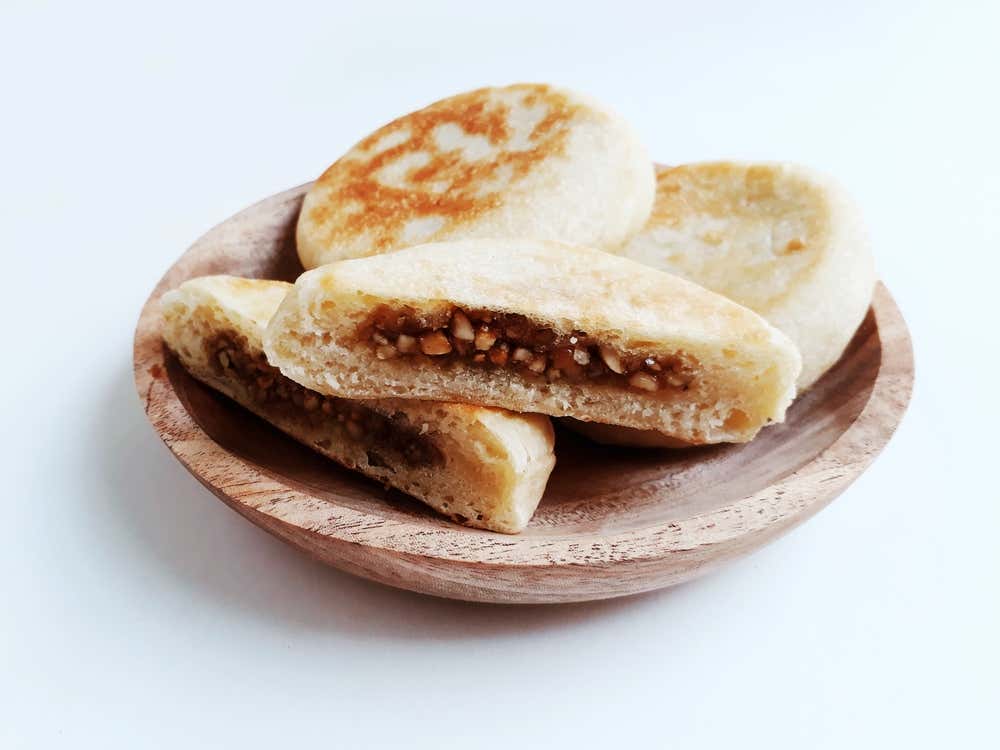
- Hotteok: a fried pancake stuffed with brown sugar, cinnamon and nuts, sold at street stalls in winter
- Bingsu: an icy dessert of finely shaved ice, topped with fruit, condensed milk, sweet beans or matcha cream
- Yakgwa: a sweet honey cookie, fried and traditionally served at festivals
Typical Drinks of South Korea
To wash down all that food, Koreans have their own drinks:
- Soju: a smooth spirit, usually rice-based, and the most popular alcoholic drink in the country
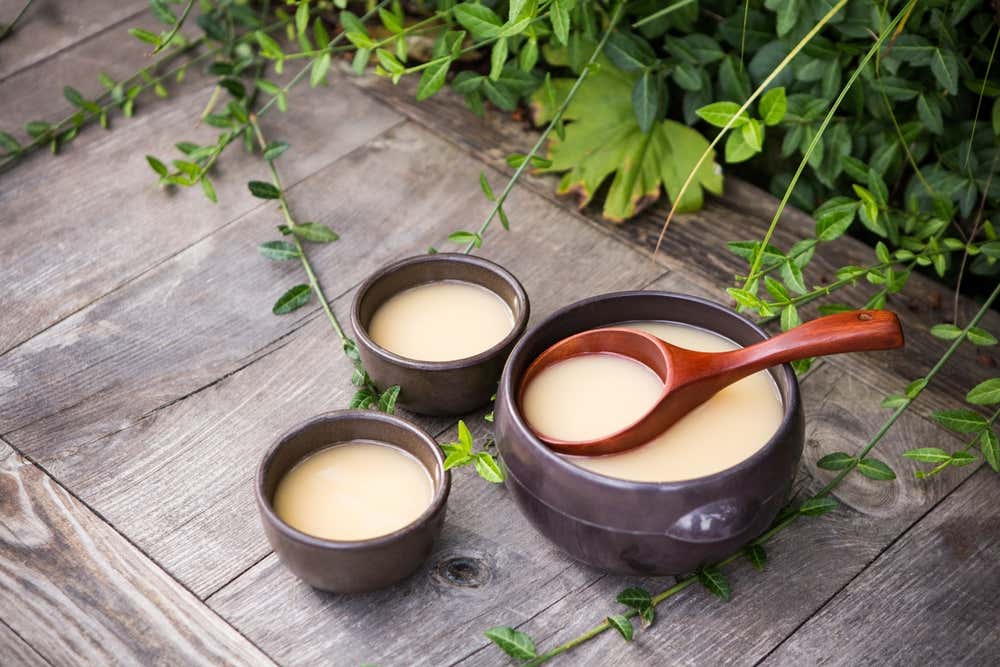
- Makgeolli: a cloudy, lightly sparkling rice wine with a gently sweet taste
- Traditional teas: such as barley tea (boricha) and cinnamon and dried-persimmon tea (sujeonggwa), served cold or hot depending on the season
The Korean Lunchbox (Dosirak)
The Korean lunchbox, called dosirak, is a real part of daily life. Students and workers often carry full meals in compartmented containers, with rice, a protein, and a few banchan. These days, restaurants and convenience stores also sell ready-made versions of the dosirak, a handy way to try several Korean dishes in one go.
Where to Eat in Seoul
If the question is what to do in South Korea beyond the classic sights, the answer runs straight through the food. In Seoul, Gwangjang Market is an essential stop for tteokbokki, bindaetteok (mung-bean pancake) and kimbap straight from stalls that have been trading for a century. The Myeongdong district gathers modern street food, while Insadong is ideal for traditional sweets among craft shops. Exploring these markets tends to be one of the most talked-about parts of a trip, often more than the monuments themselves. You can visit these spots on our private tour of Seoul.
The Culture Behind Korean Food
To talk about Korean food is to talk about culture too. Meals are made to be shared: the dishes sit in the center of the table and everyone helps themselves, reinforcing the sense of togetherness so present in Korean society. Eating together even has its own name, hoesik, the group dinners among coworkers or friends that are an essential part of social life in the country.
Understanding these habits helps you get more from the trip. In traditional restaurants, it is common to sit on the floor, share the central platters, and wait for the eldest at the table to start eating first. Small details like these make the whole experience richer, and they explain why, for many travelers, the food is the main reason to visit South Korea in the first place.
Korean Dishes at a Glance
Plan Your Korean Food Trip
From a bowl of bibimbap to a shared samgyeopsal barbecue, Korean cuisine is one of the finest ways to dive into the culture of the country. Once you know which dishes you want to try first, the next step is to plan the trip: explore the markets of Seoul, book a local food tour, and leave room in your suitcase and your stomach for the flavors waiting on every corner. When you are ready, take a look at Civitatis’s full catalog of tours and activities in South Korea.


Most read of #More of Asia
Best Beaches in Sicily: 10 Spots for Your Next Trip
2 October 2026Best Time to Visit Japan: A Season-by-Season Guide
1 October 2026Traditional Japanese Food: 10 Dishes to Try in Japan
1 October 2026Iconic Food in Chicago: 17 Dishes You Have to Try
30 September 2026Best Beaches in Costa Rica: 12 Spots on Both Coasts
30 September 2026Best Time to Visit Hawaii: A Season-by-Season Guide
29 September 2026Most read #United States
Best Time to Visit Hawaii: A Season-by-Season Guide
29 September 2026West Coast Road Trip: An 8-Day Itinerary
12 July 2026
The 8 Best Day Trips from Philadelphia in 2026
1 July 2026NBA Game Tickets in New York: A Complete Guide
3 June 2026Top Fun Facts About New York
3 June 2026

The Ultimate 3-Day Boston Itinerary for First-Time Travelers
14 January 2026Top 11: Best Day Trips from Miami (2026)
10 January 2026The 12 Best Day Trips from Los Angeles (+ Travel Time)
22 November 2025Top 11: Things to Do in Las Vegas Besides Gambling
14 February 2025