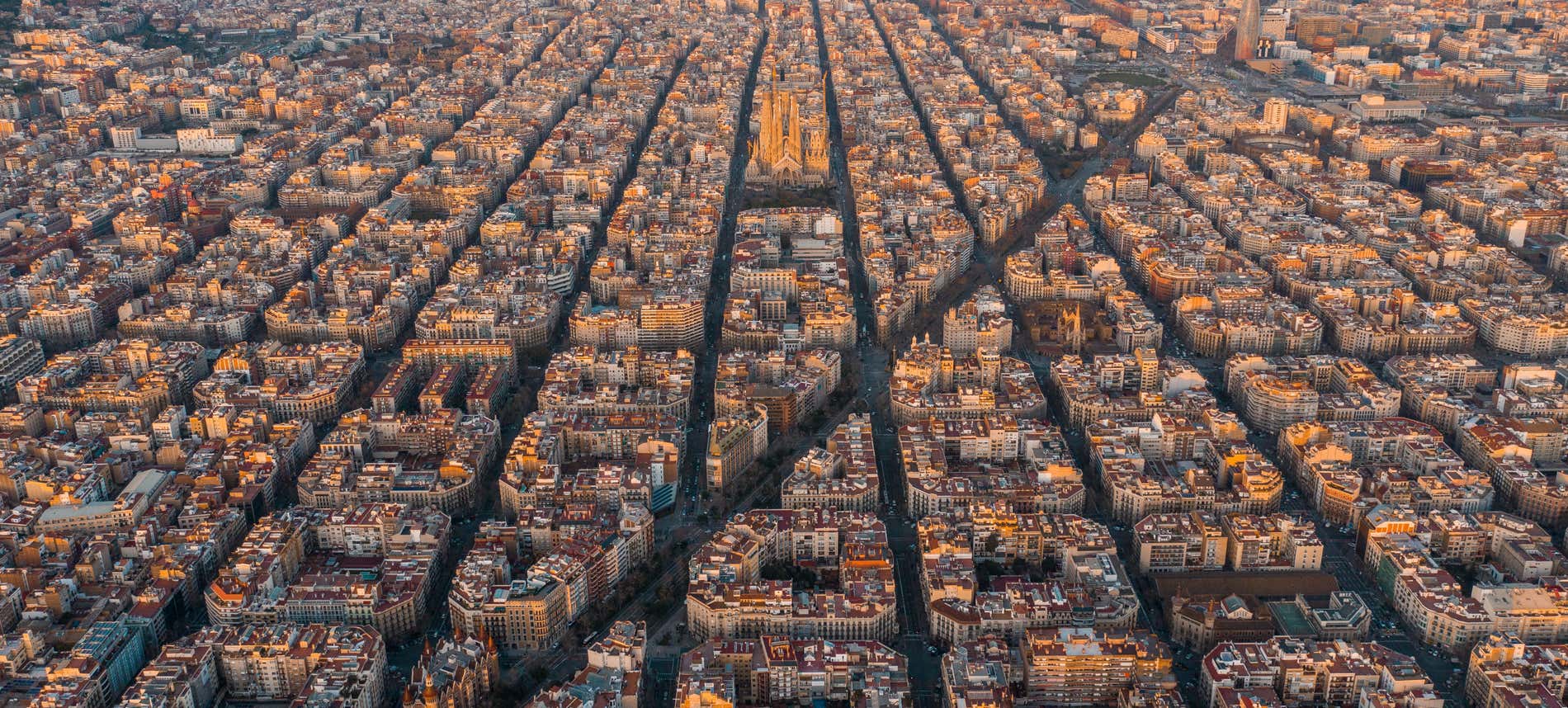
16 Best Beaches in Spain: A Coast by Coast Guide

Spain has around 5,000 miles (8,000 kilometers) of coastline, and almost none of it is the same twice. The Mediterranean gives you sheltered coves with water you can see your feet through. The Atlantic gives you wind, tides and cliffs. The Canaries give you black sand and year-round swimming. Which one suits you depends less on rankings than on what you want from a day at the beach.
The best beaches in Spain span four very different coastlines. Ses Illetes in Formentera and Cala Macarelleta in Menorca lead the Balearics, La Concha in San Sebastián is the finest city beach, Playa de las Catedrales in Galicia is the most dramatic, and Cofete in Fuerteventura is the wildest.
16 Brilliant Beaches to Visit in Spain
Below are 16 worth planning a trip around, grouped by coast, with the practical details you’ll want before setting off.
The Balearic Islands
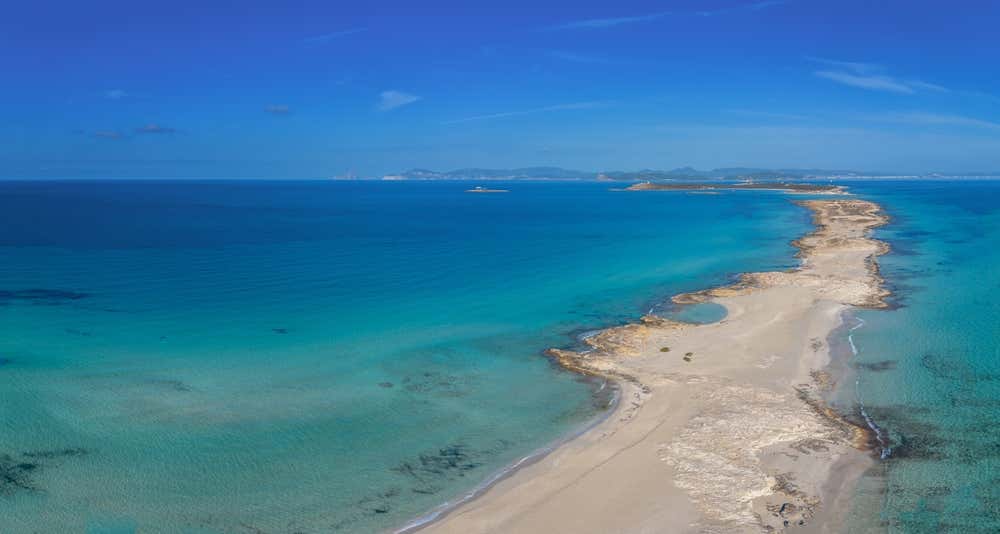
Playa de Ses Illetes, Formentera
Set inside the Ses Salines Natural Park at the northern tip of Formentera, Ses Illetes is regularly named among the most beautiful stretches of sand in Europe. The extraordinary clarity of the water comes from the Posidonia oceanica meadows offshore, a seagrass listed by UNESCO as World Heritage. It looks Caribbean and feels unmistakably Mediterranean.
If you’re staying on the neighboring island, the Formentera boat trip from Ibiza is the easiest way over, with a full day among the coves.
Address: Parque Natural de Ses Salines, 07871 Formentera, Balearic Islands.
Access: open 24 hours. Parking is capacity-controlled and charged roughly 9 AM to 8 PM, and hours shift with the season, so it’s worth checking before you go.
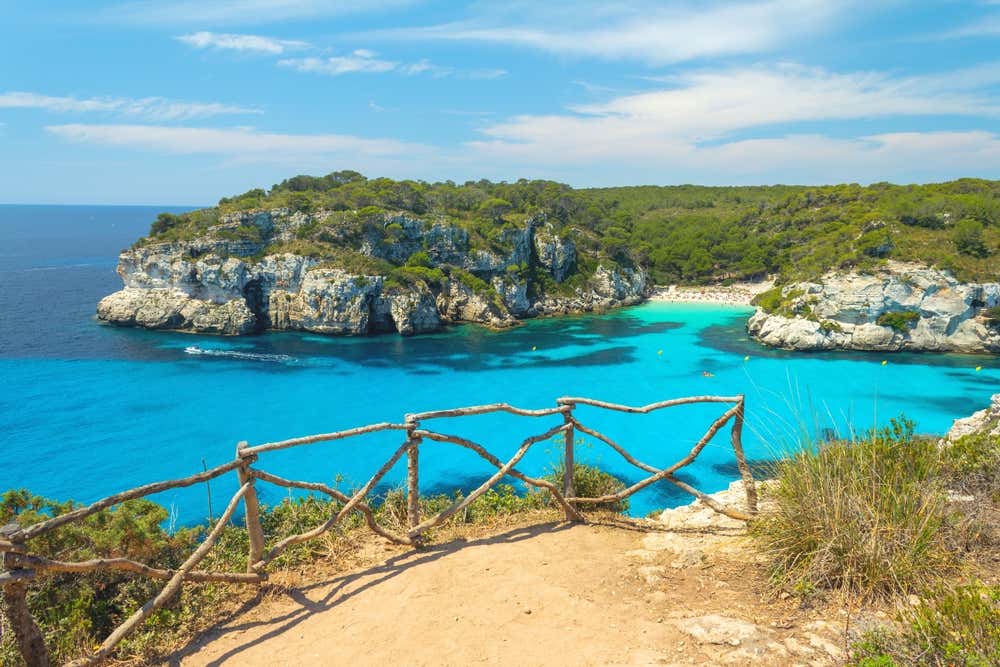
Cala Macarelleta, Menorca
Menorca holds some of the least developed coves in Spain, and Macarelleta is the pick of them. Pine-covered cliffs wrap around a small crescent of fine sand, and the water is so clear that anchored boats appear to hover above the seabed. It’s a snorkeling beach above all, and a quiet one by Balearic standards.
Reaching it by land means a walk and an early start. The simpler route is the boat cruise around south Menorca from Cala Galdana, which takes in this cove and several neighbors from the water.
Address: 07769 Ciutadella de Menorca, Balearic Islands.
Access: open 24 hours. Nearby parking generally fills before 10 AM in summer, so arrive early or come by boat.
Cala Mondragó, Mallorca
Inside the Mondragó Natural Park in southeastern Mallorca, this beach combines fine sand, low rocks and pine woods that run almost to the waterline. Because the area is protected, building has been kept to a minimum and it still feels like open country rather than a resort. The water is calm enough for paddleboarding and easy snorkeling.
The Cala del Moro and Cala S’Almunia day trip covers the same stretch of southeastern coast if you’d rather not drive, and the Palma Bay sailboat cruise is the relaxed way to see the coves from the water.
Address: Parque Natural de Mondragó, 07669 Santanyí, Balearic Islands.
Access: open 24 hours. Public parking is charged around 9 AM to 7 PM in summer and is subject to change.
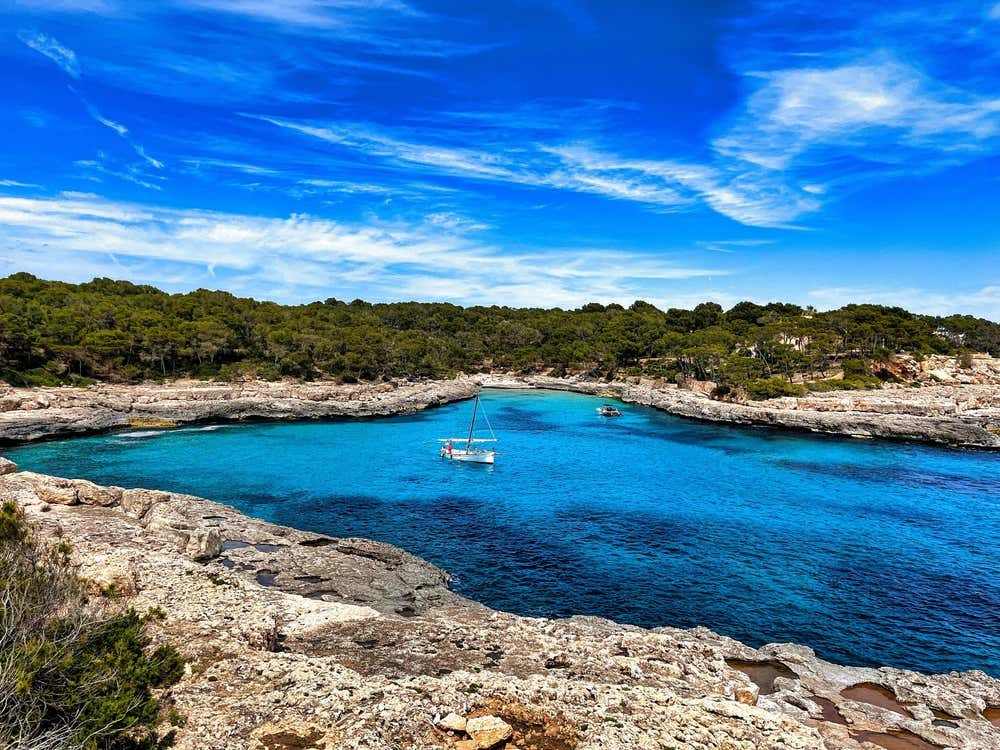
Es Trenc, Mallorca
Es Trenc is what Mallorca’s south coast looked like before the hotels arrived, and it stayed that way because the land behind it is protected saltmarsh. Nearly two miles of pale sand run without a single building in sight, backed by low dunes and the salt pans that still produce Mallorcan sea salt. Facilities are minimal, which is precisely the appeal, so bring water and shade with you.
Address: 07639 Campos, Mallorca, Balearic Islands.
Access: open 24 hours, with paid parking off the Ses Covetes and Colònia de Sant Jordi approaches. There’s more to book across the full range of activities in Mallorca.
Cala Comte, Ibiza
Ibiza’s west coast turns spectacular in the last hour of daylight, and Cala Comte is where people go to watch it. A series of small sandy shelves steps down into shallow turquoise water, with the islets of S’Espartar and Es Vedranell sitting offshore to catch the light. Swimming is excellent all afternoon; the sunset is the reason to stay.
To reach the quieter coves either side of it, the Ibiza beaches and coves speedboat tour works its way along the western shoreline from San Antonio.
Address: 07830 Sant Josep de sa Talaia, Ibiza, Balearic Islands.
Access: open 24 hours, with paid parking in summer. Arrive well before sunset in July and August.
The Canary Islands
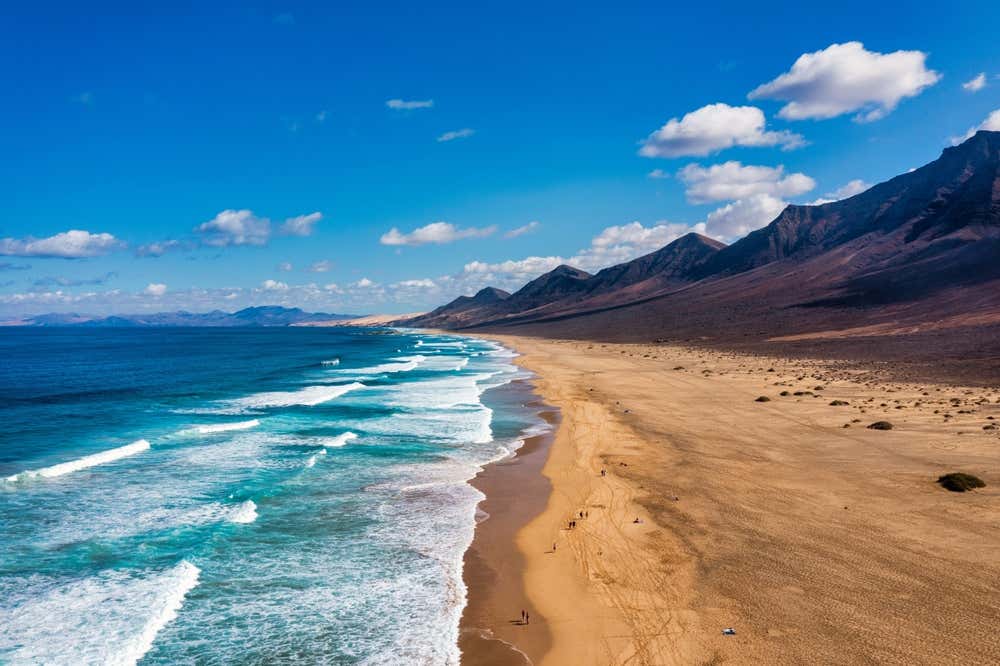
Playa de Cofete, Fuerteventura
For scale and solitude, nothing in Spain matches Cofete. More than 7 miles (12 kilometers) of untouched sand run beneath the mountains of the Jandía Natural Park, with no development behind it and often almost nobody on it. The Atlantic here carries strong currents, so treat it as a beach for walking and photographing rather than swimming.
Address: 35626 Pájara, Las Palmas.
Access: open 24 hours, reached by an unpaved mountain road. Drive it in daylight, and check conditions first. More options across the activities in the Canary Islands.
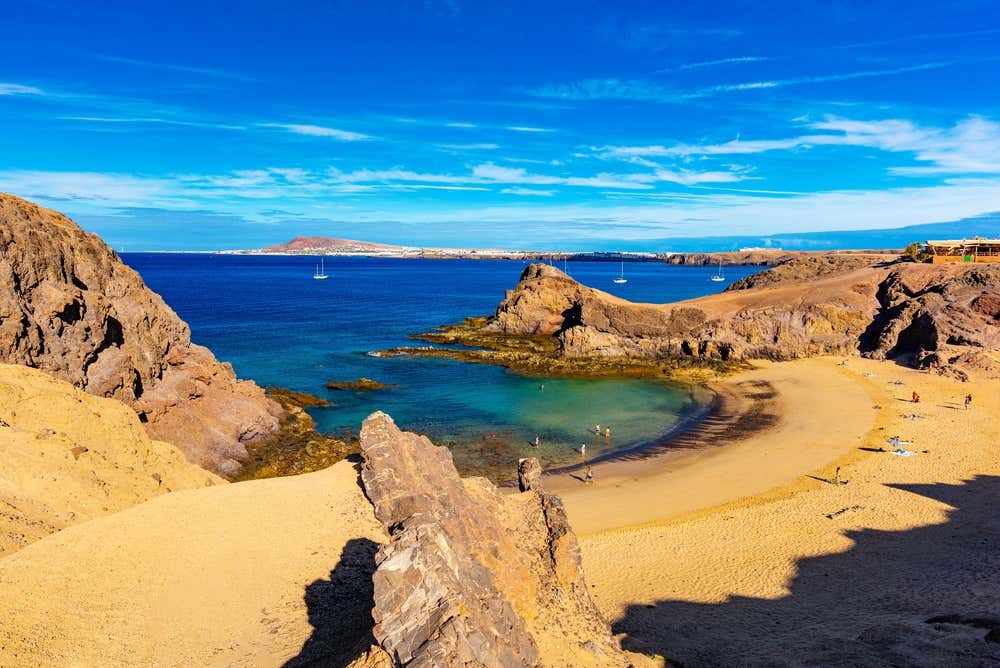
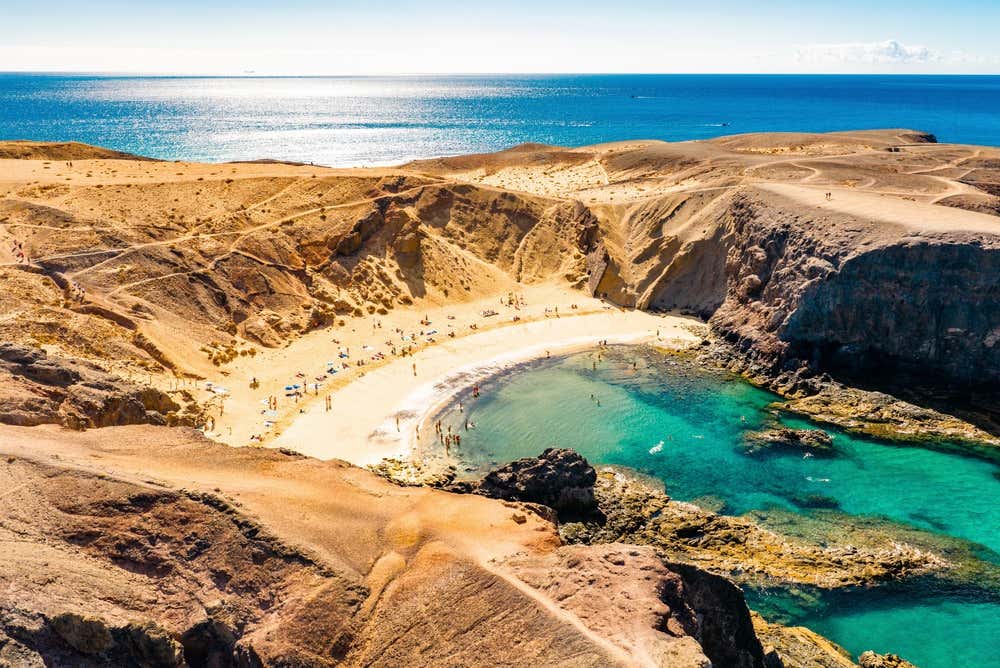
Playa de Papagayo, Lanzarote
On the southern tip of Lanzarote, Papagayo is a shell-shaped bay of emerald water almost entirely sheltered from the wind, which on this island is no small thing. Dark volcanic cliffs frame pale sand, and that contrast is why it turns up in more photographs than any other beach in the archipelago. Swimming here is calm and clear.
Address: Parque Natural de Los Ajaches, 35580 Yaiza, Las Palmas.
Access: open 24 hours. The dirt road into the natural park carries a small conservation charge per vehicle, collected roughly 9 AM to 7 PM and subject to change.
Playa de las Teresitas, Tenerife
Most of Tenerife’s beaches are volcanic black. Las Teresitas is the golden exception, just outside Santa Cruz, and the sand was brought in from the Sahara to make it so. A breakwater keeps the Atlantic swell out, which leaves flat, shallow water and makes this the island’s most reliable family beach. Palm trees, showers and a row of kiosks run the length of it.
Address: 38120 San Andrés, Santa Cruz de Tenerife.
Access: open 24 hours, with free parking and a regular bus from Santa Cruz. Lifeguards operate in daylight hours through summer. If you’re weighing up which island to base yourself on, the guide to the best Canary Island to visit compares all eight.
Andalusia and the Costa del Sol
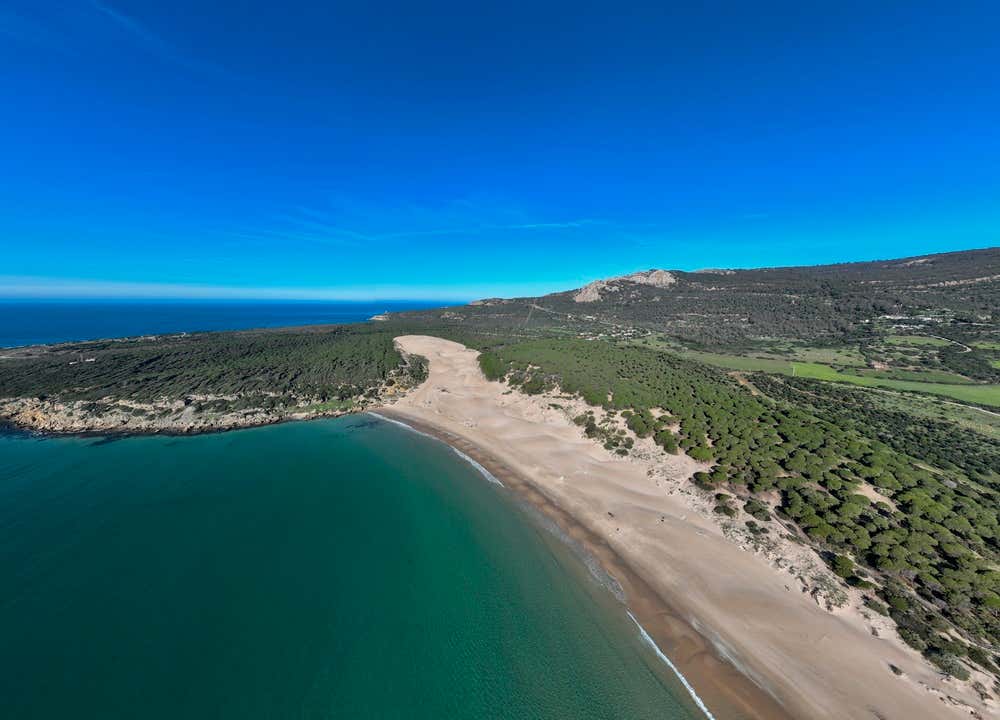
Playa de Bolonia, Tarifa
In Cádiz province, Bolonia is a wild sweep of golden sand with a steady wind that has made it a fixture for windsurfers and kitesurfers. Behind the beach rises the Bolonia dune, a protected natural monument over 100 feet (30 meters) high that you can climb for the view across to Morocco. A few steps from the water sit the ruins of Baelo Claudia, a Roman town with a forum, theater and fish-salting works still visible.
Address: Ensenada de Bolonia, 11391 Tarifa, Cádiz.
Access: beach open 24 hours. The Baelo Claudia archaeological site opens Tuesday to Saturday from 9 AM to 9 PM and Sunday from 9 AM to 3 PM, though hours change seasonally, so confirm before you set out.
Zahara de los Atunes, Cádiz
The Costa de la Luz does width rather than intimacy, and Zahara is the clearest example: several miles of open Atlantic sand backed by a low-rise village that still feels like a fishing town. The tuna caught here by the traditional almadraba nets is the reason food-minded Spaniards make the drive. Wind is common, water is cooler than the Mediterranean, and the sunsets are worth the trip on their own.
Address: 11393 Zahara de los Atunes, Barbate, Cádiz.
Access: open 24 hours, with free and paid parking through the village.
La Malagueta, Málaga
La Malagueta is the beach you can walk to from Málaga’s cathedral in about fifteen minutes, which is most of its argument. Dark imported sand, a palm-lined promenade and a line of chiringuitos grilling espeto sardines over open boats make it a proper city beach rather than a resort one. Come for a swim between museums, stay for lunch, and don’t expect solitude in August.
Address: Paseo Marítimo Pablo Ruiz Picasso, 29016 Málaga.
Access: open 24 hours, lifeguards on duty in summer daylight hours.
Cabopino, Marbella
Marbella’s reputation is all marinas and beach clubs, so Cabopino comes as a surprise. It sits at the eastern edge of the municipality beside the Artola dunes, a protected natural monument, with a 16th-century watchtower on the headland above. The sand is soft, the development is set back behind the dunes, and it’s the one Marbella beach that still looks like coastline rather than frontage.
Address: Urbanización Artola, 29604 Marbella, Málaga.
Access: open 24 hours, with free parking by the marina and boardwalks across the dunes.
Marbella or Málaga: Which Is Prettier?
Málaga is the prettier city, Marbella has the prettier coastline. Málaga’s appeal is urban: a Moorish alcazaba above the old town, the Roman theater below it, the Picasso Museum, and a working port that has been reshaped into a promenade. Its beaches are functional city beaches with dark sand and good food.
Marbella wins on setting. The Sierra Blanca rises directly behind the town, the old quarter around Plaza de los Naranjos is genuinely lovely, and beaches like Cabopino still have dunes and pine rather than apartment blocks. The trade-off is that Marbella is more expensive, quieter culturally, and harder to reach without a car.
Choose Málaga for a city break with beach time attached, and Marbella for a beach trip with a handsome town attached. They sit about 40 miles (65 kilometers) apart, so seeing both in one trip is straightforward. For the wider region, there’s a full comparison of Málaga or Granada if Andalusia’s interior is also on your list.
Catalonia
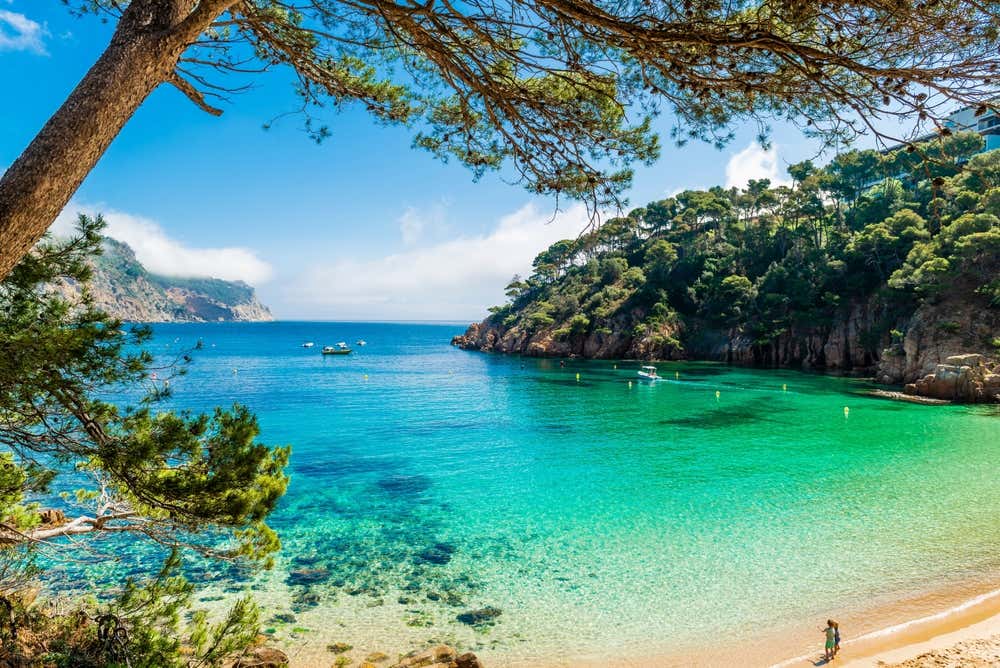
Cala Aiguablava, Begur
The Costa Brava is defined by rocky headlands and pine woods dropping into the sea, and Aiguablava lives up to its Catalan name, which means blue water. The bay is shallow and sheltered, the sand pale, and the whole thing small enough to feel manageable with young children. It’s one of the calmest swimming spots on a coastline better known for drama.
Address: 17255 Begur, Girona.
Access: open 24 hours, with paid parking around 8 AM to 8 PM in summer. There are another ten worth knowing in the guide to the best Costa Brava beaches.
Barceloneta, Barcelona
Barceloneta is not Spain’s most beautiful beach and doesn’t pretend to be. What it offers is rarer: a genuine swimming beach a metro ride from a Gothic quarter and a Gaudí skyline. The sand was created for the 1992 Olympics, the promenade runs for miles, and the old fishermen’s quarter behind it still serves some of the best seafood in the city. Go early if you want space.
Address: Passeig Marítim de la Barceloneta, 08003 Barcelona.
Access: open 24 hours, lifeguards in summer daylight hours. Plenty more to do across the activities and tours in Barcelona.
The Atlantic North
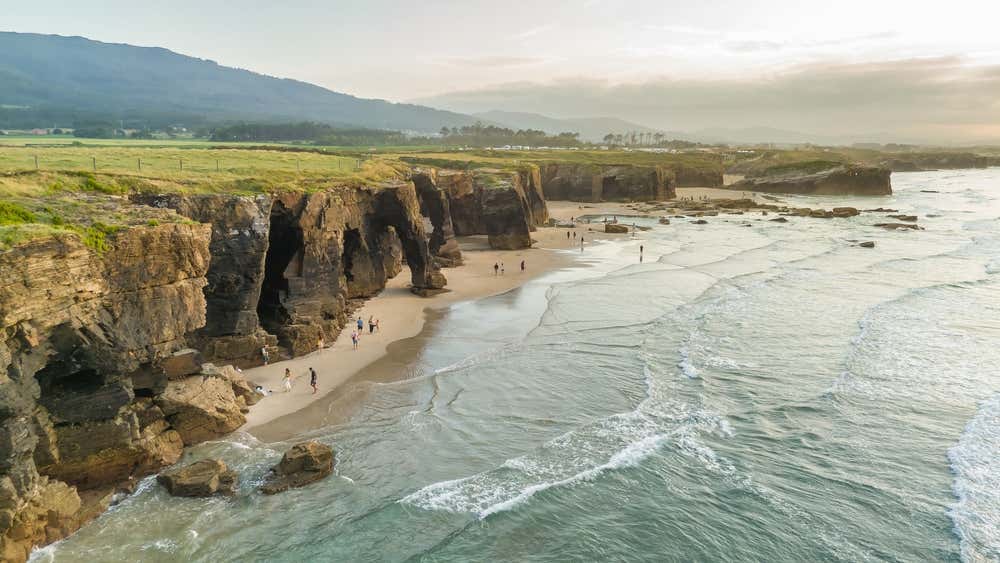
Playa de las Catedrales, Ribadeo
Officially Playa de Augas Santas, this Galician beach is a piece of natural architecture carved by the Atlantic. Rock arches and caves reaching around 100 feet (30 meters) high stand along the shore like the nave of a Gothic cathedral, which is where the popular name comes from. The catch is the tide: the arches are only walkable at low water, and at high tide the beach essentially disappears.
Address: Praia das Catedrais, 27712 Ribadeo, Lugo.
Access: open 24 hours, but plan around the tide table. Between July and October a free advance permit is required through the official regional site, so arrange that before you travel.
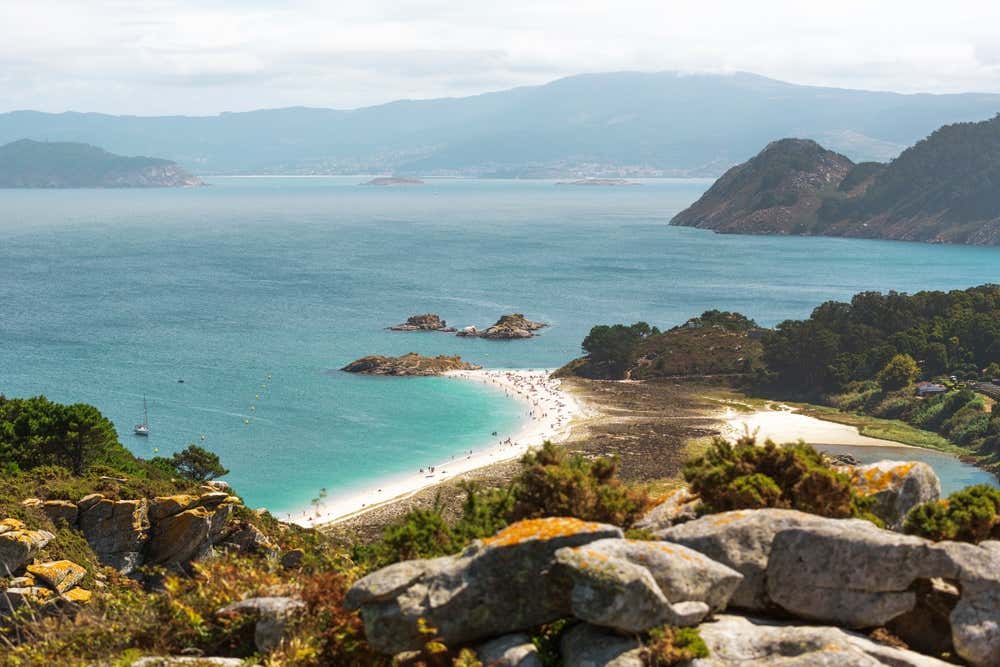
Playa de Rodas, Cíes Islands
Rodas is the crescent of white sand that links two of the Cíes islands, inside the Atlantic Islands National Park off the Galician coast. The water is clear enough to pass for the Caribbean and cold enough to remind you immediately that it isn’t. Access is capped to protect the park, which is why it stays as empty as it does.
Address: Illas Cíes, 36393 Vigo, Pontevedra.
Access: by authorized ferry only, generally running about 9 AM to 8 PM in high season. You need both a boat ticket and a park entry permit, and both should be booked well in advance.
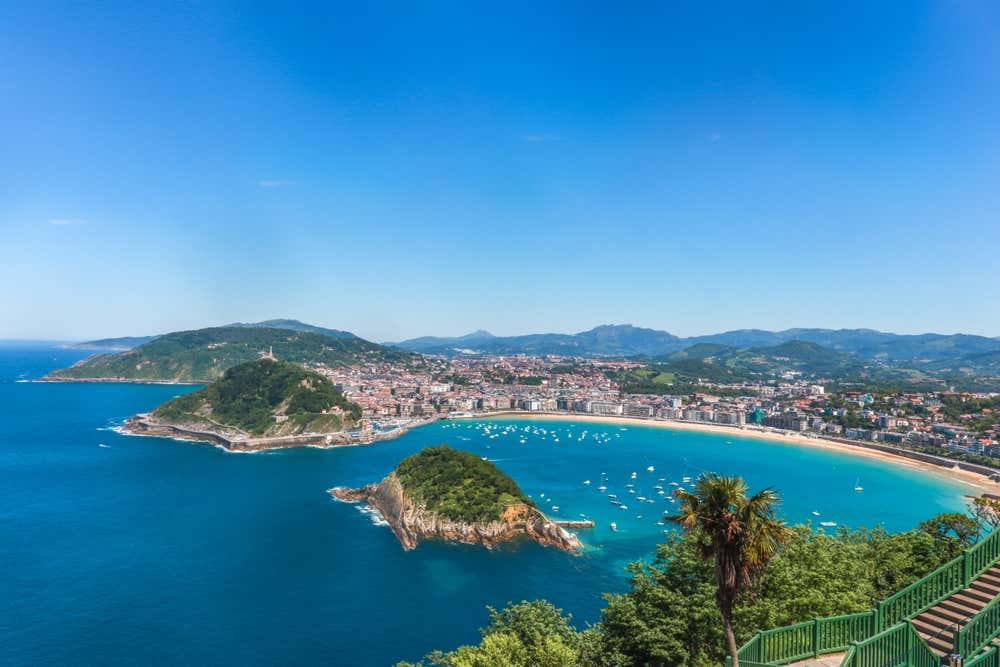
Playa de la Concha, San Sebastián
La Concha is the most elegant beach in Spain and probably the best-designed. A near-perfect shell-shaped bay sits between Monte Urgull and Monte Igueldo, edged by a promenade with the white balustrade that has become the city’s emblem. The bay’s narrow mouth keeps the Atlantic calm inside it. Add the densest concentration of pintxos bars in the country a few streets back and it’s hard to beat for a city beach day.
Address: Paseo de la Concha, 20007 San Sebastián, Gipuzkoa.
Access: open 24 hours, with lifeguards in summer from around 10 AM to 8 PM, subject to seasonal change.
Choosing Your Stretch of Coast
The decision is really about which sea you want. The Mediterranean and the Balearics give you warm, calm, clear water and coves you can swim in from May through October. The Atlantic north gives you cooler water, real tides and scenery that the Mediterranean can’t match. The Canaries give you the longest season of all, since you can swim there in January.
Once you’ve picked a coast, the rest follows quickly. Browse the activities and excursions across Spain, or if the itinerary is still open, see the best places to visit in Spain and the top beaches in the Region of Valencia. For everything beyond, there’s the best activities in English all over the world.


Most read of #Spain
16 Best Beaches in Spain: A Coast by Coast Guide
10 September 2026What to See Near Madrid: Best Royal Palaces & Historic Towns
10 September 202612 Best Places to Visit in Spain (2026)
27 August 2026Top 13: A Local’s Guide to What to Do in Málaga
9 July 2026Most read #Spain
What to See Near Madrid: Best Royal Palaces & Historic Towns
10 September 202612 Best Places to Visit in Spain (2026)
27 August 2026Top 13: A Local’s Guide to What to Do in Málaga
9 July 2026
48 Hours in Barcelona: The Best 2-Day Itinerary
29 March 2026
Seville or Granada? Where to Stay in Andalusia 2026
19 March 2026How Many Days in Granada? The Perfect 3-Day Itinerary
12 March 2026The Alhambra: How Much Time Do You Need & When to Visit
12 March 2026What to Do in Mallorca: 15 Ways to Experience the Island Life
25 February 2026