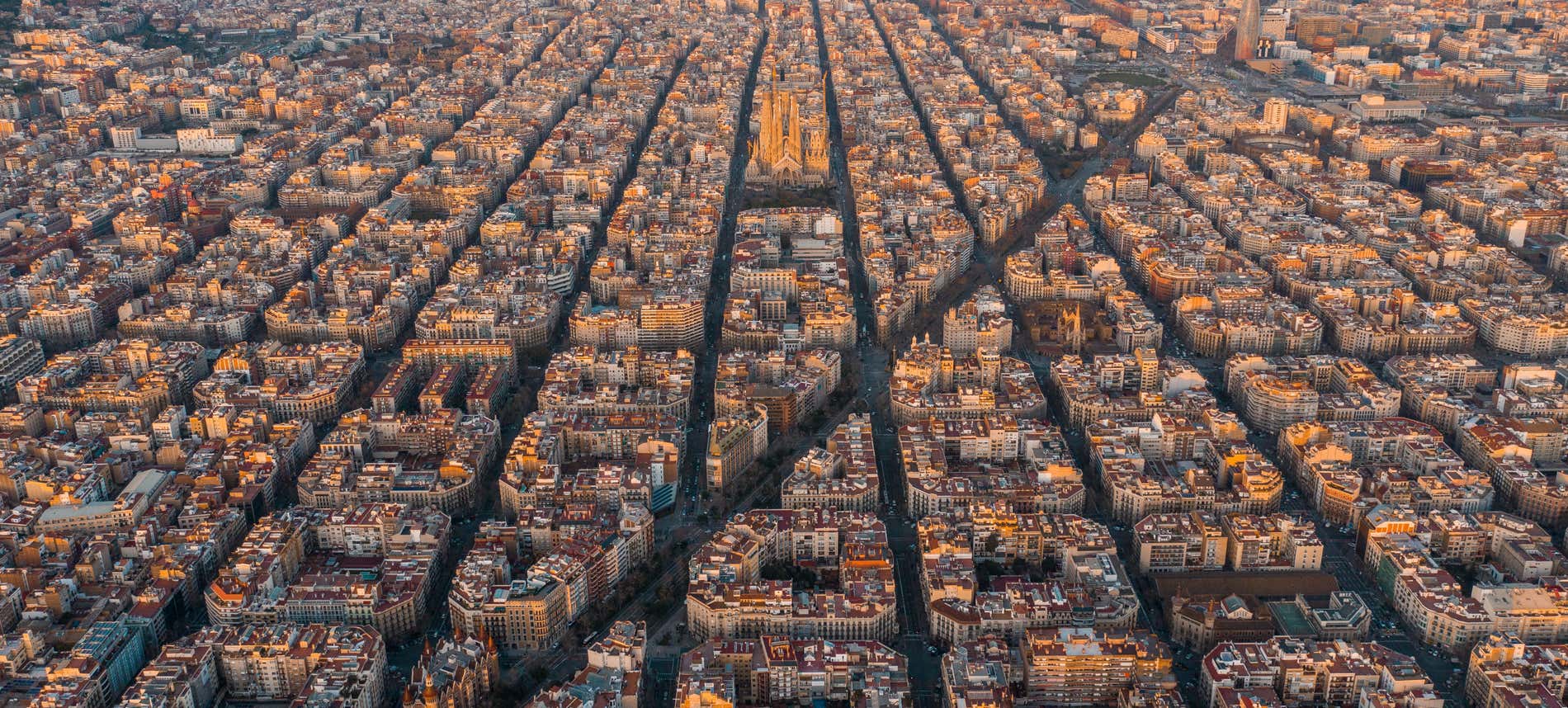
What to See Near Madrid: Best Royal Palaces & Historic Towns

Madrid is not only modern Spain’s vibrant political and cultural hub, but it’s also surrounded by a network of royal palaces, former seats of power, and historic towns. During the golden age of the Spanish Empire, the great dynasties of the Habsburgs (known in Spain as Los Austrias) and the Bourbons profoundly shaped these nearby landscapes into extraordinary monumental complexes to reflect the grandeur of the Crown.
If you’re looking to immerse yourself in the history of the Empire and discover how Spanish monarchs balanced statecraft with hunting, quiet retreat, and spiritual devotion, look no further! We have put together the ultimate guide to the three must-see sites near Madrid. All three sites, recognized by UNESCO as World Heritage Sites, uniquely illustrate the transition from the austere simplicity of the Habsburgs to the enlightened elegance of the Bourbons.
Relive the Golden Age of the Spanish Empire
San Lorenzo de El Escorial: Habsburg Austerity & Grandeur
About 27 mi (45 km) northwest of Madrid, perched on the slopes of the Sierra de Guadarrama mountain range, stands the Royal Monastery of San Lorenzo de El Escorial. It’s one of Europe’s most remarkable monumental complexes, and perfectly embodies the political and religious vision of 16th-century Spain. Commissioned in 1563 by King Philip II of Spain to commemorate the Spanish victory at the Battle of St. Quentin, this colossal monastery was conceived not merely as a palace, but as a Hieronymite monastery, a basilica, an imperial library, and the dynasty’s pantheon.
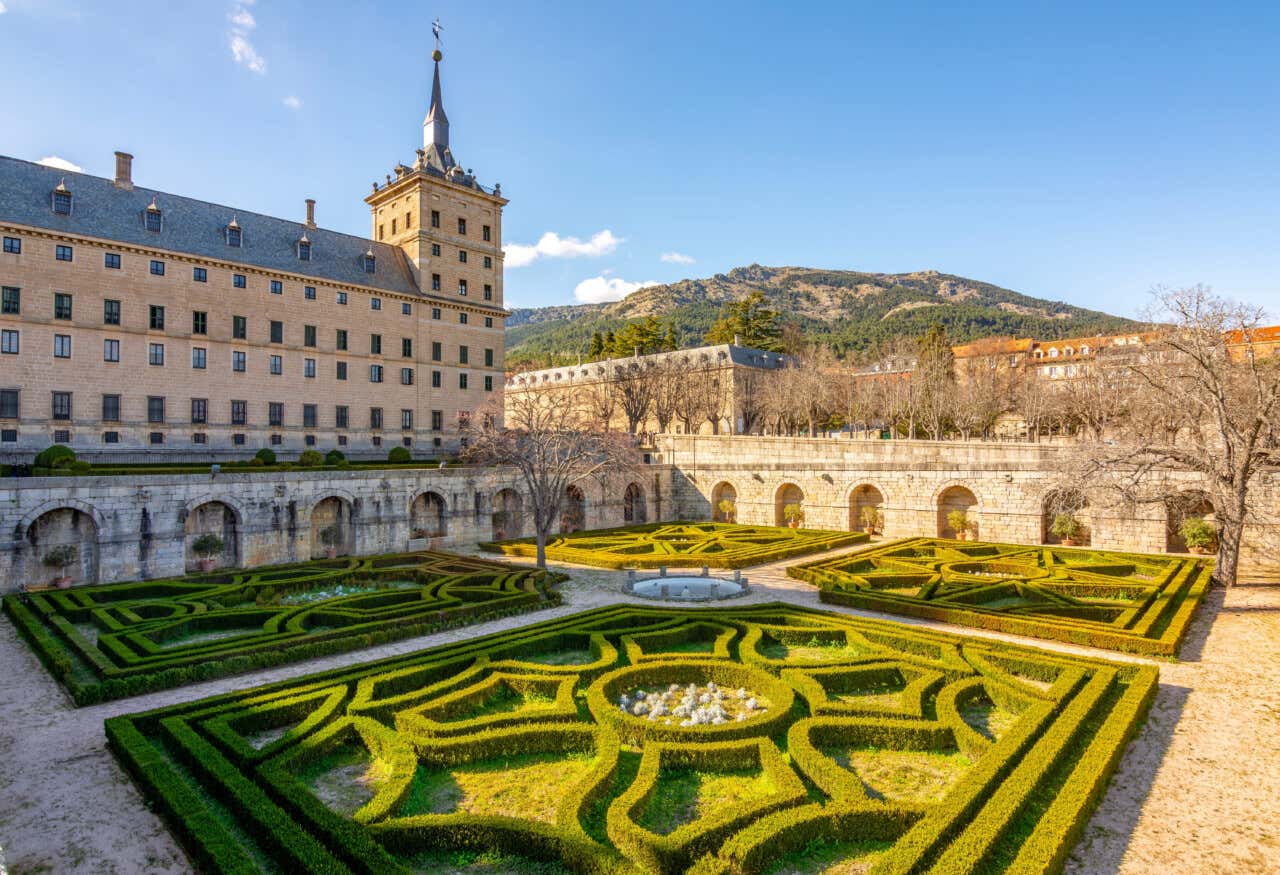
The architecture of El Escorial, initially designed by Juan Bautista de Toledo and completed by Juan de Herrera, gave rise to the Herrerian style, characterized by rigorous geometric lines, imposing volumes, and a deliberate absence of ornate decorations. This aesthetic austerity reflected the Catholic Counter-Reformation spirit championed by Philip II. The monarch wanted a place where he could govern a global empire in solitude and prayer, laying the foundation for what would become the Habsburg monarchy’s nerve center for decades.
Later, when the Bourbon dynasty ascended the throne in the 18th century, they brought a lighter, French-inspired elegance to the interiors. Although they preferred less austere residences, the Bourbons kept the monastery as the official burial site for monarchs. During the reigns of Kings Charles II and Charles IV, the royal apartments were adorned with exquisite tapestries designed by Francisco de Goya, and charming hunting lodges were built in the gardens, like the Casita del Príncipe, softening the original rigid sacredness with the Enlightenment-era taste for nature and leisure.
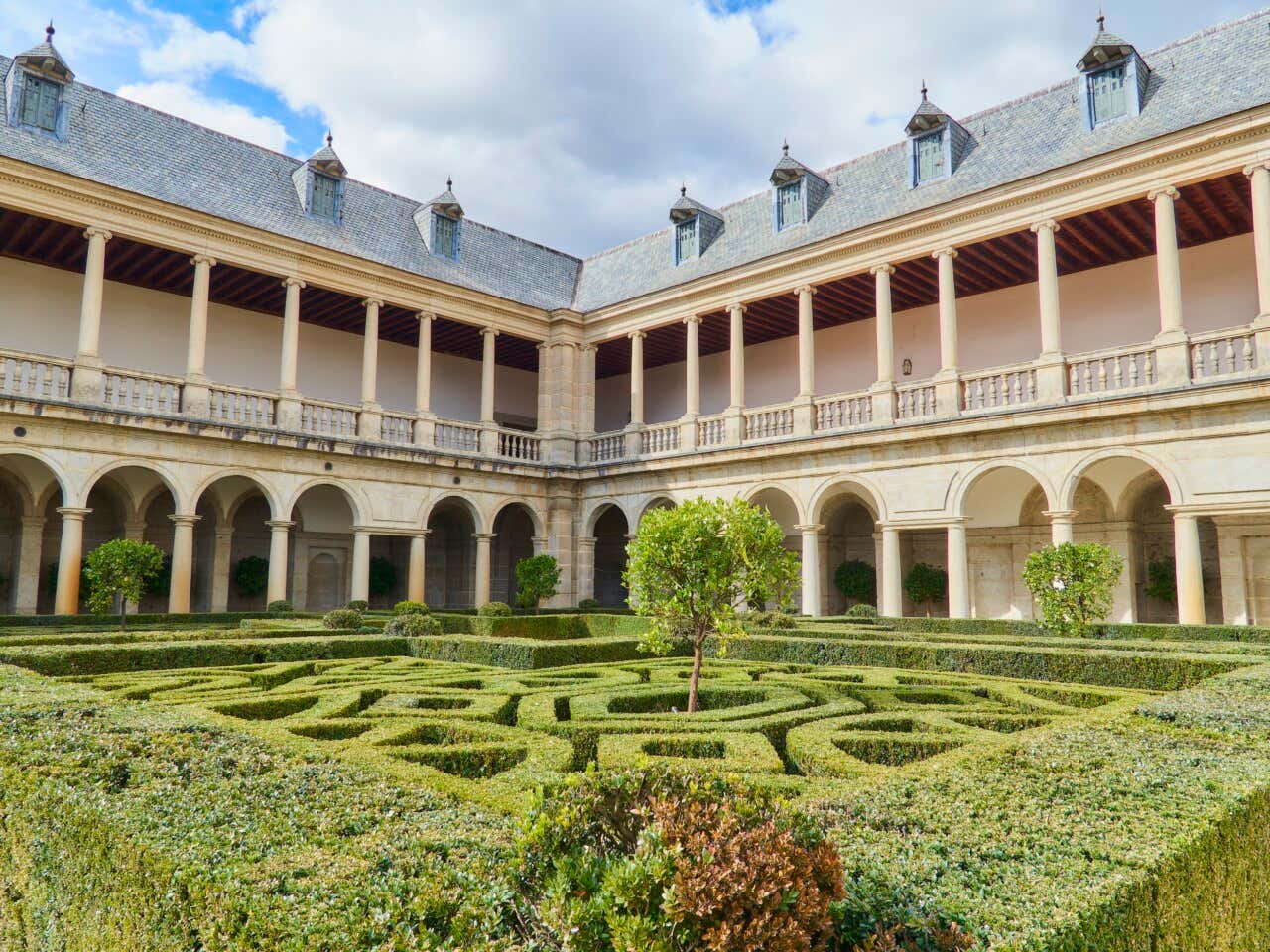
San Lorenzo de El Escorial Highlights
The Royal Pantheon (Pantón de Reyes) is a spectacular octagonal marble and gilded bronze crypt located beneath the basilica’s high altar. It serves as the resting place for almost every Spanish monarch since Emperor Charles V, offering a unique visual journey through the definitive union of the Habsburg and Bourbon dynasties.
How to Get to San Lorenzo de El Escorial From Madrid
By Train
Take the Cercanías C-8 or C-8a line from Atocha, Sol, Nuevos Ministerios, Chamartín, or Príncipe Pío stations. The travel time is about 50-60 minutes. From the El Escorial train station, it’s a 10 to 15-minute uphill walk to the monastery, or a short ride on the L4 local bus in front of the station.
By Bus
Take bus lines 661 or 664 operated by ALSA/Herranz from the Moncloa underground station (connected to Metro lines 3 and 6). It takes about 50-60 minutes. This is a convenient option because the San Lorenzo de El Escorial bus station drops you off just 5 to 10 minutes away on foot from the monastery entrance, saving you the climb.
Aranjuez: The Bourbon Oasis Along the Tagus
Heading south along the banks of where the Tagus and Jarama rivers meet, you’ll find a completely different scenery to explore near Madrid: the city of Aranjuez. Designed as a lush oasis on the dry Castilian plateau, this royal estate served as a spring residence for the monarchy. Its history dates back to the mid-16th century, when Philip II, who initially designated the grounds as a country retreat for hunting and relaxation, transformed it into the Spanish Versailles.
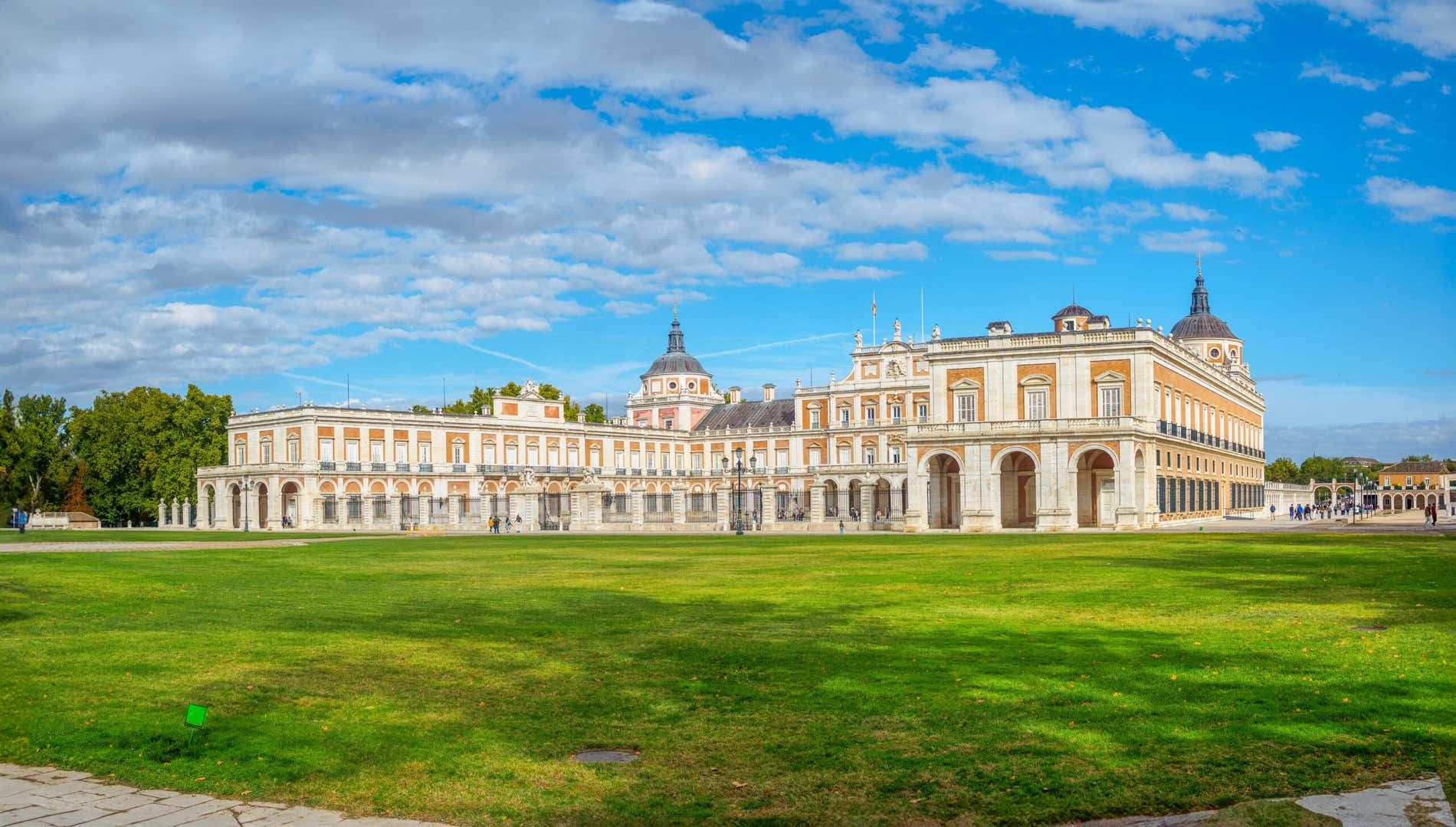
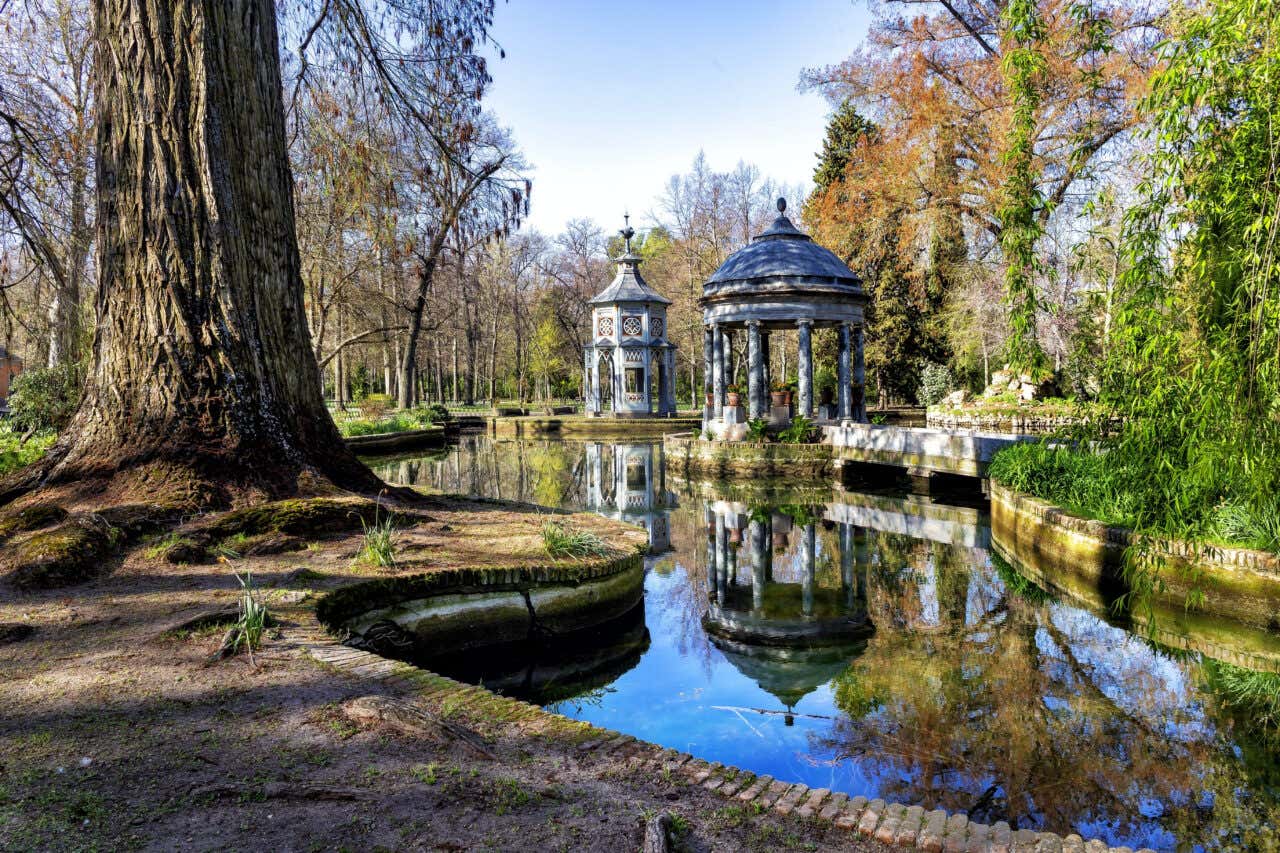
During the Habsburg era, Aranjuez kept a distinctly intimate character. The royal architects laid out the first irrigation canals and picturesque gardens, taking advantage of the area’s abundant water. However, Aranjuez’s true transformation into the architectural gem it is today is owed to the Bourbon dynasty. Philip V, Charles III, and Charles IV redesigned the Royal Palace of Aranjuez, adding large wings, monumental plazas, and incredible gardens such as the Jardín del Príncipe and the Jardín de la Isla.
Nested within these manicured grounds stands the famous Casa del Labrador, a neoclassical pavilion that houses some of the most opulent interior decorations in Europe. Aranjuez thus became the center of court life during the spring, a place where international diplomacy intertwined with boat rides on the Tagus and musical festivities that have inspired composers of every era.
Aranjuez Highlights
Don’t miss the Gabinete de Porcelana, an extraordinary chamber in the Royal Palace whose walls are entirely covered in intricate porcelain plaques featuring Rococo and Oriental-inspired bas-reliefs. Created by the Real Fábrica del Buen Retiro at the request of Charles III de Bourbon, it’s one of the absolute masterpieces of 18th-century decorative art.
How to Get to Aranjuez From Madrid
By Train
Take line C-3 from Chamartín, Nuevos Ministerios, Sol, or Atocha. The travel time is about 45-50 minutes from Atocha. From Aranjuez station, a pleasant 10-minute walk through a tree-lined avenue brings you straight to the palace grounds. This is the recommended option as the train is more frequent and reliable, helping you avoid the traffic leaving Madrid.
By Bus
Take line 423 from the Plaza de Castilla underground station or Estación del Sur (Méndez Álvaro). The journey takes approximately 50-60 minutes. Although the train is a better option, this is an excellent alternative if you’re staying near Méndez Álvaro.
Alcalá de Henares: the Cradle of Literature & Humanism
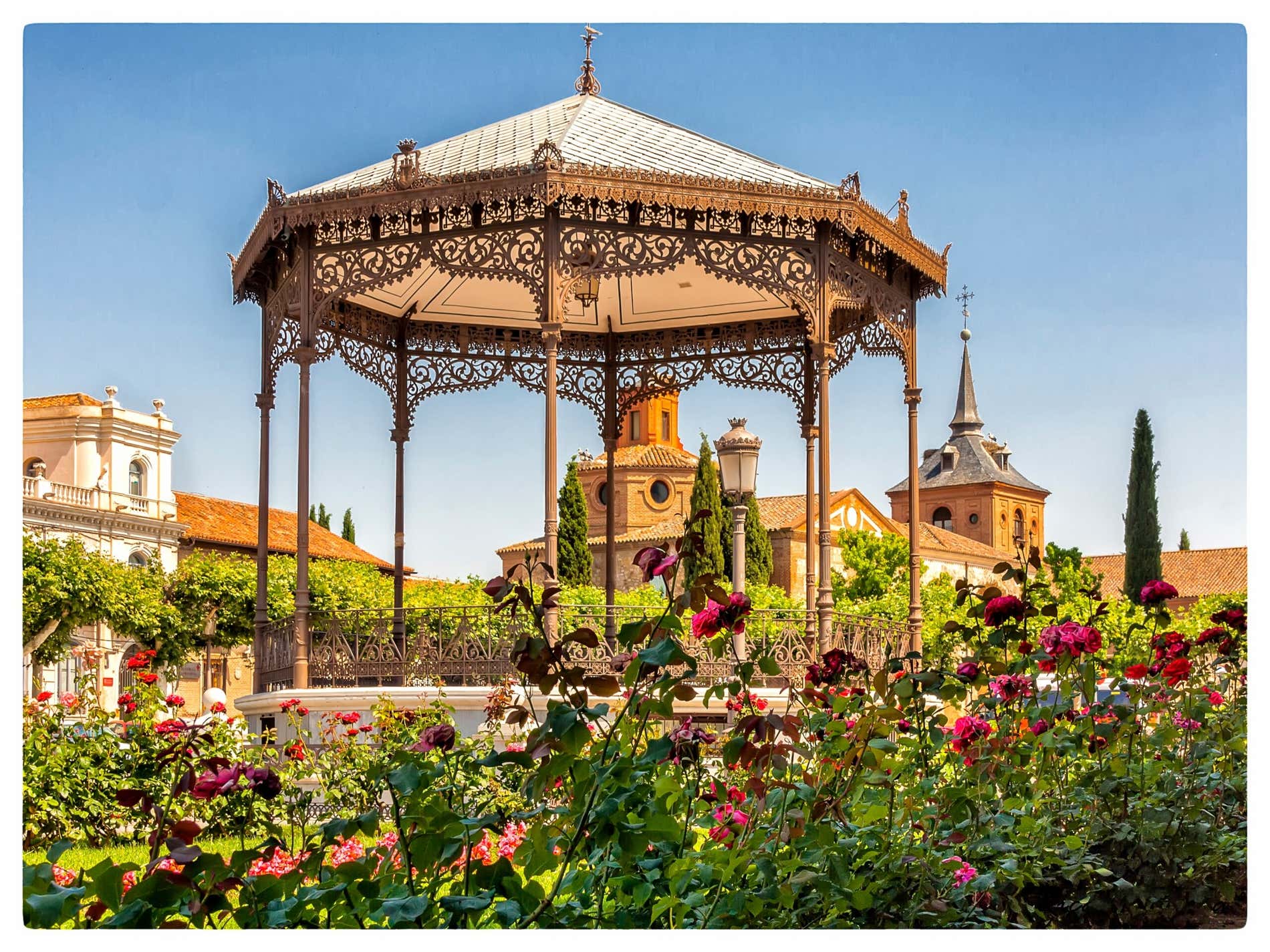
To the east of Madrid lies Alcalá de Henares, a city that shifts the focus from court life to university culture and intellectual heritage. Founded originally as a Roman settlement and expanding during the Middle Ages, Alcalá reached its golden era in 1499 when Cardinal Cisneros established the renowned Complutense University. It became the world’s first planned university city, with a Renaissance design that would later serve as a blueprint for university campuses across Europe and the Americas. In fact, this earned it the nickname the “City of Knowledge.”
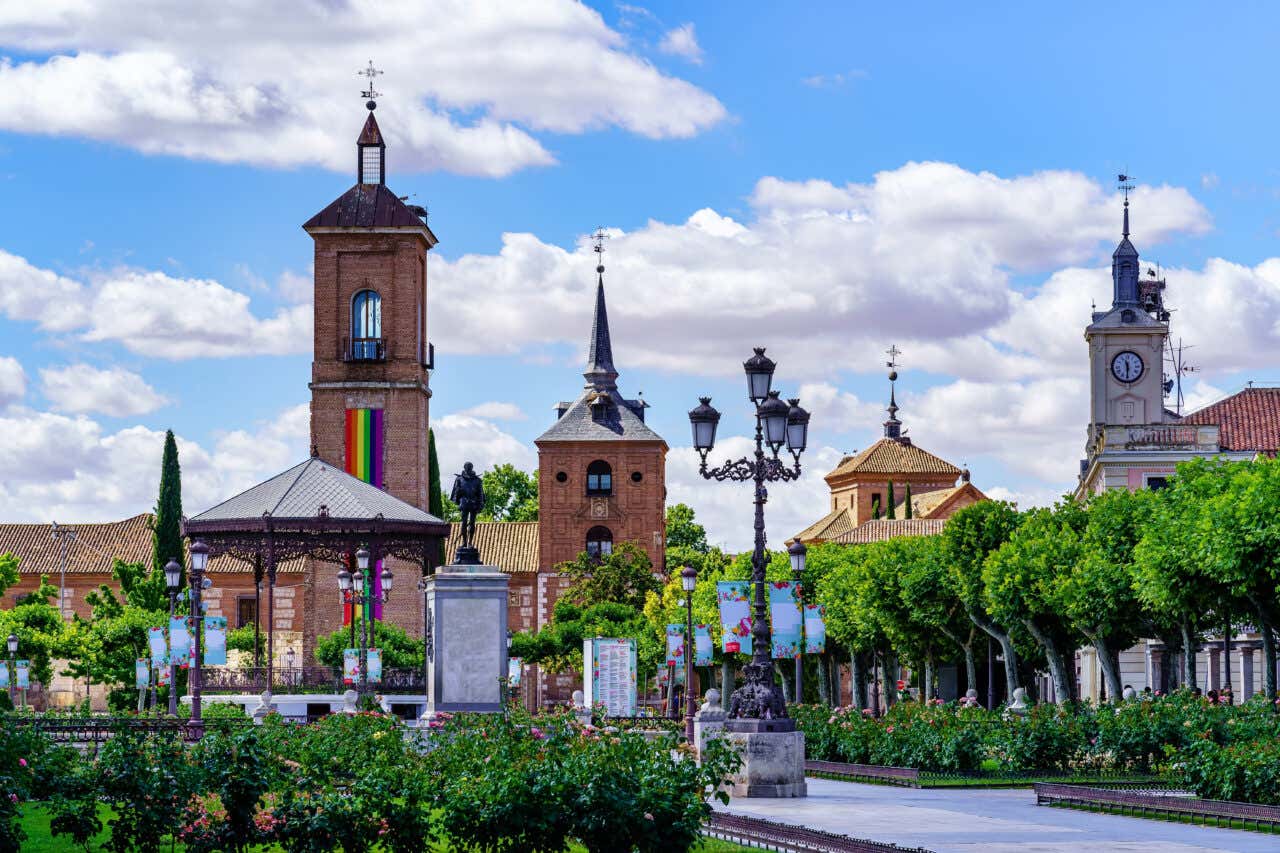
Supported by the Habsburgs, Alcalá de Henares served as the academic training ground for the Spanish Empire’s elite. Did you know that Alcalá was home to the brightest minds of the time during the Golden Age? Lope de Vega, Francisco de Quevedo, and St. John of the Cross once walked its arcaded streets. It’s also famously the birthplace of Miguel de Cervantes, the author of Don Quijote, whose presence still permeates every corner of the historic center today.
As the dynasty changed and the Bourbons came to power in the 18th century, Alcalá de Henares gradually took on a different role. The centralizing, Enlightenment-inspired reforms promoted by Charles III brought changes to the Spanish educational system and ultimately contributed to the university’s definitive transfer to Madrid in the following century. Although the city’s cultural prominence slowly shifted toward the capital, Alcalá preserved its remarkable historic character. Its Plateresque facades, Renaissance courtyards, and Baroque convents continue to reflect the extraordinary intellectual and artistic achievements fostered under both dynasties.
Alcalá de Henares Highlights
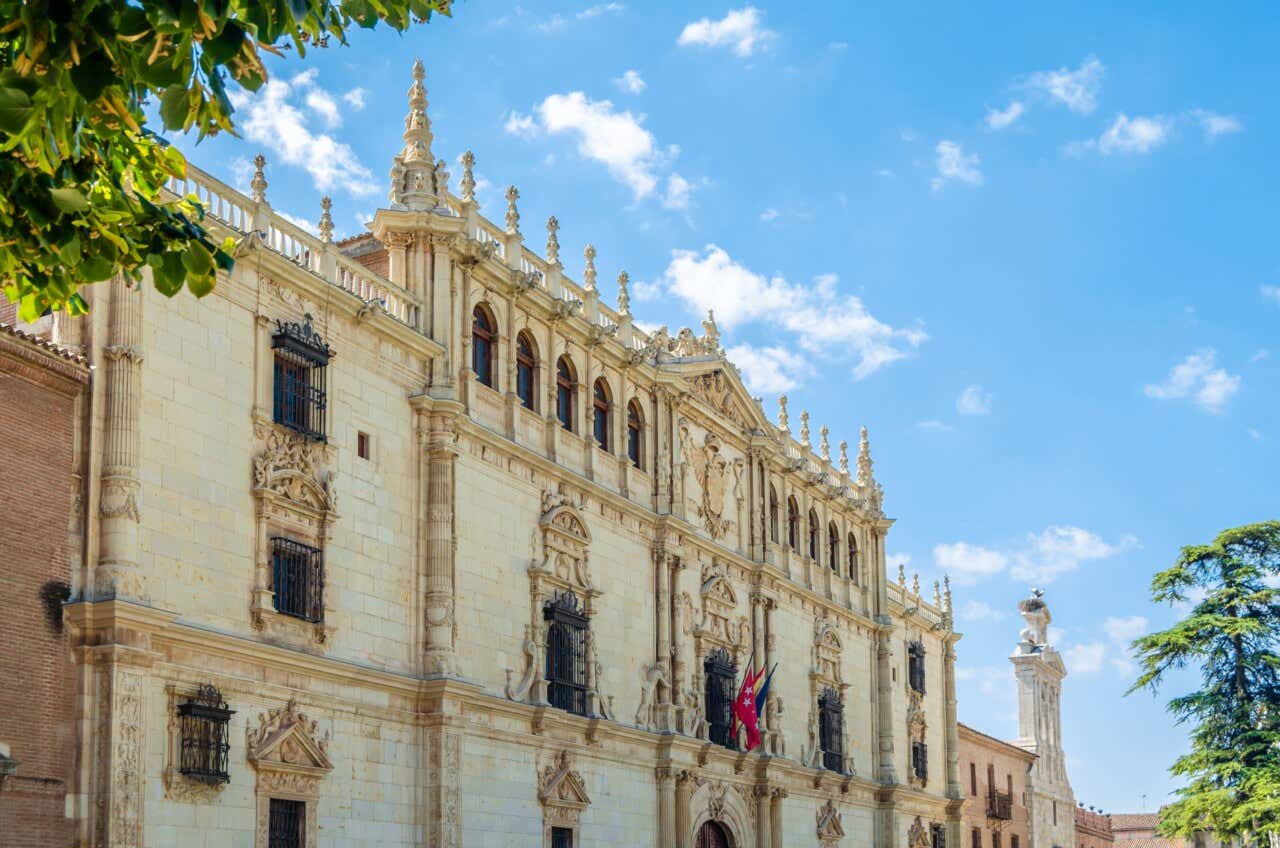
Visit the spectacular Plateresque facades of the Colegio Mayor de San Ildefonso and the Paraninfo, the university’s great hall, featuring a magnificent Mudéjar-style coffered ceiling. This historical hall is where the King and Queen of Spain present the prestigious Miguel de Cervantes Prize each year—the highest honor in Spanish-language literature.
How to Get to Alcalá de Henares From Madrid
By Train
Take the Cercanías line C-2 or C-7 from Atocha, Chamartín, Príncipe Pío, Recoletos, or Nuevos Ministerios. It takes approximately 35-40 minutes. Get off at the Alcalá de Henares station (not to be confused with the previous stop, Alcalá de Henares Universidad), which is a short 5 to 8-minute walk from the central Plaza de Cervantes.
By Bus
Line 223 departs regularly from the Avenida de América underground station (connected to Metro lines 4, 6, 7, and 9). Depending on traffic, it takes about 40 minutes to get there.
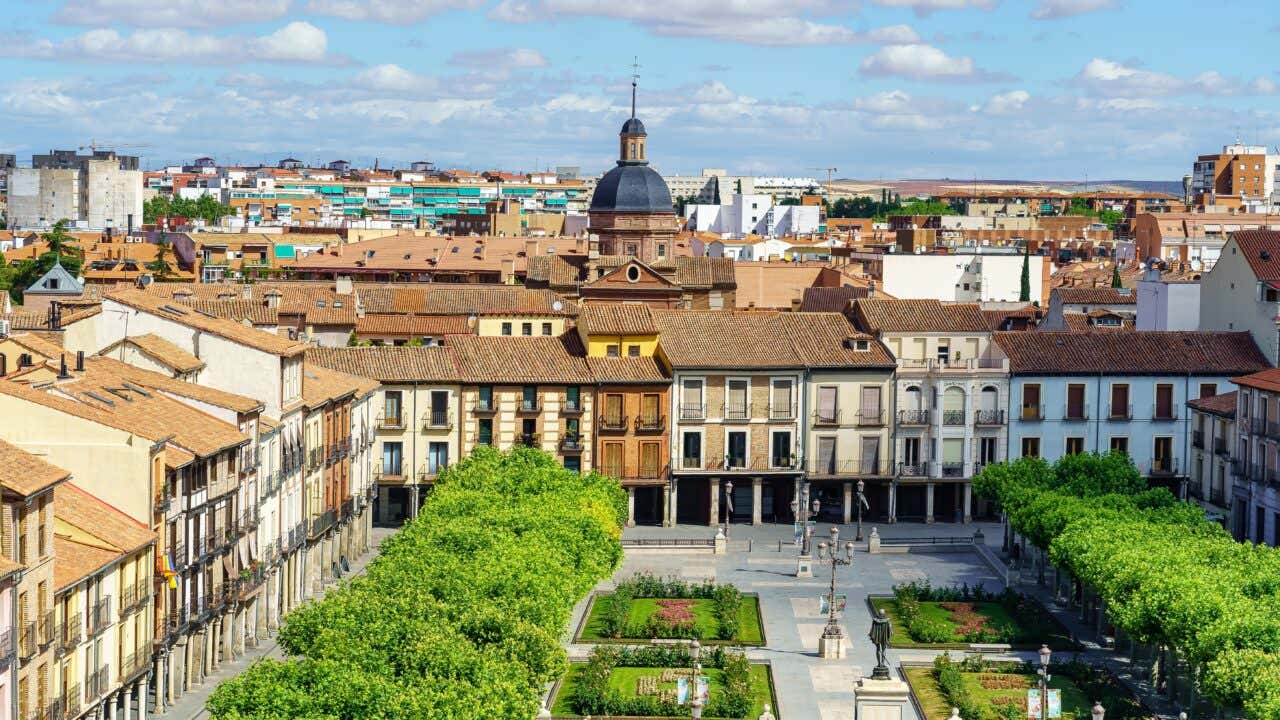
Visiting El Escorial, Aranjuez, and Alcalá de Henares is much more than just taking a simple day trip from Madrid—it’s embarking on a true journey back in time, following the footsteps of the monarchs and intellectuals who shaped Spain’s cultural and political identity. From Habsburg stone monuments to Bourbon river gardens and literary landmarks, these towns offer a glimpse into Spain’s rich heritage. Whether you’re an architecture enthusiast, a history buff, or simply a traveler searching for unforgettable sights, you’ll discover the most authentic, profound, and fascinating soul of the entire region when you explore these three UNESCO gems.


Most read of #Spain
16 Best Beaches in Spain: A Coast by Coast Guide
10 September 2026What to See Near Madrid: Best Royal Palaces & Historic Towns
10 September 202612 Best Places to Visit in Spain (2026)
27 August 2026Top 13: A Local’s Guide to What to Do in Málaga
9 July 2026Most read #Spain
What to See Near Madrid: Best Royal Palaces & Historic Towns
10 September 202612 Best Places to Visit in Spain (2026)
27 August 2026Top 13: A Local’s Guide to What to Do in Málaga
9 July 2026
48 Hours in Barcelona: The Best 2-Day Itinerary
29 March 2026
Seville or Granada? Where to Stay in Andalusia 2026
19 March 2026How Many Days in Granada? The Perfect 3-Day Itinerary
12 March 2026The Alhambra: How Much Time Do You Need & When to Visit
12 March 2026What to Do in Mallorca: 15 Ways to Experience the Island Life
25 February 2026