The 12 Best Sunsets in the World (and How to Experience Them)

The experience of enjoying a good view can be elevated tenfold by a perfect sunset. Some places shine in daylight, but others truly wake up when the sun begins to fall. You can be having a drink in a city, standing on a volcanic ridge, drifting across the ocean aboard a boat… no matter where you are, the golden hour is a universal experience that can be enjoyed wherever you are.
That said, some sunsets rise above the rest. In certain places, the light and landscape meet in a way that pulls you into the moment, making you feel briefly, effortlessly connected to the nature around you, creating memories to last a lifetime. Today at Civitatis, we’re taking a look at some of the best places to watch a sunset, and giving you some activities to get the most out of your experience!
The Best Sunsets in the World
1. Mount Teide – Tenerife
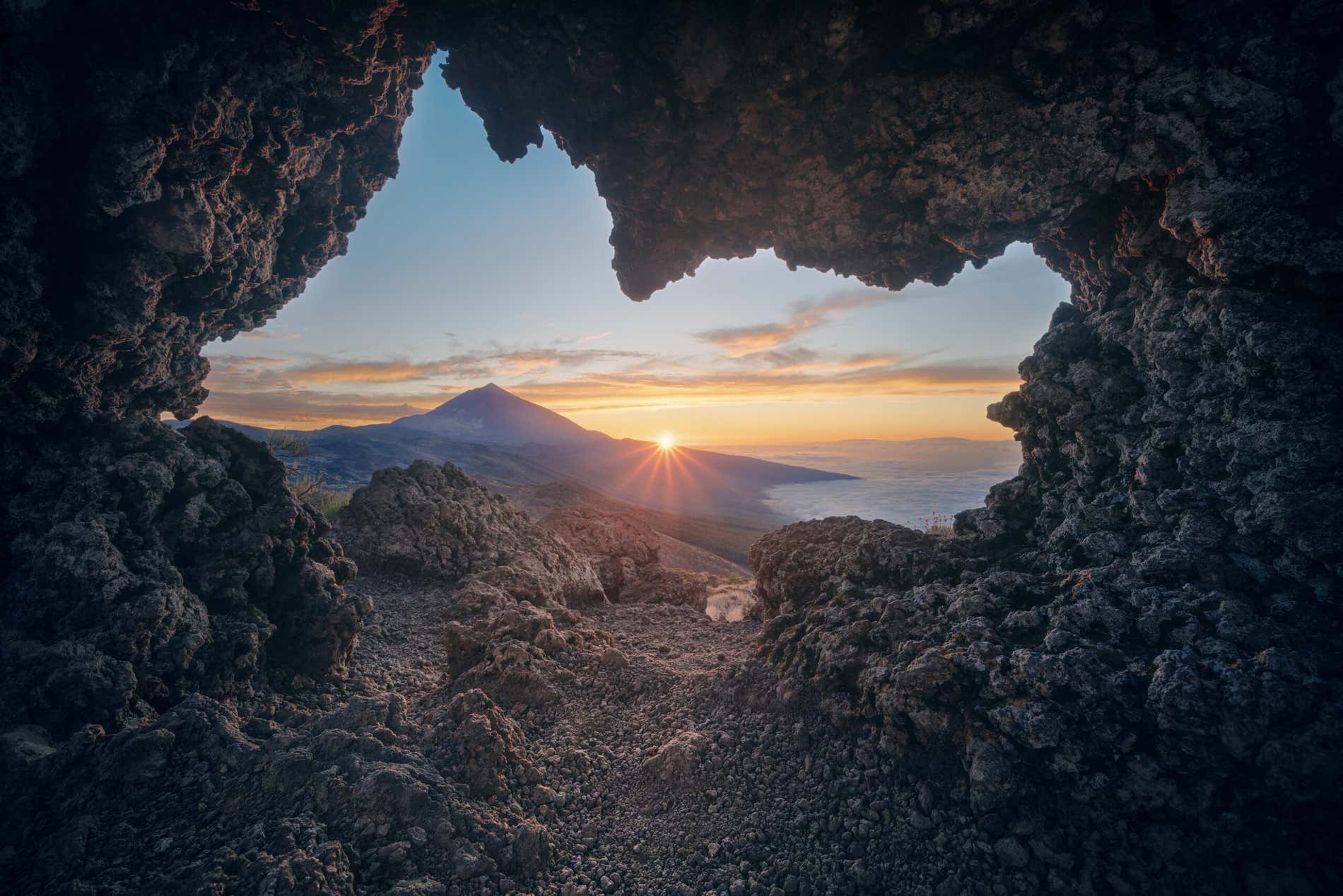
Tenerife is the largest of Spain’s Canary Islands, sitting just off the coast of Morocco. While it’s famous for year-round sunshine and beaches, the island’s interior tells a different story, one shaped by ancient volcanic activity going back millions of years. Huge craters, lava fields, and mountain peaks cut through the landscape, creating dramatic terrain that feels worlds away from the coastal resorts.
Mount Teide is Spain’s highest peak, towering 12,198 feet (3,718 meters) from the island’s center. Up here, above the cloud line, the sunset is something else entirely. The light bounces off black volcanic rock in shades of orange and pink, with a sea of clouds rolling beneath you. Once the sun drops, this spot transforms into one of the best stargazing sites in Europe.
On this Teide stargazing tour, you’ll visit the Teide Observatory, watch this epic sunset from the slopes of the volcano, and use professional telescopes to explore the night sky!
2. Mount Etna – Sicily, Italy
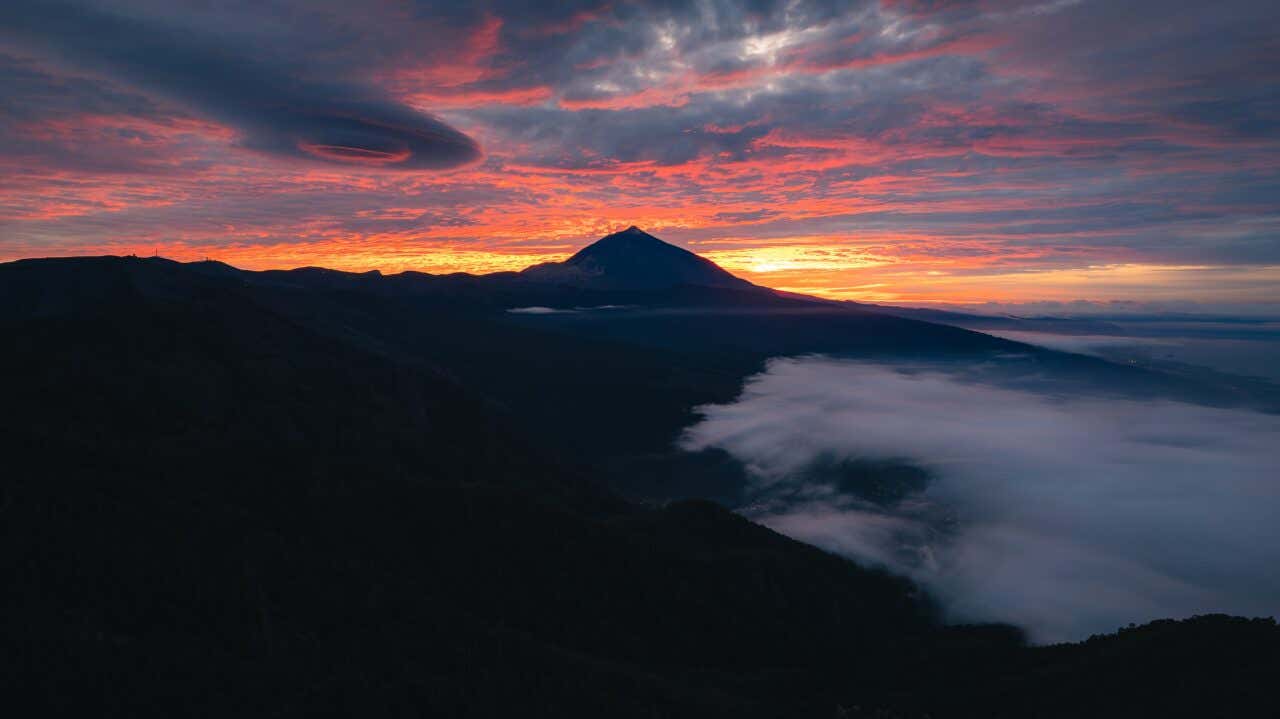
Mount Etna dominates the east coast of Sicily near Catania. As one of the most active volcanoes on the planet, it’s constantly reshaping itself. Steam vents hiss, craters shift, and old lava flows create a landscape that looks like it belongs on another planet. The mountain has a rough, powerful presence that’s impossible to ignore.
At sunset, this otherworldly terrain comes alive. The light catches on the black rock and rising steam, while the Mediterranean glows in the distance. The contrast between the warm volcanic slopes and the cool sea creates a color show that shifts by the minute.
On this Mount Etna sunset tour, you’ll travel by jeep through the Etna Natural Park, explore lava caves and forest trails, and stop for panoramic views along the way. There’s also a tasting stop featuring local wine, honey, and liqueurs, before ending the evening with sunset views from over 6,500 feet (2,000 meters) up in the air… unforgettable!
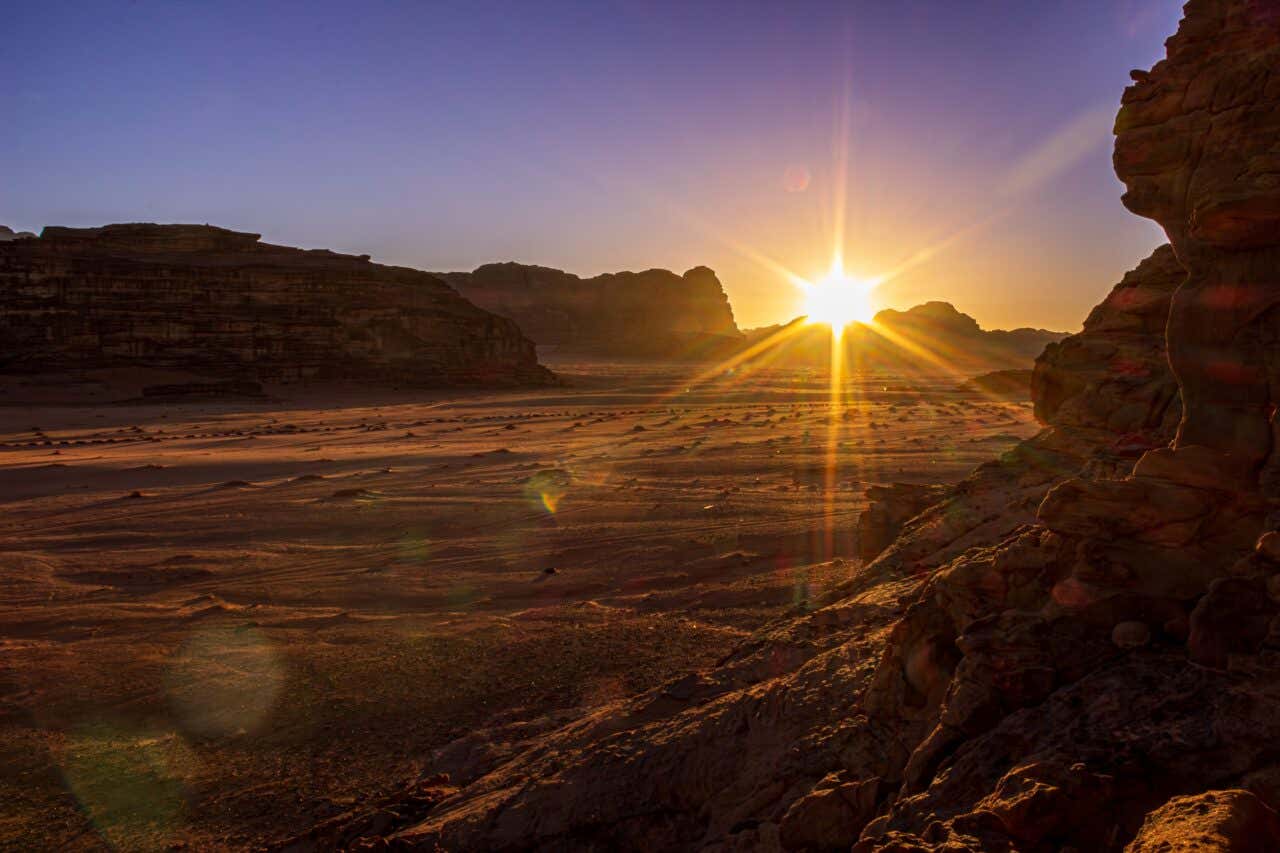
3. Wadi Rum – Aqaba, Jordan
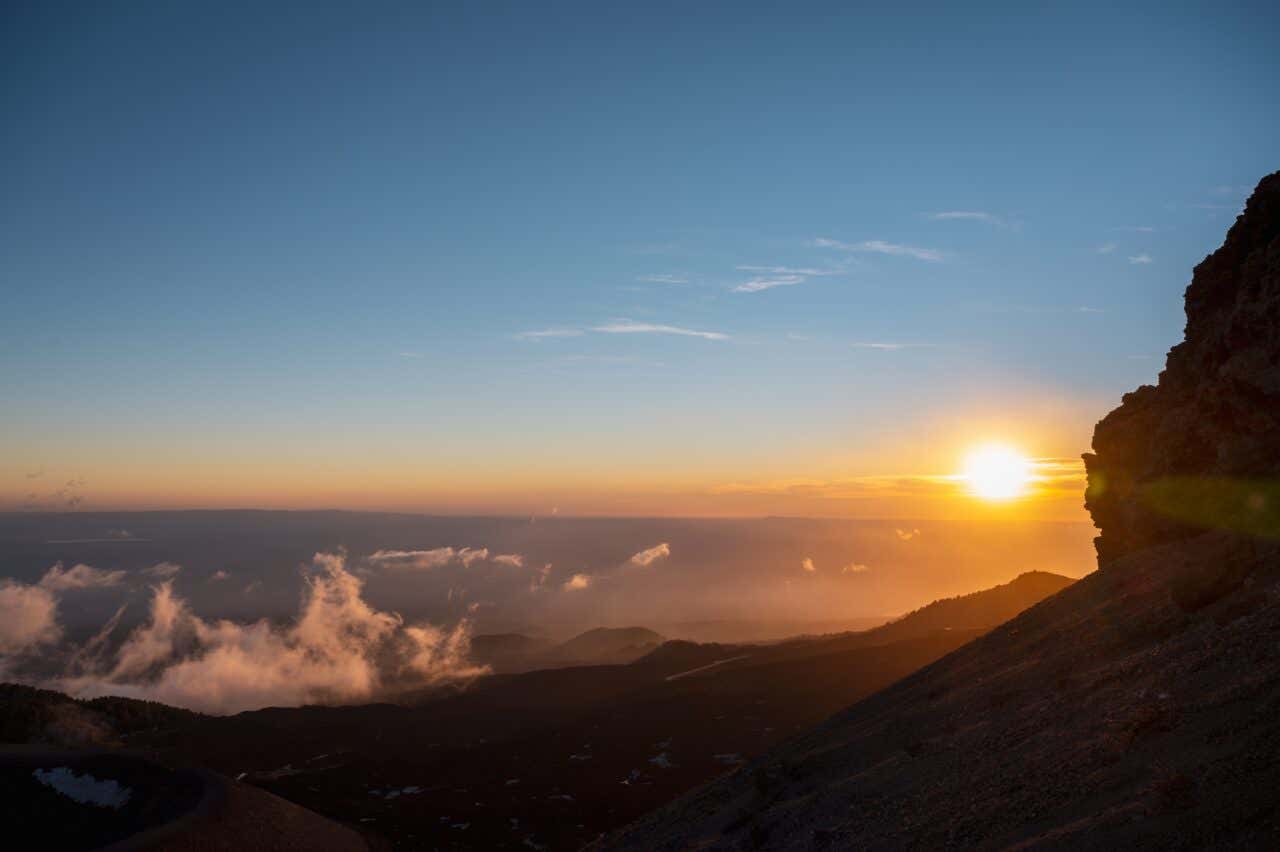
Wadi Rum is a massive desert region in southern Jordan that’s been used to film Mars and moon landscapes for good reason. Red sand stretches for miles, massive sandstone cliffs rise hundreds of meters, and once you’re deep in the valley, modern life disappears completely. The silence here is almost physical.
As thesun sets, the red rocks and sand seem to glow from within, taking on shades of copper and crimson as the light fades. The cliffs cast long shadows across the valley floor, and the light stretches endlessly across the open space, giving the whole landscape a fiery appearance.
On this hot air balloon tour of Wadi Rum, you’ll float into the sky and catch the desert in its most vivid light. You’ll see the cliffs and dunes from above, then finish the morning with tea or coffee before heading back to your hotel.
4. Twelve Apostles – Victoria, Australia
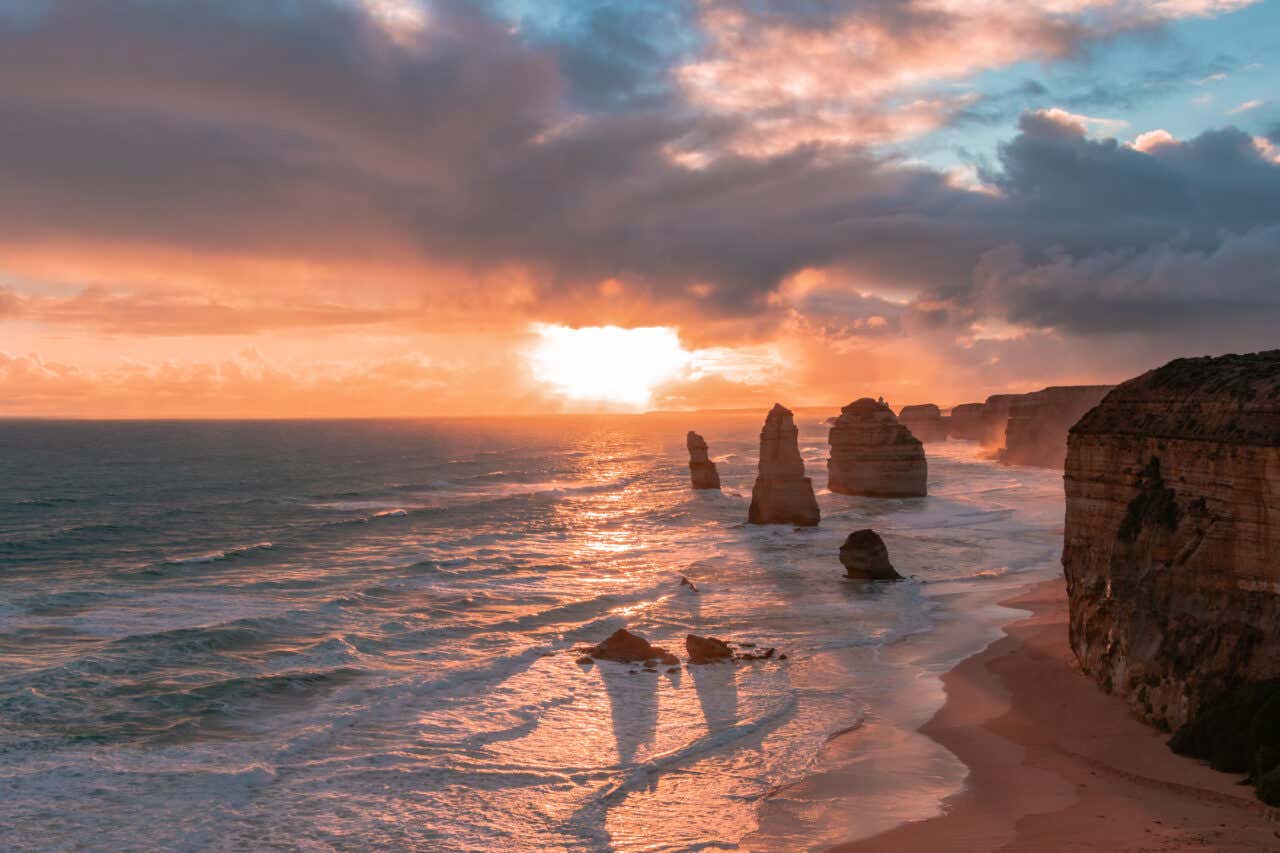
The Great Ocean Road runs along Australia’s southern coast southwest of Melbourne, winding past beaches, forests, and dramatic coastal cliffs. It’s consistently ranked as one of the world’s great road trips, and for good reason. The scenery shifts around every bend, with lookout points revealing new stretches of coastline.
The Twelve Apostles are the showstopper. These massive limestone stacks rise straight out of the Southern Ocean, and at sunset, they put on an unforgettable display. The cliffs glow golden and orange while the sea turns deep blue, and the contrast between the warm stone and cold water is striking. The light changes fast here, with the whole scene transforming in the space of twenty minutes.
On this full-day tour from Melbourne, you’ll stop at towns, rivers, and forests along the Great Ocean Road before reaching the coast at golden hour. You’ll visit the Shipwreck Coast and Loch Ard Gorge, hear stories of survival and history, and end the day by with the main event: watching the sunset over the Twelve Apostles from the beach.
5. Uluru – Northern Territory, Australia
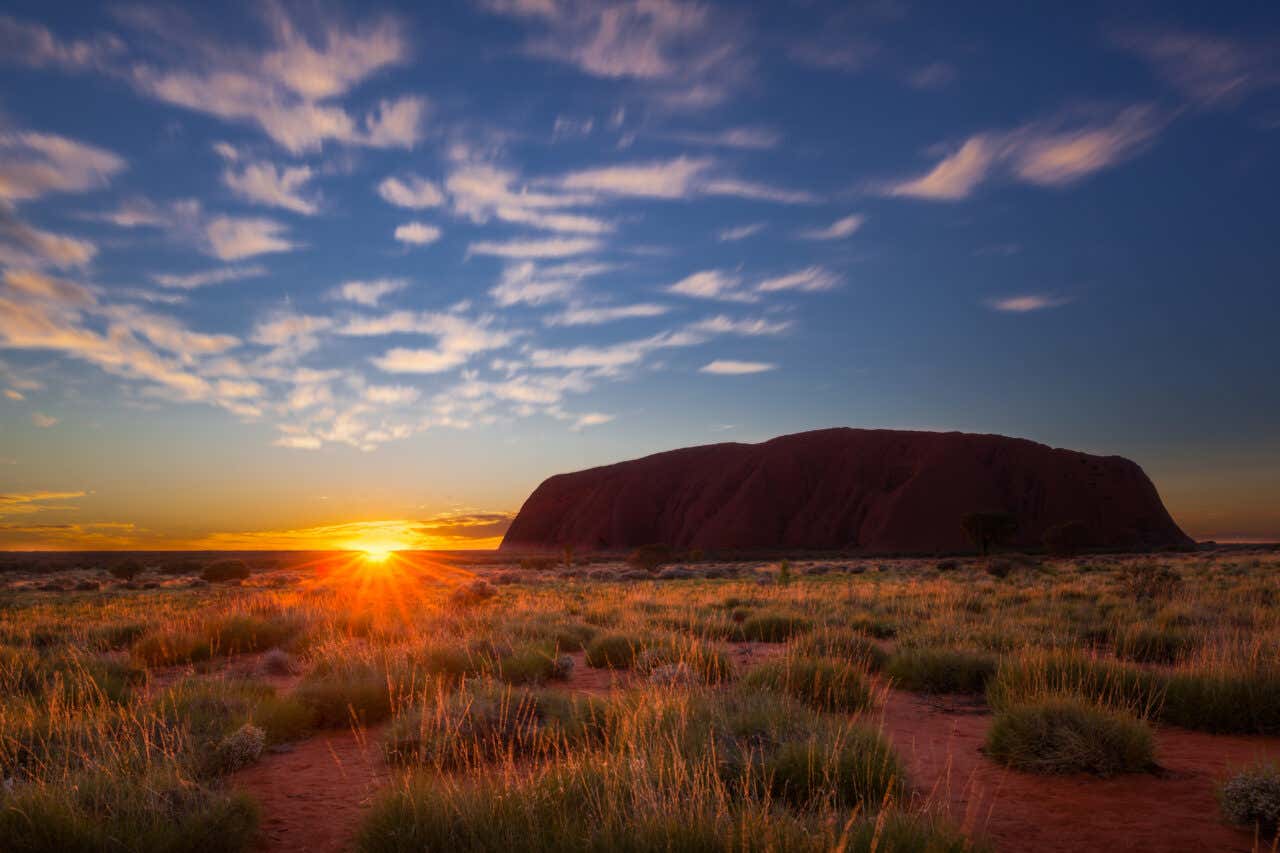
Uluru is a massive sandstone monolith rising 1,142 feet (348 meters) straight out of the Australian desert. It’s a sacred site for the local Anangu people and one of the country’s most powerful natural landmarks. Standing in the middle of absolutely nothing, it dominates the landscape in a way that photos never quite capture. You have to see its scale in person to understand it.
At sunset, the entire surface of the rock shifts from orange to deep red to purple as the sun drops, with the changes happening gradually enough that you can watch the transformation unfold. The rock seems to absorb and radiate the light at the same time, creating an effect that feels almost deliberate.
On this Uluru-Kata sunset tour, you’ll explore Uluru-Kata Tjuta National Park, visit the Mutitjulu waterhole, and walk the Kuniya trail along the base of the rock. The experience ends with a glass of wine and snacks at the main viewpoint as the light fades across the desert.
6. Angkor Wat – Siem Reap, Cambodia
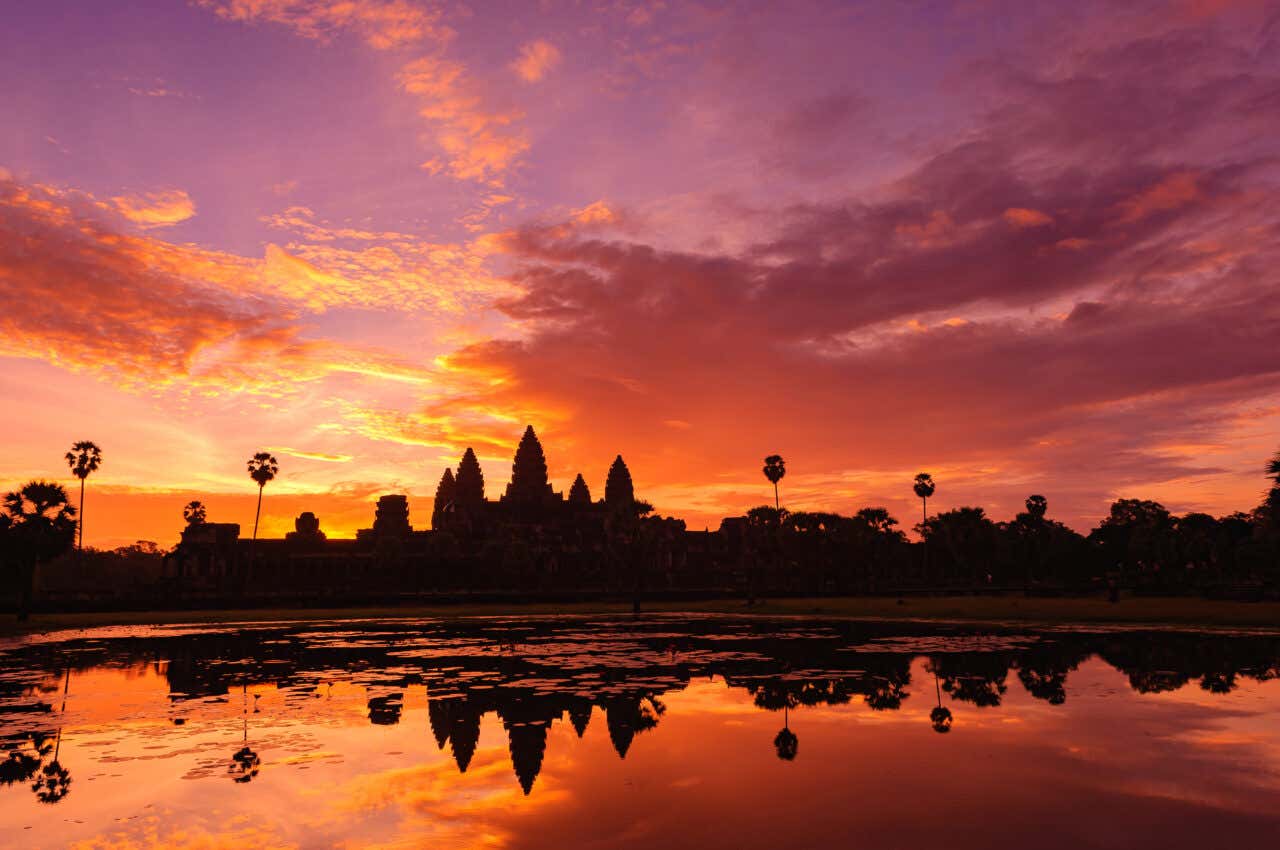
Angkor Wat is a massive 12th-century temple complex near Siem Reap in northern Cambodia. As one of the largest religious monuments in the world and the country’s most recognizable symbol, it draws crowds throughout the day. The scale of the place is staggering, featuring towers, courtyards, galleries covered in intricate carvings, all spread across hundreds of acres.
Sunset brings a completely different atmosphere to the temples. The crowds thin out, the heat eases, and the light hits the ancient stone from a lower angle, picking up details in the carvings that harsh midday sun washes out. From the Phnom Bakheng viewpoint, you get a wide view over the treetops with Angkor Wat’s distinctive towers in silhouette against an orange sky. It’s the best way to end a day of temple exploration.
On this Angkor Wat tour from Siem Reap, you’ll explore the temples with a guide, learn the stories behind the stonework, and finish the day watching sunset from one of the best viewpoints in the complex. Check it out!
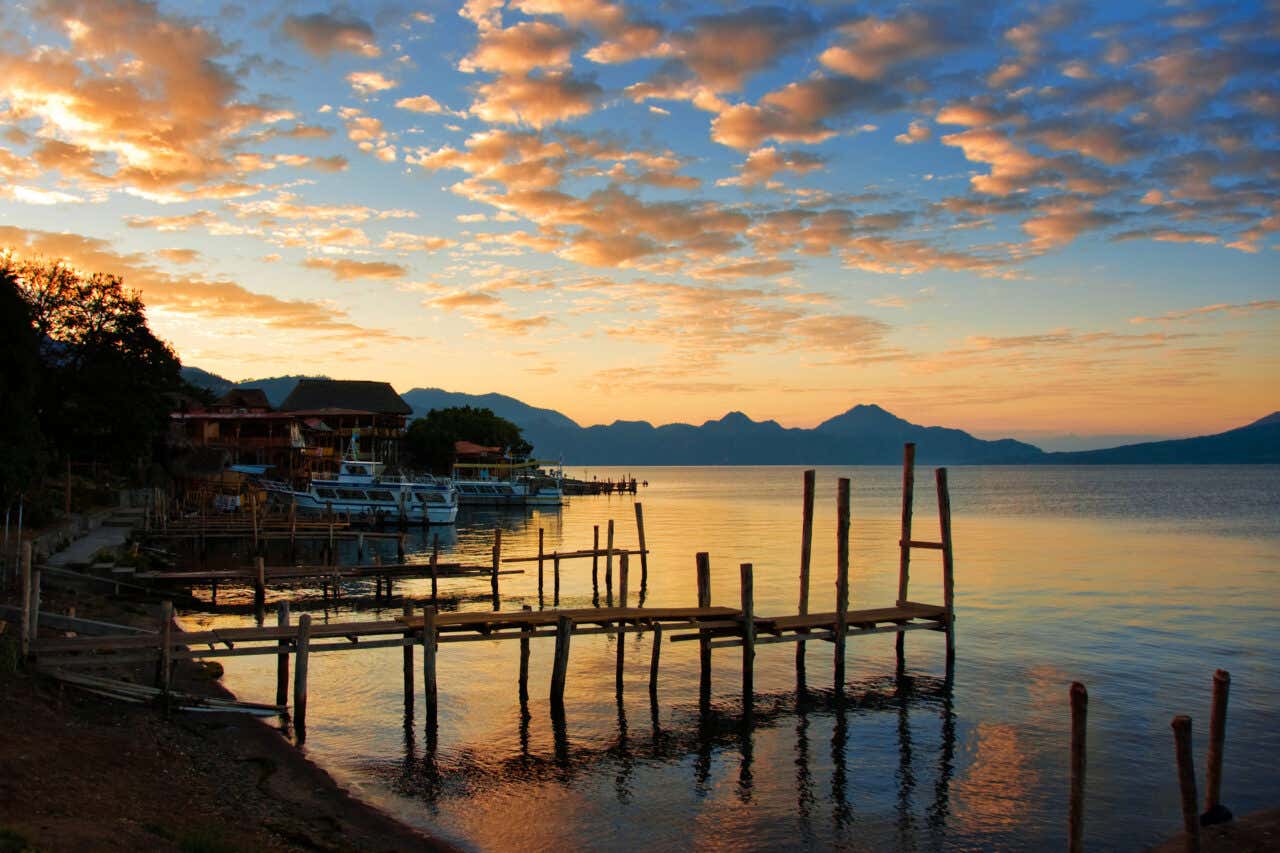
7. Mayan Face – Lake Atitlán, Guatemala
Lake Atitlán sits in the Guatemalan highlands, surrounded by steep cliffs and three volcanic peaks. Small towns line the water’s edge, connected mainly by boat since roads here are scarce. It’s a stunning setting—the kind of place where every viewpoint feels like a postcard, but the real landscape somehow looks better than any photo.
The Mayan Face viewpoint gives you the full sweep of the lake and mountains in one shot. At sunset, the sky turns orange behind the three volcanoes, and the calm water reflects the entire display. The light is soft up here in the highlands, giving everything a warm glow that intensifies as the sun drops behind the peaks.
On this Mayan Face hike from Panajachel, you’ll start before sunrise and hike up to the viewpoint in the early morning dark. After a short climb, you’ll reach the ridge in time to watch the sun rise over the lake and volcanoes.
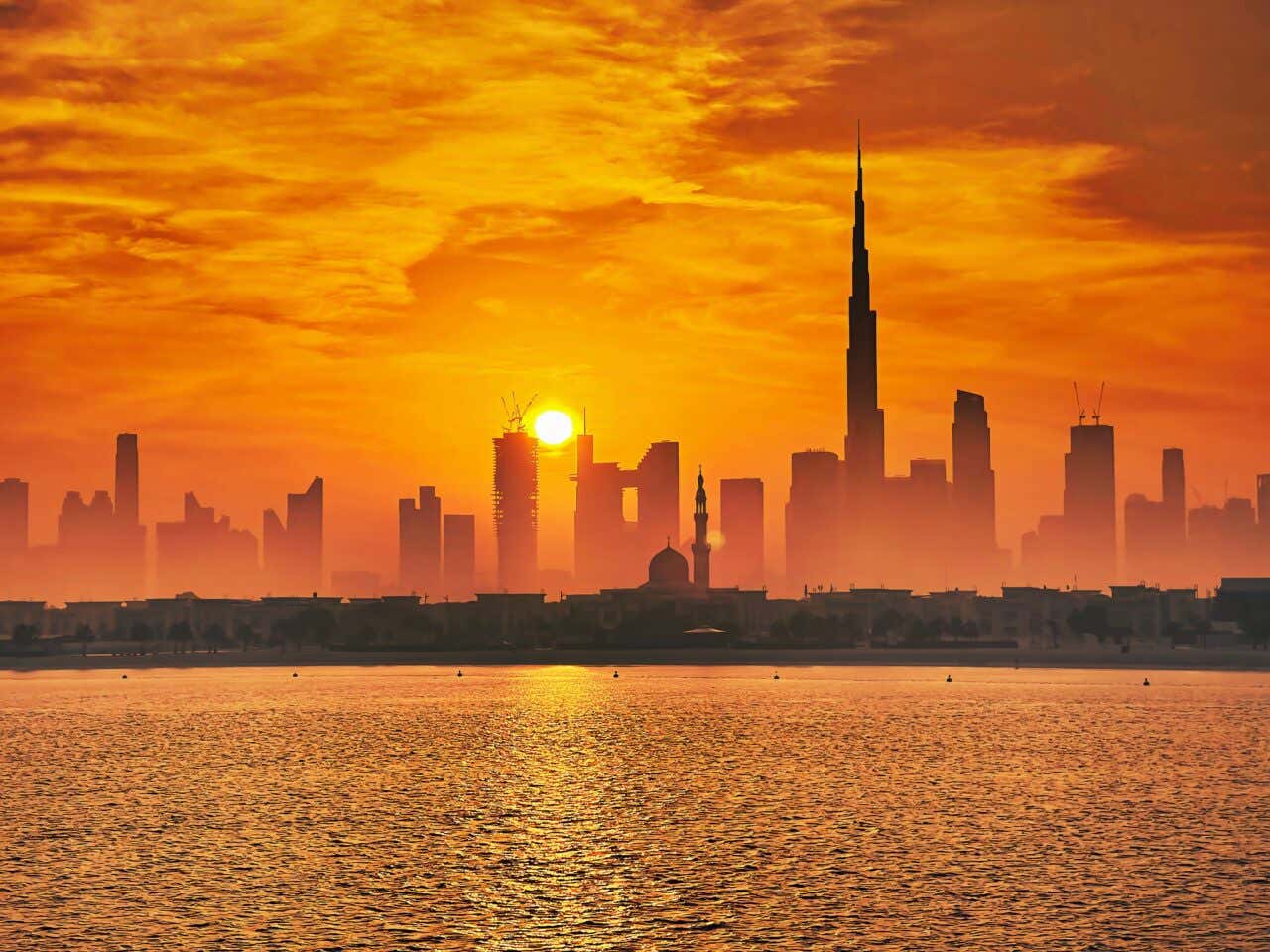
8. Dubai Marina – Dubai, UAE
Drive thirty minutes outside Dubai and the gleaming skyline fades into soft sand dunes stretching to the horizon. The contrast is total, from vertical steel and glass to wide-open desert silence. Out here, the landscape feels ancient despite being so close to one of the world’s most modern cities.
As the sun goes down, the dunes turn from pale gold to deep orange, and the temperature finally drops to comfortable levels. The light is soft and warm, casting long shadows across the rippled sand. It’s a simple scene, just sand and sky, but the colors and the silence make it feel significant.
On this Camel ride in the Dubai desert experience, you’ll ride camels through the dunes at sunset, stop to enjoy the views, and then continue to a Bedouin-style camp. The evening includes food, live performances, and the chance to try shisha, henna, and other local traditions before heading back to the city.
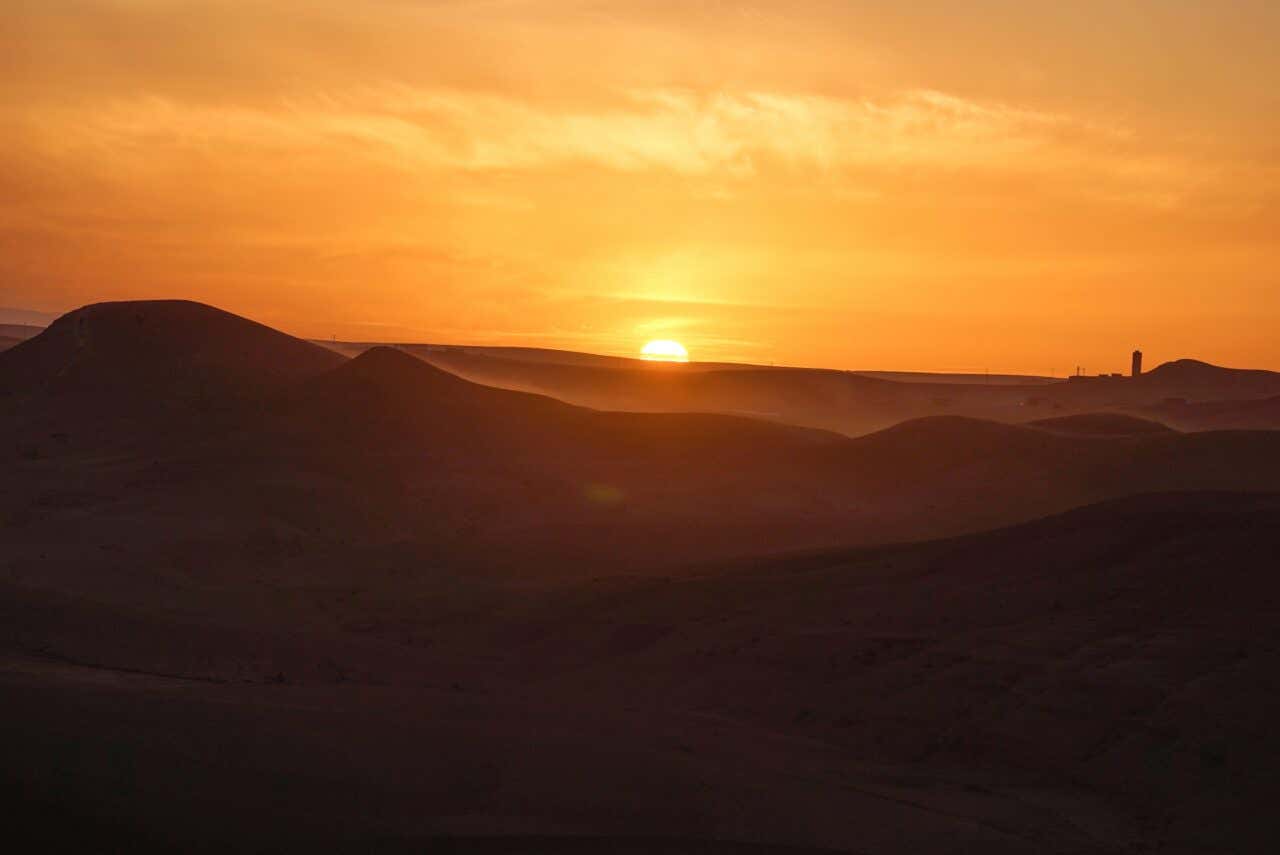
9. Agafay Desert – Marrakech, Morocco
The Agafay Desert sits just outside Marrakech, close enough for an easy trip but remote enough to feel completely disconnected. Unlike the Sahara’s famous sand dunes, Agafay is rocky and lunar, featuring dry hills, open space, and long views toward the Atlas Mountains in the distance. It’s a good alternative if you don’t have time to venture deep into Morocco’s larger deserts.
The light here at sunset is soft and wide-reaching. It washes across the rocky ground in warm gold and pink, hitting the distant mountains and casting the desert floor in gentle shadow. The landscape is spare but beautiful, with nothing to interrupt the view or the quiet.
On this overnight experience in the Agafay Desert, you’ll head to camp from Marrakech, enjoy sunset views and optional camel rides, then sit down to a full Moroccan dinner with live music and traditional performances. You’ll spend the night in a private haima tent and return to the city the next morning after sunrise and breakfast.
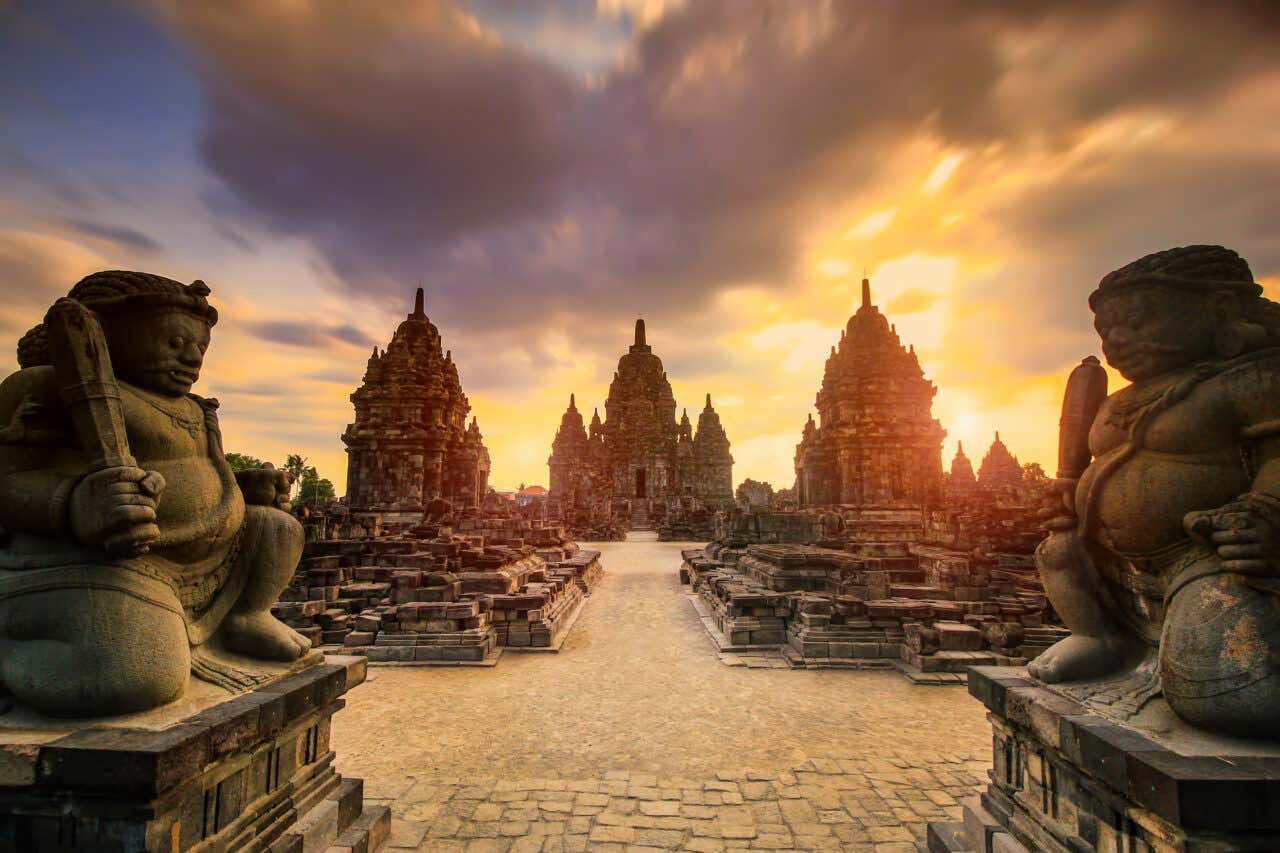
10. Prambanan & Borobudur – Yogyakarta, Indonesia
These two temple complexes sit near Yogyakarta in central Java, both UNESCO World Heritage sites and both still active places of worship. Borobudur is a massive 9th-century Buddhist monument built from volcanic stone. Prambanan is a Hindu complex with towering spires that rise dramatically from the surrounding plains. They’re different in style but equally impressive in scale.
Sunset brings out the texture in the ancient carvings and gives the temples a softer, more contemplative feel. The light hits the stone at an angle that shows off details lost in midday glare, and the crowds thin out enough that you can actually stop and take it in without being rushed along.
On this full-day temple tour from Yogyakarta, you’ll visit both Borobudur and Prambanan, along with smaller temples like Mendut and Pawon. The tour also includes stops in the historic city center before ending the day at Prambanan, where you can catch the golden hour light at one of Indonesia’s most iconic monuments.
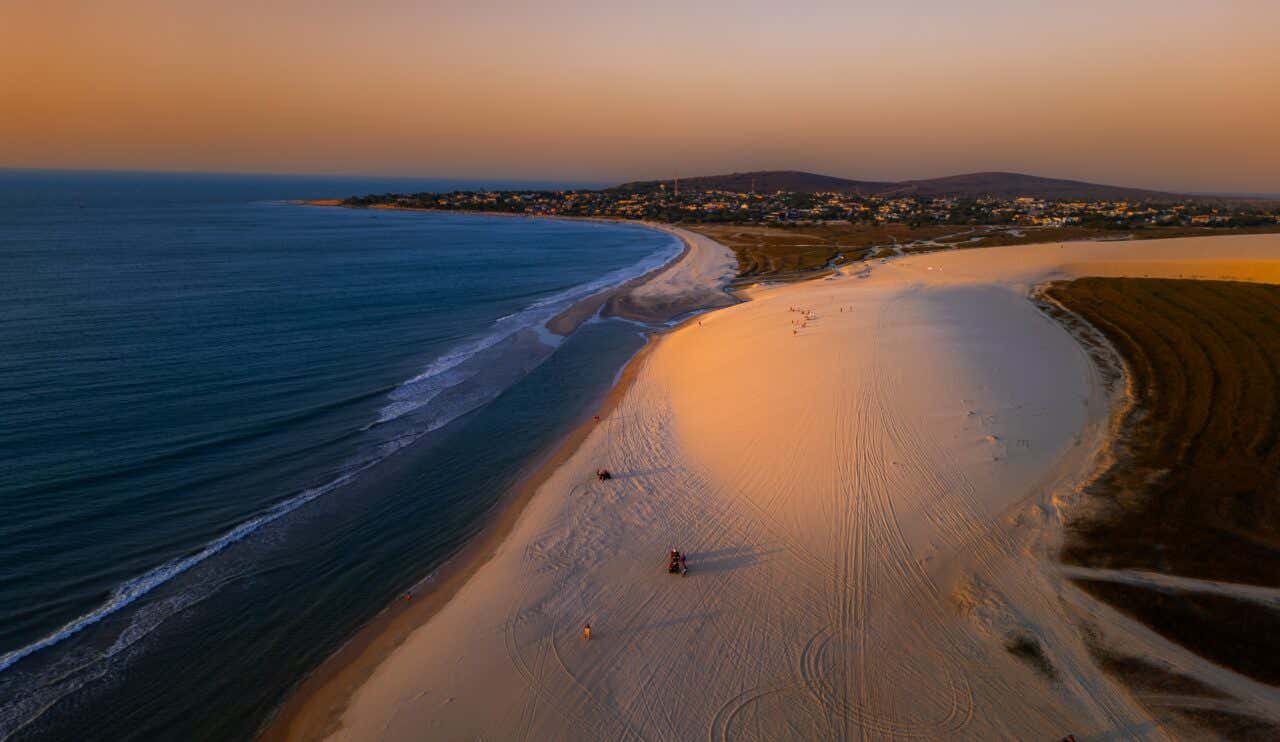
11. Jericoacoara Dunes – Ceará, Brazil
Jericoacoara is a small, remote beach town on Brazil’s northeast coast. The streets are sand, the pace is slow, and the whole place is surrounded by massive dunes and turquoise lagoons. It takes effort to get here, which has kept it relatively low-key despite its stunning setting.
Each evening, locals and visitors climb the main dune to watch the sun set over the Atlantic. It’s become a simple ritual. People gather quietly as the light changes, turning the sea and sand shades of orange and pink. The view is wide open, with nothing but ocean and sky in front of you.
On this Jericoacoara dune tour from town, you’ll travel through the region’s famous lagoons, beaches, and dunes before ending the day in Barrinha, a small fishing village known for its sunset views. The tour includes flexible transport options like buggies or UTVs, with photo stops and beach time along the way.
12. Santorini Caldera – Santorini, Greece
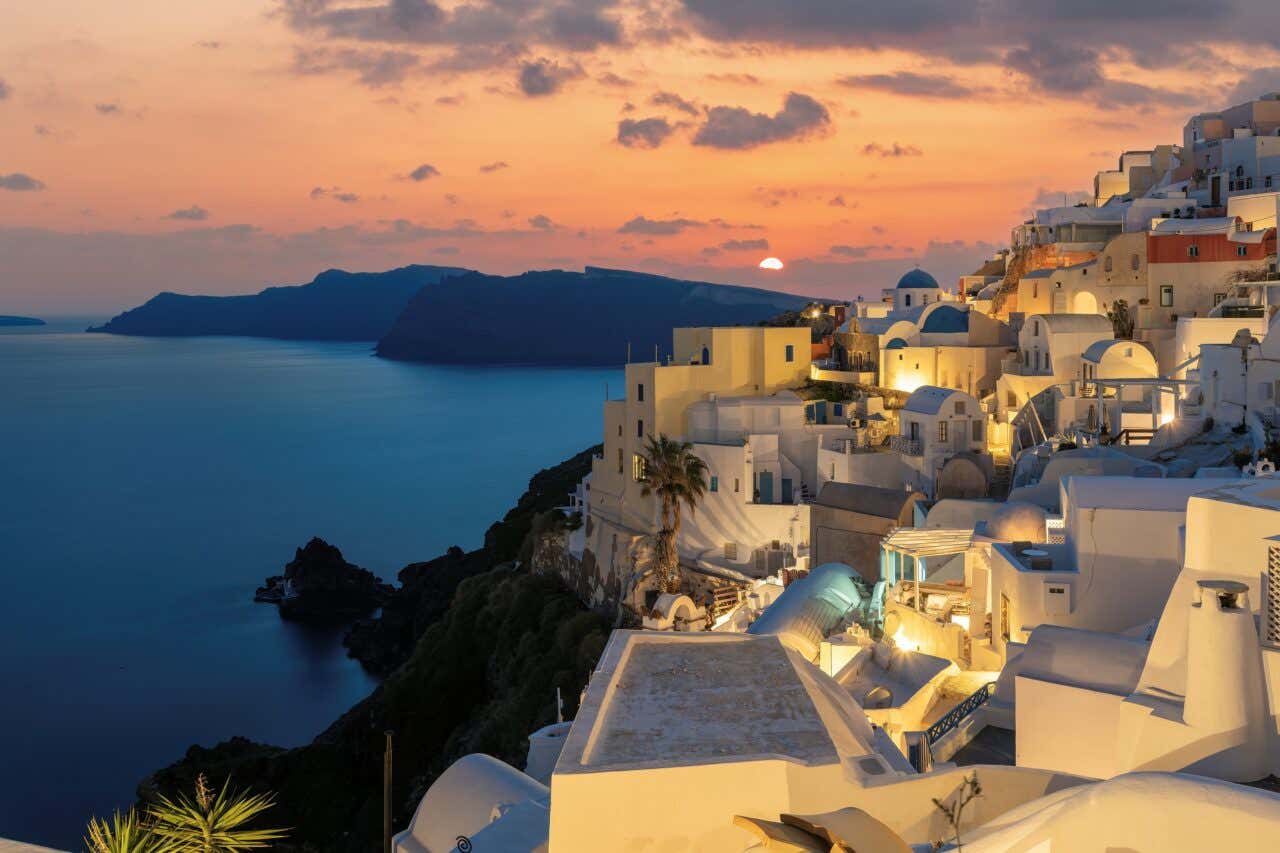
Santorini is a volcanic island in the Aegean, famous for its cliffside villages, white-washed buildings, and blue-domed churches overlooking the sea. The island’s west-facing caldera views have made it one of the most photographed sunset spots on Earth, and, for once, the hype is justified.
The sun sets directly behind the caldera, lighting up the cliffs and casting warm light across the white buildings and dark water. The colors are intense, deep oranges and pinks against the white architecture and blue sea. It’s undeniably beautiful, though the clifftop villages of Oia and Fira can get packed with people all fighting for the same view.
Instead of jostling for a spot on the cliffs, this Santorini catamaran cruise gives you front-row seats from the water. You’ll sail past volcanic islands, stop to swim in hot springs, and enjoy a buffet dinner onboard before anchoring below Oia just in time for the sunset. The view from the water is just as iconic and a whole lot more peaceful.
How Do You Take a Great Sunset Photo?
Capturing a sunset is part of the experience, but you need to know what you’re doing to snap the perfect pic. Whether you’re using an iPhone, a film camera, or a DSLR, here’s how to make the most of golden hour.
What’s the best time to take sunset photos?
Start shooting about 30 minutes before sunset and keep going until 15–20 minutes after. That window gives you the richest light, with changing tones from golden to pink to deep blue.
Tips for sunset photos on iPhone or smartphone
- Tap to focus on the brightest part of the sky.
- Slide your finger to adjust exposure manually.
- Turn on gridlines to help with framing.
- Try portrait mode for shots with people in silhouette.
- Use Live Photos or burst mode to catch motion like waves or birds.
If you’re using a film camera
- Let the camera meter for the sky. Aim at the brightest part and half-press the shutter to lock focus and exposure.
- Avoid flash. It flattens the colors and kills the vibe.
- Hold the camera steady or rest it on something once the light fades.
- Zoom out instead of in, wide shots tend to handle the light better and give more context.
For manual film cameras
- Lower the exposure (EV -0.3 to -1.0) to bring out richer colors in the sky.
- Aim for a narrow aperture (f/8–f/11) and adjust shutter speed as the light fades.
If you’re using a digital camera (DSLR or mirrorless)
- Shoot in RAW to capture more color data.
- Use manual mode: ISO 100, aperture around f/8–f/11, and adjust shutter speed as the light fades.
- Bracket your shots to get different exposures.
- Try including foreground elements like rocks, trees, or people for a better composition.
There you have it! Those are our picks for the 12 best sunsets on the planet. If you’re planning on travelling to any one of them, or you’re looking for more travel experiences, be sure to check out more tours & experiences with Civitatis!
That said, wherever you find yourself, next time the sun begins to set, take a second to look up. You never know when a simple sky might turn into something you’ll remember for years to come.


Most read of #Multi-Destination
11 Best Places to Visit in South America (2026)
6 March 202610 Secret Foodie Destinations to Visit in 2026
28 February 2026Top 10: Places to See the Northern Lights (2026)
18 February 2026The Best Bachelorette Party Destinations in 2026
12 February 202615 Bucket List Travel Experiences to Gift in 2026
3 February 2026Top 12: Best Places to Travel in May in 2026
28 January 2026Most read #Multi-Destination
11 Best Places to Visit in South America (2026)
6 March 202610 Secret Foodie Destinations to Visit in 2026
28 February 2026Top 10: Places to See the Northern Lights (2026)
18 February 2026The Best Bachelorette Party Destinations in 2026
12 February 202615 Bucket List Travel Experiences to Gift in 2026
3 February 2026
10 Romantic Vacation Ideas for Valentine’s Day 2026
27 January 2026Top 10 Tallest Pyramids in the World
14 January 2026The 10 Tallest Waterfalls in the World You Can Visit in 2026
19 December 2025The 12 Best Sunsets in the World (and How to Experience Them)
8 December 2025
7 of the Most Bike-Friendly Cities to Visit in 2026
6 December 2025The 10 Best Yoga Vacation Spots: Retreats, Classes & More!
5 December 2025Underrated Travel Destinations: 10 New Adventures for 2026
20 November 2025Civitatis’ Picks for the Best Places to Solo Travel in 2026
13 October 2025
Where to Travel in September (Updated: 2025)
24 July 2025The 11 Most Active Volcanoes in the World
21 May 2025Summer 2025: The Best Music Festivals in the World
24 April 2025Top 10: Where to Travel in August 2025
9 April 2025