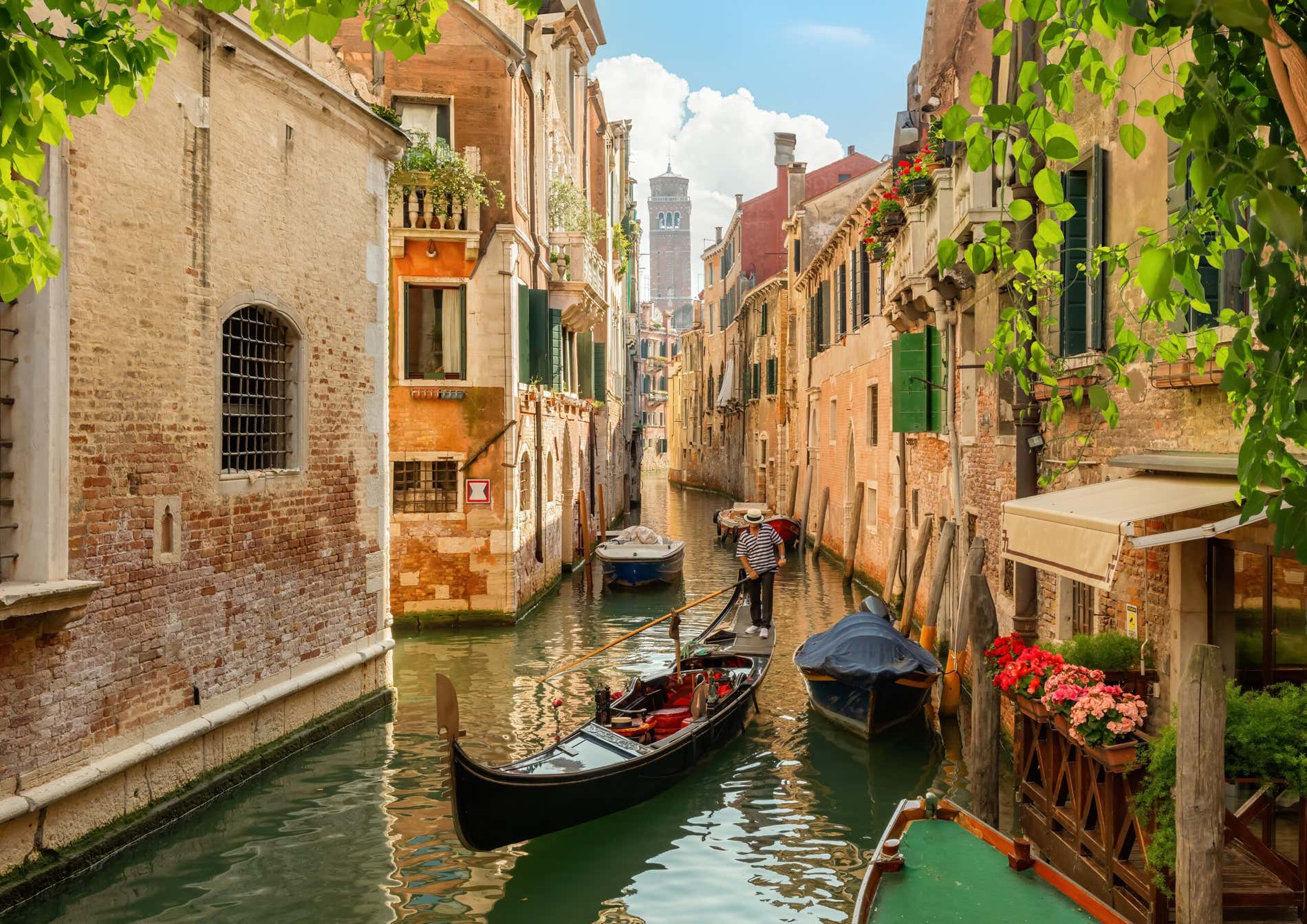
The 13 Most Beautiful Italian Islands to Visit in 2026

Italy has more than 400 islands scattered around its coastline, and only two of them, Sicily and Sardinia, are places most travelers could name. The rest range from volcanic outcrops with permanently erupting craters to lagoon villages painted in colors chosen so fishermen could find their way home through fog. Some sit twenty minutes from a mainland port. One is closer to Africa than it is to Rome.
Which Italian islands are the most beautiful? Capri leads on sheer drama, with limestone cliffs and the Faraglioni rocks. Sicily and Sardinia offer whole worlds of their own. The Aeolian Islands deliver active volcanoes, Procida brings pastel fishing harbors, and Burano contributes the brightest streets in the Venetian lagoon. Each one answers a different question about what you want from a trip.
This guide covers 13 of them, along with the ferry route to reach each one and the months worth targeting. Where a place is genuinely difficult to visit without planning ahead, you will find that noted too.
Which Italian Island Should You Visit?
1. Sicily
Sicily is the largest island in the Mediterranean, not just in Italy, and it behaves less like an island than like a country that happens to be surrounded by water. Greek temples at Agrigento stand more complete than most of what survives in Greece. Palermo’s markets still carry the vocabulary of Arab rule. And Mount Etna, at roughly 3,350 meters, keeps rearranging the skyline above Catania.
You could spend two weeks here and see a third of it. If your time is shorter, pick a base. Palermo suits anyone drawn to street food, mosaics, and a city with genuine grit, and you can start with a free walking tour of Palermo that covers the old town and its layered history. Catania puts you at the foot of Etna. Taormina gives you the Greek theater and the coastline below it.
Do not underestimate driving times. Sicily is close to 26,000 square kilometers, and the road between Palermo and Syracuse takes far longer than the map suggests.
2. Sardinia
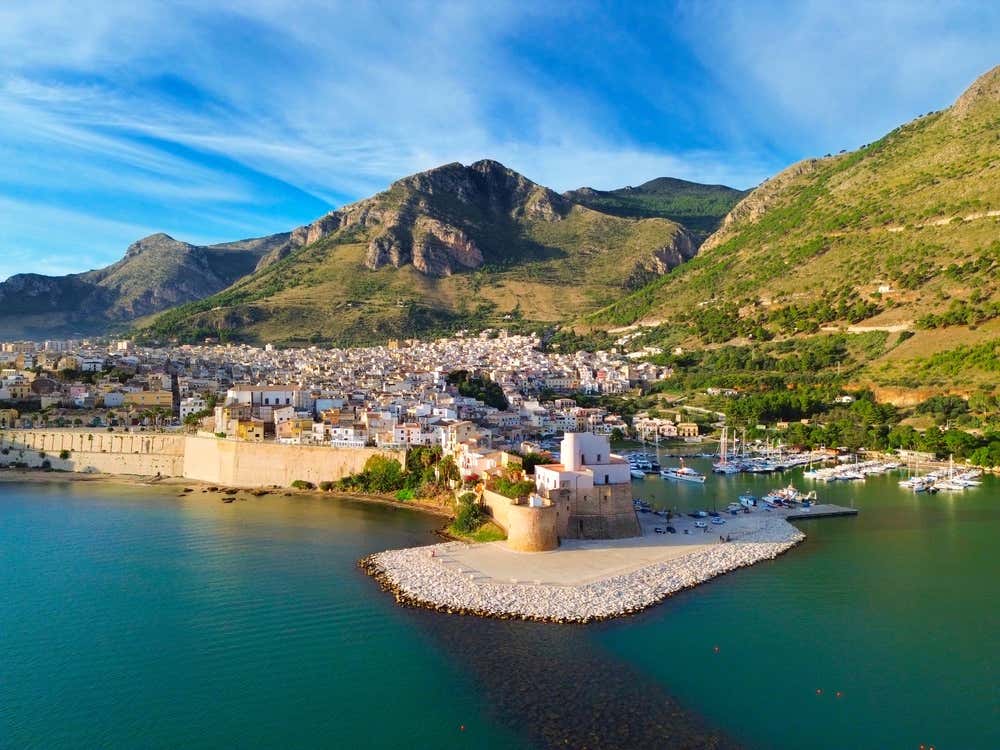
Sardinia is the second largest Italian island and the one with the strangest interior. Inland you will find more than 7,000 nuraghi, conical stone towers built in the Bronze Age by a civilization that left no written record. Su Nuraxi at Barumini is a UNESCO World Heritage Site and the best preserved of them.
The coast is what draws most visitors. The Costa Smeralda in the northeast has the yachts and the price tags. The Gulf of Orosei on the east coast has limestone cliffs falling into water that ranges from turquoise to something closer to green, with beaches like Cala Goloritzé reachable only on foot or by boat. Browse the full range of excursions and activities across Sardinia to see how the regions differ.
Sardinian is a distinct language, not an Italian dialect, and you will still hear it spoken in the villages of the Barbagia.
3. Capri
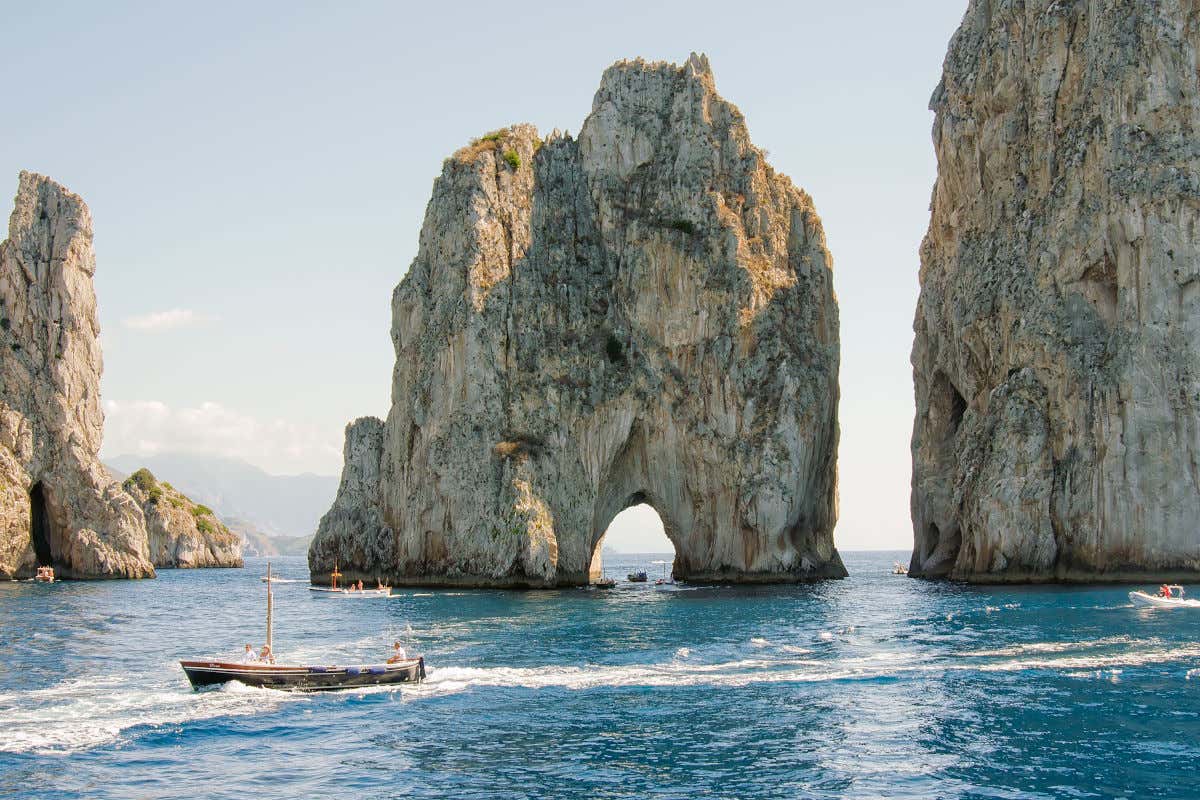
Capri is the most photographed island in Italy and it earns the attention. Limestone cliffs drop vertically into the Tyrrhenian Sea, and the Faraglioni, three rock stacks off the southern shore, have become the island’s signature. The town of Capri itself is dense with luxury boutiques and day-trippers. Anacapri, higher up, stays noticeably quieter.
The Blue Grotto is the single most requested sight, a sea cave where light entering below the waterline turns the whole interior an intense blue. Access depends entirely on sea conditions, so treat it as a bonus rather than a fixed plan. If you are staying in Naples, a boat excursion to Capri that circles the island before dropping you ashore covers both the coastline and free time in town. Prefer to include Anacapri and a guide? The Capri and Anacapri day trip from Naples takes about six hours.
Two things worth the climb: Monte Solaro, the island’s highest point, reached by chairlift from Anacapri in around 12 minutes, and Villa San Michele, the former home of Swedish physician Axel Munthe, whose garden looks straight down at the sea. Once you are on the island, you can also book a combined bus and boat tour that links the main viewpoints.
4. Ischia
Ischia is the largest island in the Bay of Naples and the one where the volcanic origin is most useful to visitors. Hot springs fed by activity beneath Monte Epomeo have made it a wellness destination since Roman times, and the thermal parks around Forio are still the main reason people come.
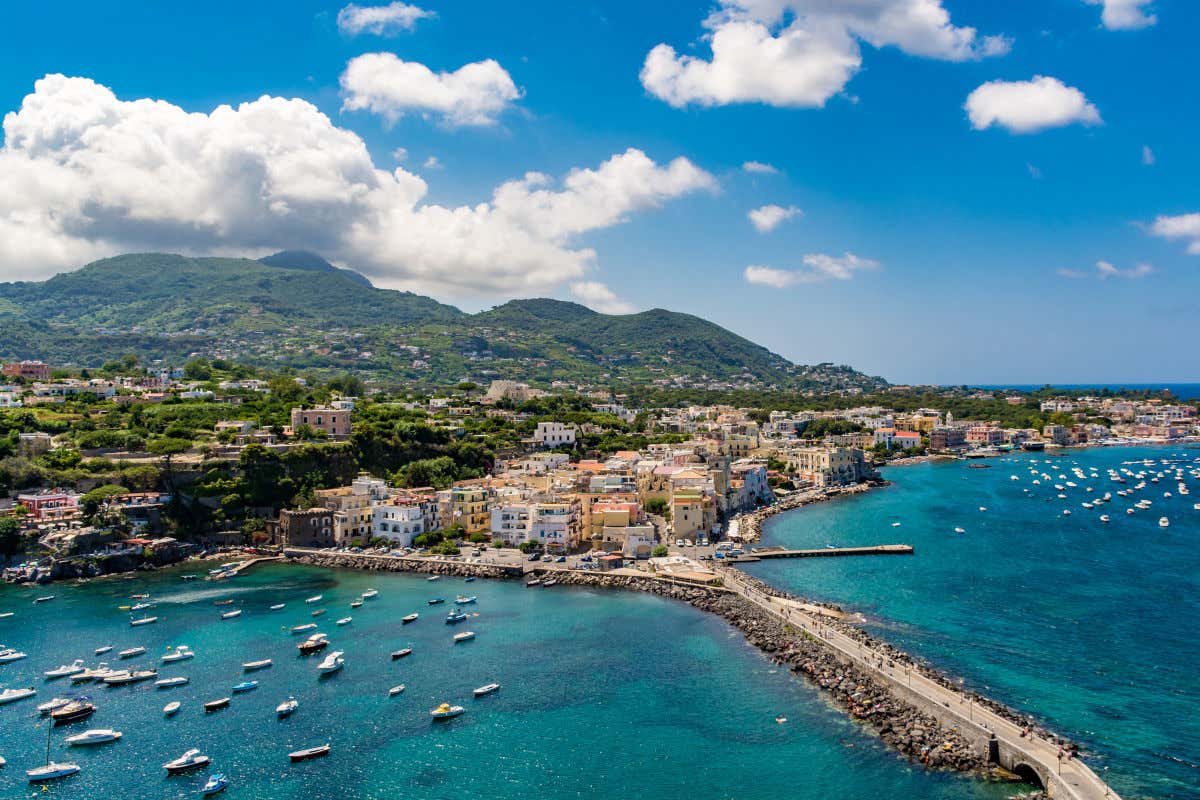
The Aragonese Castle is the island’s most recognizable image, sitting on a rocky islet connected to Ischia by a stone causeway built in the fifteenth century. Beyond the spas, the walk up Monte Epomeo rewards you with the whole gulf laid out below. You can also see the coastline from the water on an Ischia coast cruise with swimming stops and lunch on board, or browse the complete list of tours and activities on Ischia to build your own day.
Ischia is another of the most beautiful islands in Italy
5. Procida
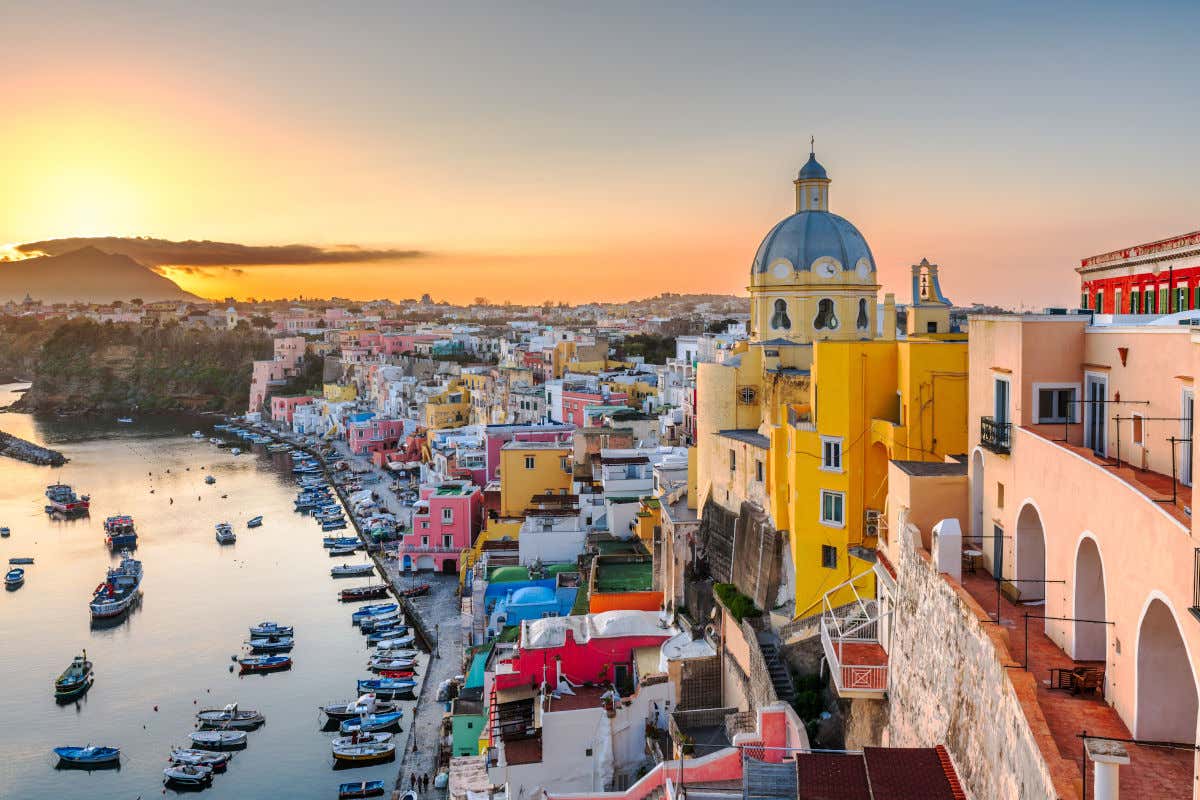
Procida is the smallest of the three Bay of Naples islands and the one that still feels like a working place rather than a resort. Its houses crowd around Marina Corricella in pinks, yellows, and ochres, a palette that reportedly began as a navigational aid so fishermen could pick out their own homes from the water.
In 2022 it was named Italian Capital of Culture, unusual recognition for an island of roughly four square kilometers. Climb to Terra Murata, the highest point, and you reach Palazzo d’Avalos, a palace that served as a prison until the late twentieth century. A day trip to Procida from Naples with lunch included gives you time to walk the old town and the fishing harbor. If you would rather have context as you go, consider a private guided tour of Procida covering Corricella and Terra Murata.
Want both islands in one day? The Ischia and Procida day trip from Naples combines them, though it runs long at around twelve hours.
6. The Aeolian Islands
North of Sicily, seven volcanic islands make up the Aeolian archipelago, listed by UNESCO as a World Heritage Site for their contribution to volcanology. The naming conventions of the discipline, including the terms Strombolian and Vulcanian, come from here.
Lipari is the largest and best served, which makes it the practical base. Vulcano takes its name from the Roman god of fire and still has active fumaroles and mud baths. Stromboli is the reason most people make the trip: its crater erupts in small bursts almost continuously, and seeing the lava trace down the slope after dark from a boat is genuinely difficult to match anywhere else in Europe.
The efficient approach is a single organized crossing. A Vulcano, Panarea, and Stromboli excursion from Lipari covers three islands in a day and finishes with the volcano at sunset. Coming from the Sicilian mainland instead? The Lipari, Stromboli, and Panarea excursion departing from Milazzo does the same circuit. You will find shorter options on the Lipari tours and activities page, including hikes and single-island trips.
One practical note. When Stromboli’s alert level rises, landings are suspended and operators switch to viewing the eruptions from the sea. This is normal and worth expecting rather than treating as a disruption.
7. The Egadi Islands
Off the western tip of Sicily, the Egadi Islands consist of Favignana, Levanzo, and Marettimo. Favignana is shaped roughly like a butterfly when seen from the air and spent centuries as a center of tuna fishing. Its old cannery, the Tonnara Florio, now works as a museum, and the flat terrain makes the island easy to cross by bike between one cove and the next.
Cala Rossa and Cala Azzurra are the two coves people photograph, both former quarries where the tufa stone was cut away to leave sheer white walls above clear water. From Marsala, a day trip to Favignana and Levanzo with swimming stops in the coves handles the logistics. From Trapani, the Egadi Islands day trip gives you four hours ashore on Favignana before continuing to Levanzo.
Levanzo is worth the extra stop for the Grotta del Genovese, a cave holding Neolithic paintings and Paleolithic engravings. Visits are limited and arranged locally, so confirm access before you count on it.
8. The Maddalena Archipelago
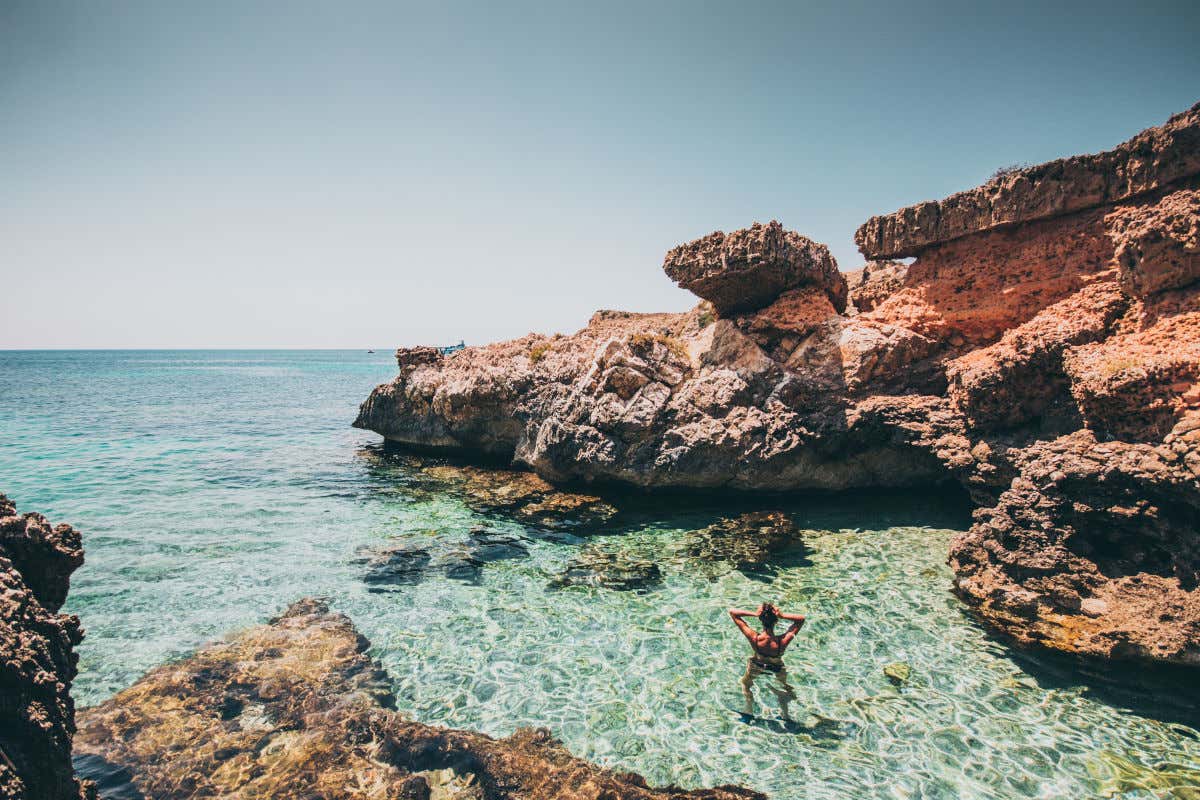
In northern Sardinia, facing the Costa Smeralda, the Maddalena Archipelago gathers seven main islands and dozens of smaller ones inside a national marine park. Budelli holds the famous pink beach, colored by fragments of a coral organism, though it has been fenced off and closed to visitors for decades to let it recover. You can see it from the water but not walk on it.
Spargi and Santa Maria compensate with coves that stay close to empty outside August. Boats leave daily from Palau, and a Maddalena archipelago boat day trip from Palau works through several islands with stops to swim. For a quieter version, the small-group archipelago boat tour with lunch included caps numbers and adds time in La Maddalena town. Further options are listed on the Palau excursions page.
9. Burano, Murano, and Torcello
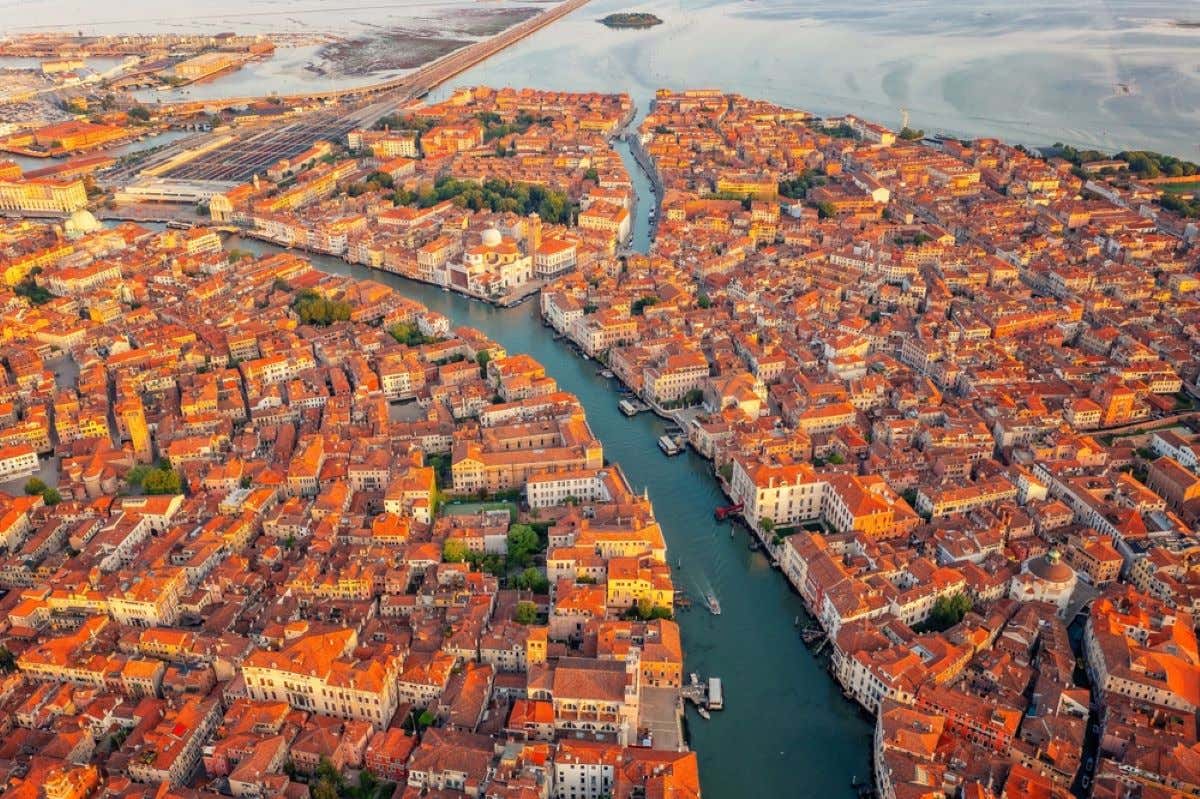
Three islands in the Venetian lagoon hold most of what is interesting about Venice beyond the historic center. Murano became the home of Venetian glassmaking in 1291, when the Republic moved the furnaces off the main islands to reduce the risk of fire. The craft never left.
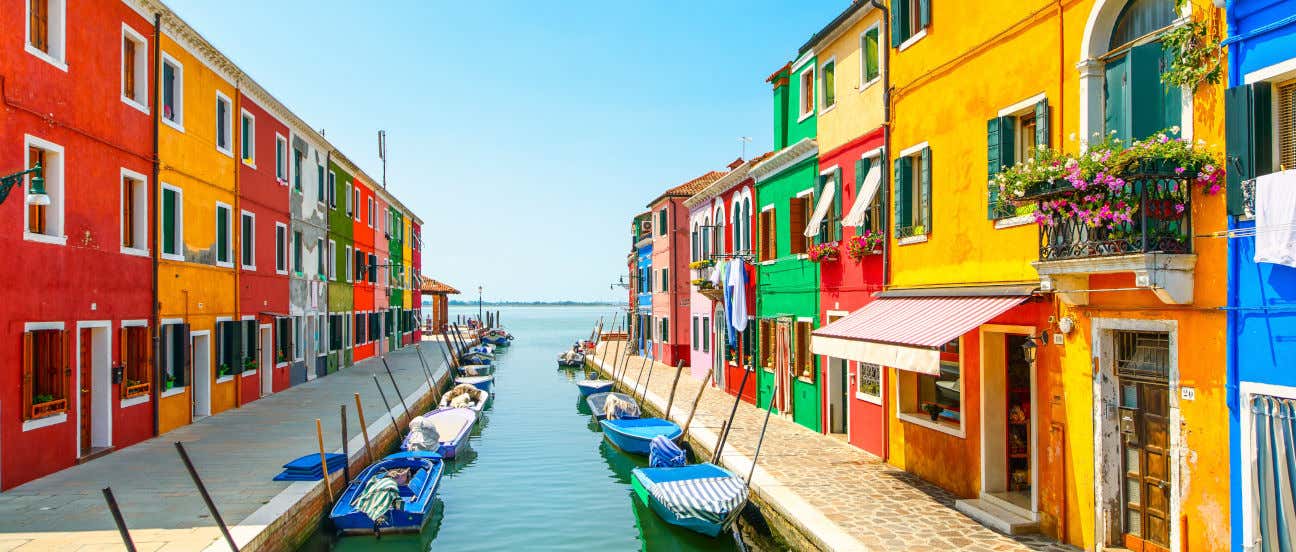
Burano is the one that photographs best, its canal-side houses painted in saturated blocks of color, with a lacemaking tradition, the merletto, that once supplied European courts. Torcello is the oldest and now the emptiest, home to a handful of residents and a cathedral with eleventh-century mosaics, though it once held a larger population than Venice itself.
The standard route is a Murano and Burano day trip from Venice with a glassblowing demonstration. To add the third island, the Burano, Murano, and Torcello self-guided day trip gives you around an hour on each. Both leave from central Venice, and you can compare them against everything else on the Venice tours and experiences page.
Time on each island is tight on group tours. If Burano is your priority, consider taking the public vaporetto and setting your own pace.
Visiting a Murano glass workshop is an essential plan in the Venetian lagoon
10. Elba
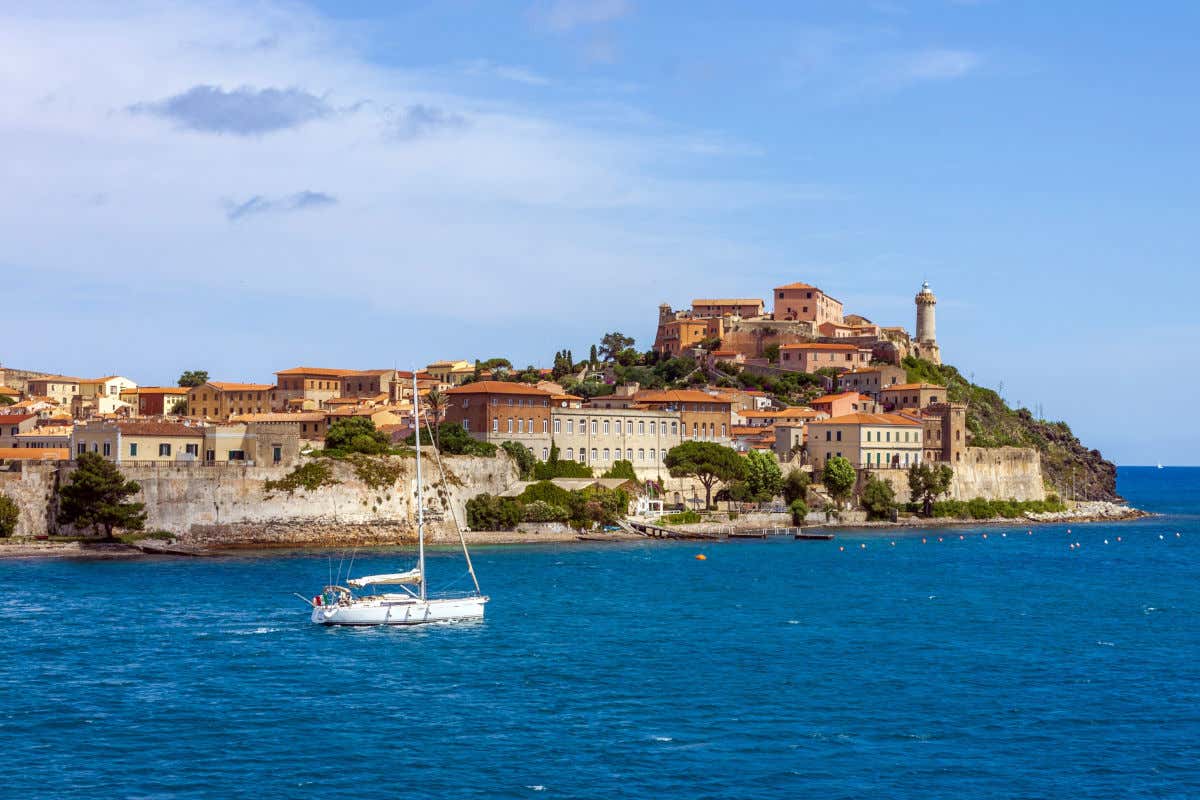
Elba is the third largest Italian island and the largest in the Tuscan Archipelago, at about 27 kilometers across. Napoleon was exiled here between May 1814 and February 1815, and his residence, the Villa dei Mulini in Portoferraio, is open to visitors.
The island rewards anyone who likes variety in a small space. Beaches such as Capo Bianco and Fetovaia have pale sand and shallow water. The interior is mountainous, with Monte Capanne reaching 1,019 meters and a cable car running to the summit for views across to Corsica on clear days. There is also a genuine industrial past here: Elba supplied iron ore from Etruscan times until the twentieth century, and the mining landscape at Rio Marina is now a park.
Ferries run from Piombino in a little over an hour. In summer, organized trips from Florence combining train and ferry are available through local operators, though schedules vary by season and are worth confirming directly.
11. Ponza
Ponza is the largest of the Pontine Islands in the Tyrrhenian Sea, roughly halfway between Rome and Naples, and it remains far more popular with Italians than with international visitors. That shows in the atmosphere, which is closer to a working port town in summer than to anything resembling Capri.
The coastline is volcanic, cut into arches and sea stacks, with coves you can only reach by boat. Chiaia di Luna, a crescent beach beneath a sheer tufa cliff, is the most striking, though access has been restricted at times due to rockfall risk. The harbor, ringed with pastel buildings, is where every plan on the island begins.
If you are already in the Bay of Naples, an Ischia to Ponza day trip with a coastal boat ride and swimming stops is the simplest way to see it without rearranging your itinerary.
12. Pantelleria
Pantelleria sits between Sicily and Tunisia, closer to Africa than to the Italian mainland, and it is the most isolated island on this list. There is no sand. The coast is black lava rock, cut into coves, and the interior is planted with zibibbo vines and caper fields.
The architecture is the giveaway that you are somewhere unusual. Dammusi, low houses built from volcanic stone with domed roofs designed to collect rainwater, are found nowhere else in Italy. The Specchio di Venere is a crater lake with thermal water and mud you can bathe in. The island’s passito, a sweet wine made from sun-dried zibibbo grapes, holds its own protected designation, and the practice of growing the vines in hollows to shelter them from wind is recognized by UNESCO as intangible cultural heritage.
Renting a car is close to essential, since public transport is minimal. Aim for May through October. Outside those months a large share of hotels and restaurants close for the season.
13. Lampedusa
Lampedusa is the southernmost point of Italy, part of the Pelagian Islands, and geologically it belongs to the African continental shelf rather than the European one. That distance shows in the light and the water.
Spiaggia dei Conigli, or Rabbit Beach, is the reason most travelers come. It is a shallow bay of pale sand where the water grades through several shades of blue before it gets deep, and it is one of the few remaining nesting sites in Italy for the loggerhead sea turtle. Access is regulated during nesting season to protect the eggs, so check the current rules before you plan a day there.
The island is small and largely treeless. Bring shade, and expect the ferry from Porto Empedocle to take the better part of a working day if you are not flying.
How to reach the Italian islands
Where an island sits determines how you get there, and the differences are large. The Bay of Naples trio, meaning Capri, Ischia, and Procida, are the easiest, reachable by ferry or hydrofoil from Naples and Sorrento in under an hour. The Aeolian and Egadi archipelagos depend on Sicilian ports: Milazzo for the former, Trapani and Marsala for the latter. Sardinia’s Maddalena Archipelago is organized from Palau, and the Venetian lagoon islands are a short boat ride from central Venice.
Between June and August, book ferry tickets in advance. Popular routes sell out several days ahead. Outside those months, sailings thin out considerably, and some seasonal routes stop entirely.
These times are indicative and shift with the operator, the season, and sea conditions. Check current schedules on each ferry company’s website before you commit to an itinerary.
When to visit
Spring, from April to June, and early autumn are the best windows for most of these islands. Temperatures are comfortable, crowds are manageable, and accommodation costs drop noticeably against the summer peak. July and August bring domestic Italian tourism in force, especially to Capri, Ischia, and Sardinia, with higher prices and capacity limits on some activities.
The volcanic islands need a slightly different approach. The Aeolians and Pantelleria offer little natural shade, so in high summer plan around the middle of the day rather than through it. In winter, many ferry connections are reduced sharply or suspended altogether, which makes the smaller islands impractical rather than simply quiet.
Frequently asked questions
How many islands does Italy have?
Italy has more than 400 islands, though the exact figure depends on whether you count uninhabited rocks and islets. Only around 80 are populated. The vast majority sit in the Tyrrhenian Sea, around Sicily and Sardinia, and in the Venetian lagoon.
What is the largest island in Italy?
Sicily is the largest, at roughly 25,700 square kilometers, followed by Sardinia at about 24,000. Elba is third but far smaller, at around 224 square kilometers. Sicily is also the largest island in the Mediterranean.
What are the three main islands near Italy?
Sicily, Sardinia, and Elba are the three largest. If the question is about the Bay of Naples, which it often is, the trio people mean is Capri, Ischia, and Procida.
Which Italian island is best without a car?
Capri, Procida, Burano, and Favignana are all small enough to cover on foot, by bike, or on local buses and boats. Pantelleria, Sardinia, and Sicily are the opposite case, with limited public transport and long distances, so renting a vehicle makes a real difference there.
Can you visit several Italian islands in one trip?
Yes, provided you stay within one cluster. Capri, Ischia, and Procida combine easily from a base in Naples or Sorrento, since they sit less than an hour apart by boat. The same applies to the Aeolian and Egadi archipelagos, where single-day excursions routinely take in two or three islands. Combining Sicily with Sardinia in one trip is possible but requires flying.
Italy’s islands are not a single category of destination. They span active volcanoes, Bronze Age ruins, lagoon villages, and a stretch of North African coastline that happens to fly an Italian flag, and the practical question is usually which cluster fits the time you have rather than which island is objectively best.
Pick a base, work outward from its port, and you will see more than you expect. When you are ready to build the trip around specific days on the water, browse Civitatis’s full catalog of the best activities in English all over the world and lock in the crossings that matter most.


Most read of #Italy
The Best 9-Day Southern Italy Itinerary
8 June 2026Top 14 Places to Visit in Italy in 2026
31 March 2026Gondola Rides in Venice: Prices, Routes, & Best Tours
25 March 2026Most read #Italy
The Best 9-Day Southern Italy Itinerary
8 June 2026Top 14 Places to Visit in Italy in 2026
31 March 2026