13 Best Places to Visit in Brazil (2026)

Brazil is the fifth largest country on earth, and a trip here asks you to choose. You can spend two weeks and see a fraction of it, which is why the best places to visit in Brazil tend to be the ones that give you something the others can’t: a coastline, a wetland, a jungle river, a colonial center built on gold.
The 13 best places to visit in Brazil are Rio de Janeiro, São Paulo, the Amazon, Iguazu Falls, Belo Horizonte, Brasília, the Pantanal, Fernando de Noronha, Curitiba, Florianópolis, the Lençóis Maranhenses, Salvador and Recife. Together they cover beaches, rainforest, wetlands, modernist architecture and colonial history.
What follows is a run through each one, with what makes it worth the flight, how much time it deserves and the season that suits it best. Distances here are long and the climate shifts as you move, so the order you visit things matters as much as the list itself.
Must-Visit Places in Brazil
1. Rio de Janeiro
Rio is the obvious starting point, and it earns the position. Few cities are built into their landscape this dramatically, with granite peaks dropping straight into the Atlantic and neighborhoods wedged into whatever flat ground is left. Christ the Redeemer stands 98 feet (30 meters) tall on top of Corcovado, not counting the pedestal, and has been one of the New Seven Wonders of the World since 2007.
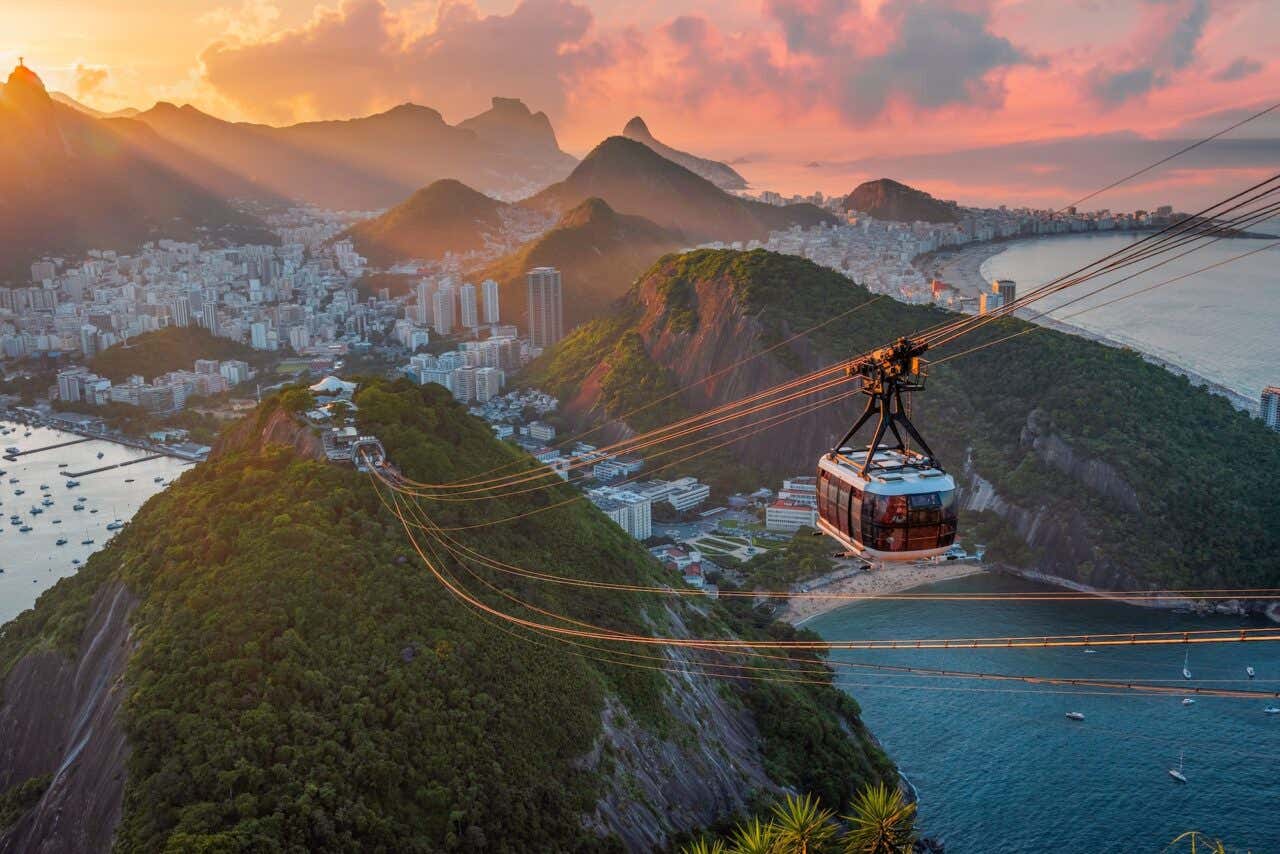
The classic circuit takes in Corcovado, Sugarloaf Mountain and the Maracanã, and you can cover all three in a day if you plan the order well. The full-day Rio tour by minibus takes you to Christ the Redeemer, Sugarloaf and the Maracanã in one go, which solves the logistics on your first morning. If you’d rather do Corcovado at your own pace, the Corcovado train ticket takes you up through the Tijuca Forest instead.
Give Rio at least three days. Copacabana and Ipanema deserve an unhurried morning each, Santa Teresa and Lapa are better in the late afternoon, and the view from the water is different again on a private boat trip around Guanabara Bay. The full range of tours and experiences in Rio de Janeiro runs to well over a hundred options.
2. São Paulo
São Paulo is where Brazil does business, and travelers often skip it for exactly that reason. That’s a mistake. The city holds the country’s best museums, its most serious restaurant scene and an immigrant history that shows up on every menu, with the largest Japanese community outside Japan concentrated around the Liberdade district.
Start at the Avenida Paulista and the São Paulo Museum of Art, whose glass easels let you walk around the paintings rather than past them. Then eat. A private food tour of São Paulo is the shortcut to understanding a city where Lebanese, Italian and Japanese cooking have all become local. Two days is enough for a first visit, and you’ll find more things to do in São Paulo than that allows for.
3. The Amazon, from Manaus
The Amazon isn’t a destination you visit in an afternoon. Getting into the forest properly means flying to Manaus, an unlikely city of two million people in the middle of the rainforest, then heading out by boat. Manaus grew rich on rubber in the late 1800s, and the opera house they built with the proceeds still stands in the center, tiled in the colors of the Brazilian flag.
Just outside the city, the dark Rio Negro meets the sandy Solimões and the two run side by side for miles without mixing, a difference in temperature and density you can see from the deck. For the forest itself, the three-day Amazon jungle tour gives you enough time to get past the day-trip fringe, while the four or five-day Rio Negro tour includes hiking and a visit to a local community.
If you have the time, the five-day river cruise from Manaus down to Belém is the version of the Amazon most people picture. Budget three days minimum for anything worth calling a jungle trip, and browse the wider list of excursions from Manaus before you commit.
4. Iguazu Falls
Iguazu is 275 separate waterfalls spread along nearly two miles (three kilometers) of the border between Brazil and Argentina. The Brazilian side, reached from Foz do Iguaçu, gives you the panorama. The Argentine side puts you on walkways directly above the water. Ideally you do both, on separate days.
The centerpiece is the Devil’s Throat, a horseshoe where fourteen separate falls converge and throw up enough spray to soak you from a distance. The Macuco Safari takes you into the rainforest by electric vehicle and then straight under the falls by speedboat, which is the closest you’ll get without swimming. Two days covers both sides comfortably, and the full catalog of activities in Foz do Iguaçu includes the bird park and the Itaipu dam.
Since you’re already at the border, plenty of travelers carry on south. If that’s tempting, the Civitatis guide to the best places to visit in Argentina picks up where this one leaves off.
5. Belo Horizonte and Minas Gerais
Belo Horizonte is Brazil’s third largest city and the way into Minas Gerais, the mountainous inland state that got rich on gold in the eighteenth century and spent it on churches. The city itself is worth a day for the Pampulha complex, an early Oscar Niemeyer project from the 1940s that shows the architect working out ideas he’d later use in Brasília.
The real draw is what’s around it. Ouro Preto, a UNESCO World Heritage Site since 1980, is a hillside town of baroque churches and steep cobbled lanes that has barely changed in two centuries. Tiradentes is smaller and quieter and does the same thing at a slower pace. A private excursion from Belo Horizonte lets you choose between the historic towns and the surrounding countryside, or you can start with a private tour of Belo Horizonte itself.
6. Brasília
Brazil built itself a capital from nothing in the middle of the savanna, and finished it in 41 months. Brasília was inaugurated in 1960, laid out by Lúcio Costa in the shape of an aircraft and filled in by Niemeyer with the curved concrete that became the country’s architectural signature. UNESCO listed the whole city in 1987.
It divides people, and that’s part of the appeal. The Cathedral of Brasília, with its sixteen concrete ribs and stained glass ceiling, is worth the trip on its own. A day and a half is plenty unless you’re an architecture obsessive, and the guided tours of Brasília are the practical way to see a city designed around cars rather than pedestrians. Go in the dry season, from May to September, when the light does the buildings justice.
7. The Pantanal
The Amazon has the reputation, but the Pantanal is where you actually see animals. It’s the largest tropical wetland on the planet, covering roughly 70,000 square miles (180,000 square kilometers), though estimates vary depending on where you draw the boundary. The open landscape means wildlife has nowhere to hide, which is exactly the problem with dense rainforest.
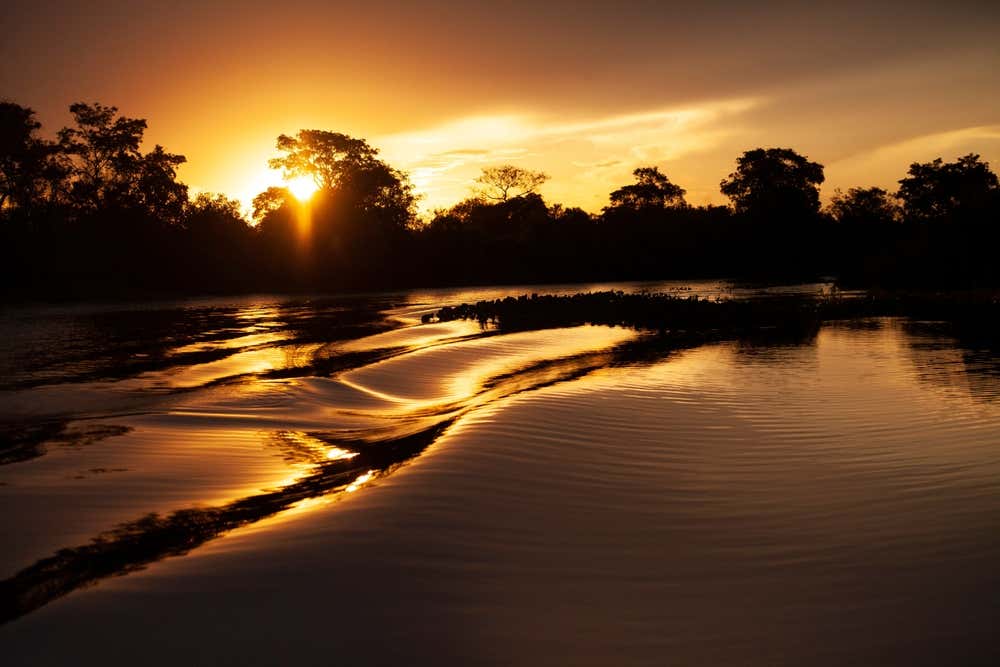
Capybaras, caimans, giant otters, hyacinth macaws and jabiru storks are close to guaranteed. Jaguars are not, but the Pantanal offers better odds than anywhere else in the Americas. The northern half is reached from Cuiabá, and this safari into the Mato Grosso marshland combines a land safari with an hour on the water. Come between May and September, when the floodwaters drop and animals concentrate around what’s left. More options appear on the Cuiabá activities page.
8. Fernando de Noronha
An archipelago of volcanic islands about 220 miles (350 kilometers) off the northeast coast, Fernando de Noronha is the most protected place in Brazil and the hardest to get into. Visitor numbers are capped, there’s an environmental tax charged per day of your stay, and the marine park charges separately again. It’s worth every bit of the hassle.
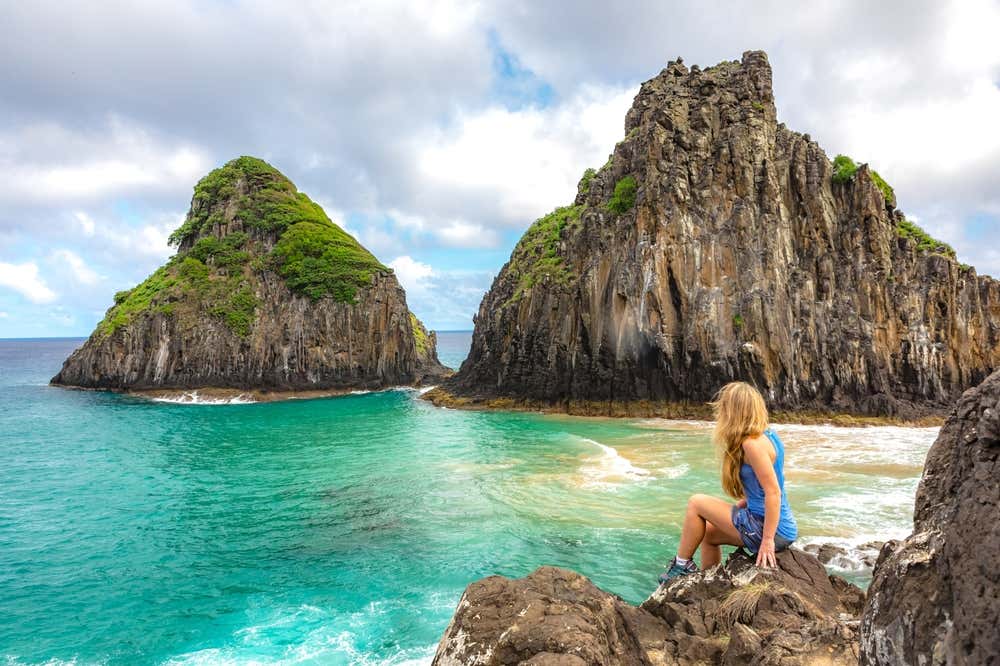
Baía do Sancho is regularly voted among the best beaches in the world, reached by a ladder bolted into a cliff face. Spinner dolphins gather in the bay most mornings, and the water clarity makes this the best diving in the country. Fees and quotas change, so confirm the current rates before you book flights. Available activities on Fernando de Noronha are limited by design, and four days is about right.
9. Curitiba
Curitiba is the city urban planners fly in to study. Its bus rapid transit system has been copied from Bogotá to Los Angeles, and roughly a fifth of the city is green space. For a traveler that translates into somewhere genuinely pleasant to walk, with a cooler southern climate that comes as a relief after the northeast.
The Oscar Niemeyer Museum, known locally as the Eye for reasons that are obvious the moment you see it, holds the largest collection of the architect’s drawings. The Botanical Garden’s glass greenhouse is the city’s postcard image. Curitiba also anchors the Serra Verde railway down to the coast, one of the great train rides in South America. A day and a half is enough, and the tours available in Curitiba cover both the city and the surrounding Paraná coast.
10. Florianópolis
Half city, half island, Florianópolis is where southern Brazilians go to surf. The island has dozens of beaches and they’re genuinely different from one another: the north is calm and family-friendly, the east coast takes the Atlantic swell head on, and the south stays rural enough that some beaches still need a walk to reach. Praia Mole and Joaquina are the surf names worth knowing.
The Lagoa da Conceição in the middle of the island is the social center, with the best places to eat and a saltwater lagoon that’s calm enough for paddleboarding. Season matters more here than almost anywhere else in Brazil, since this is the far south and the water gets cold outside the summer months. Aim for December through March, and check the excursions and boat trips in Florianópolis for the island circuit.
11. Lençóis Maranhenses
This one doesn’t look real in photographs and barely looks real in person. The Lençóis Maranhenses is a field of white sand dunes covering around 600 square miles (1,550 square kilometers), and every rainy season the valleys between them fill with water. The result is thousands of freshwater lagoons sitting in the middle of what is otherwise a desert.
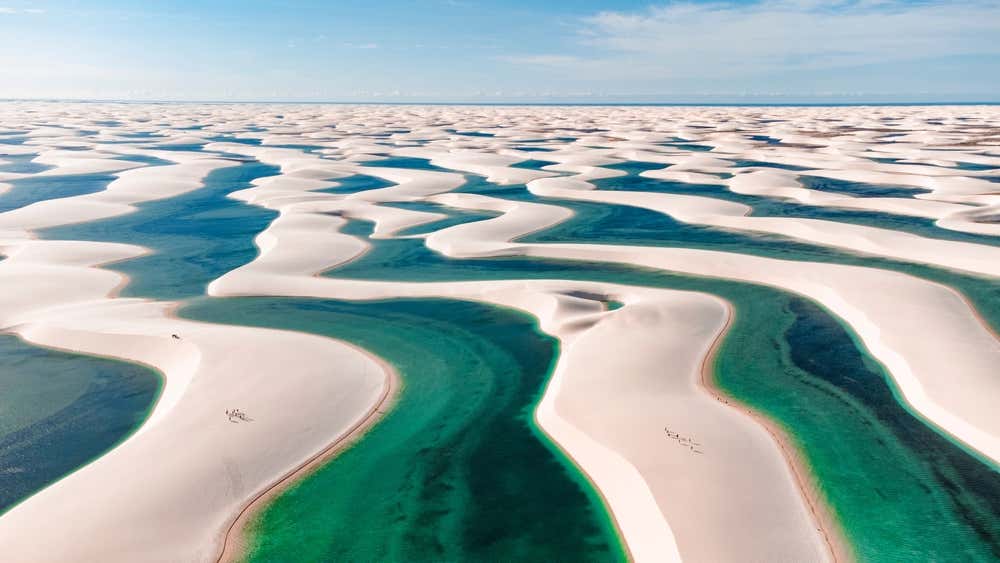
Timing is everything. The lagoons fill from around March and hold water through September, with July and August usually the peak. Come outside that window and you get dunes without the water. Most trips start from Barreirinhas, and the two-day hike from Barreirinhas to Atins walks you through the heart of the park. If you’d rather not walk it, the speedboat transfer between Barreirinhas and Atins covers the same ground in a fraction of the time. Everything else is listed under activities in Barreirinhas.
12. Salvador
Salvador was Brazil’s first capital, founded in 1549, and it remains the center of Afro-Brazilian culture. The historic Pelourinho district has been a UNESCO World Heritage Site since 1985, and its pastel baroque facades photograph beautifully, though the reason to come is what’s happening in the streets rather than on them.
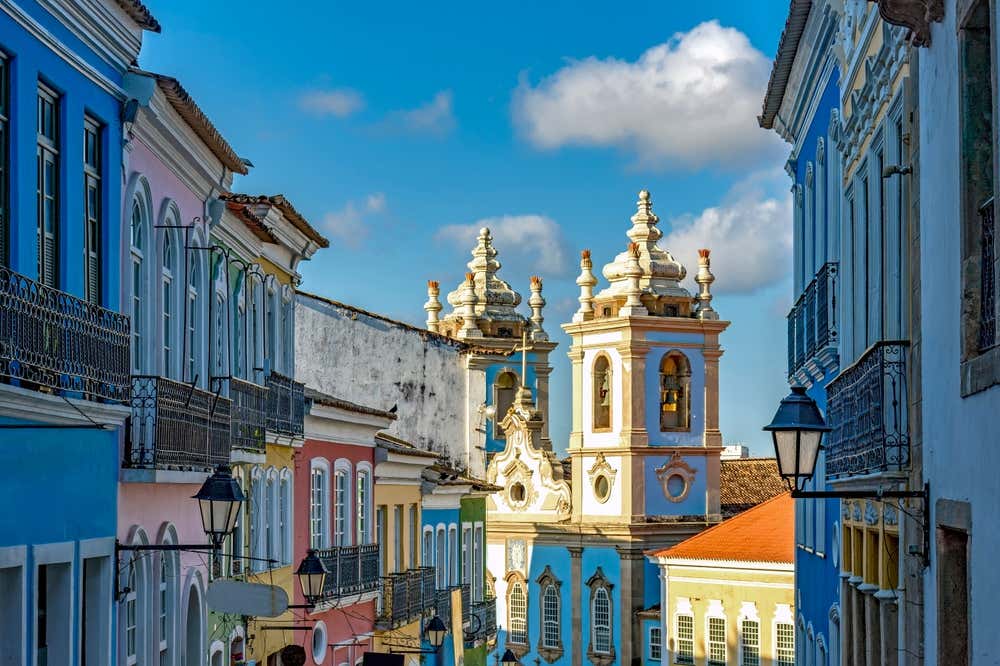
Capoeira circles form without announcement, percussion groups rehearse in public, and the food is its own argument for the trip. Try moqueca baiana, a fish stew built on coconut milk and palm oil, and acarajé from the baianas selling it at street stalls. The free walking tour of the historic center is the easiest introduction, while the Pelourinho African culture tour traces the history of slavery and liberation in the city.
Give Salvador three or four days, more if you want the coast. The day trip to Morro de São Paulo reaches an island with no cars and clear water, and there are further day trips from Salvador up the northern coast. September to March brings the reliable sun, and Carnival here is one of the largest street parties anywhere.
13. Recife and Olinda
Recife is built across islands and river channels, which earned it the nickname the Brazilian Venice, and the old center still shows the Dutch influence from a brief occupation in the 1600s. Six miles (ten kilometers) up the coast sits Olinda, a hilltop colonial town that has been a UNESCO World Heritage Site since 1982 and is really the reason most people come.
Olinda’s carnival is the counter-argument to Rio’s: no stadium, no tickets, just giant papier-mâché puppets carried through steep streets while everyone follows. The two cities work as a single trip and two days covers them. Check what’s on offer among the tours and excursions in Recife, most of which include Olinda.
How Long Do You Need in Brazil?
Two weeks lets you do three regions properly. A sensible first trip pairs Rio with Iguazu and then either the northeast for beaches or the Pantanal for wildlife. Trying to add the Amazon and Fernando de Noronha to the same two weeks means spending most of it in airports.
Domestic flights are the only realistic way to cover the distances, and internal legs are often cheaper booked as part of a multi-city itinerary than one at a time. Fares and schedules shift, so it’s worth confirming with the airline before you lock in your route.
Practical Details Before You Go
Visas. Citizens of the United States, Canada and Australia currently need an electronic visa to enter Brazil for tourism. Requirements change, so confirm your situation with the Brazilian embassy or consulate in your country before booking, and make sure your passport has a blank page for the entry stamp.
Seasons. Brazil sits mostly in the southern hemisphere, so summer runs December to March. That’s the right window for the southern beaches and Florianópolis, but the wrong one for the Pantanal and Brasília, where the dry season from May to September is better. The northeast stays warm year round.
Getting around cities. In the larger cities, book transport and tours through a licensed operator rather than arranging things on the street, and keep valuables out of sight in busy areas. Guided activities are a straightforward way to see more without managing the logistics yourself.
Brazil Trip Planner
Seasons and travel times above are general guidance rather than guarantees, since weather patterns shift from year to year. It’s worth checking a current forecast and confirming opening times with each site before you finalize your route.
Which Places to Visit in Brazil Should You Choose?
Brazil rewards the traveler who picks a few things and does them properly. The country is too big for a highlights reel, and the difference between a good trip and a rushed one usually comes down to how many flights you were willing to skip.
Whichever combination you settle on, book the things that need booking early. Fernando de Noronha caps its visitors, Carnival fills every room months ahead, and the Lençóis lagoons only exist for part of the year. When you’re ready to start filling in the days, browse the full range of tours and experiences across Brazil, or explore the best activities in English all over the world.


Most read of #South America
What is a Free Tour & How Much do They Cost?
16 October 202615 Bucket List Travel Experiences to Gift in 2026
14 October 2026What to Do in Athens: 11 ‘Musts’ in the Greek Capital
13 October 2026Top 11: What to Do in Belize in 2026
12 October 202611 Unmissable Day Trips from Rome (& How to Get There)
11 October 2026Top 12: What are the Best Things To Do in NYC With Kids? (2026)
10 October 2026Most read #United States

Iconic Food in Chicago: 17 Dishes You Have to Try
30 September 2026Best Time to Visit Hawaii: A Season-by-Season Guide
29 September 2026
NBA Game Tickets in New York: A Complete Guide
3 June 2026Top Fun Facts About New York
3 June 2026
The Ultimate 3-Day Boston Itinerary for First-Time Travelers
14 January 2026Top 11: Best Day Trips from Miami (2026)
10 January 2026The 12 Best Day Trips from Los Angeles (+ Travel Time)
22 November 2025Top 11: Things to Do in Las Vegas Besides Gambling
14 February 2025Top 10: Things to Do in Washington, DC
22 November 2024