What to See in San Luis Potosí, Mexico: 11 Highlights
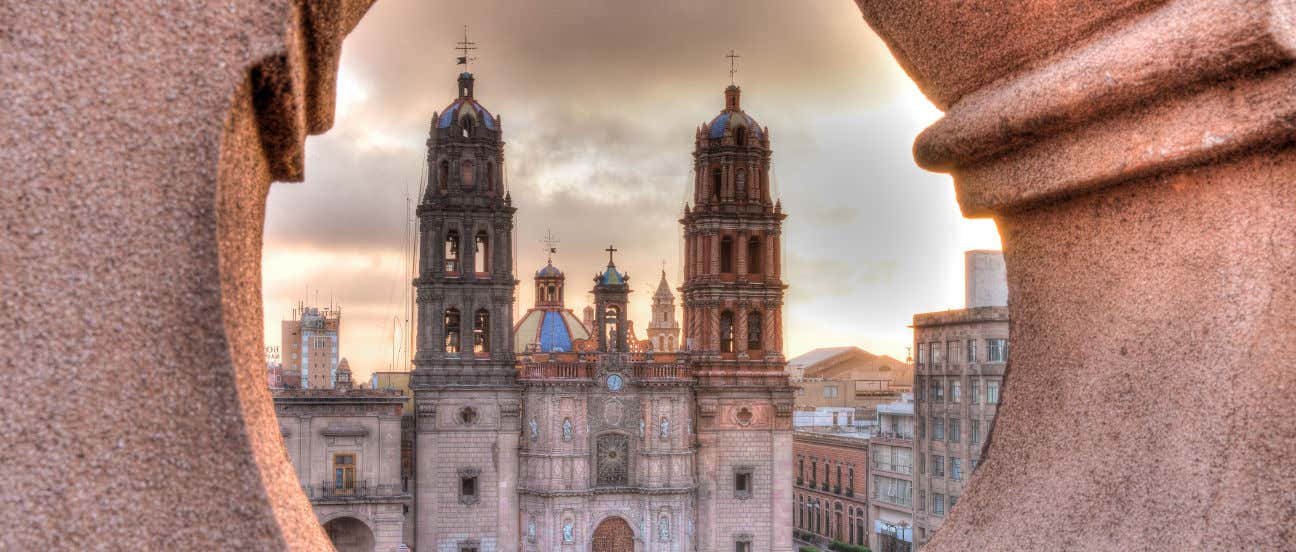

San Luis Potosí tends to sit in the shade of Mexico’s better-known colonial destinations, which is a shame, because its historic center holds some of the best-preserved baroque squares in the country. Add to that a ghost town out in the desert and some of the most photographed waterfalls in the Huasteca, all within reach of the city.
So what should you see in San Luis Potosí? The Plaza de Armas and its cathedral, the Templo del Carmen, and the Centro de las Artes are the essential stops in the historic center, while Real de Catorce and the Tamul waterfall are the day trips most sought out by anyone staying in the city for a few days.
¿Qué es lo más famoso de San Luis Potosí?
1. Plaza de Armas and the Metropolitan Cathedral
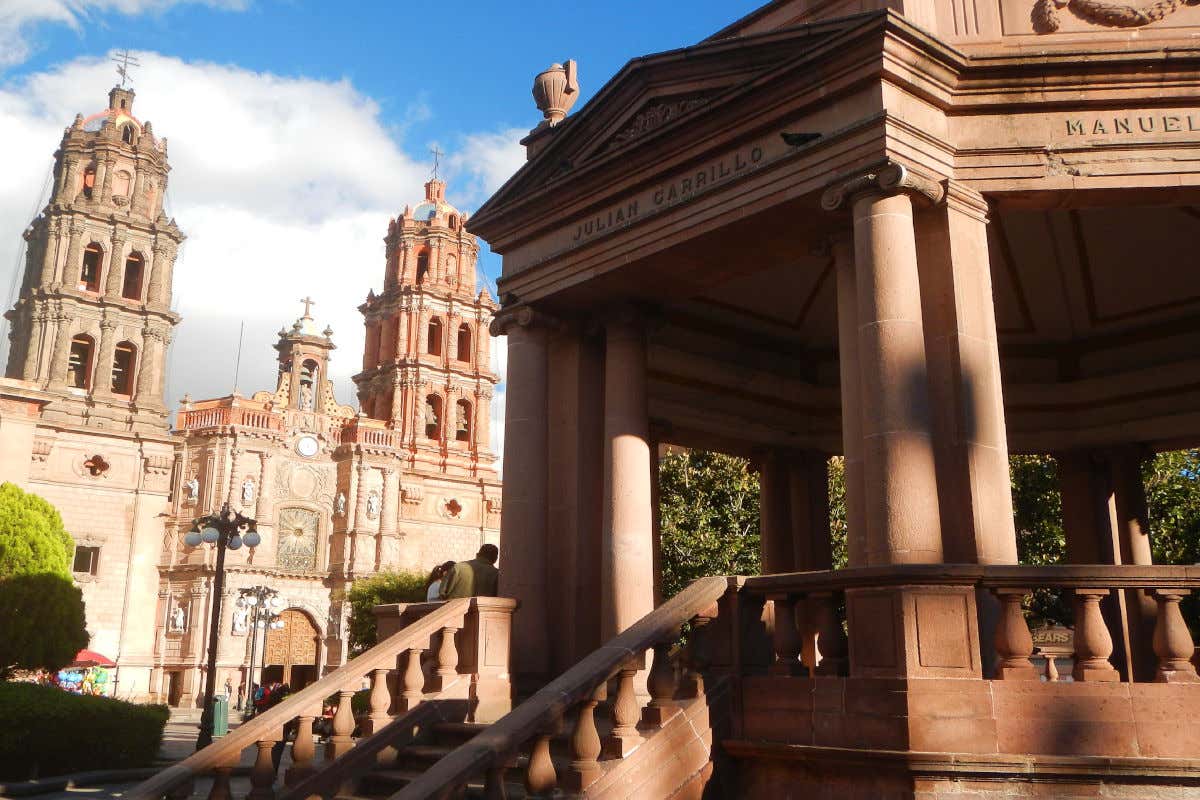
The Plaza de Armas is the heart of the historic center and the largest square in the Potosí capital. On one side stands the Metropolitan Cathedral, built between 1670 and 1730, with a baroque facade and an interior where twelve sculptures of the apostles, carved in Carrara marble, stand out.
Around the square you’ll also find the Palacio Municipal and the Palacio de Gobierno, along with an octagonal bandstand typical of Mexican plazas from this period. It makes a good starting point for any walk through the center. To get the full history, there’s no better way than joining a guided walking tour of San Luis Potosí.
2. Templo del Carmen and Teatro de la Paz
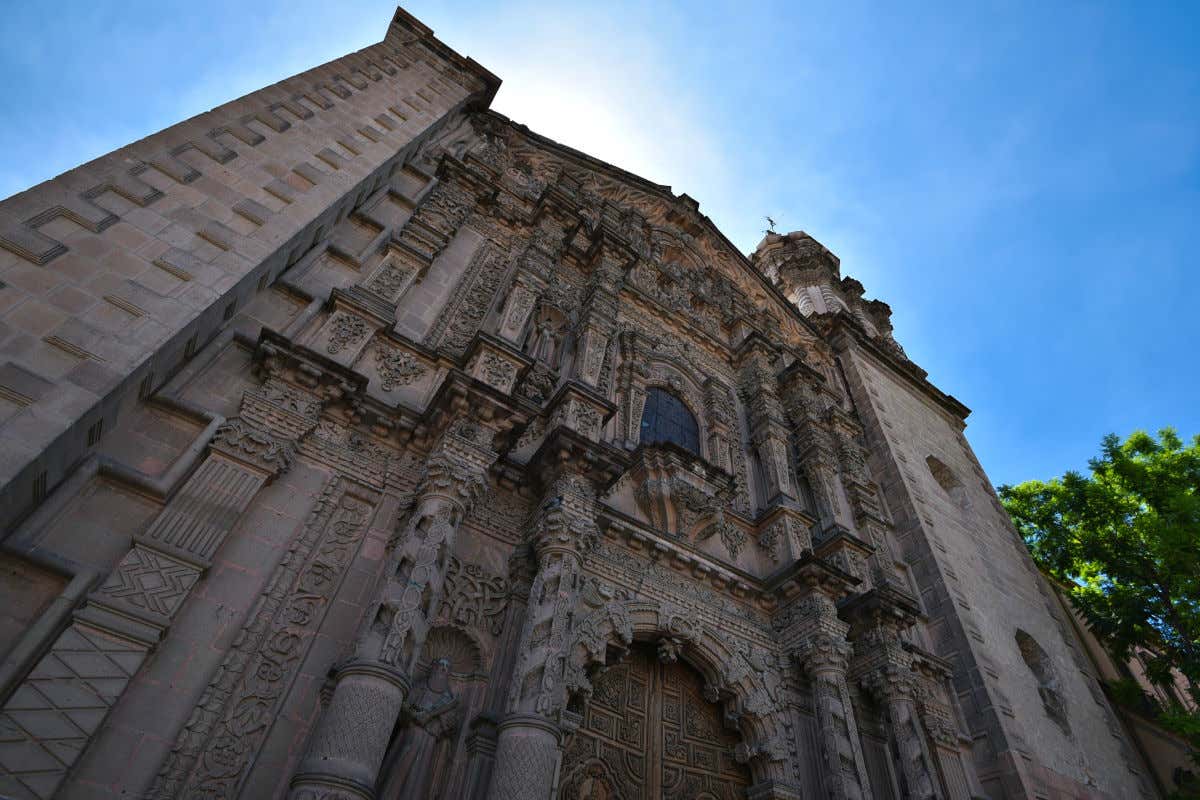
A few minutes on foot from the Plaza de Armas, the Templo del Carmen is, for many people, the most spectacular building in the city. Its Mexican baroque facade gives way to a churrigueresque altarpiece known as “Los Siete Príncipes,” one of the most elaborate in the historic center.
Directly opposite stands the Teatro de la Paz, a Porfirian building in neoclassical style with French influence that still hosts cultural performances. On the same square, the Museo Nacional de la Máscara holds one of the most complete collections of traditional masks in Mexico.
3. Centro de las Artes and the Leonora Carrington Museum
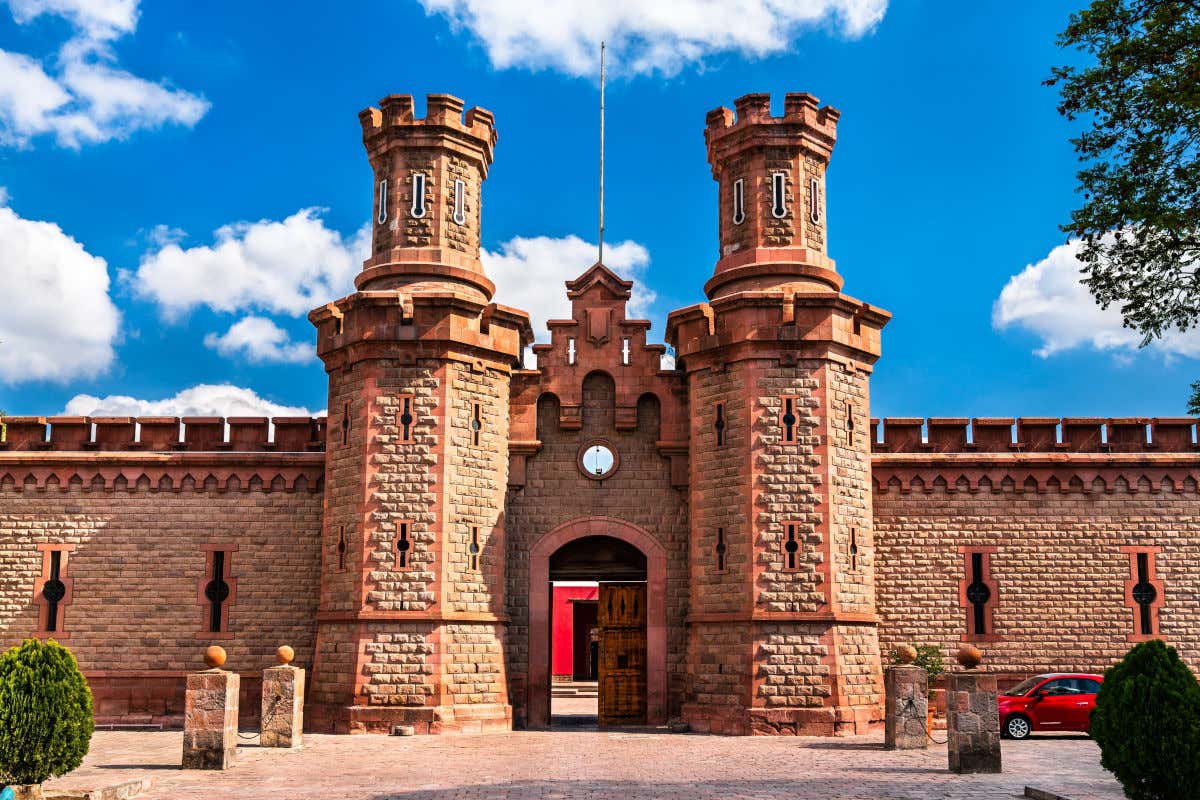
The Centro de las Artes occupies a 19th-century penitentiary converted into a cultural space, and it houses the Leonora Carrington Museum, dedicated to the work of the surrealist painter who spent much of her life in Mexico. Her sculptures and paintings sit alongside the building’s old prison corridors, which adds an extra layer of strangeness to the visit.
You can book the San Luis Potosí sightseeing tour to learn more about this museum, since it usually includes a stop at the Centro de las Artes. The route also tends to take in the Sanctuary Basilica of Our Lady of Guadalupe and the rest of the city’s main monuments, all in a single morning.
4. Plaza de San Francisco and Plaza de Aránzazu
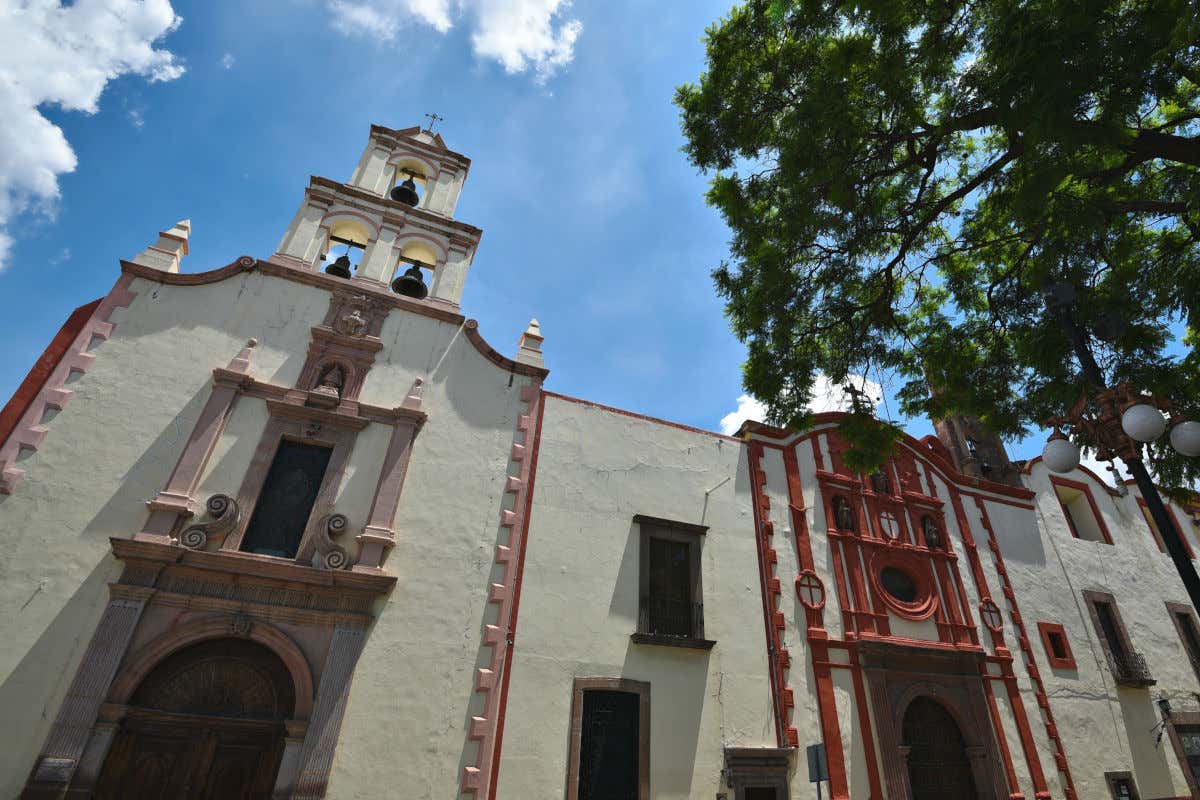
The Plaza de San Francisco brings together three churches in a single complex: the church of San Francisco, the Templo de la Tercera Orden, and the Templo del Sagrado Corazón. Sitting for a while by its fountain, among the gardens, is one of the calmest things you can do in the historic center.
Walking west brings you to the Plaza de Aránzazu, where the Museo Regional Potosino traces the history of the state from pre-Hispanic times through to the Mexican Revolution. Both squares are UNESCO World Heritage Sites as part of the Camino Real de Tierra Adentro, the same colonial trade route that gave rise to the city in 1592.
5. Parque Tangamanga I
If you need a break from the bustle of the historic center, Parque Tangamanga I is the largest green space in the city. It covers more than 1,000 acres (400 hectares) of trails, artificial lakes, and picnic areas. Entry is free, and it’s one of the things locals themselves like best about their weekends.
Inside the park you’ll also find a planetarium and a botanical garden, so if you’re traveling with children it can be a good way to combine nature and culture in the same afternoon.
6. Sendero del Capitán and Cerro de San Pedro
Cerro de San Pedro is, quite literally, the place where San Luis Potosí was born. This is where the gold and silver deposits were discovered that drew the first settlers here in the 16th century. Today it’s an almost abandoned village, with derelict mining buildings and wide views over the Potosí high plateau.
You can book the Sendero del Capitán hiking tour, which crosses Monte Caldera to reach Cerro de San Pedro and digs into the mining history that gave rise to the whole region.
7. Real de Catorce
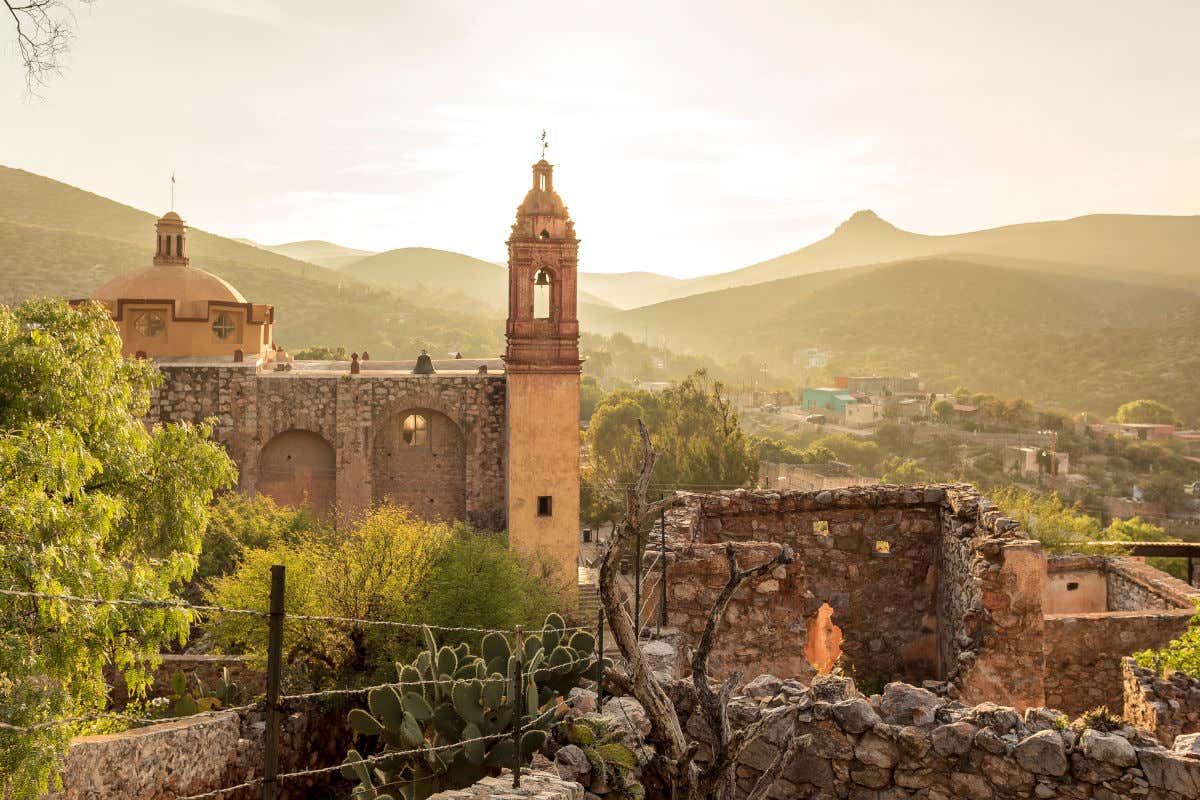
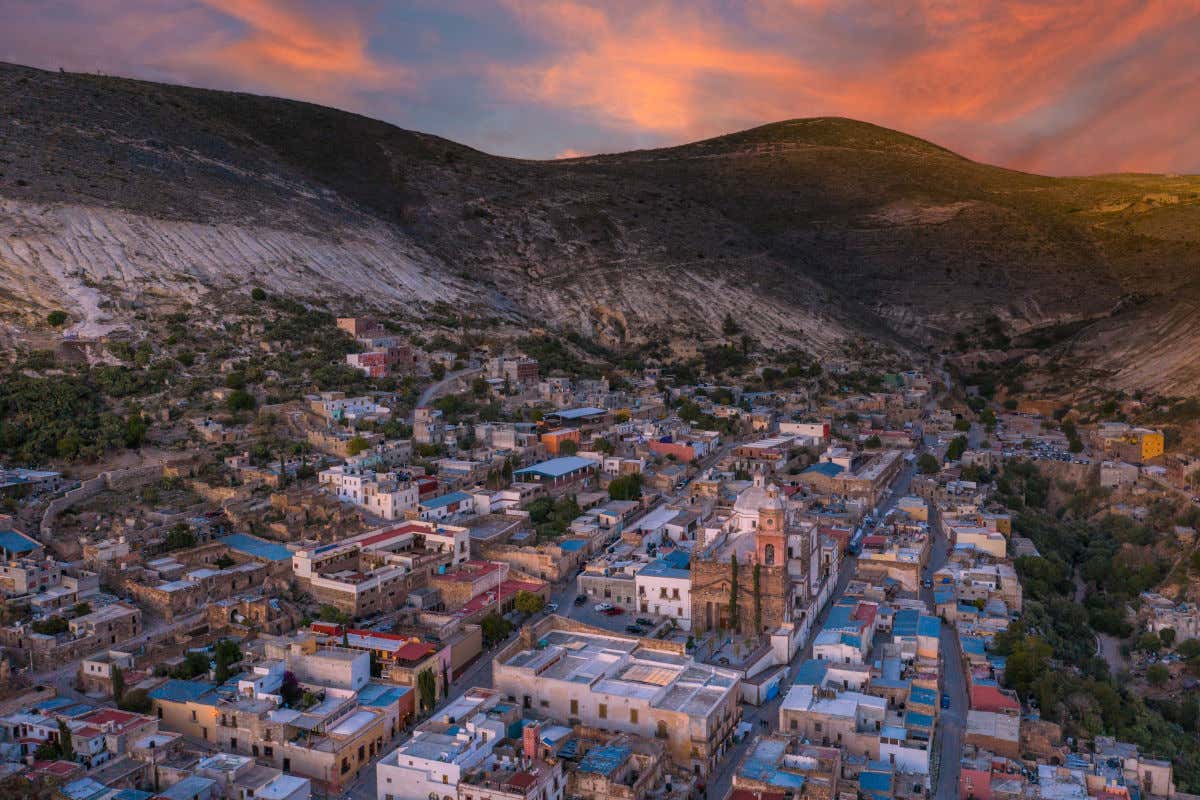
About three hours from the capital, Real de Catorce is one of the most photographed Pueblos Mágicos in Mexico. It was a prosperous mining town in the 18th century, but lost most of its population once silver stopped paying. Today it keeps that half-abandoned air, set among semi-desert mountains.
You reach it through the Ogarrio tunnel, dug by hand and running more than 1.2 miles (2 kilometers), which for decades was the only way into town. You can book the Real de Catorce day trip to see its cobbled streets, its church, and the cemetery without having to arrange transportation yourself.
8. Santa María del Río
Another of the state’s Pueblos Mágicos, Santa María del Río is the birthplace of the rebozo, the traditional Mexican shawl that has been woven by hand here for generations. The Casa del Rebozo, the only space in the world devoted entirely to this craft, explains its origins and the various weaving techniques through historic pieces.
You can book the Santa María del Río tour, which also visits the Franciscan church of La Asunción and leaves free time to buy crafts in the shops around the center.
9. Tamul Waterfall
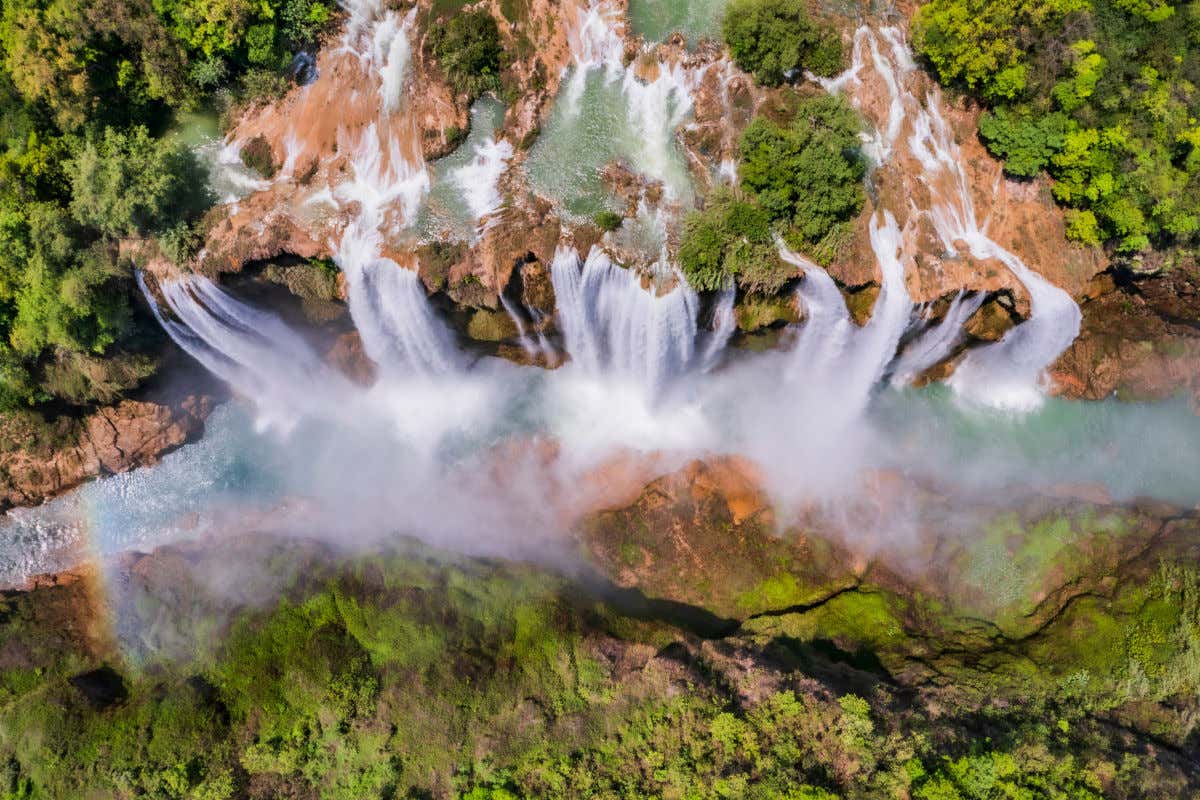
Out in the Huasteca Potosina, the Tamul waterfall is the largest in the state, with a drop of more than 330 feet (100 meters) where the Gallinas and Santa María rivers meet. The usual way to approach is by boat along the Tampaón River, passing first through the Cueva del Agua, a half-open grotto where the river runs straight out into the canyon.
You can book the Tamul waterfall and Cueva del Agua excursion, which includes the boat ride to the foot of the falls. Bear in mind it’s a long trip from the capital, so set aside the whole day for it.
10. Xilitla and Edward James’s Surrealist Garden
Xilitla is probably the most singular corner of the entire Huasteca Potosina. Here the eccentric British art collector Edward James built Las Pozas, a surrealist garden spread between natural pools and concrete sculptures that merge into the jungle, now an open-air museum.
Since it sits several hours from the capital, the most practical way to see it is on the 2-day tour of Xilitla and Tamasopo, which generally also takes in the waterfalls and the Puente de Dios in that second town.
11. Laguna de la Media Luna
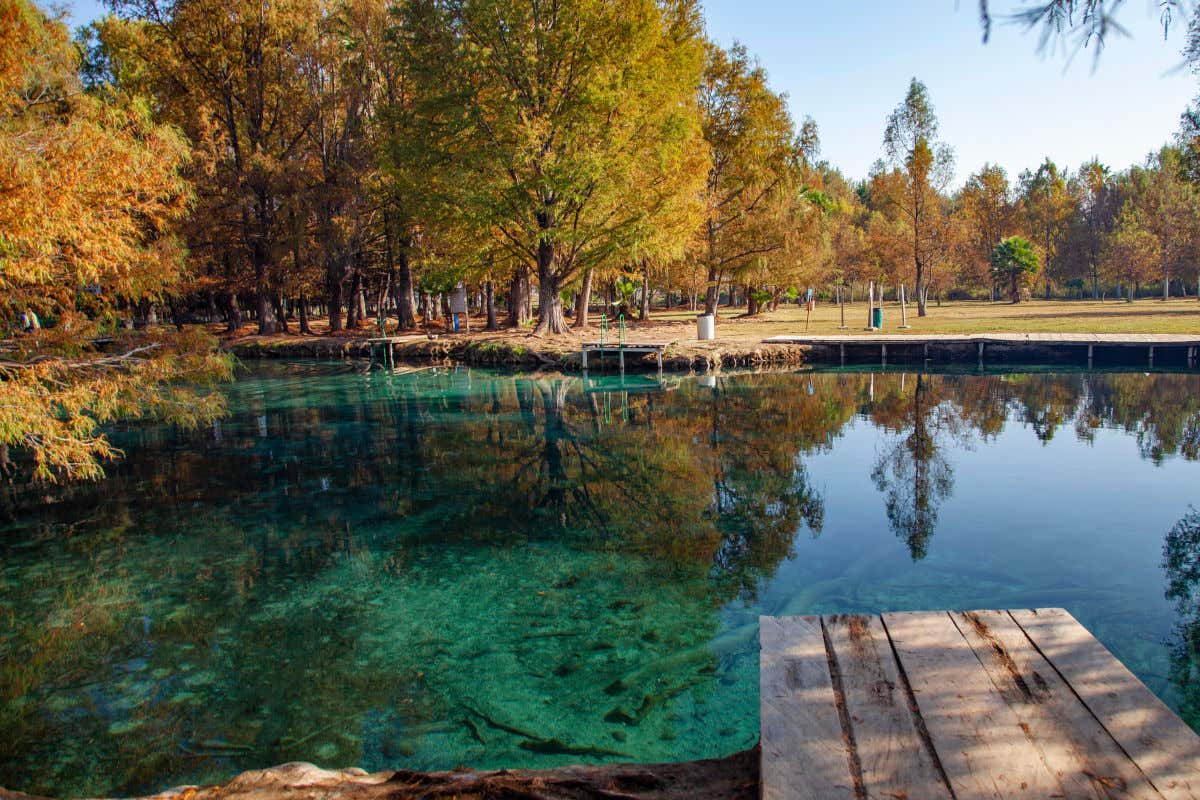
In the municipality of Río Verde, about two hours from the capital, the Laguna de la Media Luna is one of the most unusual freshwater diving spots in Mexico. Its clear karstic waters reach nearly 120 feet (37 meters) deep and hold mammoth fossil remains on the bottom, which is why outside Mexico it’s sometimes called Mammoth Lake.
You can book diving in the Laguna de la Media Luna whether you already have experience or want to try it for the first time, since visibility in the water tends to be excellent all year round.
How to Get to San Luis Potosí
San Luis Potosí airport connects with Mexico’s main cities and takes direct flights from a handful of US destinations. If you’re coming from Mexico City, Highway 57D links the two in around four and a half hours, which is the usual choice for anyone who’d rather drive.
Within the city, you can cover most of the historic center on foot, since the main squares are connected by pedestrian streets. For trips out to the Huasteca or the desert, booking an organized excursion is usually the most practical approach, given how far apart these areas sit. You’ll find the full range on the page for day trips from San Luis Potosí.
When to Visit San Luis Potosí
Spring and early fall are generally considered the best time to visit the city, since the weather is milder and rain is less frequent. Summer, by contrast, is the rainy season, which in the Huasteca Potosina means far fuller waterfalls, though also more humidity and the occasional road closed by high water.
If your priority is the historic center, any time of year works well, since temperatures on the Potosí plateau never reach the extremes you’ll find in other parts of Mexico.

Frequently Asked Questions About San Luis Potosí
What Are the Most Famous Places in San Luis Potosí?
Within the city, the Plaza de Armas, the Templo del Carmen, and the Centro de las Artes are the most important visits. If you have more than two days, Real de Catorce and the Tamul waterfall are the day trips that come up most often in the itineraries of people visiting the area.
How Many Days Do You Need in San Luis Potosí?
One full day is enough to cover the historic center at a comfortable pace. If you also want to see Real de Catorce or head into the Huasteca Potosina, add at least two or three more days, since those areas sit several hours from the capital.
What Is the Difference Between San Luis Potosí City and the Huasteca Potosina?
San Luis Potosí is the state capital, with a colonial historic center listed as a UNESCO World Heritage Site. The Huasteca Potosina is a separate region within the same state, several hours to the east, known for its waterfalls, rivers, and jungle, with Xilitla and Tamasopo as its main reference points.
San Luis Potosí gathers into a single state a quiet colonial capital, a ghost town out in the desert, and some of the most impressive waterfalls in the country. With a decent itinerary, you can combine the historic center with a run into the Huasteca without the trip ever feeling rushed. You’ll find everything on offer across the state of San Luis Potosí.
If you want to keep planning your route through Mexico, take a look at the full Civitatis catalog. It brings together the best activities in English all over the world, ready to book in a few minutes.


Most read of #North America
What to See in San Luis Potosí, Mexico: 11 Highlights
14 August 2026The 14 Best Museums in Mexico City, Aztecs to Chocolate
12 August 202615 Famous Landmarks in Mexico, from Maya Ruins to Canyons
12 August 2026The 14 Most Beautiful Places to Visit in Canada
11 August 202616 Best Things to Do in Querétaro, Mexico
10 August 2026Top 11: The Best Day Trips from Mexico City (2026)
5 August 2026Most read #North America
The 14 Best Museums in Mexico City, Aztecs to Chocolate
12 August 202615 Famous Landmarks in Mexico, from Maya Ruins to Canyons
12 August 2026The 14 Most Beautiful Places to Visit in Canada
11 August 202616 Best Things to Do in Querétaro, Mexico
10 August 2026
Things to Do in Los Cabos: 12 Unmissable Spots
4 August 2026
West Coast Road Trip: An 8-Day Itinerary
12 July 2026The 8 Best Day Trips from Philadelphia in 2026
1 July 2026Top 10: The Best Cities to Visit in Mexico (2026)
16 June 2026
NBA Game Tickets in New York: A Complete Guide
3 June 2026