
16 Best Things to Do in Querétaro, Mexico
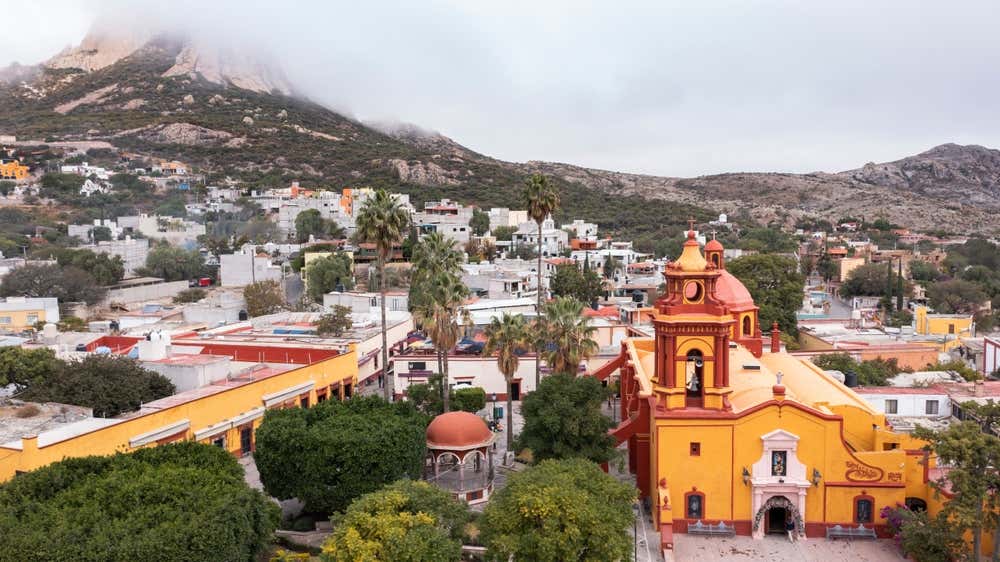

Querétaro sits about 135 miles (215 kilometers) northwest of Mexico City, close enough to reach in a morning. Most travelers coming this way carry on to San Miguel de Allende, so you’ll often have the plazas half to yourself. The old town packs around 1,400 protected monuments into two-thirds of a square mile, and you can walk across the whole of it in twenty minutes.
The best things to do in Querétaro sit inside its UNESCO-listed old town: a 74-arch colonial aqueduct, the baroque church of Santa Rosa de Viterbo, the convent where Emperor Maximilian was jailed, and the hill where he was shot. Wine country and mountain missions lie beyond.
You’ll find 16 of them below, weighted toward what you can walk to from the main square, with the day trips gathered at the end so you can plan around them. Give yourself time to sit down. The plazas here were built for it, and you’ll see plenty of locals doing exactly that.
The Best Things to Do in Querétaro
1. The Historic Center on Foot
Querétaro’s old town joined the UNESCO World Heritage list in 1996, and the street plan is a big part of why. The Spanish laid out a neat grid for themselves, while the Otomí, Tarasco, and Chichimeca quarters kept their older winding lanes. Walk five minutes from the cathedral in any direction, and you’ll cross from one into the other.
Almost everything here is built from cantera rosa, the local pink quarry stone, which warms to a deep rose in the late afternoon. The pedestrian streets, or andadores, run between them. On Andador 5 de Mayo and Andador Libertad you’ll find tables spilling outside after dark, and nobody will rush you through your coffee.
A guide will get you into a few courtyards you’d otherwise walk straight past. This guided tour of Santiago de Querétaro runs in English and takes you around the main squares and churches with the stories attached.
2. Los Arcos, the Colonial Aqueduct
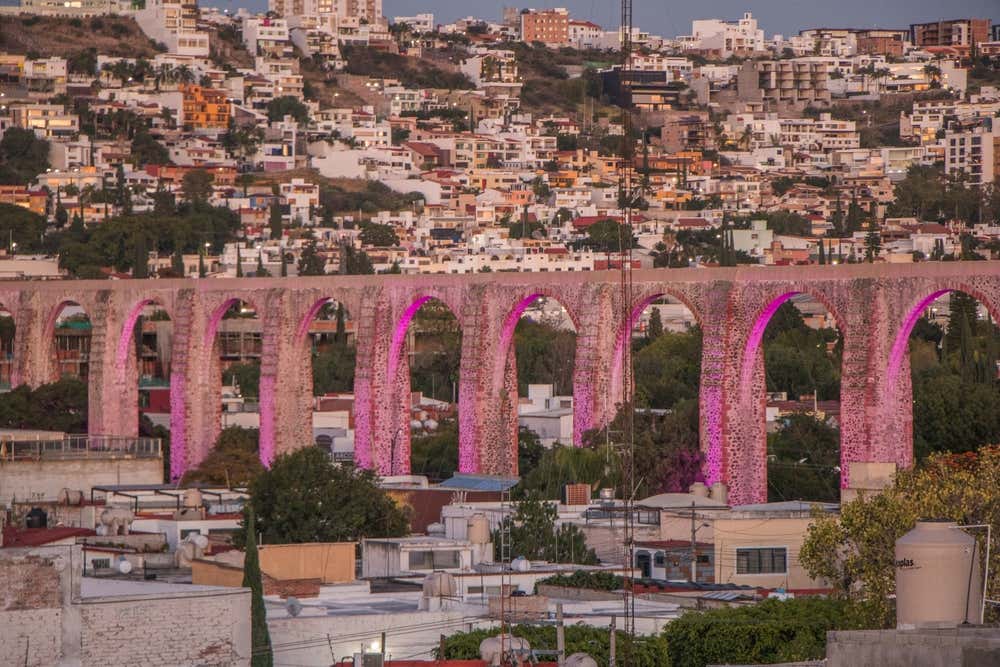
Seventy-four stone arches run for about 4,200 feet (1,280 meters) along the eastern edge of the city. Built between 1726 and 1738, the aqueduct brought spring water down from La Cañada to the fountains in the central plazas, and it kept doing that job for well over two hundred years.
The Marquis Juan Antonio de Urrutia y Arana paid for most of it. Locals will tell you he built it to impress a Capuchin nun he’d fallen for. The written records point to something more practical, since people were getting sick from bad water, but you’ll hear the romantic version far more often.
Head to the Mirador de los Arcos on Avenida Tecnológico about forty minutes before sunset and you’ll catch the arches glowing against the sky. To walk the full route, including the fountains and convents it fed, the Santiago de Querétaro Aqueduct Tour takes around four hours in English.
3. Plaza de Armas
Also called Plaza de la Independencia, this is where the city feels most like itself. Clipped laurel trees ring a central fountain topped with a statue of the same Marquis who funded the aqueduct, and the arcades around it hold cafés that stay busy from breakfast until late.
On the north side you’ll find the Casa de la Corregidora, once home to Josefa Ortiz de Domínguez. In 1810 she got word of the discovered independence plot out of a locked room and on to the rebels. The state government sits there now, and you can usually step into the courtyard for a look.
For a first lap that covers the square and the streets around it, the Santiago de Querétaro classic car tour takes under an hour and lets you choose your own route.
4. Templo y Convento de la Santa Cruz
This is where the city started. The convent stands on Sangremal hill, where the Spanish and the Chichimeca fought in 1531 and where, by tradition, the surrender that founded Querétaro took place. It later became the first missionary training college in the Americas, and friars who trained here walked as far as Texas and California.
In the garden you’ll find the Árbol de la Cruz, a tree whose thorns grow in the shape of small crosses, each with three finer spines that locals read as the nails of the crucifixion. The story credits Fray Antonio Margil, who is said to have pushed his walking stick into the ground here on his last visit.
Your guide will also show you the viceregal kitchen, the last arch of the aqueduct where the water arrived, and the plain cell that held Emperor Maximilian in 1867. Visits run in guided groups only, usually Tuesday through Sunday and mostly in Spanish, though the hours move with the religious calendar, so check before you go.
5. Cerro de las Campanas
On June 19, 1867, Maximilian of Habsburg was shot on this hill alongside generals Miguel Miramón and Tomás Mejía, which brought the Second Mexican Empire to an end. Édouard Manet painted the scene four times without ever setting foot in Mexico, and the paintings are worth looking up before you come.
A small chapel marks the exact spot, built by Emperor Franz Joseph for his brother. Further up the slope you’ll see a colossal statue of Benito Juárez looking down on it.
The rest of the hill is a free public park with shaded paths, a small museum, and the widest view over the city you’ll get anywhere. Come early and you’ll share it with locals out for a run.
6. Templo de Santa Rosa de Viterbo
Finished around 1752 and attributed to Ignacio Mariano de las Casas, this is the most inventive baroque church in a city that has plenty of them. Look at the exterior and you’ll notice the flying buttresses curl into scrolls instead of rising in straight lines, which you won’t find anywhere else in Mexico.
Look closely at the twin entrance arches and you’ll spot carved faces pulling mocking expressions. The story goes that de las Casas put them there for the skeptics who told him the building would never stand.
Inside, gilded retablos climb every available wall, and the wooden pulpit is inlaid with ivory and silver. Entry is free, though services take priority, so early morning or mid-afternoon will give you the quietest look.
7. Casa de la Zacatecana
A 17th-century townhouse turned museum, spread over two floors, thirteen rooms, and two patios. You’ll find furniture, mirrors, and paintings spanning the 17th to the 19th centuries, and the room full of antique clocks is worth the ticket on its own.
The house takes its name from a colonial legend about a woman from Zacatecas who is said to have had her husband murdered, then dealt with the assassin too. Skeletons were reportedly found under the floor during a later renovation, which is why you’ll still hear the story three hundred years on.
It usually opens Tuesday to Sunday from around 11 AM to 7 PM, though hours are subject to seasonal changes, so it’s worth confirming on the day. Give yourself an hour, and take the guided commentary if it’s offered.
8. Museo de Arte de Querétaro
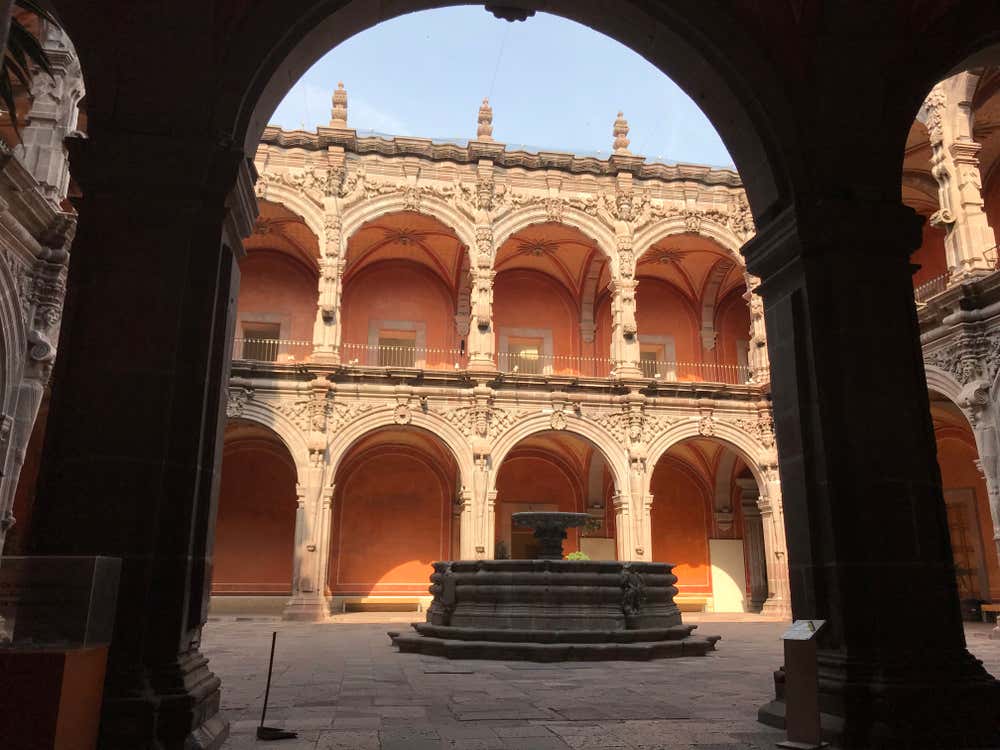
The art museum sits in the former Augustinian monastery, built from around 1731 and generally credited to the architect behind Santa Rosa de Viterbo. Plenty of people come for the building as much as the collection.
The two-story cloister is one of the most photographed spaces in Mexico, and once you’re standing in the courtyard you’ll see why. Every column, arch, and corbel carries carved figures, faces, and knotted cords, and no two are alike.
Inside you’ll find viceregal painting, 19th-century Mexican work, and rotating contemporary shows. Opening hours generally run Tuesday to Sunday, though it’s worth checking the current schedule before you plan a morning around it.
9. Jardín Zenea and Templo de San Francisco
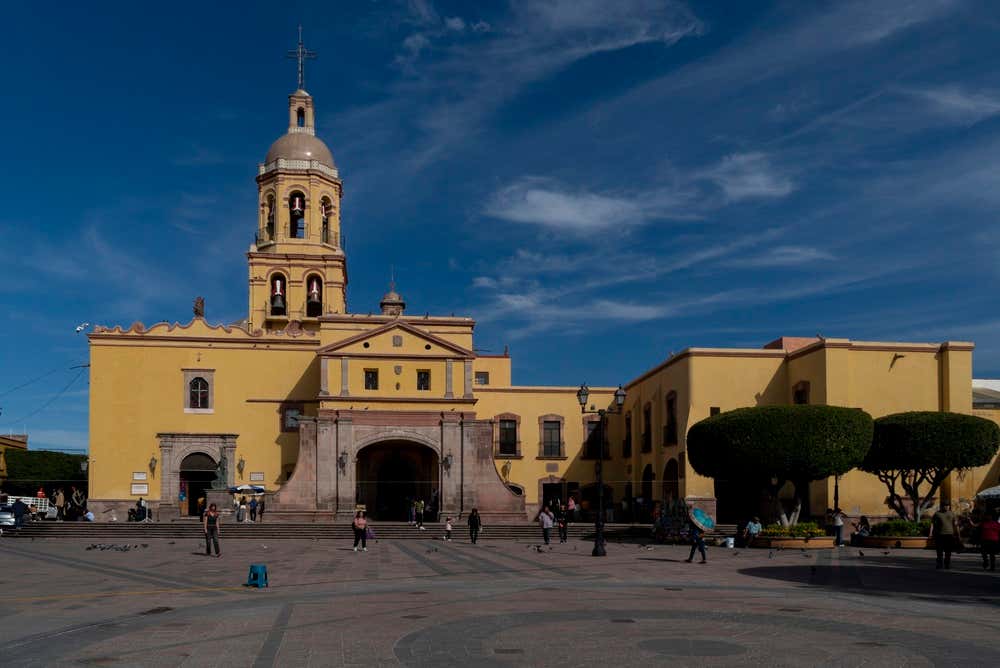
The city’s main garden, also called Jardín Obregón, was once the atrium of the Franciscan convent next door. It’s been a bullring, a market, and a hotel forecourt since then, and was restored as a garden in 1990. The bandstand at its center still hosts free concerts most weekends.
Facing it is the Templo de San Francisco, whose tiled dome you’ll recognize from every postcard of the city. The former convent attached to it now holds the Museo Regional, with sixteen rooms covering everything from pre-Hispanic Querétaro to the independence conspiracy.
This is also a good corner of town to get hungry in. The Querétaro food tour with entry to the Calendar Museum spends five hours on local dishes and craft traditions, and the museum it finishes at is far better than the name suggests.
10. Teatro de la República
A modest neoclassical theater, originally the Teatro Iturbide, that has hosted two of the heaviest moments in Mexican history. The war council that tried Maximilian sat here in 1867. Fifty years later, after two months of debate, the constitution that still governs Mexico was signed in this room in February 1917.
You can usually walk straight in and stand in the stalls, free of charge. A side room displays the delegates’ desks and portraits, and the auditorium is small enough that you’ll take it all in from the doorway.
If your legs have had enough of cobblestones by now, the Querétaro tram tour loops past the theater and the other central landmarks in an hour or two.
11. Barrio de Hércules
East of the center, past the aqueduct, you’ll find a neighborhood built around a 19th-century textile mill. Querétaro was an industrial city long before it was an aerospace one, and Hércules is where you can still see that: workers’ housing, a mill chapel, and the great brick shell of the factory.
The old buildings now hold a brewery, restaurants, and a plaza that fills up on weekend evenings. It’s rougher around the edges than the center, and a lot of visitors end up liking it best.
The same appetite for grand estates shaped the countryside around the city. The Querétaro haciendas tour visits three of them across a full day with an English-speaking guide.
12. Bernal and Its Monolith
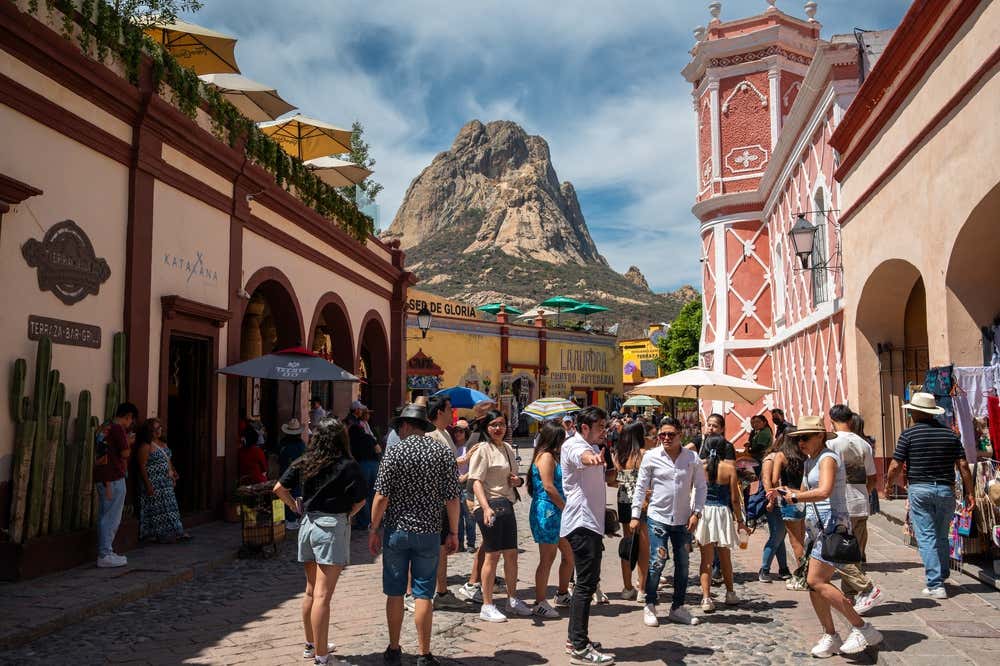
About 35 miles (56 kilometers) northeast of the city, a single dome of volcanic rock rises roughly 1,150 feet (350 meters) above the town of San Sebastián Bernal. Geologists date it to around 8.7 million years old, and it ranks among the tallest freestanding monoliths anywhere.
The Otomí-Chichimeca people have treated it as sacred for centuries. Every May a procession carries a heavy wooden cross up the slope to ask for rain, and in 2009 UNESCO added those traditions to its Intangible Cultural Heritage list. The rock itself is protected as a natural monument rather than a World Heritage Site.
A maintained trail will get you to the shoulder in about an hour, and the final vertical section needs climbing gear. Save the rest of your afternoon for the town below, where you’ll find wool weaving and gorditas de migajas on the plaza. The day trip to Amealco, Tequisquiapan, and Bernal covers three towns in a day if you’d rather not drive.
13. Querétaro Wine Country
Mexico’s second wine region spreads across the plains around Ezequiel Montes and Tequisquiapan, high enough that the grapes get cool nights and a long growing season. Sparkling wine is the local specialty, and several producers age it in cellars dug into the ground.
Freixenet’s Mexican estate runs tours through its underground cellars, and the surrounding Ruta del Queso y el Vino pairs vineyards with artisan cheesemakers turning out everything from fresh goat cheese to aged manchego-style wheels. Most estates open daily, though tasting slots fill up on weekends, so book ahead.
Since tasting and driving don’t mix, the Querétaro wine and cheese tour handles the logistics across a nine-hour day. Note that this one is guided in Spanish.
14. Tequisquiapan
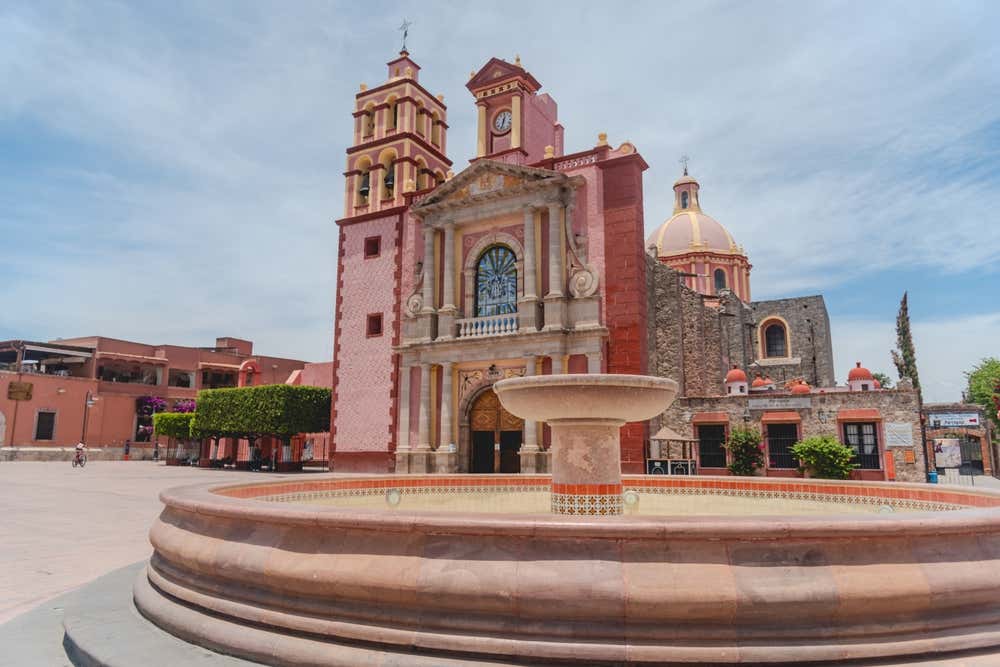
Around 45 miles (72 kilometers) southeast of the city, Tequisquiapan is the gentlest stop on this list, all whitewashed walls, bougainvillea, and a main square shaded by trees. You’ll navigate by the tower of San Juan Bautista, since it’s the tallest thing for miles.
The town made its name on thermal springs and still trades on crafts, especially wicker and basketry, which you’ll find in a market a block off the plaza. Opal has been mined in the hills nearby since the 19th century, and the local stones carry a distinctive fire.
To see where the opal comes from, the El Redentor mine day trip with a Viña TX vineyard visit takes you underground and then above ground for a tasting, over about ten hours.
15. The Sierra Gorda Missions
Three and a half to four hours northeast of the city, the semi-desert gives way to cloud forest and canyons in the Sierra Gorda Biosphere Reserve. Scattered through it you’ll find five Franciscan missions, built between 1750 and 1760 under Fray Junípero Serra before he went on to found the California missions.
UNESCO inscribed them together in 2003, mainly for the carving on the facades. Indigenous Pame craftsmen carved them, so Christian saints share the stonework with grapevines, jaguars, suns, and rabbits. Jalpan de Serra holds the mother mission, and Concá, Landa, Tilaco, and Tancoyol are spread through the mountains around it.
It’s a long day from Querétaro and a better two-day trip if you have the time. The Sierra Gorda tour from Santiago de Querétaro runs about eleven hours with hotel pickup in the historic center and a guide in English.
16. The Cuatro Palos Viewpoint
High above the town of Pinal de Amoles, a rocky ledge looks out over the folded ridges of the Sierra Gorda. On a good morning you’ll see cloud filling the valleys below with only the peaks showing through, which is what draws Mexican hikers up here.
The hamlet of Cuatro Palos itself is a handful of houses and a small chapel. A short scramble takes you up to the lookout, and the wind is cold up there even in spring, so bring an extra layer.
Getting here takes commitment, whether you drive the mountain road yourself or fold it into a longer itinerary. If that appeals, the full range of day trips from Santiago de Querétaro includes canyoning, quad routes, and archaeological sites in the same mountains.
How Long Do You Need in Querétaro?
Two full days will cover the historic center comfortably. Give the first to the plazas, San Francisco, and the art museum, and the second to Santa Rosa de Viterbo, the Convento de la Santa Cruz, the aqueduct at dusk, and Cerro de las Campanas.
Add a third day for Bernal and Tequisquiapan, and a fourth if the wine route or the Sierra Gorda appeals. Four nights suits a first visit well, and the city is small enough that you won’t lose any of it to transit.
If you’d rather learn the food than only eat it, the Mexican cooking class with a Mercado de la Cruz tour starts with the shopping and ends with a lunch you cooked yourself.
When to Visit Querétaro
October through May is the easiest stretch, with low rainfall and mild days for walking. The rains come between June and September, usually as a heavy burst late in the afternoon rather than a full gray day, so your mornings stay free.
The city sits at around 6,000 feet (1,830 meters), so you’ll get warm afternoons and genuinely cool evenings all year. Bring a jacket whatever month you come.
Two dates are worth building a trip around: the city’s founding anniversary on July 25, and the September festival of the Holy Cross, when conchero dancers fill the streets around the Santa Cruz convent. Exact dates shift a little year to year, so confirm with an official source before you book flights.
How to Get There
From Mexico City it’s about 135 miles (215 kilometers) and roughly three hours by road. Buses leave Terminal Norte throughout the day, and the executive-class services are comfortable enough that you can skip the rental car altogether.
Querétaro Intercontinental Airport (QRO) also takes direct flights from several US cities, including Houston, Dallas, and Chicago. It sits about 20 miles (32 kilometers) east of the center, and a private transfer in Santiago de Querétaro will get you door to door if you land late.
Plenty of travelers reach Querétaro as an overnight extension from the capital instead. The Civitatis guide to the best day trips from Mexico City covers the other options in that direction if you’re weighing them up.
Day Trips Compared
Drive times are approximate and assume you set off before the morning traffic. If independence history is your angle, the day trip to Dolores Hidalgo, Atotonilco, and San Miguel de Allende strings three of the key sites together in one day.
Plan Your Trip to Querétaro
Querétaro never had to reinvent itself for visitors. It kept working, kept building, and kept its old town intact along the way, so walking through it feels less like touring a monument and more like being let into somewhere ordinary and very old.
Give it four days and you’ll get a UNESCO city, a mountain range, and a wine region without moving hotels once. When you’re ready to fill in the rest of the route, the Civitatis roundup of the best cities to visit in Mexico is a good place to start, and the full range of tours and experiences across Mexico will cover the ground in between.
Wherever you head next, you can book guided walks, day trips, and tastings in advance through Civitatis’s full catalog of activities in English all over the world, and spend your first morning in the plaza instead of a ticket line.


Most read of #North America
Top 10: The Best Cities to Visit in Mexico (2026)
9 October 2026The 8 Best Day Trips from Philadelphia in 2026
8 October 2026Iconic Food in Chicago: 17 Dishes You Have to Try
30 September 2026Best Time to Visit Hawaii: A Season-by-Season Guide
29 September 202615 Best Things to Do in Mérida, Mexico
25 September 2026Cancun Beaches: The 9 Best Spots for Sun and Sand
25 September 2026Most read #North America
Top 10: The Best Cities to Visit in Mexico (2026)
9 October 2026The 8 Best Day Trips from Philadelphia in 2026
8 October 2026Iconic Food in Chicago: 17 Dishes You Have to Try
30 September 2026Best Time to Visit Hawaii: A Season-by-Season Guide
29 September 202615 Best Things to Do in Mérida, Mexico
25 September 2026
11 Pueblos Mágicos Near Mexico City Worth the Trip
23 September 2026Oaxaca Beaches: 10 Best Spots on the Pacific Coast
22 September 2026Best Time to Visit Tulum: Weather, Crowds and Sargassum
12 September 2026Cancún to Isla Mujeres: Ferry, Catamaran and Costs
11 September 2026
What to See in Jalisco in 2026: Lake Chapala, Tequila & More
31 August 202614 Best Places to Visit in Canada
28 August 2026What to See in San Luis Potosí, Mexico: 11 Highlights
14 August 2026The 10 Best Things to Do in Puerto Vallarta, Mexico
14 August 2026
15 Famous Landmarks in Mexico, from Maya Ruins to Canyons
12 August 2026The 14 Most Beautiful Places to Visit in Canada
11 August 202616 Best Things to Do in Querétaro, Mexico
10 August 2026Top 11: The Best Day Trips from Mexico City (2026)
5 August 2026