Traditional German Food: 11 Dishes to Try
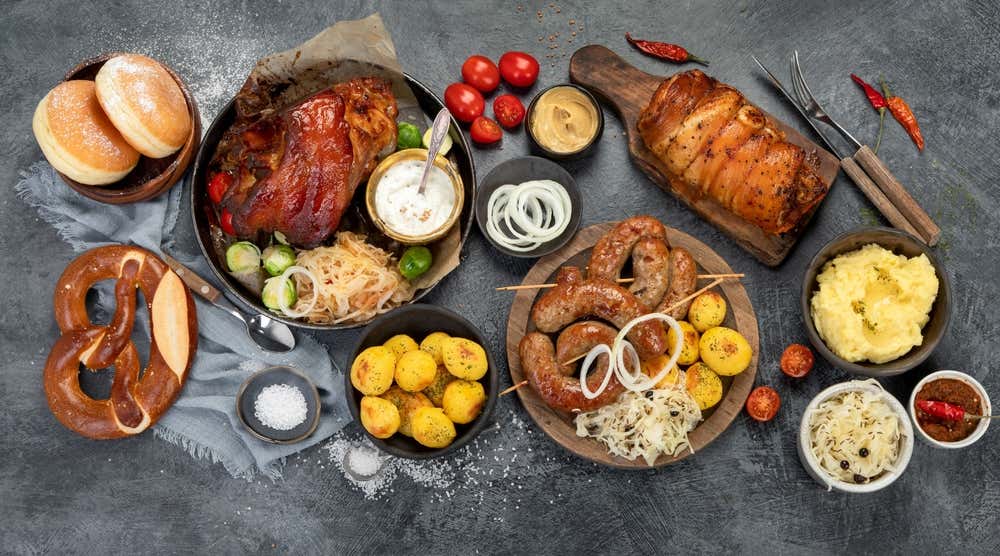

Around 1,500 different kinds of sausage are made in Germany. That figure alone explains a lot about the character of the cooking here: hearty, regional and backed by centuries of farmhouse tradition.
Traditional German food combines pork and beef, potato and cabbage sides, breads of every kind and spiced baking, served almost always with beer and in generous portions that shift from one region to the next, from the white sausage of Munich to the stuffed pasta of Swabia.
German cooking doesn’t stop at sausages and sauerkraut, though both hold a place of honor at the table. There are breads, stews, filled pastas and a Christmas baking tradition that deserves a chapter of its own. Hungry yet?
Traditional Food to Try in Germany
1. Bratwurst, Weisswurst and Frankfurter
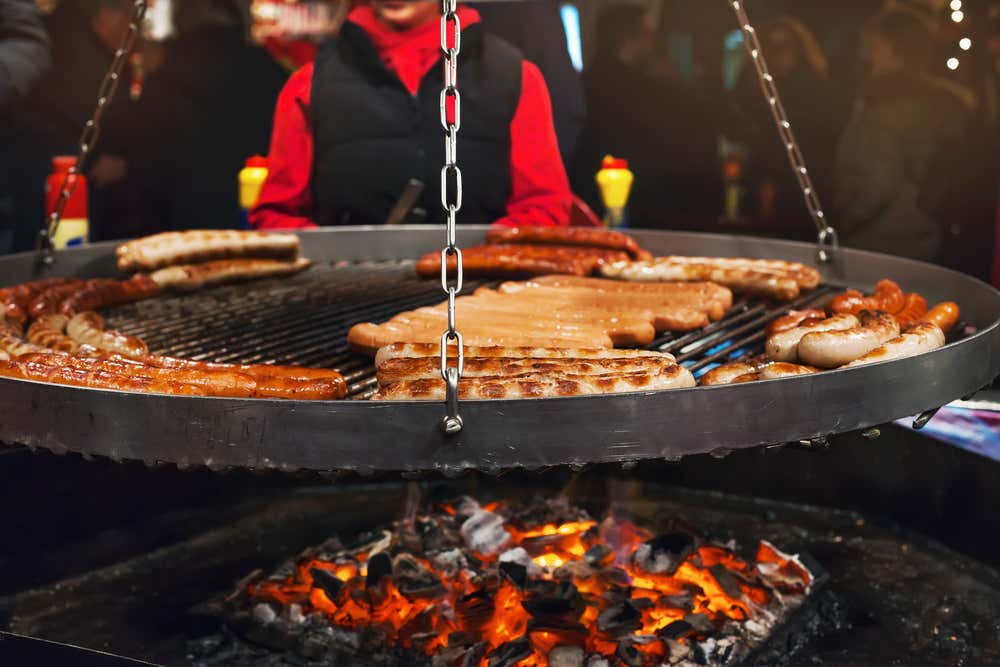
Sausage is the undisputed queen of German food. With 1,500 registered varieties across the country, picking just one would be unfair, but three turn up on almost every menu and you’ll find them in any city.
- Bratwurst: the most widespread. It’s made with ground pork and spices, grilled or fried, and served with mustard and bread, or alongside sauerkraut and mashed potato
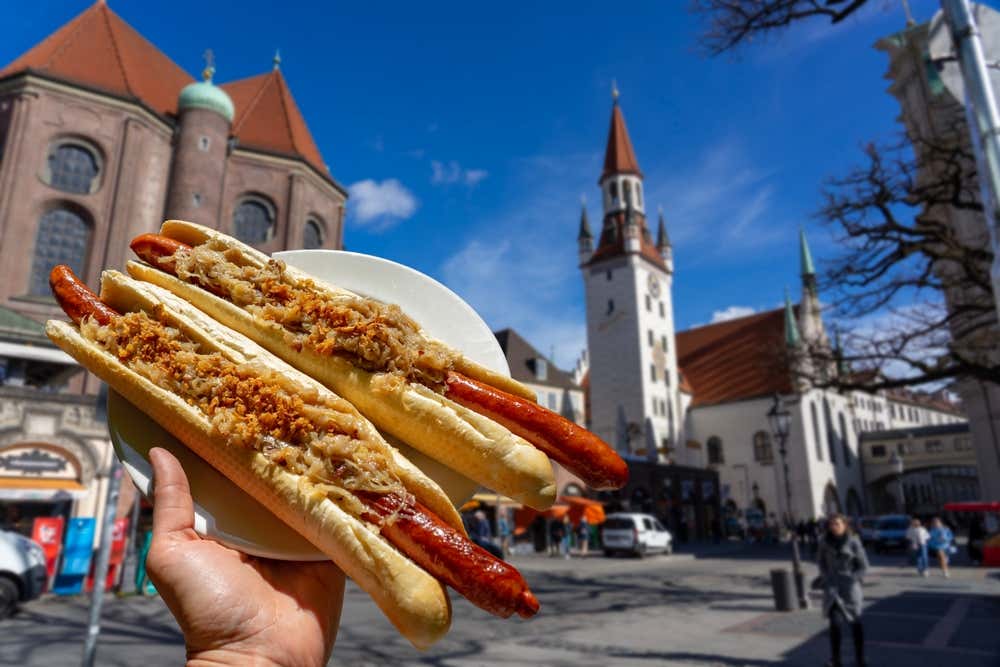
- Weisswurst: the white sausage is a Munich specialty. It’s made with veal and bacon, poached rather than grilled, and traditionally eaten only in the morning, before noon. You peel it before eating and pair it with sweet mustard and a brezel
- Frankfurter: long, smoked and mild, this is the German variety best known outside the country. The American hot dog descends directly from it, carried over by German immigrants who settled in the United States in the 19th century
2. Currywurst, the Sausage of Berlin
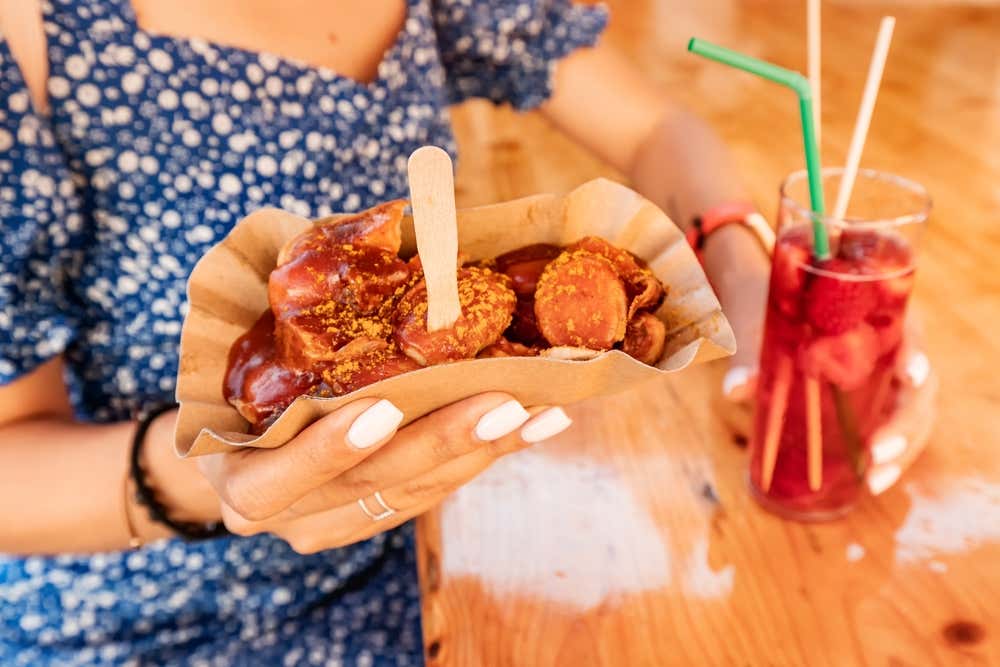
Few dishes in traditional German food have a history this specific. Herta Heuwer invented currywurst in 1949 at her stand in Charlottenburg, Berlin. She got hold of ketchup and curry powder from British soldiers, mixed them with other spices and poured the result over a grilled pork sausage. She patented her own sauce, called Chillup, in 1951.
At its peak, Heuwer’s stand sold 10,000 portions a week. Germany now gets through around 800 million currywurst a year, 70 million of them in Berlin alone. A commemorative plaque in the city remembers its creator, and the Deutsches Currywurst Museum devotes a whole space to this fast food classic.
To try one while you get to know the city, the free walking tour of Berlin covers the capital’s monuments, streets and squares, and puts you within reach of the food and beer along the way. For something built entirely around eating, book the Berlin food tour.
3. Brezel, the Knot-Shaped Bread
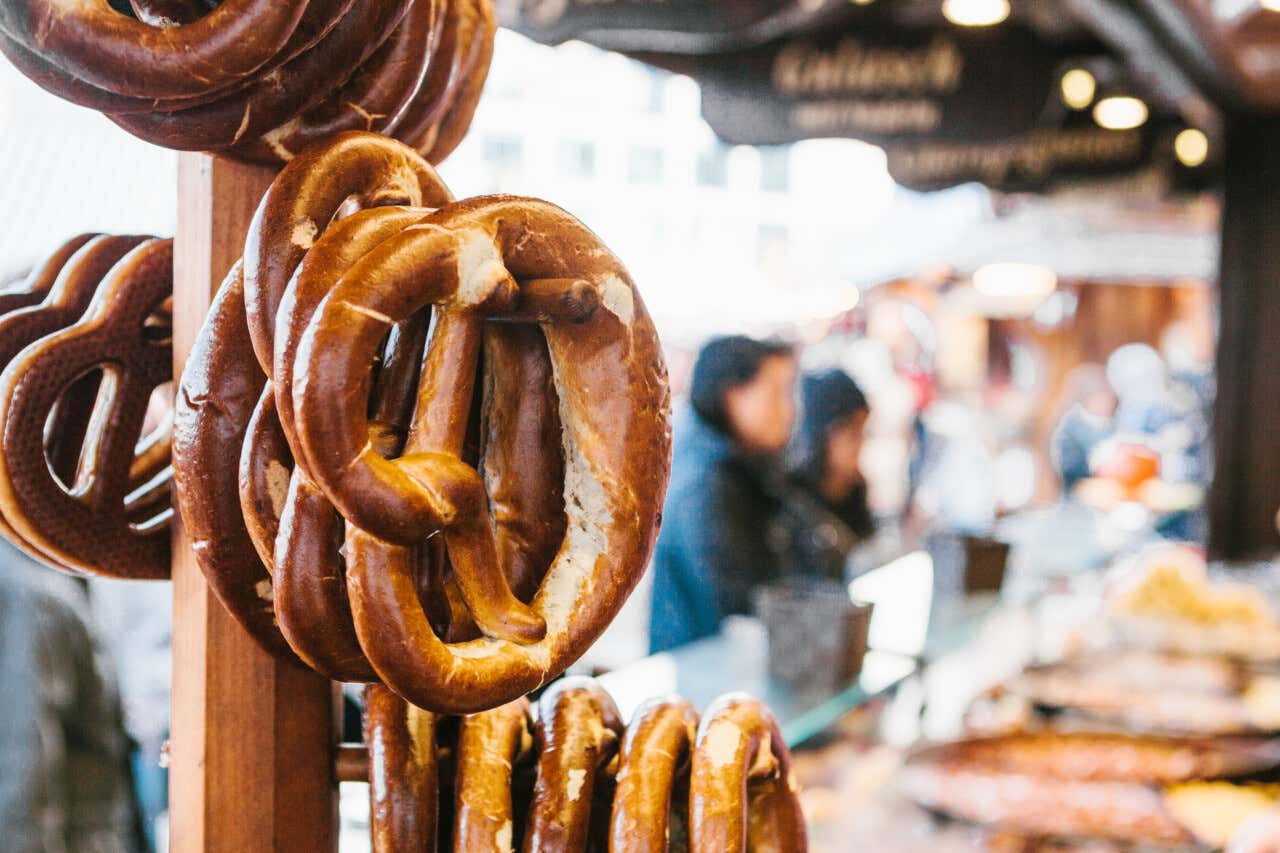
The brezel, or pretzel, is probably the most photographed symbol of German food, and with good reason. This knotted bread is baked after the dough passes through a solution of water and baking soda or food-grade lye, which gives it that glossy brown crust and its distinctive flavor. Soft and springy inside, crisp and salty outside. It’s a Bavarian specialty eaten since the Middle Ages, and today it’s sold in every bakery, train station and market in the country.
The most famous version is the Bayerische Brezel, big, with thick soft arms. In Munich, historic beer halls like the Hofbräuhaus serve it fresh from the oven alongside a stein of Münchner Hell, the pale lager the city is known for. If you take the free walking tour of Munich, it’s easy to pick one up from a stand near Marienplatz and eat as you walk. The route ends at the Hofbräuhaus, which is convenient.
4. Döner Kebab, the Berlin Invention
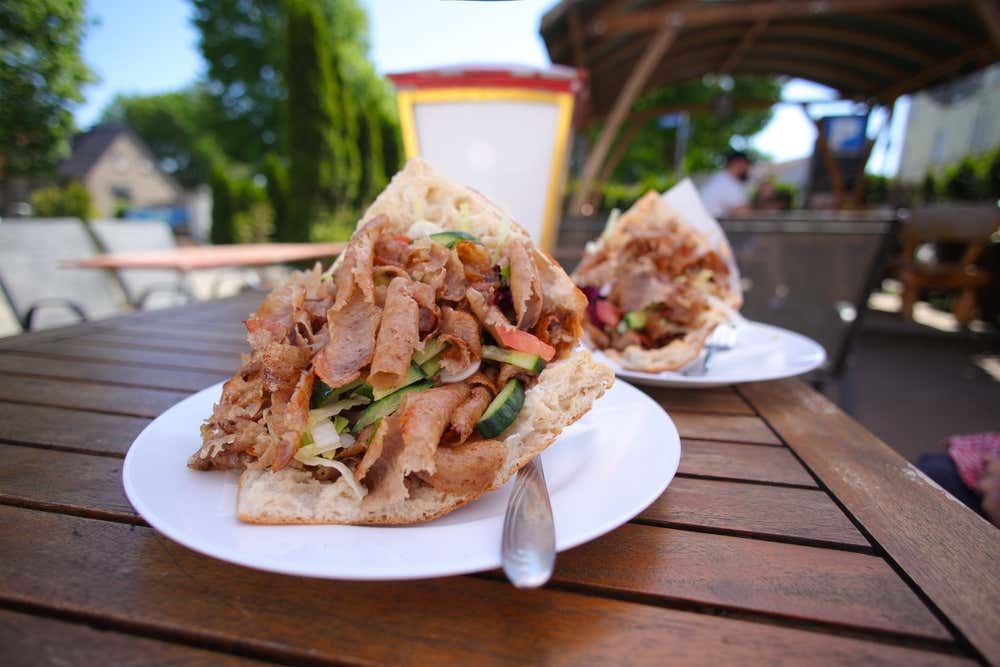
Plenty of people associate it with Turkey, but the döner kebab in its current form, bread stuffed with meat, salad and sauce, was born in West Berlin in 1972. Its creator was Kadir Nurman, a Turkish immigrant working near the zoo on Kurfürstendamm, who had the idea of putting the meat inside the bread so workers could eat on the move.
The dish went from Turkish workers’ food to one of the country’s culinary symbols. There are more than 16,000 kebab shops across Germany, and Berlin, with over 1,000 of them, is considered the döner capital of the world. The business is worth around €3.5 billion a year in Germany alone.
The alternative Berlin guided tour steps away from the tourist center and through neighborhoods where döner and other street food are easy to find, taking in the Kopi quarter, the Yaam market and the murals of the East Side Gallery.
5. Schnitzel, the Breaded Cutlet
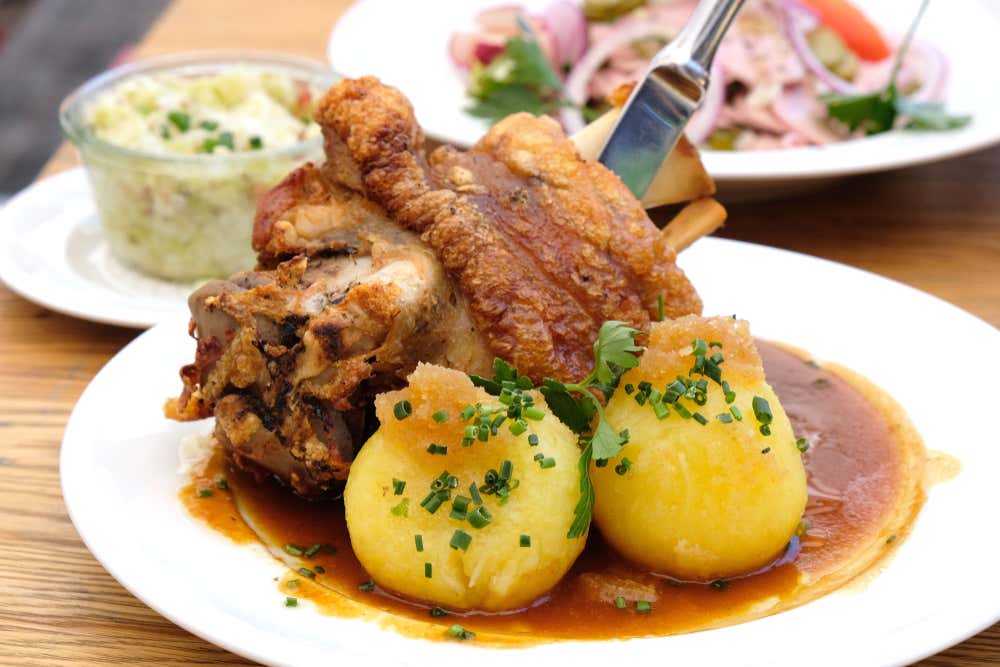
Schnitzel is Austrian by birth, from Vienna. But given how close the two countries are, it has belonged on any list of German food for generations. It’s a cutlet of veal, pork or chicken, breaded and fried, served with lemon, potatoes or potato salad. Hard to go wrong with.
You’ll find variations all over Germany: Jägerschnitzel comes with mushroom sauce, Rahmschnitzel with cream sauce. In Bavaria, don’t leave without trying Schweinshaxe, the pork knuckle roasted until the skin turns crisp.
6. Sauerbraten, the Roast Many Call the National Dish
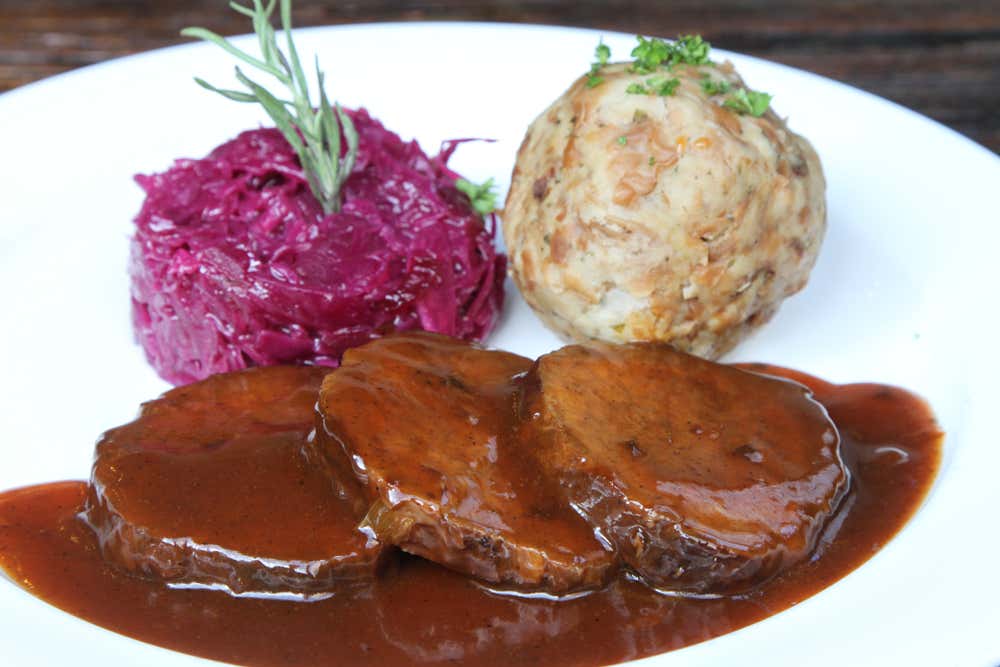
For a lot of Germans, sauerbraten is the national dish. Its origins go back to the Middle Ages, when meat was marinated in vinegar or wine for days to keep it longer. The technique survives today for the flavor rather than out of necessity.
The meat, usually beef, is marinated for three to ten days before it goes into a slow braise. It arrives with a thick sweet-and-sour sauce, alongside Knödel and red cabbage.
7. Kartoffelsalat and Sauerkraut, the Constant Sides
Sauerkraut is cabbage fermented in its own juice. Its origins aren’t German at all: the practice goes back to China, where cabbage was being fermented more than 2,000 years ago. The method reached Europe in the 16th century, and in Germany it became the fixed companion to sausages and meat.
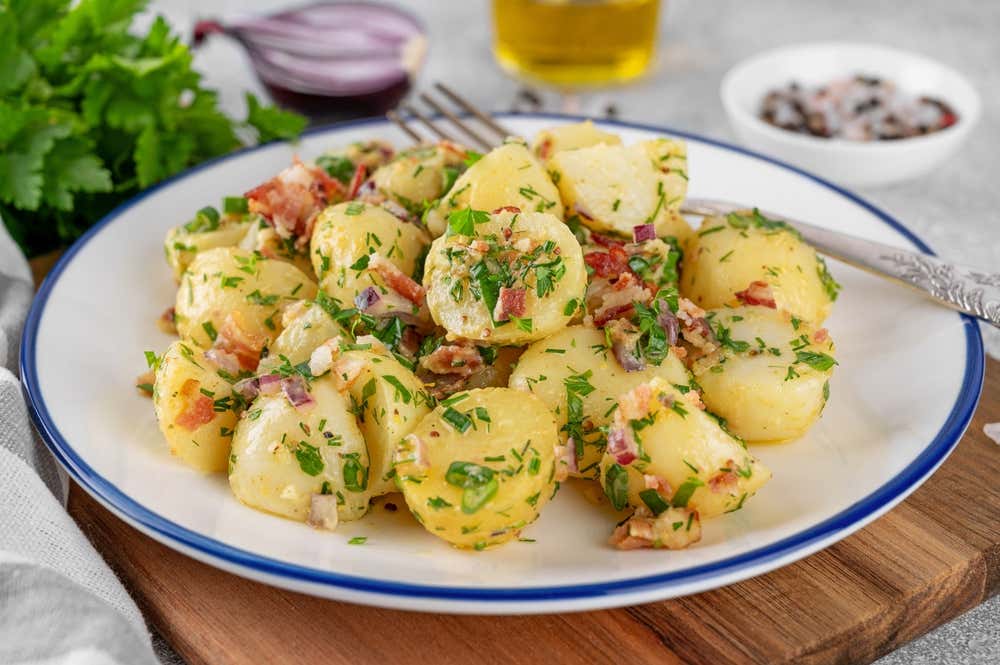
Potato salad, or Kartoffelsalat, has been eaten since the 18th century and changes by region. In the south it’s dressed with vinegar and oil and served warm; in the north you’re more likely to find it with mayonnaise. Neither version is more authentic than the other, just different.
8. Spätzle and Maultaschen, the Pasta of Southern Germany
In Swabia, in the southwest, pasta rules. Spätzle is an egg dough cut into irregular strips and boiled, served as a side or, with melted cheese over the top, as a main course under the name Käsespätzle.
Maultaschen is stranger still. These are large ravioli filled with ground meat, spinach and breadcrumbs, thought to have been invented by Cistercian monks at Maulbronn Abbey in the early 17th century. They filled them with meat during Lent, when it was forbidden, and hid it inside the dough so that God wouldn’t see. Hence the popular nickname: Herrgottsbescheißerle, roughly “little trick on the Lord.”
9. Knödel, the Dumplings That Round Out the Plate
Knödel is the German answer to the dumpling, though considerably bigger. It’s made with bread, potato, flour or semolina, and boiled until it’s soft and slightly sticky inside. It comes with roast meats, stews like sauerbraten, or soups, though there’s also a sweet version filled with fruit and dusted with sugar and cinnamon.
Bavaria is the best place to try Semmelknödel (bread-based) and Kartoffelknödel (potato-based), usually next to a local beer.
10. The Sweet Side: Lebkuchen, Stollen and Black Forest Cake
German baking is defined by spices and, above all, by Christmas.
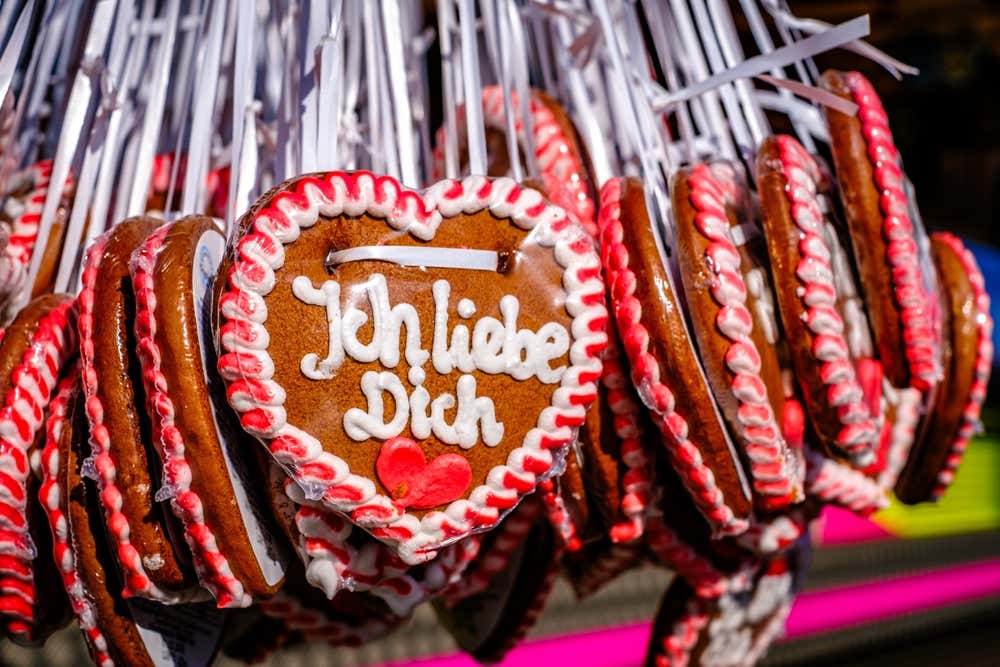
Lebkuchen
Originally from Nuremberg, it’s made with honey, nuts and spices like cinnamon, clove and nutmeg, usually finished with a glaze or a coat of chocolate. It’s one of the star products of the German Christmas markets, especially the Bavarian ones.
Stollen
Dresden’s stollen traces back to the Striezelmarkt, the oldest Christmas market in Germany, dating to 1434. It was already being baked in the 15th century, and by 1560 the city’s bakers were presenting the rulers of Saxony with loaves weighing up to 35 pounds (16 kilograms). Its long shape is said to echo the entrance to a mine, a nod to the region’s mining history. “Dresdner Christstollen” is now a protected designation of origin: only stollen baked in the Dresden area can carry the name.
Black Forest Cake (Schwarzwälder Kirschtorte)
Its exact origin is disputed, though the most cited recipe is credited to the pastry chef Josef Keller, of Café Ahrend in Bad Godesberg, and dates from 1915. It’s built from chocolate sponge, cream, cherries and Kirschwasser, the cherry liqueur from the Black Forest region that gives the cake its name.
11. Beer, Biergärten and Markets: Where to Try It All
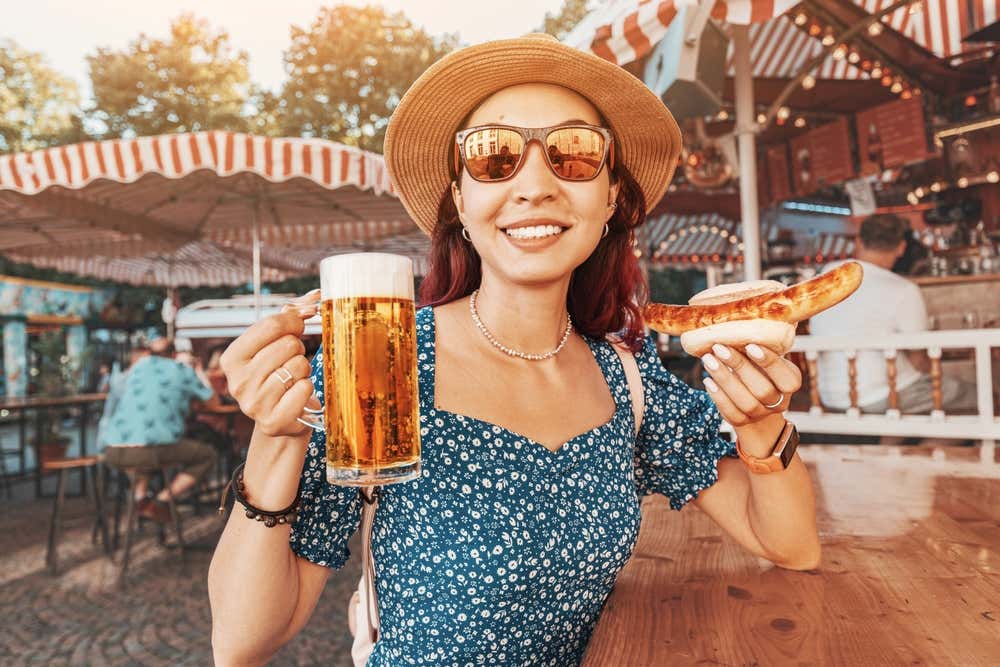
Beer accompanies almost every plate of traditional German food, and Munich is a good place to start understanding it. Oktoberfest, the largest folk festival in the world, began in 1810 and runs each year from mid-September to the first Sunday in October, though it’s worth confirming the exact dates before you travel since they shift slightly. Outside those weeks, the biergärten stay open all summer.
Traditional German food isn’t really explained by a list of dish names. You understand it sitting in a biergarten with a brezel and a beer, or standing at a currywurst stand in Berlin. Every region has its own version, from Bavarian Weisswurst to Swabian Maultaschen.
To get to grips with the brewing tradition without waiting for Oktoberfest, the Munich walking tour covers the city’s history from the late medieval period onward across two hours, taking in the locations that shaped it.
The Viktualienmarkt, Munich’s food market, is another compulsory stop: you can buy from the stalls and eat at the tables of its central biergarten. It sits a few minutes from Marienplatz, in the heart of the old town.
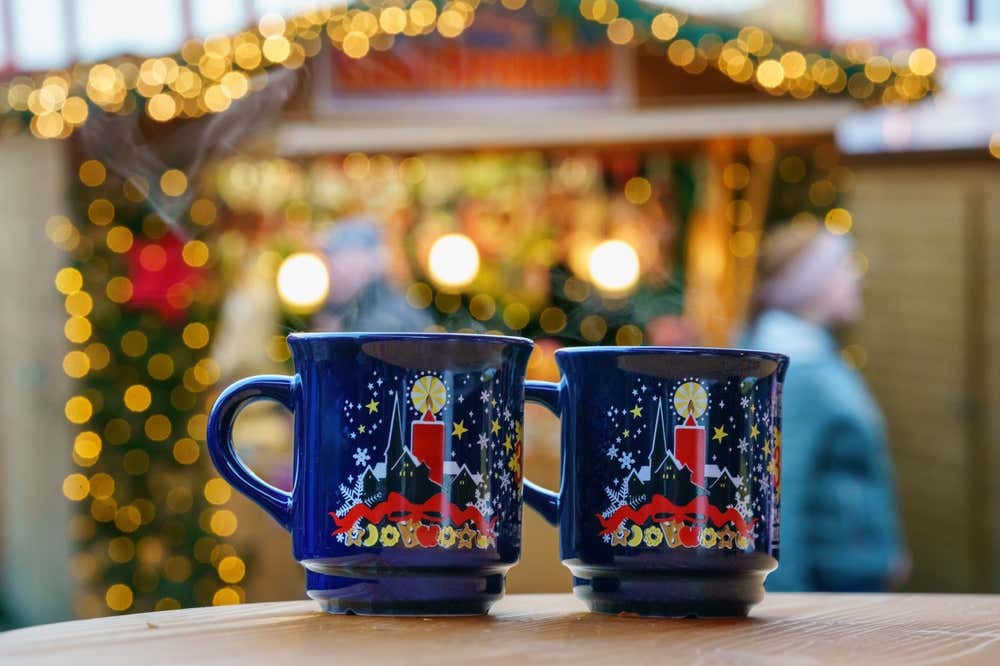
In December, the Christmas markets are the best way to try Lebkuchen, stollen and mulled wine (Glühwein) in one go. The Nuremberg market is among the most famous in the country, and from Munich you can reach it on a Nuremberg day trip lasting around 10 hours. If you’d rather go straight to the birthplace of stollen, Dresden has kept its Christmas market going since 1434.
Practical Tips Before You Sit Down to Eat
Germans tend to eat lunch between 12 PM and 2 PM, and dinner fairly early, between 6 PM and 8 PM. Restaurant hours vary by city and season, so it’s worth checking before you head out. Tipping isn’t obligatory but it’s appreciated: 5 to 10 percent, rounding up the total and saying the final figure out loud when you pay, rather than leaving money on the table.
With “Guten Appetit” before eating, “Zahlen, bitte” to ask for the check and “Prost” when you raise a glass, you have enough to get by in any Gasthaus or biergarten in the country.

Frequently Asked Questions
Is Food Expensive in Germany?
Street food like döner or currywurst usually costs little, though exact prices vary by city. Eating at a traditional restaurant with a meat dish and a beer comes out higher, but it’s still affordable compared with other Western European countries.
What Is Germany’s Most Popular Food?
In culinary terms, the most popular things in Germany are sausage in its many forms (Bratwurst, Currywurst, Weisswurst), the brezel and beer. Beyond the food itself, Oktoberfest and the Christmas markets are the traditions travelers associate most with the country.
What Is a Typical German Breakfast?
Usually light: Brötchen (bread rolls) with jam, cold cuts or cheese, sometimes with a boiled egg alongside. The heavy breakfast with sausages is saved for particular occasions, not everyday mornings.
What Are the Three Main Meals of the Day in Germany?
Frühstück (breakfast) and Abendessen or Abendbrot (dinner) tend to be cold, light meals of bread, cold cuts and cheese. Mittagessen (lunch) is traditionally the substantial meal of the day, though that habit has shifted in the larger cities.
If you want to plan the trip without leaving the eating to chance, Civitatis’s full catalog brings together tours and day trips across the country, many with stops to try these dishes where they belong. And if your next destination isn’t Germany, you’ll also find the best activities in English all over the world.


Most read of #More of Europe
What is a Free Tour & How Much do They Cost?
16 October 202615 Bucket List Travel Experiences to Gift in 2026
14 October 2026What to Do in Athens: 11 ‘Musts’ in the Greek Capital
13 October 2026Top 11: What to Do in Belize in 2026
12 October 202611 Unmissable Day Trips from Rome (& How to Get There)
11 October 2026Top 12: What are the Best Things To Do in NYC With Kids? (2026)
10 October 2026Most read #United States

Iconic Food in Chicago: 17 Dishes You Have to Try
30 September 2026Best Time to Visit Hawaii: A Season-by-Season Guide
29 September 2026
NBA Game Tickets in New York: A Complete Guide
3 June 2026Top Fun Facts About New York
3 June 2026
The Ultimate 3-Day Boston Itinerary for First-Time Travelers
14 January 2026Top 11: Best Day Trips from Miami (2026)
10 January 2026The 12 Best Day Trips from Los Angeles (+ Travel Time)
22 November 2025Top 11: Things to Do in Las Vegas Besides Gambling
14 February 2025Top 10: Things to Do in Washington, DC
22 November 2024