
What to See in Jalisco in 2026: Lake Chapala, Tequila & More

Jalisco is the state that most of the world pictures when it pictures Mexico. Mariachi, tequila, and charrería all started here, and all three are still very much alive rather than staged for visitors. The state runs from the highlands around Guadalajara down to the Pacific, which means you can spend a morning in an agave field and an afternoon in the ocean.
Jalisco packs a lot into one state. You can tour agave distilleries in Tequila, climb circular pyramids at Guachimontones, browse craft workshops in Tlaquepaque, sail Lake Chapala, and swim off Puerto Vallarta. Guadalajara makes the easiest base, with most highlights within a two-hour drive.
What follows is a run through the places that earn a spot on a first trip, with rough travel times so you can slot them into a real itinerary. If you want to see the full range of guided tours and day trips across Jalisco, that catalog is a useful place to start planning.
What to Do in Jalisco 2026
Jalisco at a Glance
Travel times are approximate and assume driving. Road conditions and traffic around Guadalajara vary a lot by time of day, so it’s worth checking before you set off.
Guadalajara’s Historic Center
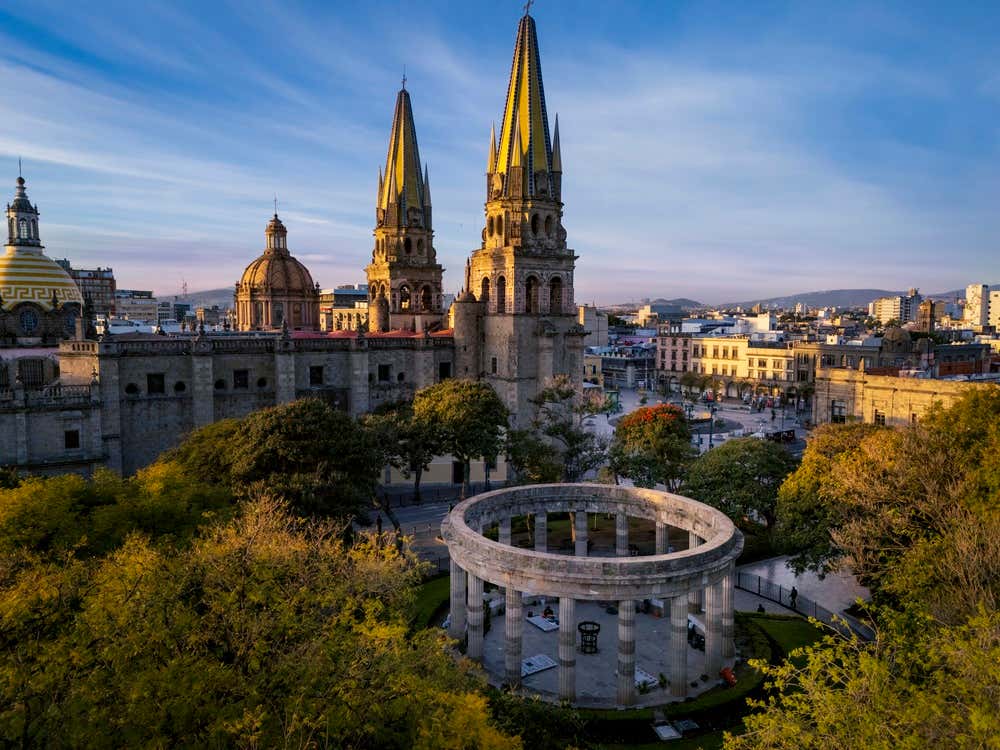
The old town of Guadalajara is arranged around four plazas that frame the cathedral, and you can walk the whole thing in a morning. The Hospicio Cabañas is the piece most people remember. It’s a UNESCO World Heritage Site, and its chapel ceiling holds José Clemente Orozco’s mural cycle, including the swirling figure known as The Man of Fire. Lying on the benches underneath it is the standard way to look at it.
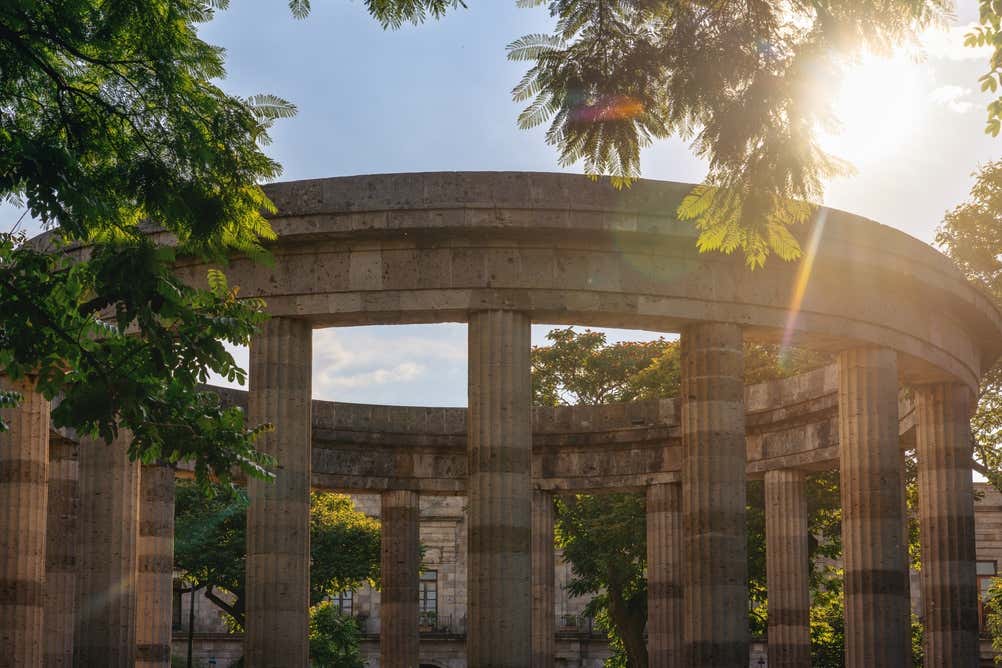
The Degollado Theatre and the Rotonda de los Jaliscienses Ilustres sit within a few minutes’ walk, and the Mercado San Juan de Dios is a short stroll east. A free walking tour of Guadalajara’s old town covers the main squares with a local guide, or you can go deeper into the painting with a dedicated tour of the city’s Orozco murals.
If you’d rather see the center lit up, the city looks noticeably different after dark. A night tour of Guadalajara with dinner included takes in the illuminated monuments, and there’s also a tour of the city’s mysteries and legends if you like your history with a bit of ghost story attached. Both run in the evening, so they pair well with a daytime visit.
Tequila and the Agave Landscape
Tequila is a real town, not just a drink, and it sits about 40 miles (65 kilometers) northwest of Guadalajara. The surrounding Agave Landscape and Ancient Industrial Facilities of Tequila was inscribed as a UNESCO World Heritage Site in 2006, which is why the blue-gray fields on the drive in look so uniform. Harvesting is still done by hand by jimadores using a flat blade called a coa.
La Rojeña, in the middle of town, is the oldest working distillery in Latin America and the home of José Cuervo. You can visit it on a day trip to Tequila with a La Rojeña distillery tour, or arrive in style aboard the José Cuervo Express train with a mariachi show. The train version runs around eleven hours door to door, so treat it as a full day rather than a side trip.
Smaller producers are worth your time too. Tickets to the Casa Sauza distillery get you into another of the town’s founding names, while a private tour of the La Fortaleza distillery shows the old stone-wheel method still in use. For something slower, horseback riding through the agave fields at Rancho Don Jacinto puts you out among the plants themselves. Tastings are part of nearly every option, so plan your driving accordingly.
Guachimontones Archaeological Site
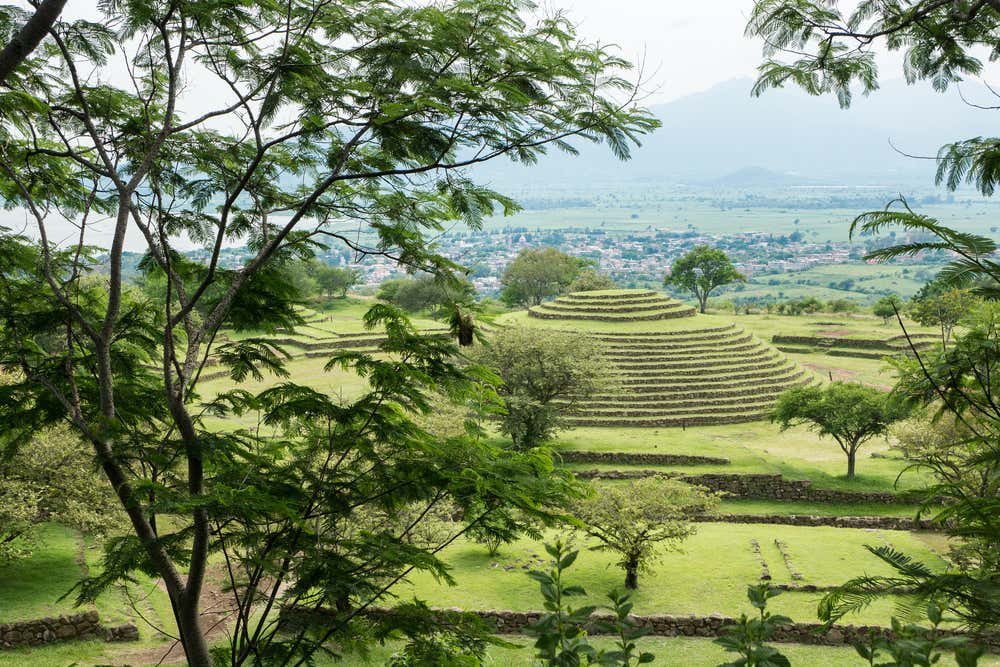
Guachimontones, near the town of Teuchitlán, is the most surprising thing in Jalisco for most visitors. Instead of the square stepped pyramids you see elsewhere in Mexico, these structures are circular, built as concentric rings around a central pillar. They belong to the Teuchitlán tradition, a culture that flourished in western Mexico while Teotihuacan was at its height, and nothing quite like them exists in the rest of the country.
The site includes the Phil Weigand Interpretive Center, named for the archaeologist who spent decades arguing the mounds were significant rather than natural. It sits about an hour west of Guadalajara. A day trip to Guachimontones with museum entry covers the transport and the context, and there’s a combined Guachimontones and Tequila day trip if you want to pair the two. Bring a hat, since the site is open ground with very little shade.
Lake Chapala and Ajijic
Lake Chapala is the largest freshwater lake in Mexico, covering roughly 420 square miles (1,100 square kilometers) along Jalisco’s southern edge. The climate on its north shore is famously steady, which is how the village of Ajijic came to host one of the biggest communities of North American retirees anywhere in the country. That mix shows up in the cafés, the galleries, and the bilingual signage.
Ajijic itself is worth an unhurried walk for the painted murals along its side streets and the malecón looking out over the water. It’s about 45 minutes from Guadalajara. An Ajijic and Lake Chapala tour with a boat trip combines the village with time on the lake. For something odder, a trip to Mezcala Island and its abandoned fortress visits a former prison that held insurgents during the war of independence.
The lake shore also has thermal water. An excursion to the San Juan Cosalá thermal pools makes a good half day if you’ve been walking a lot. The springs run warm year-round, so this one works even in the cooler months.
Tlaquepaque and Tonalá
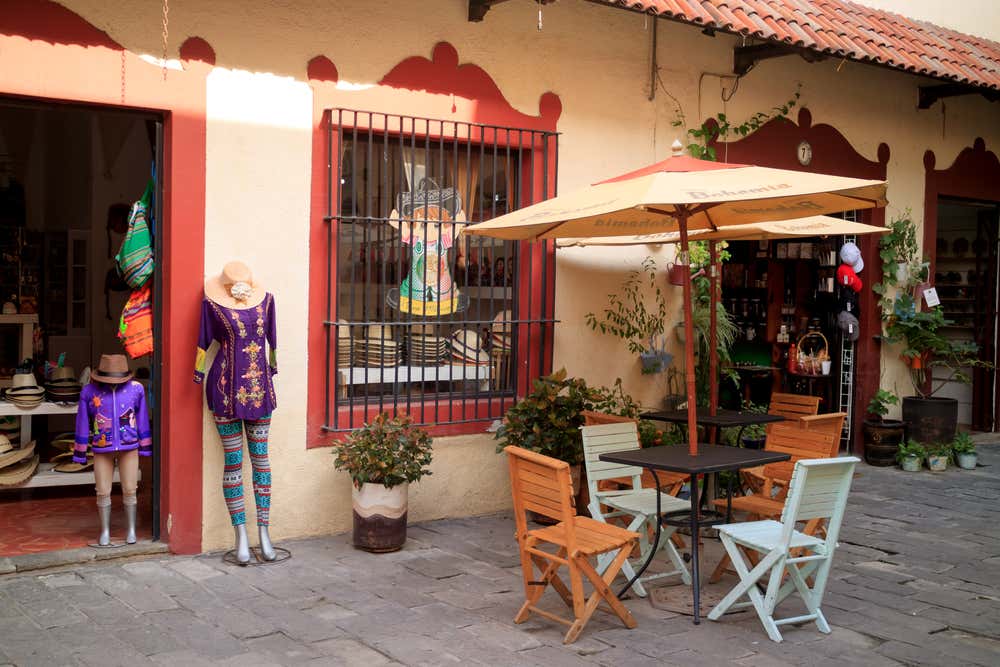
These two towns have been absorbed into greater Guadalajara but keep their own character entirely. San Pedro Tlaquepaque is a Pueblo Mágico, and its pedestrian core is lined with ceramic workshops, glassblowers, and courtyards that open off the street into shaded patios. El Parián, a ring of cantinas around a central bandstand, is where mariachi groups play through the afternoon.
Tonalá, a few miles further out, is the working end of the same craft tradition. Its Thursday and Sunday street markets are where much of what you see for sale in Tlaquepaque is actually made. A tour of Tonalá and Tlaquepaque with their handicraft markets covers both in one run. If you only have an hour or two, the free tour of Tlaquepaque is a quick way in, and the Tlaquepaque sightseeing tram saves your legs. Market days are the ones to aim for, though schedules shift, so confirm before you commit.
Colonia Americana
Guadalajara’s Colonia Americana was named the world’s coolest neighborhood by Time Out in 2022, and the ranking has held up better than most of those lists do. The draw is the architecture as much as the bars. Wide avenues are lined with early twentieth-century mansions built when the city’s merchant families moved west out of the old center, and many now house cafés, galleries, and small hotels.
Avenida Chapultepec runs through the middle of it and turns into an open-air market at weekends. A free tour of the Colonia Americana neighborhood explains what you’re looking at, and a beer and architecture tour of the district handles both interests at once. For the older tradition, the tour of Guadalajara’s traditional cantinas visits the places that have been serving since long before the neighborhood got fashionable.
Charrería and Mariachi
Charrería is the national sport of Mexico, and it comes from this part of the country. It’s a competitive display of horsemanship and roping performed in a circular ring called a lienzo, and UNESCO added it to its list of Intangible Cultural Heritage in 2016. Watching one is nothing like watching a rodeo in the United States. The judging rewards style and precision rather than speed.
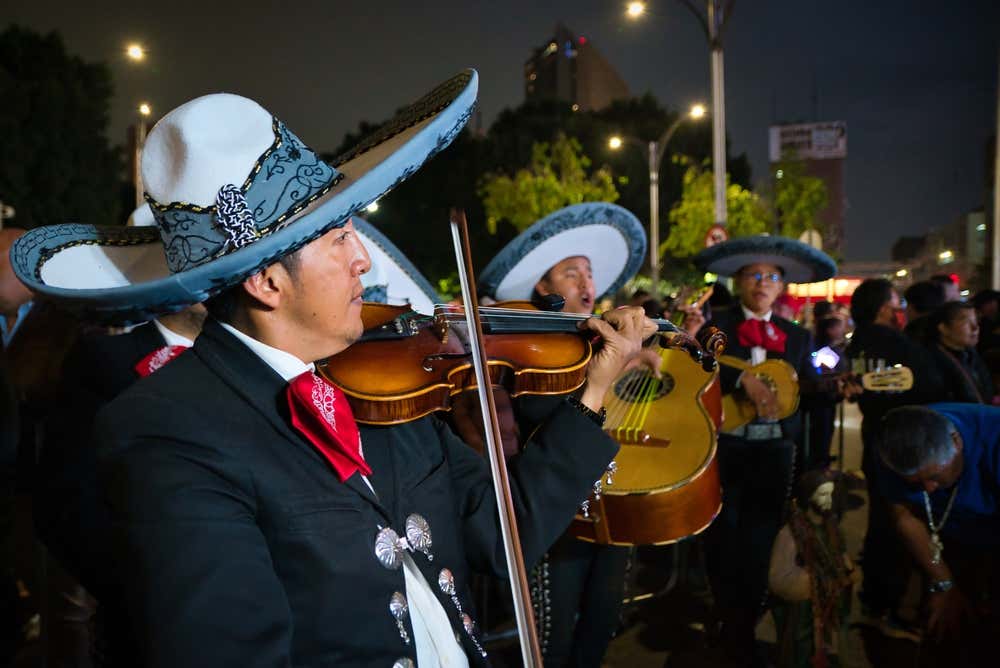
Mariachi has the same regional roots, and Guadalajara hosts an international mariachi festival each September. A charreada tour where you meet the charros gets you close to the horses, and the guitar-shaped bus tour with dinner and a live mariachi show is exactly as unserious as it sounds. For a different kind of spectacle, a lucha libre night in Guadalajara explains the masks and the rivalries before the bell.
Zapopan and the Oblatos Canyon
Zapopan is technically its own city, though it long ago merged into the Guadalajara sprawl. Its basilica houses the Virgin of Zapopan, a small corn-paste figure that draws well over a million people into the streets every October for the Romería, one of the largest religious processions in Mexico.
Just north of the city the ground drops away into the Barranca de Oblatos, a canyon carved by the Santiago River with lookout points along the rim. An excursion combining Zapopan and the Oblatos canyon handles both in about four hours. Visibility into the canyon is best in the rainy season when the waterfalls are running, though the trails can be slick then.
Mazamitla and the Sierra del Tigre
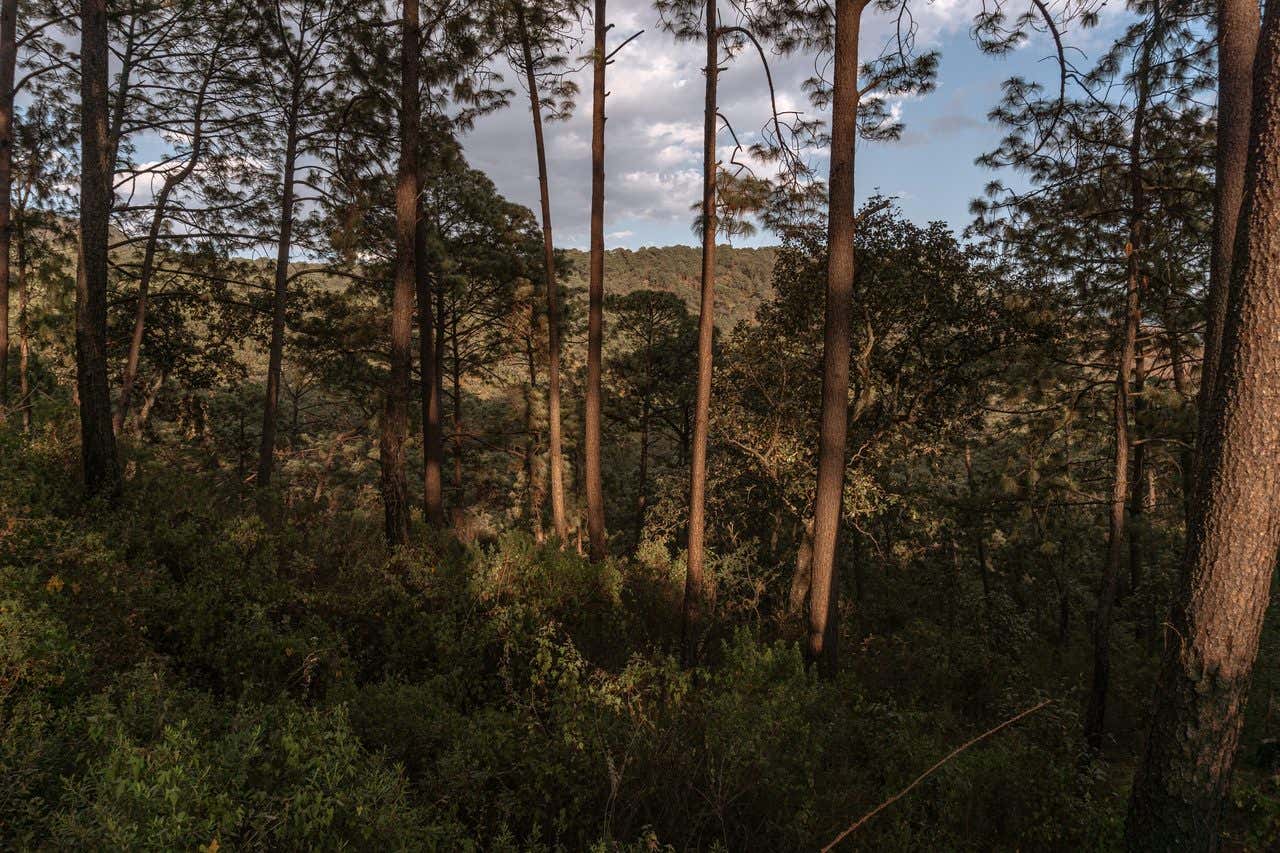
About two hours south of Guadalajara, the landscape changes completely. Mazamitla is a Pueblo Mágico set in pine forest at around 7,200 feet (2,200 meters), with white walls, red-tiled roofs, and wooden balconies that owe more to alpine architecture than to colonial Mexico. Evenings get genuinely cold, which is part of the appeal for people escaping the lowland heat.
The waterfalls in the surrounding hills are the main reason to go beyond the town square. A day trip to Mazamitla and the Mundo Aventura Eco Park waterfall pairs the village with the forest, and there’s an alternative Mazamitla and El Salto waterfall day trip covering a different cascade. Closer to the city, the Huaxtla waterfalls trip is a shorter option at five or six hours.
Puerto Vallarta
Jalisco’s Pacific coast is anchored by Puerto Vallarta, set on Banderas Bay with the Sierra Madre rising straight up behind the town. The Malecón is the spine of the place, a seafront walkway studded with bronze sculptures, and the old Zona Romántica south of the Cuale River keeps the cobblestones and the low rooflines that predate the resorts.
Getting oriented is easy enough on the Puerto Vallarta hop-on hop-off bus, or with a culture tour covering the town’s customs and history. The food is a strong reason to linger. A night taco tour through four or five taco styles works well as a first evening, and the Pitillal neighborhood food tour heads into a part of town most visitors miss.
Whales pass through Banderas Bay in the northern winter, generally from around December to March. Humpbacks come here to calve, and a whale watching trip on the bay runs about three hours. Season dates shift year to year, so confirm with an official source before booking flights around it.
The Beaches South of Vallarta
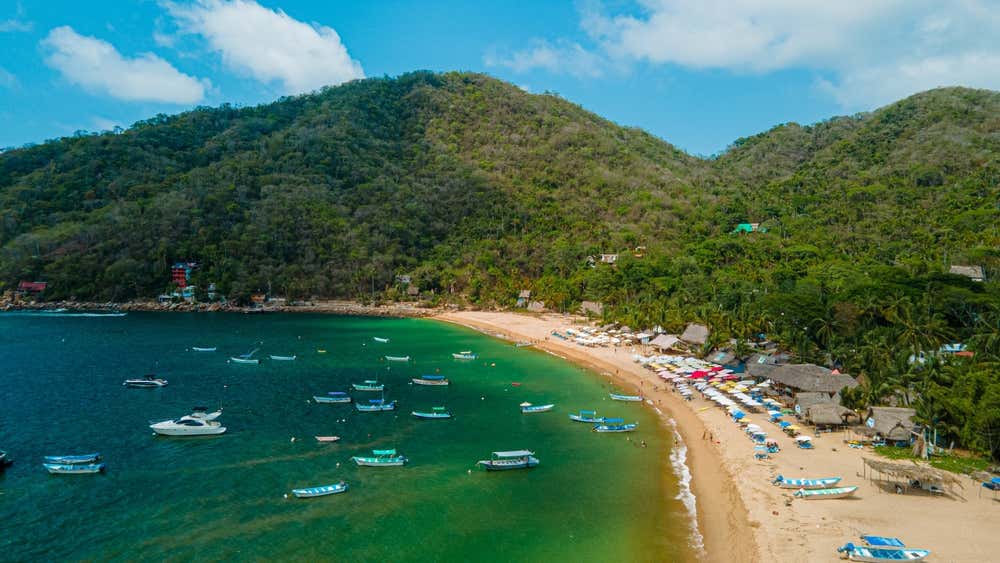
The best beaches near Puerto Vallarta have no road to them. Yelapa, Majahuitas, Colomitos, and Las Caletas are all reached by boat, which is what keeps them quiet. Colomitos is often described as the smallest beach in Mexico, tucked into a cove you reach on foot along a jungle trail or by water taxi.
A hidden beaches hike with snorkeling at Colomitos combines the walk and the water, while a trip to Yelapa and Majahuitas cove gives you two of the harder-to-reach ones in a day. Closer in, the snorkeling tour at Los Arcos de Mismaloya marine park visits the rock arches that give the protected area its name.
Further out, the Marietas Islands are an uninhabited volcanic group and a protected national park. A catamaran tour to the Marietas Islands takes about seven hours from the bay. Visitor numbers to the islands are capped to protect the seabird colonies, so book further ahead than you would for the mainland beaches.
The Sierra Madre Behind the Coast
The mountains start almost immediately inland from Puerto Vallarta, and the jungle there is dense enough that the change from beach to rainforest happens in about twenty minutes of driving. Rivers cut down through it toward the bay, which is what makes this stretch so good for adventure activities.
A jungle zipline day at Los Veranos Canopy Park covers ziplines, kayaks, and hanging bridges in one go, and the Jorullo Bridge ATV tour with a zipline circuit crosses one of the longest suspension bridges of its kind. For something gentler, the Palo María waterfall hike follows a river to a natural pool, and the Vallarta Botanical Garden tour is mostly flat walking.
Mascota and Talpa de Allende
Inland from the coast, up in the Sierra, two more Pueblos Mágicos sit within reach of each other. Talpa de Allende is a pilgrimage town, built around a small image of the Virgin that draws walkers along footpaths from Puerto Vallarta and beyond, particularly in the spring. Mascota, nearby, is the quieter of the two, with a cobbled center and an unfinished nineteenth-century church that was never roofed.
Both are a long way from anywhere, which is much of their charm. A day trip to Mascota and Talpa de Allende runs around thirteen hours from Puerto Vallarta. Start early and expect mountain roads, since the route climbs steadily most of the way.
Jalisco with Kids
Guadalajara handles families better than most Mexican cities, largely because so much of what there is to do sits within the metro area rather than an hour outside it. Selva Mágica is the largest amusement park in western Mexico, and it shares a site with the city zoo, which makes a full day without much planning.
A ticket to Selva Mágica covers the rides, and the Michin Aquarium in Guadalajara is a good rainy-afternoon option. Older children tend to get more out of KidZania Guadalajara, where they work through simulated adult jobs for play money. On the coast, the Jardín Mágico butterfly farm tour lasts about an hour, which is roughly the right length for small children.
What Is Jalisco Known For
Jalisco is known for tequila, mariachi music, and charrería, all three of which originated in the state. It’s also the source of much of Mexico’s national imagery abroad, from the wide-brimmed sombrero to the charro suit. Guadalajara, the capital, is one of the country’s largest cities and its main cultural center outside Mexico City.
The state holds two UNESCO World Heritage Sites: the Hospicio Cabañas in Guadalajara and the agave landscape around Tequila. It also contains Mexico’s largest freshwater lake and a long stretch of Pacific coastline. That range is unusual for a single Mexican state, and it’s the practical reason a Jalisco trip can cover so much ground.
What to Eat in Jalisco
The dish most associated with Guadalajara is the torta ahogada, a crusty birote roll filled with pork carnitas and then drowned in a thin tomato and chile de árbol sauce. It is eaten with both hands over a plate, and there is no dignified way to do it. Ask for it media ahogada if you want half the sauce.
Birria, a slow-cooked stew usually made with goat, also comes from Jalisco, as does the fermented corn drink tejuino and the burnt-topped custard called jericalla. A walking food tour of Guadalajara covers most of these in one afternoon, and the Santa Tere neighborhood food tour concentrates on one of the city’s oldest eating districts. The tour of Guadalajara’s markets is the option to pick if you want to see where it all comes from.
Best Time to Visit Jalisco
October through April is the driest and most comfortable stretch across most of the state. Guadalajara sits at about 5,100 feet (1,550 meters), so its days stay mild while the coast is warm, and evenings in the highlands can drop enough that you’ll want a jacket. The rainy season runs roughly from June to September, usually as heavy afternoon storms rather than all-day drizzle.
September is worth considering despite the rain. The city marks the independence holidays and hosts its international mariachi festival, and the countryside is at its greenest. Whale season on the Pacific coast falls at the opposite end of the calendar, generally December to March. Festival dates move, so check an official source before you build a trip around one.
How Many Days You Need in Jalisco
Four days is enough for Guadalajara and two day trips, which for most people means Tequila plus either Guachimontones or Lake Chapala. A week lets you add the coast without spending the whole trip in transit. Puerto Vallarta is about five hours from Guadalajara by road, or under an hour by air.
If you only have a weekend, stay in the city and pick one excursion. The full range of day trips leaving from Guadalajara shows what fits into a single day, and the activities available in Guadalajara itself fill the gaps. For a wider view of how the city compares to the rest of the country, the guide to the best cities to visit in Mexico is a useful companion, and there’s a closer look at what to do in Guadalajara if the capital is your main stop.
Getting Around Jalisco
Guadalajara has a light rail network and an extensive bus system, and the historic center is walkable end to end. For anything outside the metro area, organized day trips are usually simpler than driving, particularly for the tequila route where tastings are involved. Intercity buses connect the main towns and are comfortable and frequent.
Within the city, a bike tour of Guadalajara covers more ground than walking, and an electric scooter tour of the city works well if the distances put you off. Visitors from outside Mexico should confirm entry requirements with the relevant embassy before traveling, since rules differ by nationality and change from time to time.
Planning Your Trip
Jalisco rewards a slower trip than most people give it. The distances look small on a map, but the state changes character every hour you drive, from agave plain to pine forest to Pacific bay, and rushing between them means missing what makes each one distinct.
Pick a base, choose two or three excursions that genuinely appeal rather than trying to see everything, and leave room for the afternoon where nothing is planned. Whenever you’re ready to start booking, the full range of tours and experiences across Mexico is worth a look, and so is Civitatis’s full catalog of activities in English all over the world.


Most read of #North America
What to See in Jalisco in 2026: Lake Chapala, Tequila & More
31 August 202614 Best Places to Visit in Canada
28 August 2026What to See in San Luis Potosí, Mexico: 11 Highlights
14 August 2026The 10 Best Things to Do in Puerto Vallarta, Mexico
14 August 2026The 14 Best Museums in Mexico City, Aztecs to Chocolate
12 August 202615 Famous Landmarks in Mexico, from Maya Ruins to Canyons
12 August 2026Most read #North America
14 Best Places to Visit in Canada
28 August 2026What to See in San Luis Potosí, Mexico: 11 Highlights
14 August 2026The 10 Best Things to Do in Puerto Vallarta, Mexico
14 August 2026The 14 Best Museums in Mexico City, Aztecs to Chocolate
12 August 2026
The 14 Most Beautiful Places to Visit in Canada
11 August 202616 Best Things to Do in Querétaro, Mexico
10 August 2026Top 11: The Best Day Trips from Mexico City (2026)
5 August 2026
West Coast Road Trip: An 8-Day Itinerary
12 July 2026
The 8 Best Day Trips from Philadelphia in 2026
1 July 2026Top 10: The Best Cities to Visit in Mexico (2026)
16 June 2026NBA Game Tickets in New York: A Complete Guide
3 June 2026