
The 14 Most Beautiful Places to Visit in Canada
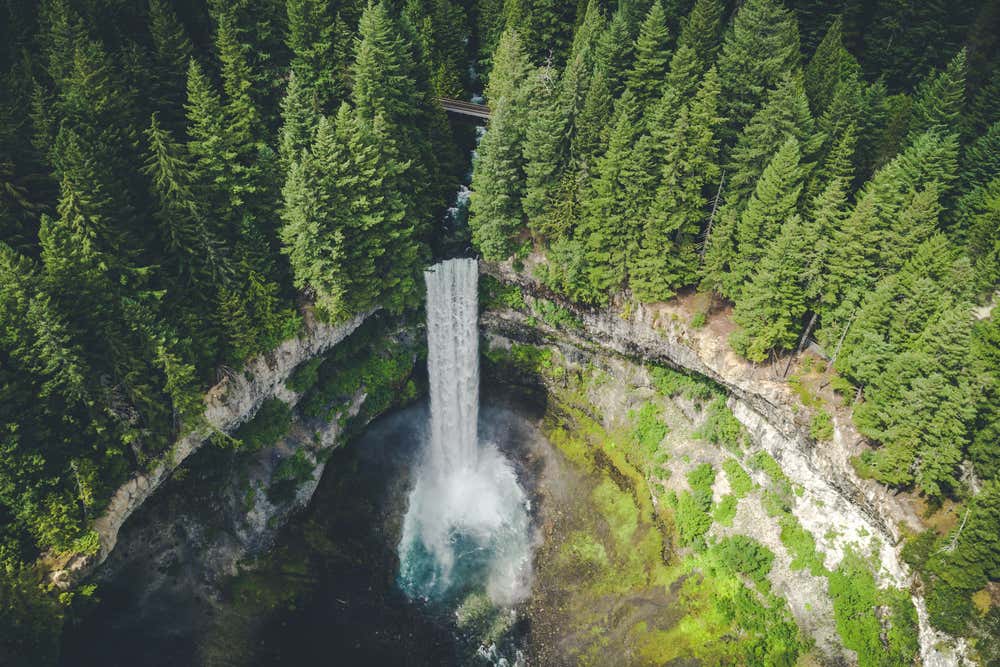

Canada is the second largest country on earth and roughly four out of five Canadians live within about 100 miles (160 kilometers) of the US border. Everything above that line is mostly forest, tundra, ice, and water. That gap between where people live and how much space there is explains why you can stand on a lakeshore here in July and hear nothing at all.
The most beautiful places in Canada are spread across six time zones, so nobody sees them in one trip. The Rocky Mountain lakes, Niagara Falls, walled Old Quebec, the record tides of the Bay of Fundy, and the aurora over the Yukon each belong to a different journey.
You’ll find 14 of them below, running west to east and finishing in the far north. Pick a region rather than a checklist. Driving from Banff to Prince Edward Island takes about 50 hours, and you’d miss almost everything worth stopping for.
The Most Beautiful Places in Canada
1. Banff National Park, Alberta
You’re looking at Canada’s first national park, protected in 1885 after railway workers stumbled into a cave of hot springs on Sulphur Mountain. It now covers about 2,564 square miles (6,641 square kilometers) of the Rockies, and UNESCO listed it as part of the Canadian Rocky Mountain Parks in 1984.
What makes the scenery here so particular is the color of the water. Glaciers grind rock into a fine powder called rock flour, it washes into the lakes, and it scatters light back at you in that improbable turquoise. You’ll see it in almost every lake in the park, and it’s strongest in mid to late summer once the melt is running.
Everyone needs a national park pass to enter, even if you’re only driving through. A Banff National Park tour covers Bow Falls and the hoodoos in about three hours, or you can pick your own route on one of the guided hikes in Banff.
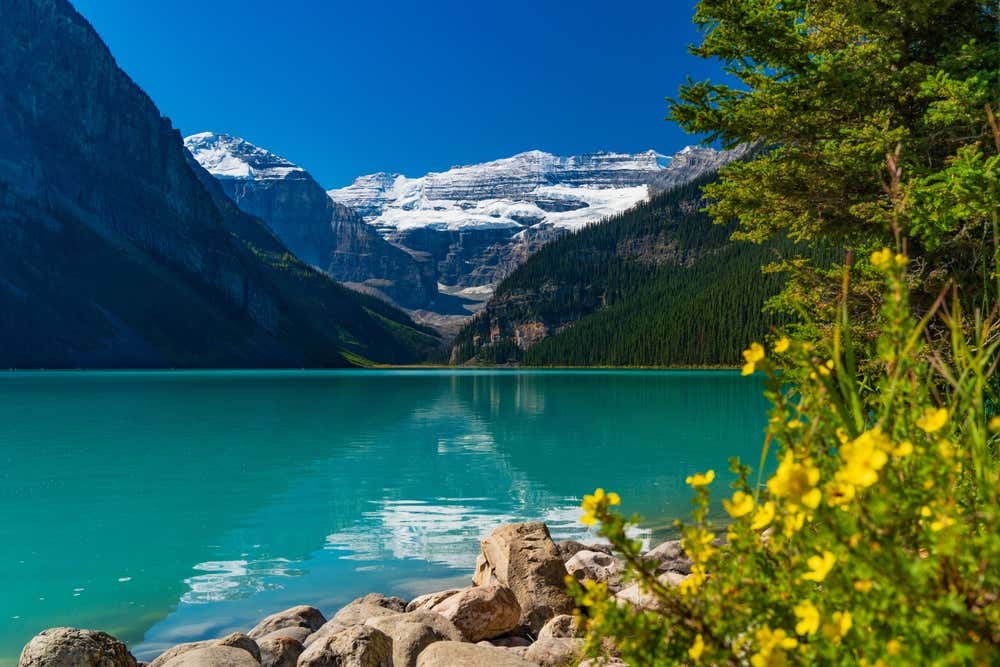
2. Lake Louise, Alberta
Sitting at about 5,680 feet (1,731 meters), Lake Louise fills a hanging valley with the Victoria Glacier at the far end, so you’ll see the ice that colors the water right there in the same view. The Fairmont hotel on the shore has been photographing well since 1890, and the lawn in front of it is free to walk across.
Most people stop at the lakeshore, take the photo, and leave. Walk twenty minutes along the north shore and the crowd thins out fast. Keep going and the trail climbs to the Lake Agnes Tea House, which has been serving hikers since 1905 and takes cash only.
Parking fills before 7 AM in summer, which is the single most common way to ruin a Lake Louise morning. The Lake Louise excursion from Banff takes the problem off your hands and adds Marble Canyon on the way.
3. Moraine Lake, Alberta
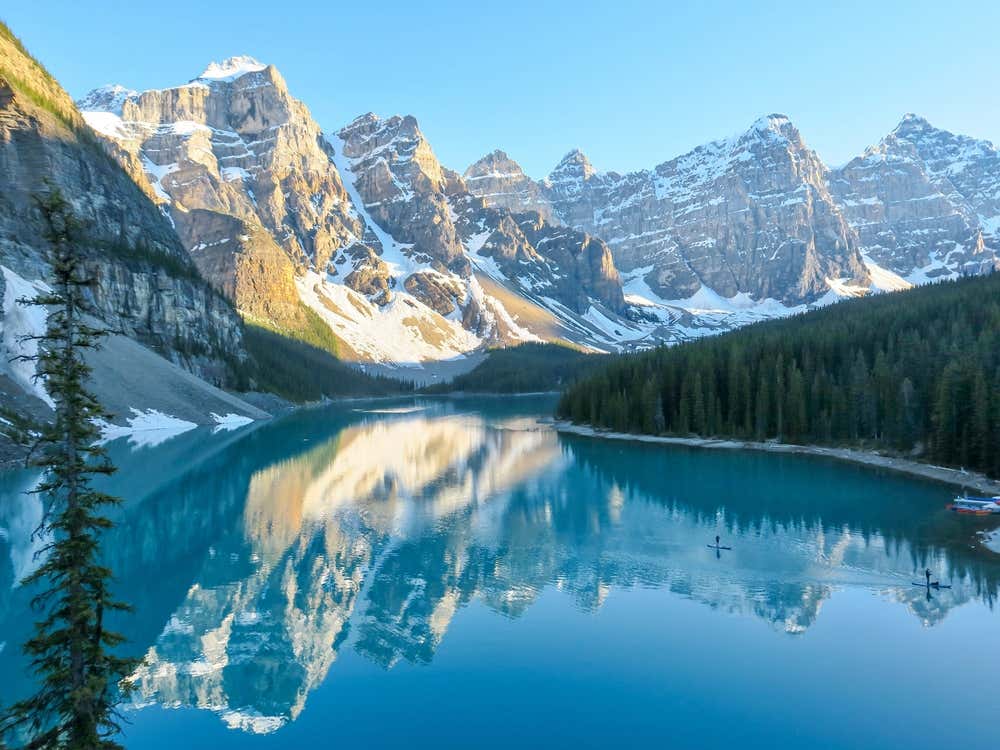
Ten sharp peaks stand behind a lake so intensely blue it looks color-corrected. The Valley of the Ten Peaks was on the back of the Canadian twenty dollar bill for years, and standing on the rockpile at the outlet you’ll understand exactly why they chose it.
Here’s the thing you need to know before you plan anything. Moraine Lake Road has been closed to private vehicles since 2023, from June through mid-October, after Parks Canada found itself turning away thousands of cars a day. You cannot drive here. Access is by Parks Canada shuttle, Roam Transit, a licensed tour operator, or your own legs and a bike up the 7.8 miles (12.5 kilometers) of paved road.
Shuttle seats are released in advance and go quickly, so book the moment you know your dates. The Moraine Lake sunrise or sunset trip is one of the licensed routes in, and it puts you at the water when the light is on the peaks rather than in the middle of the day.
4. The Icefields Parkway, Alberta
Highway 93 North runs 144 miles (232 kilometers) from Lake Louise to Jasper, and it’s routinely called one of the great drives anywhere. You’ll pass more than a hundred glaciers, waterfalls right beside the road, and the milky blue of Peyto Lake from a viewpoint a short walk off the parking lot.
The centerpiece is the Columbia Icefield, the largest sheet of ice in the Rockies, feeding the Athabasca Glacier that comes down almost to the highway. It’s one of the few places where you can stand on the ground and look at a glacier without a hike.
Allow a full day rather than three hours, because you’ll stop constantly. Fuel is scarce along the route, so fill up before you set off. The Icefields Parkway tour from Banff runs about eleven hours and means you can look out of the window instead of at the road.
5. Jasper National Park, Alberta
Jasper is the biggest park in the Canadian Rockies at roughly 4,200 square miles (11,000 square kilometers), and it’s quieter than Banff simply because it’s further from a major airport. It’s also a Dark Sky Preserve, so on a clear night you’ll see the Milky Way from the middle of town.
You should know what happened here. A wildfire tore through the park and the townsite in July 2024 and damaged around a third of the buildings in town. Jasper has been rebuilding since, the town and park are open, and most trails have reopened, though Maligne Canyon and Cavell Road are closed for the whole of the 2026 season while slopes are stabilized.
Plenty of the best of it was untouched. Maligne Lake, Athabasca Falls, and the Columbia Icefield are all open and show no sign of fire. Check the Parks Canada interactive map for current closures before you travel, then browse tours and activities in Jasper to fill the days.
6. Niagara Falls, Ontario
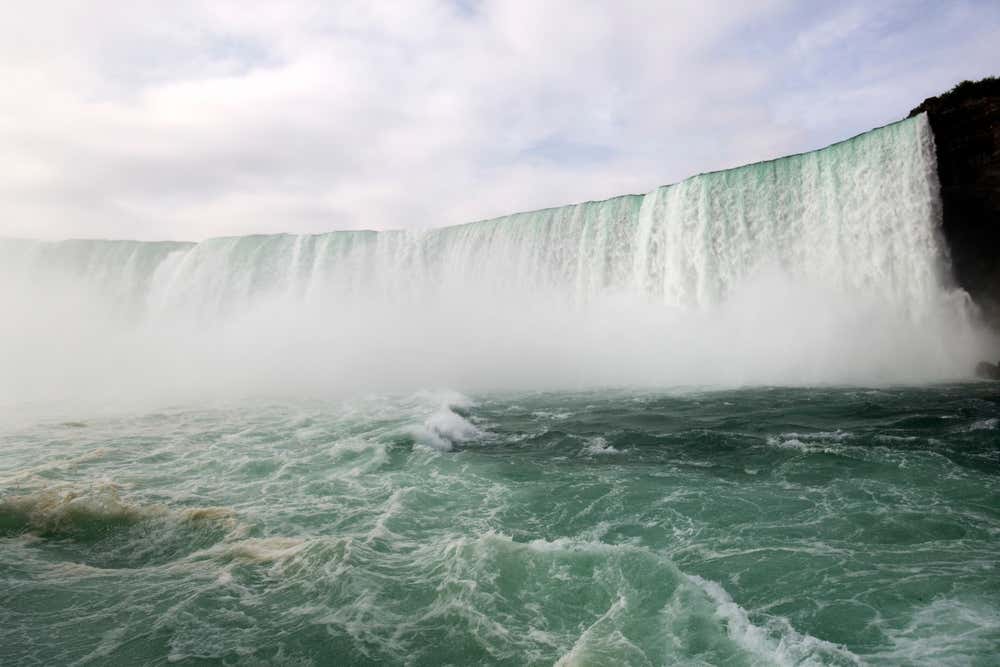
Horseshoe Falls is about 2,200 feet (670 meters) across and drops roughly 167 feet (51 meters), and the number that actually registers when you’re standing there is the volume: enough water goes over the lip every second to fill an Olympic swimming pool many times.
The Canadian side has the better view, and it isn’t close. From Ontario you’re looking straight into the curve of Horseshoe Falls, while the American side gives you the edge of it. That single geographic accident is why the Canadian bank is built up the way it is.
Go early or stay late, since the middle of the day in summer is genuinely crowded. You can ride the rapids downstream on the Niagara River jet boat tour, or come out for the day from the city on the Niagara Falls day trip from Toronto.
7. The Thousand Islands, Ontario
You’ll be counting 1,864 of them, scattered across the St. Lawrence River where it leaves Lake Ontario, and the rule is that an island counts if it stays above water year round and supports at least one living tree. Some are big enough for a village. Others are big enough for a house and nothing else.
The granite here is part of a ridge connecting the Canadian Shield to the Adirondacks, which is why the shorelines are pink rock and pine rather than sand. Gilded Age families built summer castles on the larger islands, and several are still standing.
You’ll want to be on the water rather than beside it, so a boat trip out of Gananoque or Kingston is the way to do it. The wider Great Lakes region has more on offer if you’re building a route through Ontario.
8. Old Quebec, Quebec
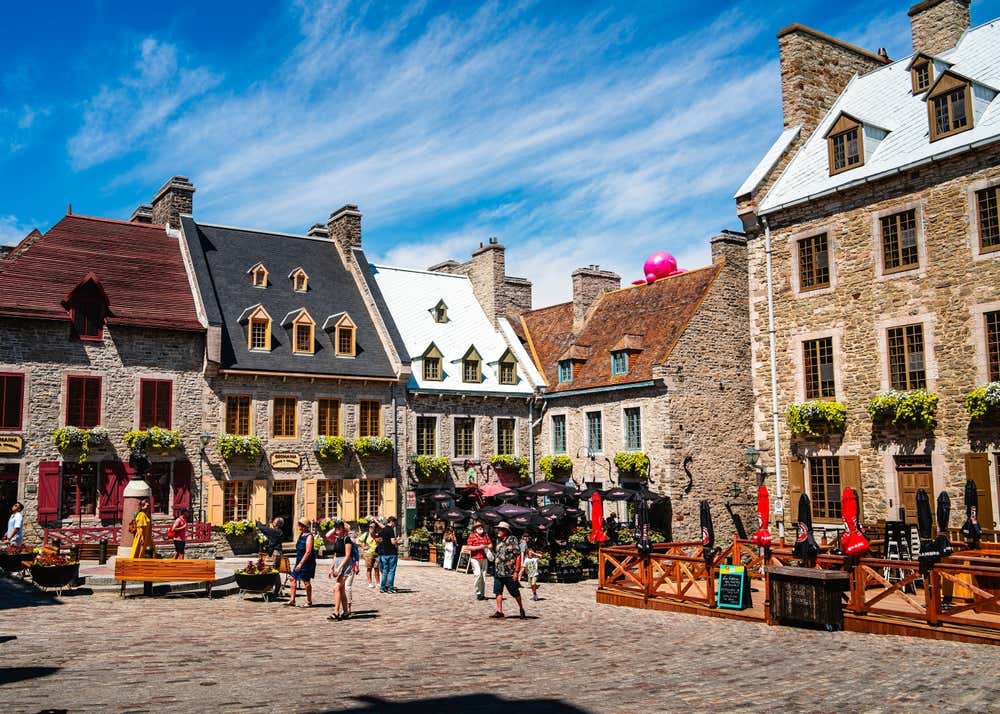
Founded in 1608, Quebec City holds the only surviving fortified city walls anywhere in the Americas north of Mexico, and UNESCO listed the old town in 1985. Walk the ramparts and you’re on a defensive line that was still being argued over in the 19th century.
You’ll recognize the Château Frontenac above the river, often called the most photographed hotel in the world, and below it you can walk the Quartier Petit Champlain through some of the oldest commercial streets on the continent. In winter the whole thing gets snow on it and looks faintly unreal.
Ten minutes out of town, Montmorency Falls drops 272 feet (83 meters), which makes it about a hundred feet taller than Niagara even though almost nobody outside Quebec has heard of it. Start with the walking tour of Old Quebec to get the layout and the history in one go.
9. The Bay of Fundy, New Brunswick
The highest tides on the planet happen here, rising and falling as much as 53 feet (16 meters) twice a day. The bay’s shape and length happen to match the natural rhythm of the water sloshing in it, so each tide reinforces the last, and the result is a coastline that completely rearranges itself every six hours.
At Hopewell Rocks you can walk on the sea floor among sandstone stacks at low tide, then come back later and kayak over the same ground. It’s the clearest demonstration of scale you’ll find anywhere on this list, and it costs nothing but timing.
Check a tide table before you go, since arriving at the wrong hour means seeing half the story. Saint John makes a practical base on the New Brunswick side, and across the water in Nova Scotia the Halifax waterbus tour covers the harbor city.
10. Prince Edward Island
Canada’s smallest province is a strip of red sandstone in the Gulf of St. Lawrence, and the iron in that stone is why you’ll see cliffs and beaches in a deep rust color against green fields and blue water. There is no other coastline in the country that looks like it.
Cavendish is where Lucy Maud Montgomery set Anne of Green Gables, and the farmhouse that inspired it is preserved as a national historic site. The book has brought visitors here from Japan in particular for decades, which is a strange and rather lovely thing to see on a small island.
The Confederation Bridge runs 8 miles (12.9 kilometers) from New Brunswick and takes about twelve minutes to cross. You’ll find things to do around Charlottetown and across the rest of Prince Edward Island.
11. Vancouver Island, British Columbia
At roughly 290 miles (460 kilometers) long, Vancouver Island is big enough to hold rainforest, mountains, farmland, and a provincial capital without any of them crowding each other. The east coast is gentle and settled, the west coast takes the full weight of the Pacific, and the difference between them is startling.
You’ll find Victoria at the southern tip, with its harbor and the Butchart Gardens just outside, built into an exhausted limestone quarry from 1904 onward. It’s one of the few places where an industrial scar has turned into the main attraction.
The waters around the island hold orcas, humpbacks, and gray whales through the summer. You can go looking for them on the whale watching trip from Vancouver, or head to Telegraph Cove at the north end, which is one of the best places in the country for it.
12. Tofino, British Columbia
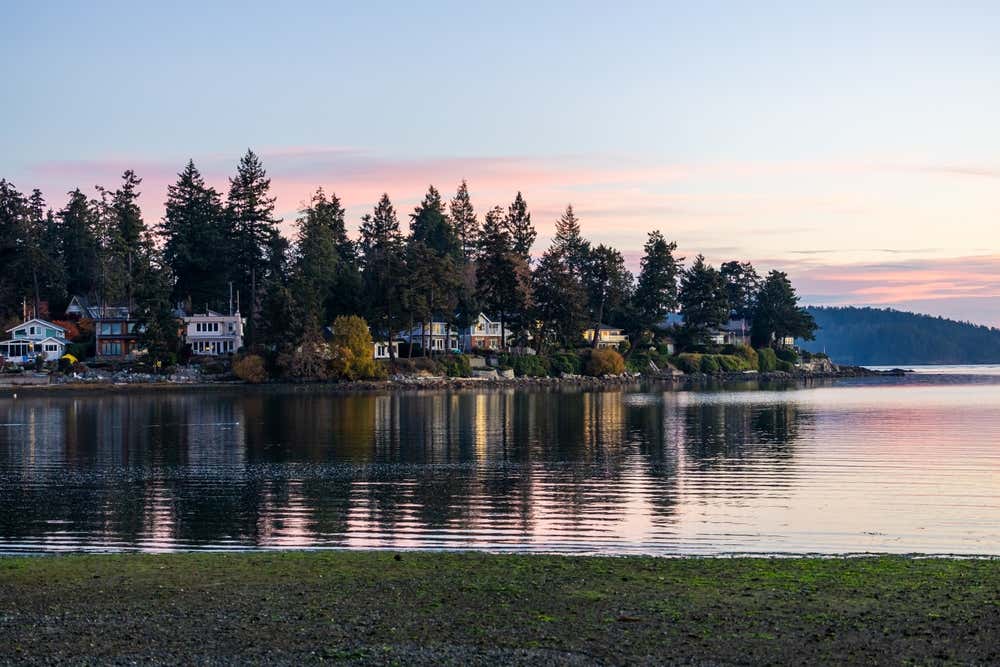
Out on the exposed west coast of Vancouver Island, Tofino sits between old growth rainforest and open ocean. Long Beach runs for miles inside Pacific Rim National Park Reserve, and the surrounding Clayoquot Sound was named a UNESCO Biosphere Reserve in 2000.
Most beach towns sell you summer. Tofino sells you winter, and it works. From November to February, Pacific storms throw swell against the headlands, and people book rooms specifically to sit behind glass and watch it happen. Storm watching is a genuine season here with its own rates.
Come in summer instead and you’ll get cold-water surfing, hot springs reachable only by boat, and bears turning over rocks on the tidal flats. The rest of British Columbia is worth building around it.
13. Whistler, British Columbia
Whistler hosted the alpine events of the 2010 Winter Olympics and remains one of the largest ski areas in North America, with two mountains you can cross on the PEAK 2 PEAK Gondola. That crossing spans 2.73 miles (4.4 kilometers) and holds the record for the longest unsupported lift span in the world.
The drive up from Vancouver is half the appeal. The Sea to Sky Highway runs along Howe Sound with mountains dropping straight into saltwater, and it takes about ninety minutes without stops. You’ll want stops.
Summer is arguably the better season now, with alpine hiking, lake swimming, and a mountain bike park that draws riders from everywhere. Have a look at what’s running in Whistler before you decide when to come.
14. The Northern Lights in the Yukon and Northwest Territories
Yellowknife sits almost directly beneath the auroral oval, the ring where solar particles meet the atmosphere, and you also get flat terrain and dry, clear winter air working in your favor. It’s one of the most reliable places on earth to see the aurora, which is why people fly in from Asia specifically for it.
The season runs from roughly late August to April, and you need darkness, so the endless light of a northern summer rules out June and July entirely. Give yourself three nights minimum, because cloud can take one away and you don’t want that to be your only chance.
Both Yellowknife and Whitehorse in the Yukon run aurora tours through the season. If you can’t get that far north, the stargazing and northern lights night in Banff is a long shot on the aurora but a certainty on the stars.
Where to Go When
Seasons shift year to year and mountain roads can open late after a heavy winter, so check current conditions before you commit to dates.
How Long Do You Need in Canada?
Think in regions, not in countries. Ten days will cover the Rockies properly, giving you Banff, Lake Louise, Moraine Lake, the Icefields Parkway, and Jasper without rushing any of them. A separate ten days does Vancouver, Vancouver Island, and Tofino.
The eastern trip is different again: a week gets you Montreal, Old Quebec, and a run down the St. Lawrence, and you’d add another week for the Maritimes and Prince Edward Island. The aurora is its own short winter trip of three or four nights.
If you’d rather have the western route planned for you, the eight-day Canadian Rockies tour package runs from Vancouver through Kelowna to Banff and Jasper.
Practical Details Worth Knowing
Every national park charges admission, and if you’re visiting more than a few, the annual Parks Canada Discovery Pass pays for itself quickly. Buy it at the gate or online before you travel.
Most visitors from outside Canada need either a visa or an eTA to enter, depending on nationality, and the rules differ by passport. Requirements change, so confirm yours with the Canadian embassy or consulate in your country rather than relying on a travel article.
Distances are the thing people underestimate most. Vancouver to Toronto is about 2,700 miles (4,350 kilometers), so flying between regions is normal here rather than extravagant. Once you’re in a region, a car opens up everything a bus can’t reach.
Plan Your Trip to Canada
What links these fourteen places isn’t scenery so much as space. Canada gives you room to stand a long way from anyone else and look at something very large, whether that’s a glacier, a tide, or a sky full of moving light.
Pick one region, give it the time it deserves, and leave the rest for another year. You’ll find guided walks, day trips, and wildlife tours across the country in the full range of tours and activities in Canada, and the wider Alberta catalog if the Rockies are where you’re starting.
Wherever you land, you can book ahead through Civitatis’s full catalog of activities in English all over the world, and spend your first morning on a trail instead of a ticket line.


Most read of #North America
Top 10: The Best Cities to Visit in Mexico (2026)
9 October 2026The 8 Best Day Trips from Philadelphia in 2026
8 October 2026Iconic Food in Chicago: 17 Dishes You Have to Try
30 September 2026Best Time to Visit Hawaii: A Season-by-Season Guide
29 September 202615 Best Things to Do in Mérida, Mexico
25 September 2026Cancun Beaches: The 9 Best Spots for Sun and Sand
25 September 2026Most read #North America
Top 10: The Best Cities to Visit in Mexico (2026)
9 October 2026The 8 Best Day Trips from Philadelphia in 2026
8 October 2026Iconic Food in Chicago: 17 Dishes You Have to Try
30 September 2026Best Time to Visit Hawaii: A Season-by-Season Guide
29 September 202615 Best Things to Do in Mérida, Mexico
25 September 2026
11 Pueblos Mágicos Near Mexico City Worth the Trip
23 September 2026Oaxaca Beaches: 10 Best Spots on the Pacific Coast
22 September 2026Best Time to Visit Tulum: Weather, Crowds and Sargassum
12 September 2026Cancún to Isla Mujeres: Ferry, Catamaran and Costs
11 September 2026
What to See in Jalisco in 2026: Lake Chapala, Tequila & More
31 August 202614 Best Places to Visit in Canada
28 August 2026What to See in San Luis Potosí, Mexico: 11 Highlights
14 August 2026The 10 Best Things to Do in Puerto Vallarta, Mexico
14 August 2026
15 Famous Landmarks in Mexico, from Maya Ruins to Canyons
12 August 2026The 14 Most Beautiful Places to Visit in Canada
11 August 202616 Best Things to Do in Querétaro, Mexico
10 August 2026Top 11: The Best Day Trips from Mexico City (2026)
5 August 2026