The 14 Best Museums in Mexico City, Aztecs to Chocolate

The best Mexico City museums cover an enormous range: the Aztec Sun Stone at the National Museum of Anthropology, Frida Kahlo’s house exactly as she left it, an excavated temple in the middle of downtown, and a chocolate museum on the main square. Most close on Mondays.
Here are 14 worth your time, starting with the ones you can book in advance. That matters more than it sounds. Casa Azul in particular sells out weeks ahead, and turning up hopefully at the door is the most common way visitors miss it entirely.
1. National Museum of Anthropology
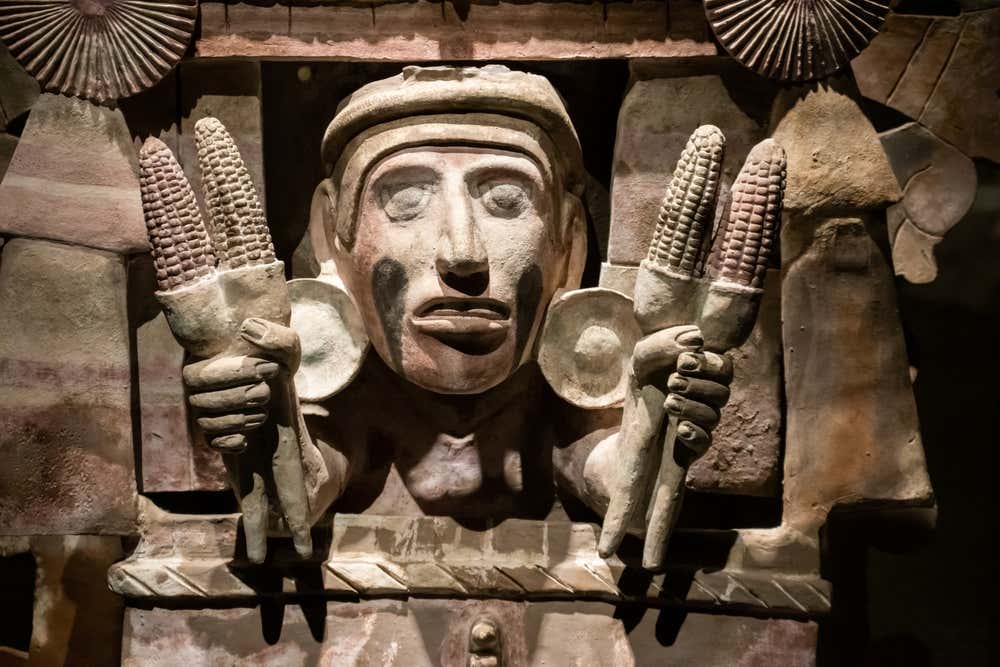
If you only manage one museum in Mexico, make it this one. Opened in 1964 and designed by Pedro Ramírez Vázquez, it holds the largest collection of pre-Columbian art anywhere, spread across 22 permanent halls around a courtyard.
The courtyard itself is worth a pause. A single slender column supports a vast concrete canopy with water falling from its edges, and locals call it El Paraguas, the umbrella. Inside you’ll find the Aztec Sun Stone, nearly 12 feet (3.6 meters) across, along with the jade burial mask of the Maya ruler Pakal and a full-scale reconstruction of Pakal’s tomb.
Give it half a day and accept you won’t see everything. Skip the line with a ticket to the National Museum of Anthropology, or take the guided tour of the Anthropology Museum if you’d rather someone told you which of the 22 halls actually matter for your interests.
2. Frida Kahlo Museum, the Casa Azul
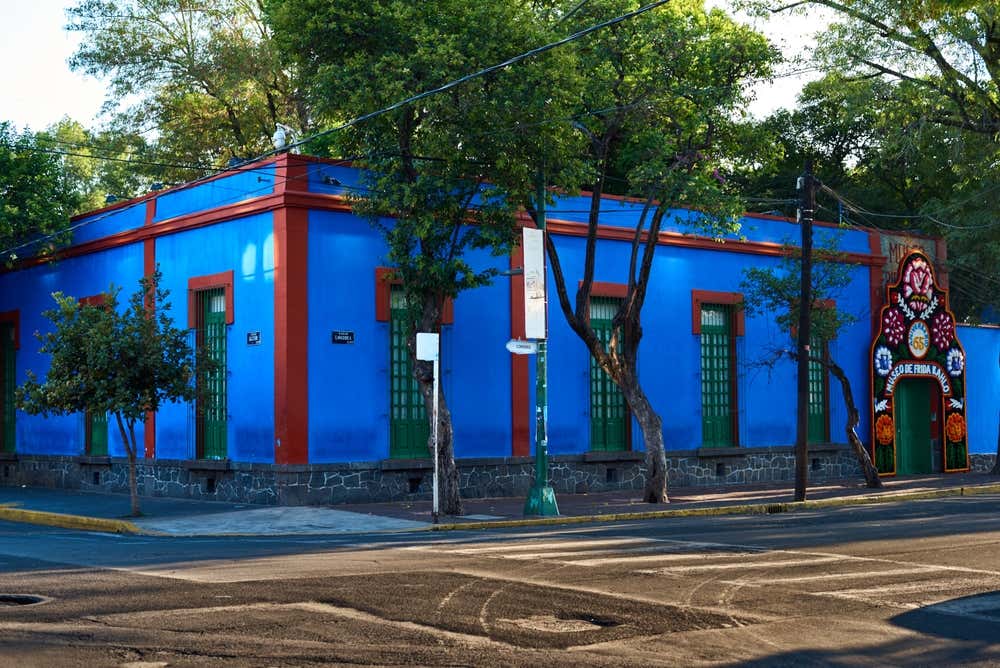
Frida Kahlo was born in this cobalt blue house in Coyoacán in 1907 and died in it in 1954. It opened as a museum four years later, and what makes it extraordinary isn’t the paintings so much as the fact that it’s still a home: her kitchen, her paint-stained easel, her corsets, the mirror above her bed that let her paint herself.
Be warned that this is the single hardest ticket in the city. Slots are released in advance and disappear fast, so book several weeks out rather than hoping for a walk-up. Photography permits cost extra and are bought at the door.
A combined ticket for the Frida Kahlo and Diego Rivera Anahuacalli museums covers both houses, or the small group guided tour of the Casa Azul runs in English and Spanish. If you want more of the family story, the nearby Casa Roja covers the Kahlo household she grew up in.
3. Chapultepec Castle and the National Museum of History
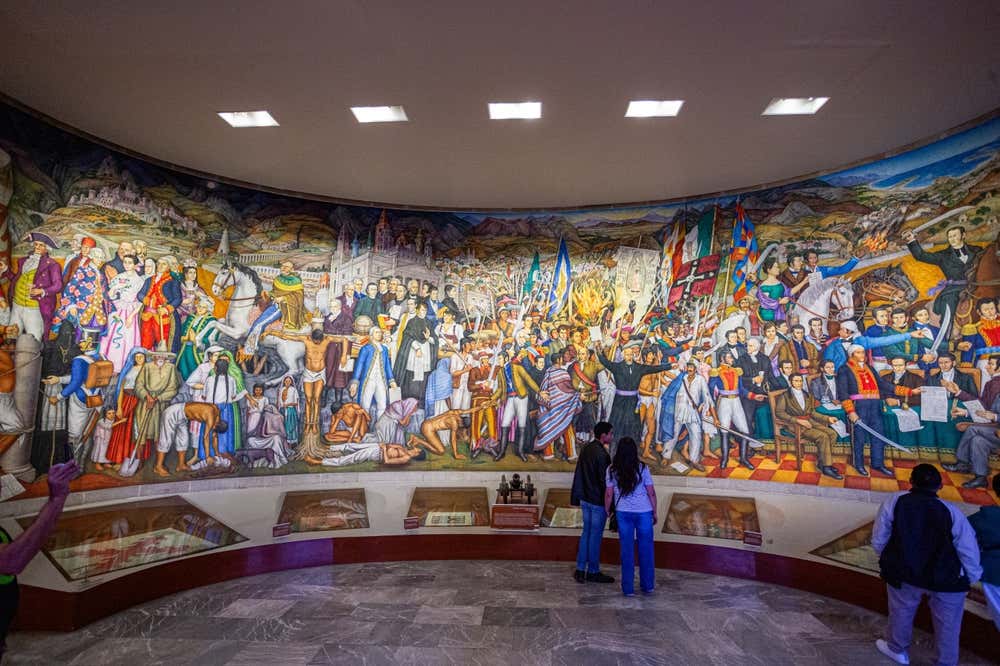
This is the only castle in the Americas that actually housed reigning sovereigns. Maximilian and Carlota lived here in the 1860s, and you can walk through their apartments with the furniture and the stained glass still in place.
It now holds the National Museum of History, with murals by Siqueiros and O’Gorman covering the independence and revolution. From the terrace you’ll get one of the best views in the city, straight down Paseo de la Reforma.
The walk up the hill from the park gates takes about fifteen minutes and there’s no shade, so bring water. Grab a ticket to Chapultepec Castle in advance, since the castle and the Anthropology Museum sit in the same park and pair naturally into one long day.
4. Templo Mayor Museum
In 1978, electricity workers digging behind the cathedral hit a carved stone disc more than 10 feet (3 meters) across. It turned out to be Coyolxauhqui, the dismembered moon goddess, and it was lying at the foot of the main Aztec temple that everyone assumed had been destroyed.
Several city blocks were demolished to excavate it. You now walk on raised platforms over the layered foundations of Tenochtitlan’s holiest site, right beside the colonial cathedral the Spanish built from its stones. Few places anywhere put the collision of two worlds in front of you so bluntly.
The attached museum holds the offerings pulled from the site, thousands of them. A ticket to the Templo Mayor Museum gets you both the ruins and the collection, and it’s a five-minute walk from the Zócalo.
5. Museo Soumaya
You’ll spot it from a long way off. Carlos Slim’s museum in Plaza Carso is wrapped in 16,000 hexagonal aluminum tiles and shaped like something between an anvil and an hourglass, designed by Fernando Romero and opened in 2011.
Inside are roughly 66,000 works across six floors, including the largest private collection of Rodin sculptures outside France, plus El Greco, Rubens, and Mexican colonial art. The layout is a continuous spiral ramp, so you walk up and drift back down.
Admission is free, which is remarkable for a collection of this size, and Museo Jumex is directly across the plaza if you want to make an afternoon of it. The Soumaya Museum tour walks you through all six levels with a guide.
6. Diego Rivera Anahuacalli Museum
Rivera designed this one himself, as a home for the pre-Hispanic art he’d been collecting for decades. He built it from black volcanic rock quarried from the lava field it stands on, and the result looks less like a museum than a temple somebody forgot to excavate.
The collection runs to tens of thousands of pieces. The ground floor is deliberately dark and low-ceilinged, and as you climb, the light increases, until the roof terrace opens onto the Pedregal and the mountains behind it.
It’s well south of the center and much quieter than Coyoacán, which is part of the appeal. Entry is included in the combined Frida Kahlo and Anahuacalli ticket, and that portion stays valid for a year, so you don’t have to do both on the same day.
7. Leon Trotsky House Museum
Trotsky spent his last years in this fortified house in Coyoacán, a few streets from Casa Azul, and in August 1940 an assassin got past the guards and killed him in the study. The room is preserved as it was, papers still on the desk.
You’ll see the watchtowers, the steel shutters, and the bullet holes from an earlier attempt led by the muralist David Alfaro Siqueiros. The garden holds his grave under a stone marked with a hammer and sickle.
It takes about an hour and pairs naturally with the Kahlo house, given the two households knew each other rather well. The guided tour of the Frida Kahlo and Leon Trotsky museums covers both in one route.
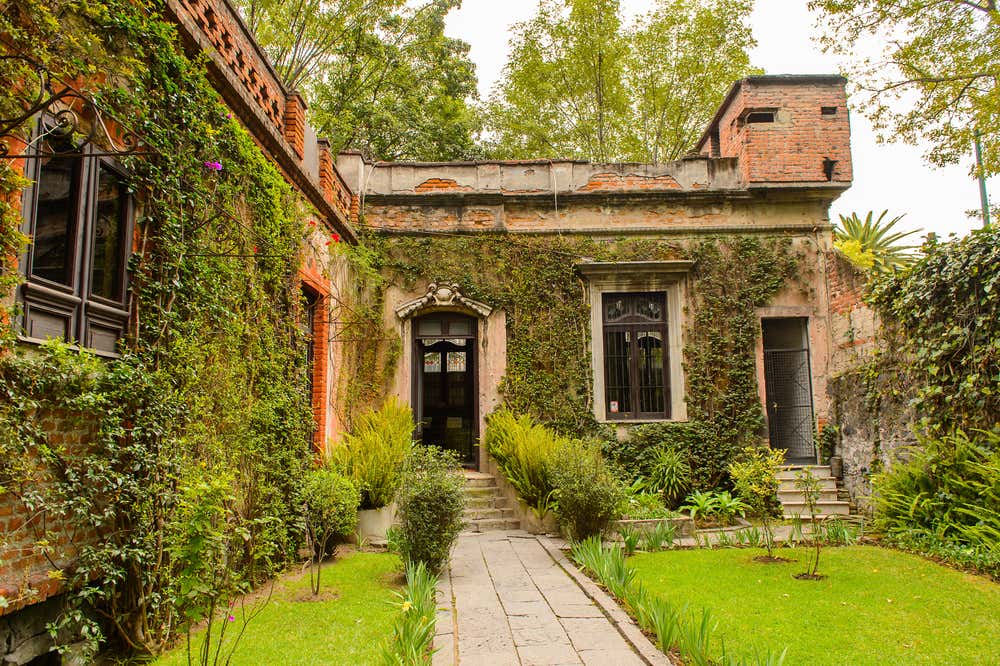
8. Choco Story Museum
Cacao was domesticated in Mesoamerica and used as currency long before anyone in Europe had tasted it, and the Aztecs drank it bitter and spiced rather than sweet. This small museum a few steps off the Zócalo tells that story properly.
You’ll go from the cacao pod through the Maya and Mexica uses of it, then into what happened once the Spanish added sugar. It’s the most family-friendly stop on this list by some distance.
There’s a tasting at the end, which is the part children remember. A ticket to Choco Story at the Zócalo takes about an hour and slots easily around a downtown morning.
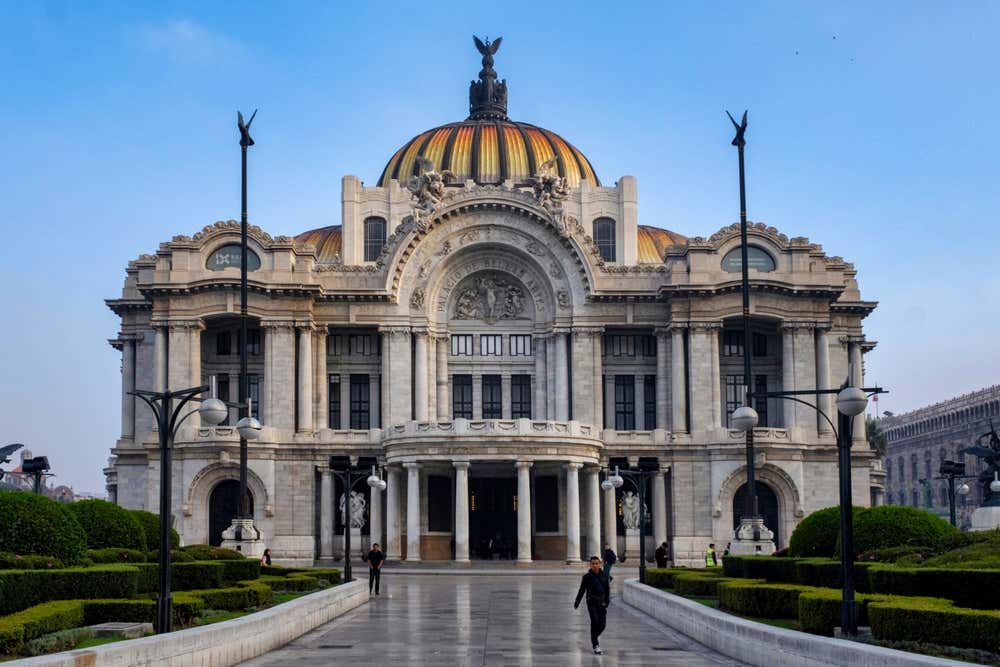
9. Palacio de Bellas Artes
Begun in 1904 and finished in 1934, the palace changed style mid-construction: art nouveau marble on the outside, art deco in the interior. It’s also sinking. The city sits on a drained lakebed, and the building has settled several feet since it was built, which you can see at the entrance steps.
The upper floors hold the greatest concentration of Mexican muralism anywhere. Rivera’s Man, Controller of the Universe is here, his recreation of the Rockefeller Center mural that was destroyed in New York for including Lenin. Orozco, Siqueiros, and Tamayo all have major works on the same floors.
The theater inside has a stained glass curtain made by Tiffany, lowered only for certain performances. For the best photograph of the building, cross to the Sears café terrace opposite, and go up the Torre Latino observation deck nearby for the view over its dome.
10. Museo Jumex
Across the plaza from the Soumaya, and about as different as two museums can be. David Chipperfield designed this one in travertine with a sawtooth roof that pulls north light into the top-floor galleries, and it opened in 2013.
The Jumex collection is one of the largest holdings of contemporary art in Latin America, built on a fruit juice fortune. Exhibitions rotate constantly and lean international, so check what’s showing before you plan around it.
Two floors, an hour, and the café is genuinely good. Doing Jumex and the Soumaya back to back is the most efficient art afternoon in the city, and you can reach both easily on a guided tour of Mexico City if you’d rather not work out the metro.
11. Museo Mural Diego Rivera
This museum exists to house one painting. Rivera’s Dream of a Sunday Afternoon in the Alameda Central stretches about 50 feet (15 meters) and packs four centuries of Mexican history into a single stroll through the park, with Rivera himself as a child in the middle of it.
It originally hung in a hotel that was destroyed in the 1985 earthquake. The mural survived, was moved across the road on rollers, and this building went up around it.
Half an hour is plenty, and there’s a key on the wall identifying every figure, which turns it from a nice painting into an argument about Mexican history. It sits at the western end of the Alameda, a short walk from Bellas Artes.
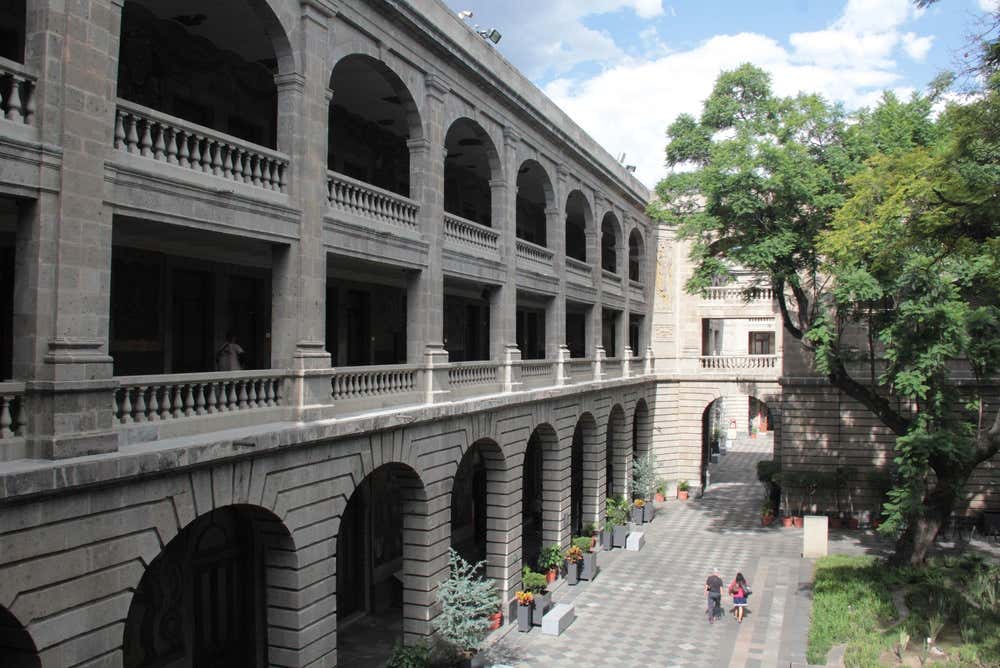
12. Museo Tamayo
Rufino Tamayo built this in 1981 to hold the international collection he’d assembled, and then gave the whole thing to the nation. The concrete building is half buried in the trees of Chapultepec Park and won Mexico’s national architecture prize.
You’ll find Picasso, Miró, Warhol, and Francis Bacon alongside Tamayo’s own work, which is worth attention in its own right. He spent his career being the muralists’ most articulate opponent, arguing that Mexican art didn’t have to be political to be Mexican.
Temporary shows take up much of the space and are consistently strong. It’s a ten-minute walk from the Anthropology Museum, so the two combine well if you have the stamina.
13. Museo Nacional de Arte
MUNAL occupies a florid Italianate palace from 1911, built as the Ministry of Communications, with a marble staircase that gets used for wedding photographs most weekends. The bronze horse in the square outside, El Caballito, has been moved around the city for over two centuries.
The collection traces Mexican art from the 16th century to 1954, which fills the gap most visitors don’t realize they have. If you’ve seen the Aztec collections and the muralists but nothing in between, this is where the colonial and 19th-century work lives.
José María Velasco’s enormous valley landscapes are the highlight, painted when you could still see both volcanoes clearly from the city. Allow ninety minutes.
14. Museo de Arte Moderno
Two circular pavilions in Chapultepec Park, opened in 1964, holding the national modern collection. It’s smaller than the museums around it and easier to absorb in one visit.
The reason to come is one painting. Frida Kahlo’s The Two Fridas hangs here, not at the Casa Azul, and it’s the largest canvas she ever painted. Plenty of visitors do Coyoacán looking for it and never find out it’s on the other side of town.
Remedios Varo, Leonora Carrington, and Rivera are all represented too. An hour covers it, and the sculpture garden outside is free to wander.
Museums at a Glance
When to Go and What It Costs
The single most useful thing to know is that most museums here close on Mondays. Plan a park day, a market day, or a day trip instead, because turning up on a Monday is the classic first-timer mistake.
Sundays are free at most national museums for Mexican nationals and residents, which is wonderful for the city and busy for you. If you’re visiting from abroad and want space to look at things, go Tuesday through Friday.
Entry is inexpensive by international standards, and the Soumaya is free entirely. If you’re planning a lot of stops, the Mexico City Passport bundles entry to a number of museums and monuments. Prices and hours change, so confirm with each museum before you go.
How to Group Them by Neighborhood
Don’t cross the city twice in one day. Mexico City is enormous, and traffic is serious, so cluster your museums geographically and you’ll see twice as much.
Chapultepec gives you Anthropology, the castle, Tamayo, and the Museo de Arte Moderno within one park. The Centro Histórico covers Templo Mayor, Bellas Artes, MUNAL, the Rivera mural, and Choco Story on foot. Coyoacán holds Casa Azul and the Trotsky house a few streets apart, with Anahuacalli further south.
Nuevo Polanco is the outlier, with Soumaya and Jumex facing each other across one plaza. To fold Coyoacán into a fuller day, the Coyoacán, Xochimilco and Frida Kahlo Museum tour combines the neighborhood with the canals.
Plan Your Trip to Mexico City
What sets these museums apart isn’t scale, it’s continuity. You can stand on an Aztec temple in the morning, look at a colonial altarpiece after lunch, and finish in front of a mural arguing about what all of it meant, all within a few square miles.
Book the two that sell out, Casa Azul and Anthropology, before you book anything else. You’ll find those and plenty more in the full range of entrance tickets in Mexico City, and the wider tours and experiences across Mexico if you’re building a longer route.
Whatever you plan, you can reserve ahead through Civitatis’s full catalog of activities in English all over the world, and spend your mornings in the galleries instead of the ticket line.


Most read of #North America
Top 10: The Best Cities to Visit in Mexico (2026)
9 October 2026The 8 Best Day Trips from Philadelphia in 2026
8 October 2026Iconic Food in Chicago: 17 Dishes You Have to Try
30 September 2026Best Time to Visit Hawaii: A Season-by-Season Guide
29 September 202615 Best Things to Do in Mérida, Mexico
25 September 2026Cancun Beaches: The 9 Best Spots for Sun and Sand
25 September 2026Most read #North America
Top 10: The Best Cities to Visit in Mexico (2026)
9 October 2026The 8 Best Day Trips from Philadelphia in 2026
8 October 2026Iconic Food in Chicago: 17 Dishes You Have to Try
30 September 2026Best Time to Visit Hawaii: A Season-by-Season Guide
29 September 202615 Best Things to Do in Mérida, Mexico
25 September 2026
11 Pueblos Mágicos Near Mexico City Worth the Trip
23 September 2026Oaxaca Beaches: 10 Best Spots on the Pacific Coast
22 September 2026Best Time to Visit Tulum: Weather, Crowds and Sargassum
12 September 2026Cancún to Isla Mujeres: Ferry, Catamaran and Costs
11 September 2026
What to See in Jalisco in 2026: Lake Chapala, Tequila & More
31 August 202614 Best Places to Visit in Canada
28 August 2026What to See in San Luis Potosí, Mexico: 11 Highlights
14 August 2026The 10 Best Things to Do in Puerto Vallarta, Mexico
14 August 2026
15 Famous Landmarks in Mexico, from Maya Ruins to Canyons
12 August 2026The 14 Most Beautiful Places to Visit in Canada
11 August 202616 Best Things to Do in Querétaro, Mexico
10 August 2026Top 11: The Best Day Trips from Mexico City (2026)
5 August 2026